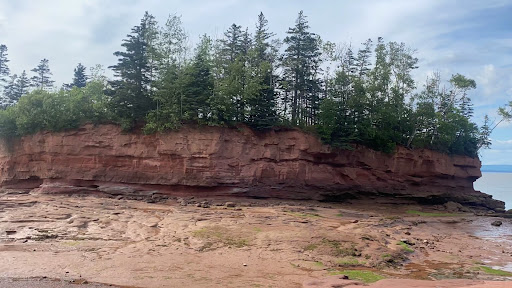
Burntcoat Head Park is located in Burntcoat in Noel, Nova Scotia. It can be easily navigated on google maps. The park is well maintained by Municipality of East Hants and entry to the park and the lighthouse is free. This pet friendly coastal park on the shore of Bay of Fundy is open from dawn to dusk daily however the lighthouse and washrooms are only open from 10:00 am to 06:00 pm.
This shore of the Fundy Bay sees highest tides in the world. The tidal range may reach to maximum of 16.3 metres (53.5 feet), from low tide to high tide. The park staff writes there everyday’s high low tide timings so that none get trapped in tides while exploring the sea bed and Flowerpot Islands.
The friendly park staff can guide you about the area and history of the lighthouse. The Burntcoat lighthouse was built three times. Where the lighthouse was built first the tides eroded it around and brought into the water, this is how Flowerpot Islands came into existence. Then the new lighthouse was built far inland which was later decommissioned and demolished. The lighthouse that we see now was rebuilt again by the East Hants Municipality to preserve it as an monument from the past. You can go to the top of the lighthouse to have a look off view. Around the Flowerpot Islands there several sea caves are formed from the tidal erosion. You can also visit these sea caves when the tide is low.
As the tide hits its lowest hundreds of meters of ocean bed becomes visible and you can walk on it, this is an expensive unique in its kind. There is a wash station to wash your shoes on the way back from walking on the sea bed. However, do not forget your waterproof boots and always plan ahead to visit the head park.
There are several protected small sea creatures where the park staff would not allow you to go to when the tide is low.
The park has serene and calm ambiance with many different trees around. All trees are labeled with their names and...
Read moreBurncoat Head is one of nature’s wonders set in the Bay of Fundy, where you can see the world’s highest tides in action. It was originally a spit of land connected to the shore and over time the tides have worn away the soft rock and sand around it, creating this island you see today. It can look very different each day depending on weather, the bay often has fog multiple times a day and usually it is cooler on the bay than inland. Bring appropriate footwear if you venture down to the ocean floor. No flip flops. Some rocks are slippery and there is sticky red mud which will stain shoes and clothing. Sneakers are likely best for walking on rocks etc. There is a tap and brush to use to wash footwear off after. An interpreter will explain that the area to the left of the stairs is off limits due to the endangered clam species there. You can walk around the island, explore the caves and walk up the beach but make sure you pay attention to incoming tides. When they start to come in, they come in faster than you expect because of the shape of the bay. This is also the location of the very unique “dinners on the ocean floor” hosted by the Flying Apron...
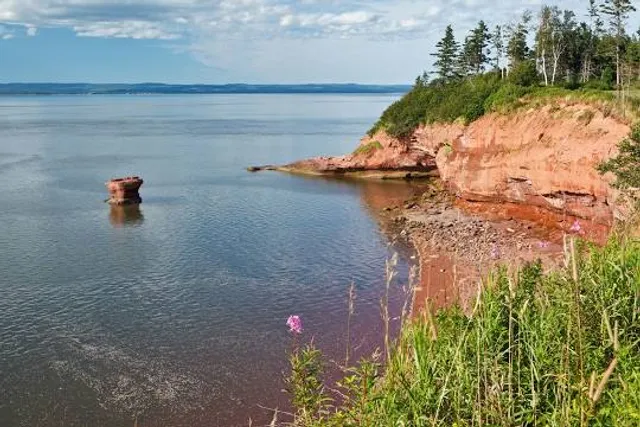
Read moreWe arrived early and surprise! An antique car club was having a picnic brunch, so we got to wander through and look at the antique automobiles before we wandered onto the ocean floor. We were there at lowest tide, and we were not able to stay long enough to watch the tide come in - we're planning a future trip to observe that. There are washrooms and shaded picnic tables in the park itself, as well as a lighthouse to visit. those parts are all accessible. Getting down to the ocean floor is part scramble part leap of faith. The floor itself is muddy, sandy, rocky, slippery and wet. Lots of kids went barefoot, most adults were wearing either water shoes or sneakers. A single water tap at the top is available for washing mud off and you will need to wash mud off. There are oodles of periwinkles everywhere so watch where you step. The tide pools have oodles of tiny hermit crabs so watch where you step. Definitely check out the tide schedule before you go. You have to be back up off the ocean floor three hours before the tide is due in. Plan your travel time accordingly and pack a change of clothes and a towel...
Read more