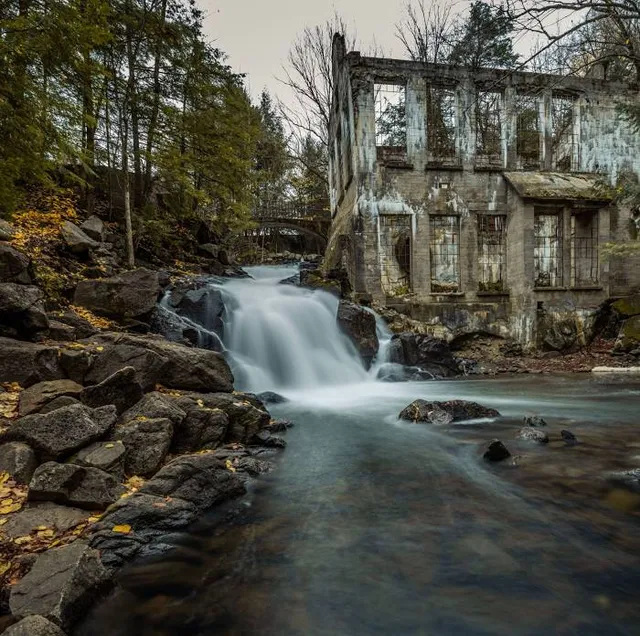
Journeying into the heart of Gatineau Park led me to the captivating Ruines Carbide Willson, a treasure trove of history nestled amidst the natural beauty of this cherished parkland. This enchanting site offers a captivating blend of historical intrigue and scenic wonder, making it a must-visit destination for those who yearn to explore the past while surrounded by nature's splendor.
From the moment I set foot on the trail that led me to the ruins, I was entranced by the sense of anticipation that hung in the air. The well-marked path winds through the forested landscape, gradually revealing glimpses of the historic remnants that await. As the ruins came into view, I was transported to a time long gone, a time of industrial ambition and pioneering spirit.
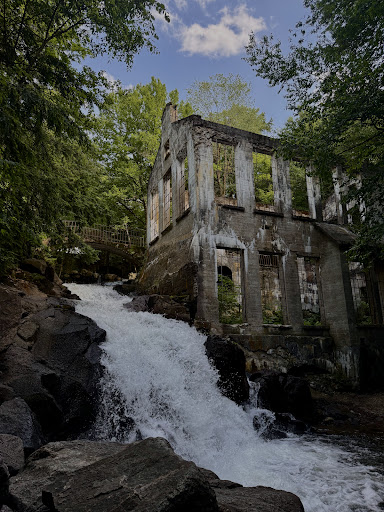
The ruins themselves stand as testament to a bygone era of innovation and progress. The remains of the Carbide Willson plant evoke a sense of wonder and curiosity, as if inviting visitors to decipher the stories they hold. Walking amidst the remnants of machinery, tunnels, and structures, I felt a deep connection to the individuals who once toiled in this very place.
The site's serene surroundings within Gatineau Park provide the perfect backdrop for contemplation and exploration. As I ventured deeper into the ruins, I was struck by the harmonious coexistence of human history and natural beauty. Towering trees and verdant foliage serve as a reminder of the enduring resilience of nature, while the ruins stand as a tribute to the ingenuity of humankind.
Photographers and artists will find themselves in a paradise of visual inspiration. The interplay of light and shadow against the weathered stone and metal creates a symphony of textures and tones that beg to be captured. Each angle offers a unique perspective, and every shot tells a different facet of the site's captivating story.
It's worth noting that while the Ruines Carbide Willson is a treasure trove of history and intrigue, it also demands our respect and conservation. Responsible exploration is key to preserving this delicate balance between heritage and environment. Visitors are encouraged to tread lightly, leaving only footprints and taking away cherished memories.
In summary, the Ruines Carbide Willson in Gatineau Park is a captivating destination that bridges the gap between past and present. A stroll through these evocative ruins is a journey into the heart of history, where the echoes of the past resonate in harmony with the beauty of nature. For those who seek a profound and immersive experience, this hidden gem is a must-visit, inviting you to unravel the enigmatic...
Read moreBeautiful hike for the young and experienced!
(What to bring found below)
We took our 10 and 12 year old boys, and it was great.
Located very close to Meech Lake in the Gatineau hills.
Ample parking, as long as you are there before 11 am on a nice weekend day(holidays can be busy, but it's worth it.
What to bring: Bug spray - put in beforehand and bring some with you Use the outhouses, 2 of them located at the parking lot, before you head out(no restrooms once you reach the ruins). Water bottles, snacks (non trash required snacks, no garbage bins along the trail Camera! - lots to take pictures of Sunscreen and hats - many open areas especially near the lake
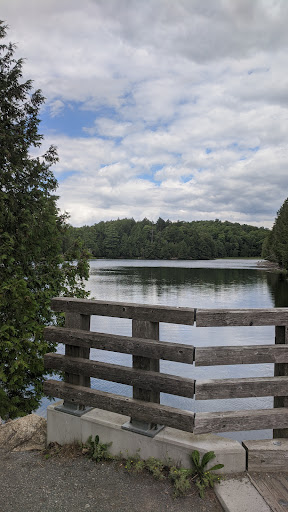
The hike itself is not too difficult. Yes, there are some hills, and some downhills, but not overly challenging.(rated Intermediate). If you never hike, you may have some difficulty on the ruts and roots. If you are an experienced hiker, this will be a nice warm up for a harder hike later in the day. About 35 minutes to hike in, with observant, and distracted boys in tow, or leading the way. A nice bridge about two thirds of the way in, is a nice little break, if you require, looking over the lake.
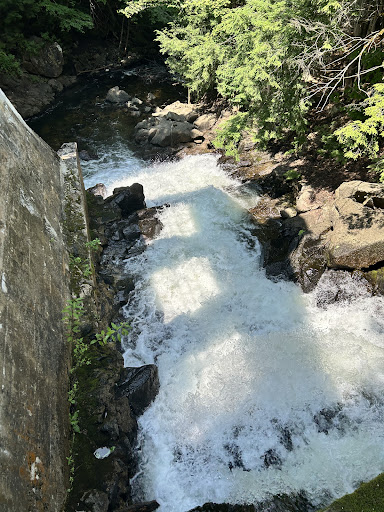
You are rewarded with a down hill (many ruts in the trail after heavy rains recently, as of May 20) March toward the sounds of waterfalls. The ruins appear before you nestled amongst beautiful old trees.
Keep an eye on smaller kids as there many areas to disappear into, and even though it is fairly safe, don't let them venture too far ahead.
On the left as you reach the first part of the ruins is an old tree that is commonly used as a bridge, just for fun. To the right takes you to the ruins. You are taken on a bridge over the falls, and head in to the ruins itself. A nice little area that everyone can enjoy, and venture into the ruins. They are not large, but very interesting with a circular path (again, very small, and if you're big you may have to get on all fours, I'm 6'3", so crawling was the only way). You can bypass going directly in, and still keep an eye on the adventuring kids. There are tables, but plenty of room to sit and enjoy the sounds and sights of the falls.
Hope you enjoy your trip, I know we had a blast. And there's always treats waiting in old Chelsea after a nice...
Read moreThe Carbide Wilson ruins are what’s left of Thomas “Carbide” Willson’s property on Meech Lake. In the late 1800’s Wilson made a name for himself in created the process by which we create calcium carbide, an important industrial chemical.
In the early 1900’s he bought 40 acres on Meech Lake, just below where another farmer had built a dam blocking a stream pouring out of the lake. He proceeded to build an even larger dam and a power station to manufacture fertilizer, but after complains from the lake users about water and his own inability to make the factory a success he was forced to close down.
The buildings remained and fell into disrepair, and now 100 years later we can walk through his mad-scientist laboratory and take in the spectacular falls and surrounding beauty. Les ruines de Carbide Wilson sont ce qui reste de la propriété de Thomas «Carbide» Willson au lac Meech. À la fin des années 1800, Wilson se fit un nom en créant le processus par lequel nous créons le carbure de calcium, un produit chimique industriel important.
Au début des années 1900, il acheta 40 acres sur le lac Meech, juste en dessous du lieu où un autre agriculteur avait construit un barrage empêchant un ruisseau de s'écouler du lac. Il construisit un barrage encore plus grand et une centrale électrique pour la fabrication d’engrais, mais après que les utilisateurs du lac se plaignirent de l’eau et de son incapacité à faire de l’usine un succès, il fut forcé de fermer.
Les bâtiments sont restés et sont tombés en ruine. Aujourd'hui, cent ans plus tard, nous pouvons parcourir son laboratoire de scientifiques fous et admirer les spectaculaires chutes et la beauté...
Read more