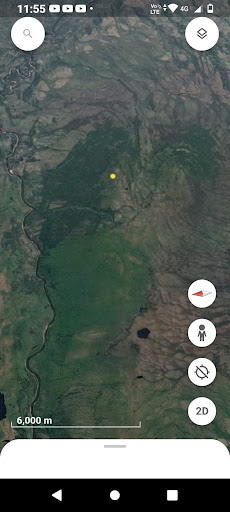
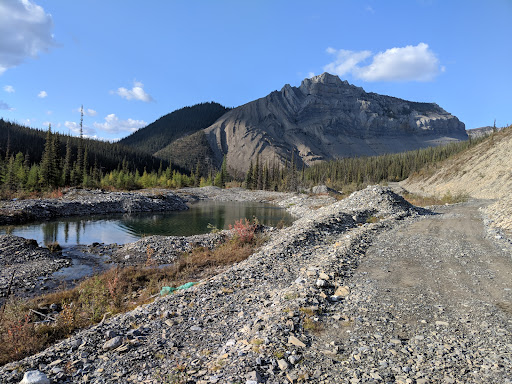
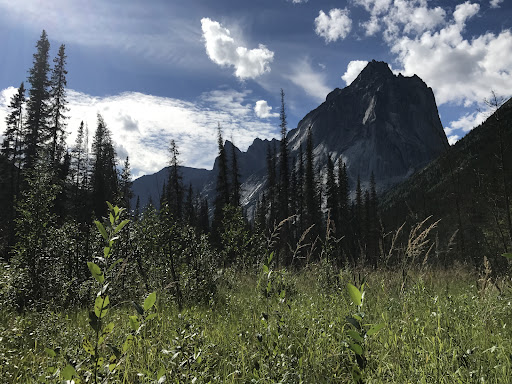
Nahanni National Park Reserve in the Dehcho Region of the Northwest Territories, Canada, approximately 500 km (311 mi) west of Yellowknife,protects a portion of the Mackenzie Mountains Natural Region. The centrepiece of the park is the South Nahanni River (Naha Dehé). Four noteworthy canyons reaching 1,000 m (3,300 ft) in depth, called First, Second, Third and Fourth Canyon, line its whitewater river.The park was among the world's first four natural heritage locations to be inscribed as World Heritage Sites by UNESCO in 1978 because of its picturesque wild rivers, canyons, and waterfalls.
The park's sulphur hot springs, alpine tundra, mountain ranges, and forests of spruce and aspen are home to many species of birds, fish and mammals. The park lies within three of Canada's ecozones, the Taiga Cordillera in the west, the Taiga Plains in the east and a small southern portion in the Boreal Cordillera.
According to Parks Canada, there are about 42 mammal species in the park, in addition to around 180 types of bird, 16 fishes and a few hardy amphibians, with the wood frog being the most commonly-found in the region.In the State of the Park Report 2009, the NWT government named ten special-concern, threatened, or endangered species that the Nahanni National Park Reserve provides appropriate year-round or seasonal habitat for, according to the Committee on the Status of Endangered Wildlife in Canada (COSEWIC). These include the common nighthawk, grizzly bear, olive-sided flycatcher, peregrine falcon, rusty blackbird, short-eared owl, wood bison, woodland caribou, wolverine and yellow rail. In addition, the bull trout and the Nahanni aster are listed, but without status; the Canada warbler and western toad are listed as possibly existing in the park.
Mammal species found in the park include the American black bear, American mink, beaver, Arctic ground squirrel, Canada lynx, collared pika, Dall sheep, fisher, grey wolf, hoary bat, hoary marmot, least chipmunk, least weasel, moose, muskrat, northern myotis, mule deer, pine marten, red fox, red squirrel, river otter, Rocky Mountain goat, snowshoe hare, white-tailed deer and several types of shrew and vole.
Birds are numerous, and include American kestrel, bald and golden eagles, barred owl, belted kingfisher, boreal owl, black-capped and boreal chickadees, Canada goose, Canada jay, eared grebe, great grey owl, great horned owl, grouse, gulls, gyrfalcon, harlequin ducks, horned grebe, loons (the common, Pacific, red-throated and yellow-billed), mallards, northern harrier, northern shrike, osprey, pied-billed grebe, ptarmigan, redpoll, red-necked grebe, red phalarope, sandpipers and plovers, sharp-shinned hawk, snow goose, surf scoter, swallows, woodpeckers and sapsuckers, and trumpeter and tundra swans.It also includes the only known nesting site of the whooping crane.
Fish found in the park include, Arctic grayling, burbot, inconnu, lake trout, lake chub, lake whitefish, longnose dace, longnose sucker, mountain whitefish, northern pike, round whitefish, slimy sculpin, spoonhead sculpin, spottail shiner and trout-perch.
The diverse range of soils offers several specialized and uncommon habitats. More than 700 species of vascular plants and 300 species of both bryophytes and lichen can be found in the park, giving it a richer variety than any other area in the NWT. Nahanni aster is a very rare species of aster found only...
Read more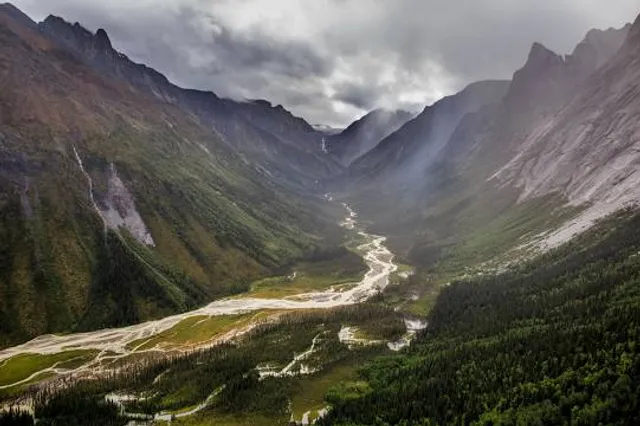
 Learn more insights from Wanderboat AI.