Historically speaking this bridge is incredibly significant. On the 8th of July 1937 after a period of great tension between the Chinese and Imperial Japanese forces. On this occasion, on the night of July 7, 1937, a small Japanese force conducting exercises near the Marco Polo Bridge demanded entry to the small walled town of Wanping in order to search for one of their soldiers. The Chinese garrison in the town refused the Japanese entry; a shot was heard, and the two sides began firing. The Chinese government, under strong anti-Japanese pressure, refused to make any concessions in the negotiation of the dispute. The Japanese also maintained their position. As a result, the conflict continued to grow.
A firefight broke out between China's National Revolutionary Army and the Imperial Japanese Army soon thereafter. This was widely believed to be the start of the Second Sino-Japanese War.
Today, this bridge still stands, as a somber reminder of a past we should not forget nor learn from.
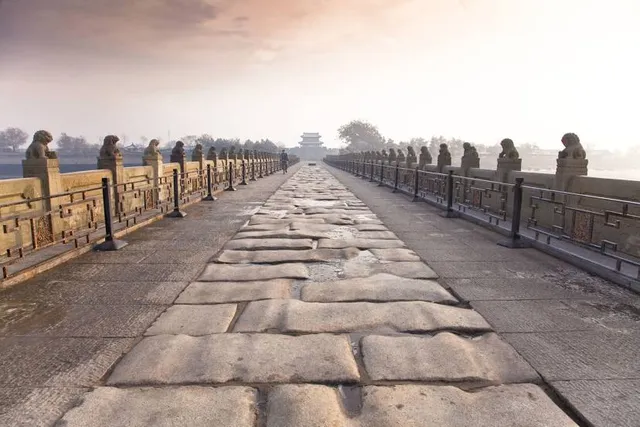
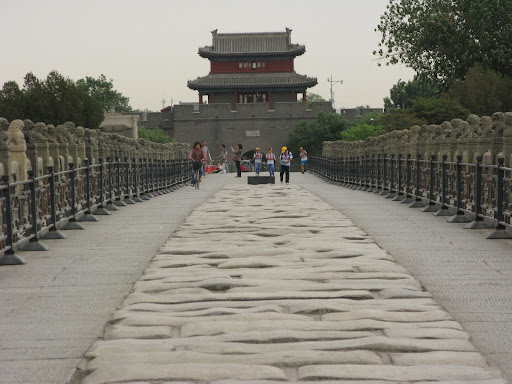
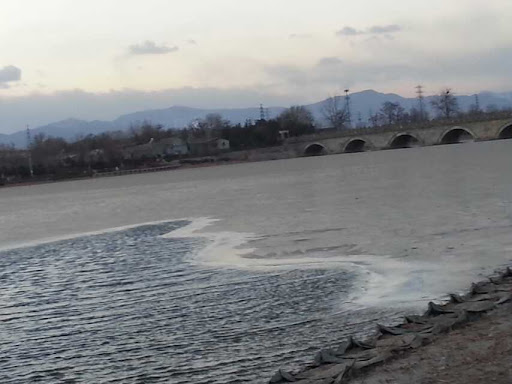
Visually speaking, this is a typical older style Chinese stone arch bridge, and it remains incredibly sturdy. The river that flows under it has been diverted so there is often no water here.
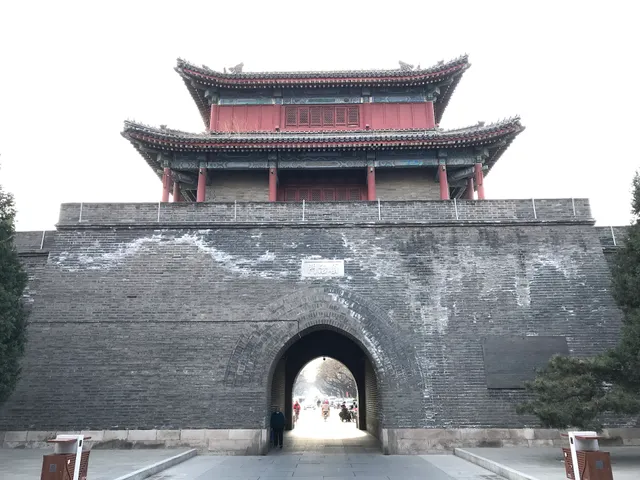
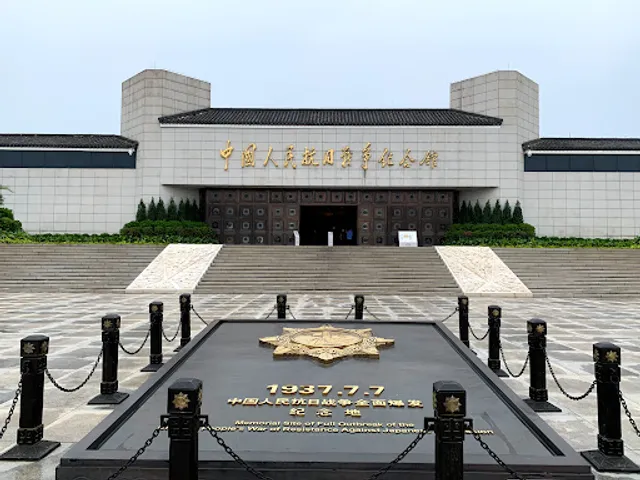
On one side there is the Wanping Fortress, another historical landmark dating back to the 17th century and inside it is the Museum of the War of Chinese People's Resistance Against Japanese Aggression, which houses a comprehensive display of materials regarding the Second-Sino Japanese war.
Great place if you like bridges and history. Highly...
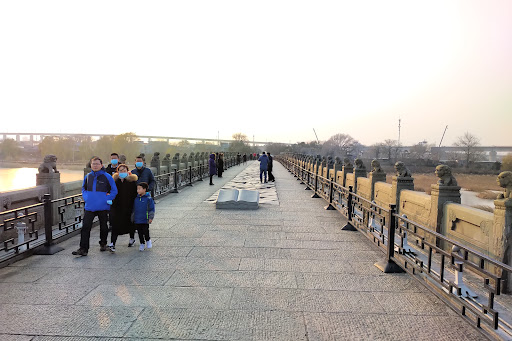
Read moreIt's an effort to get here from the city center of Beijing. The closest metro stop is a 1 hr ride. I entered on the west side of the bridge and exit on the east side. It's a 2.3 km walk (30 min) from exit C of the Garden Expo Park metro station on line 14. From this station, you'll enter on the west side of the Yongding River. On the west side, the development is sparse and is mostly a residential area. It's not developed for tourism. The bridge has fame in being romanticized by Marco Polo in his travels and also being the site of the start Second Sino-Japanese War (War of Chinese People's Resistance Against the Japanese Aggression) on July 7, 1937. The bridge is completely dedicated to tourism and no vehicle traffic is allowed; you can stroll and take pictures with all 501 lions if wanted. The east side of the river is developed for tourism and all the vendors and main site markers are located here. From here you can return to the nearest metro station or stroll to the nearby Wanping Fortress or Chinese People's Anti-Japanese War Museum. It's a 2.3 km walk (30 min) from exit D of the Dawayao metro station on line 14. I think entering from the east and exiting on the east is better than doing a west to east exit.
Gate fee is 20...
Read more橋面的石磚跟欄杆上的石獅, 很有歷史感
The Marco Polo Bridge or Lugou Bridge is a stone bridge located 15 km southwest of Beijing's city center in the Fengtai District. It bridges the Yongding River, a major tributary of Hai River. Situated at the eastern end of the bridge is the Wanping Fortress, a historic 17th-century fortress, with the Museum of the War of Chinese People's Resistance.
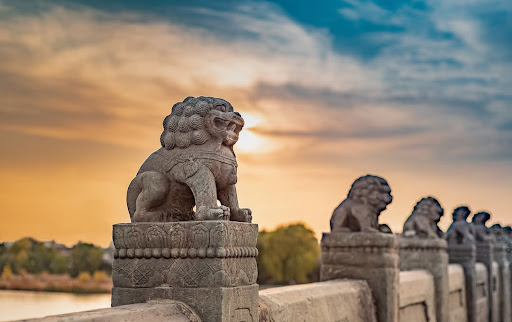
The Marco Polo Bridge is 266.5 meters (874 ft) in length and 9.3 m (30.5 ft) in width, supported on 10 piers and 11 segmental arches. Hundreds of artistically unique stone lions from different eras line both sides of the bridge. The most intriguing feature of these beasts is the fact that there are more lions hiding on the head, back or under the belly or on paws of each of the big lions. However, record has it that there were originally a total of 627 lions. The posture of each lion varies, as...
Read more