At Chengdu Shuangliu International Airport, architectural evolution tells the story of modern China in microcosm. Built in 1938 as a wartime airfield defending against Japanese raids, this southwestern gateway now processes 55 million passengers annually through terminals that embody both cultural pride and globalization's strange ironies.
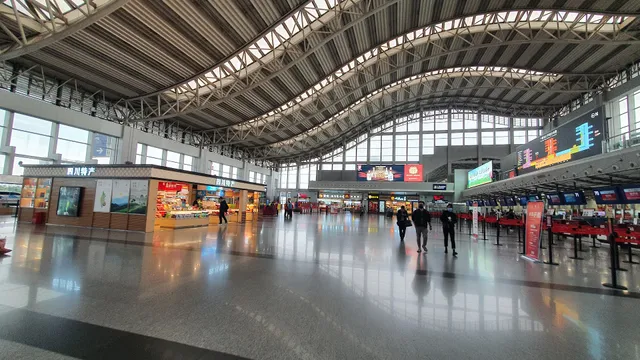
Terminal 2, completed in 2012, attempts something ambitious: a bamboo leaf-inspired design intended to become "landmark architecture in Southwest China." The winning consortium paired Landrum & Brown—the aviation industry's oldest consultancy, founded in 1949—with William Nicholas Bodouva Association, bringing 75 years of global airport expertise to Sichuan's cultural aspirations.
As pioneers who invented aviation consulting, Cincinnati-based Landrum & Brown has shaped airports across all seven continents. The consortium tackled extraordinary challenges: explosive domestic flight growth, limited expansion options, and arterials blocking facility connections. Their solution involved innovative taxiway systems tunneling beneath roads, producing a terminal where "the lithe shape of bamboo leaves would lead the new concourse to become landmark architecture."
The bamboo motif represents more than aesthetic choice—it signals Chinese architecture's post-reform desire to embed local identity within international functionality. Yet step into the men's restroom, and globalization's contradictions become visceral. American Standard urinals—fixtures bearing the name of a quintessentially American brand—line the walls of this temple to Chinese technological advancement. The irony deepens when considering that this architectural partnership between America's premier aviation consultants and Chinese aspirations produced cultural symbolism atop international infrastructure systems.
The terminal's three-parallel-porch design accommodates 3,500 passengers during peak hours while maintaining visual connections to the bamboo metaphor. Yet passengers speak of sterile efficiency rather than cultural resonance. Terminal 2's 350,000 square meters feel more like competent infrastructure than inspired architecture.
Reviews describe the terminal as "shiny and modern" but criticize "barricaded" waiting areas and shops selling "the same souvenirs." The architecture succeeds functionally but struggles to create memorable experiences beyond processing passengers.
This tension between cultural aspiration and operational necessity defines many regional Chinese airports. Unlike Beijing's star-architect spectacles, Chengdu represents pragmatic modernization: functional but not inspirational. The bamboo-leaf inspiration remains visible mainly to architects; passengers encounter standard international airport vocabulary.
With newer Chengdu Tianfu International Airport operational since 2021, Shuangliu focuses primarily on domestic routes. Terminal 1 particularly shows its age, contrasting sharply with Terminal 2's polish but revealing the airport's utilitarian evolution from military airfield to regional hub.
Perhaps the American Standard urinals serve as apt metaphor for contemporary Chinese architecture: technically proficient, globally connected, yet somehow missing the cultural narrative the building's exterior promises. The bamboo-inspired roofline suggests rootedness in local tradition, while the fixtures below reveal the complex realities of international manufacturing and brand recognition.
Chengdu Shuangliu ultimately represents a particular moment in Chinese architectural development: when cultural symbolism met global functionality without fully resolving their tensions. The bamboo dreams remain partially realized, while American plumbing fixtures remind travelers that infrastructure globalization often trumps architectural...
Read moreI just wanted to share our experience transferring through Chengdu Airport with an infant, as it appeared to us that the Chinese authorities made the experience as difficult as they can. Firstly travelling with an infant (under 2 years) is stressful in any case, but having been to a few airports, Chengdu was our most difficult experience by far. We were going to Tokyo from London, changing at Chengdu, and found the experience at Beijing much smoother and easier. I would strongly recommend any parents doing this route to either go direct, or use Beijing instead of Chengdu. My wife and I have agreed to never use Chengdu again.
Some of the issues we experienced:
When arriving at Heathrow we were informed at the desk that Chengdu required us to exit departures and re-go through arrivals to transfer - they don't transfer baggage for us. We had to sign a piece of paper confirming this. Obviously this extends the transfer process significantly, with lots more queuing, just what you want to avoid with a baby. There was no indication of this when we bought the tickets online, otherwise we would have avoided it. There was no priority seating for a baby on the bus from the plane to the airport (about 15 minutes) and no-one offered a seat. We had 3 hours for the transfer, and all three hours were spent in queues, with a single queue often taking 30 mins. In order: Fingerprint collection, customs, baggage collection, check in, baggage check, border check, security, food, gate, final security check. Our passport and tickets were checked about 5-6 times. Priority queuing for parents with infants seemed to be suspended. At security there was even a queue that was mostly empty and said it was for parents with children under 2. When we asked a guard if we could use it, we were shouted at and told we had to use the main queue. No reason given why we couldn't. In general, most of the guards and security staff were rude and quite authoritarian. There were no baby changing facilities anywhere in the airport, at least from what we could find. I visited about 4 toilets. Eventually I had to change our son on the main floor of the terminal as there was no-where to do so, and the toilets were quite dirty. On a 2.5 hour transfer, there was no time left to use toilets or get food, though we still made time for it, as other passengers on our flight did. As it was, the flight departed 30 mins late, as passengers were still making their way through...
Read moreHad the most confusing and horrible experience with this airport. I was traveling from Guangzhou to Melbourne via Chengdu (yes that’s much cheaper). Landed here at T1 and had to transfer to Tianfu airport. I wasn’t very familiar with with this airport but unfortunately none of the staff had been helpful.
I first contacted my airline (Sichuan Airline) and asked about the complementary train/bus ticket that I failed to get online. It took a few operators for them to realize I couldn’t get the train ticket, only the bus ticket, because I made my booking overseas. Fair enough. I was then told I needed to go to T2 because both the train and bus are only available then. Fair enough x2.
After I finally got to T2 I asked the staff at the gate about the bus stop. He was completely clueless. I explained I was instructed to come to T2 so the bus station must be there. Took two more staff for ‘it must be underground’. Fair enough x3. I was reluctant to enter the airport because I had to put everything through security screening just to enter the airport (something only in Chinese train station and some airports. Unfortunately this was one of them) and I was carrying 2 suitcases and a backpack with me.
So finally found the bus stop and I showed the staff the ticket, and was told 'oh it only operates from midnight to 5am'. Brilliant!🙃🙃🙃🙃 It was then when I realised train at T2 would be my only option because I would otherwise miss my flight.
Took another 5 minutes to finally get to the train station and underwent yet another security screening (seriously?? No one realised they are so redundant???) just to enter the train station. And i thought: finally, end of nightmare.
Of course not. Turns out the 'airport line' (19) wouldn't take you to the airport, you have to transfer to another line (18). Imagine my confusion on my first visit 🙃🙃🙃
Overall, the 'two airport' strategy Is poorly executed with horribly trained staff who basically know nothing more than you. So if you have to transfer in Chengdu because of its cheaper fare: avoid, avoid, avoid. Especially if you don't speak perfect mandarin and risk misunderstanding their already misleading...
Read more