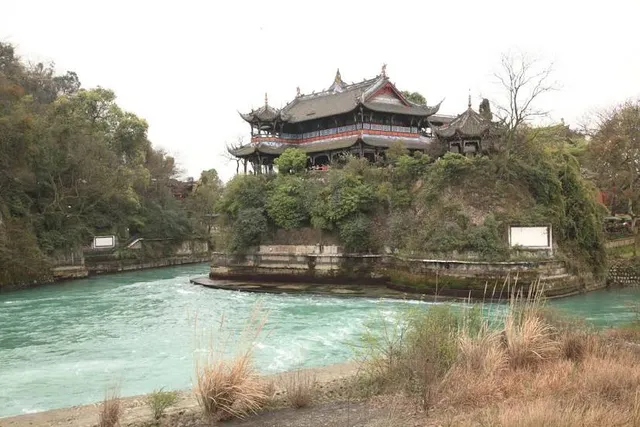
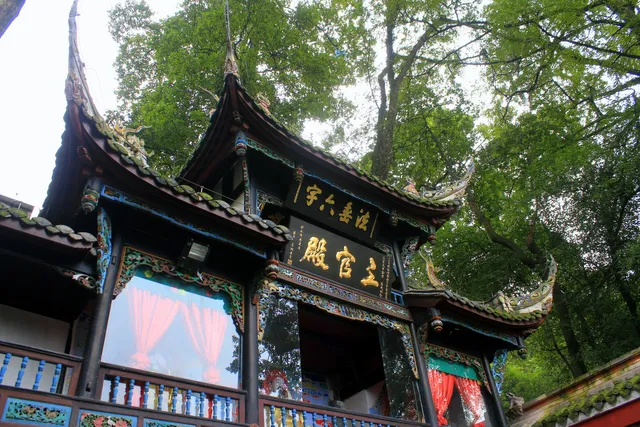
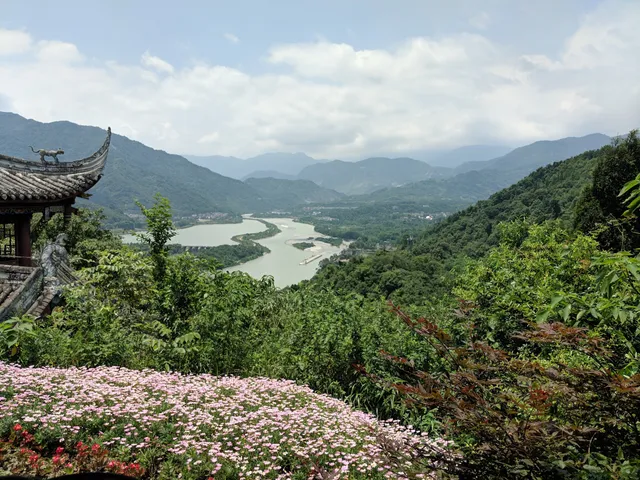
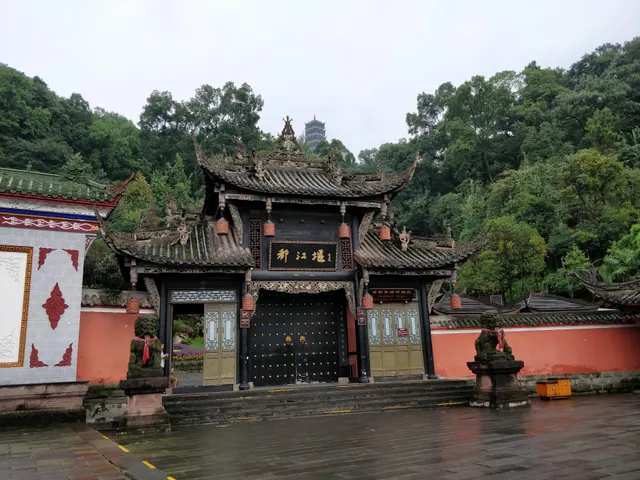
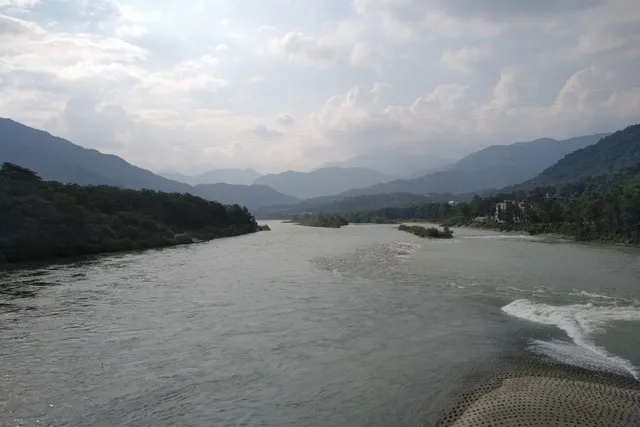
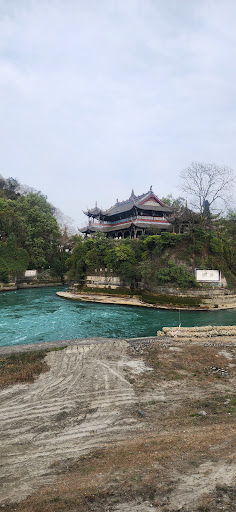
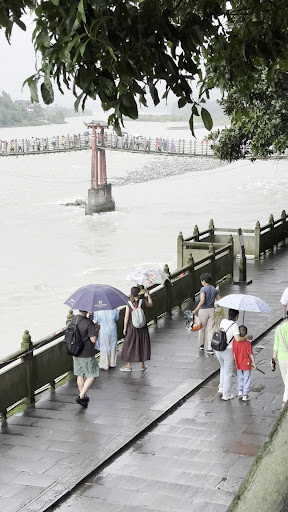
We then arrived at chengdu rail station and headed straight to Dujiangyan Irrigation Site. 75 km. 1hr 30 min car journey, northeast from Chengdu,. Considered as the “The treasure of Sichuan region, this site was perhaps the busiest site that we visited in the whole trip. We could hardly walk among hundreds of people but rather were “transported airborne” by the crowd towards the path. Somehow Felipe did not complain and rather made it hilarious through the crossing of the AnlanBridge. Everyone seemed to be amused, so we did have a good laugh too. But it was very busy, hot and humid, a very slow process to cross to the other side. At this point we had embraced local culture and learn the only way to advance was to gently push! Despite this, the visit was certainly worth it, this system is was built before BC! Ordered by the first and one of the most controversial emperors in China, Qin Shi Huang. I felt really lucky to eyewitness the ingenuity of ancient Chinese over 2000 years ago! No wonder it’s a world heritage site.The history comes from over 2,200 years ago when the city was constantly vulnerable by floods triggered by the Minjiang River. It was then that Li Bing urged to give a solution to the emperor, decided to construct an irrigation system to prevent flooding. The complex was planned to mechanically regulate the water flow of the rivers from the mountains to the plains throughout the year. Dujiangyan is the oldest irrigation system in the world. The whole compound is green, imposing place, with rushing running water in the river and channels as well as the island built in the inside of the river, and the green flourish parks all over the place.
We spend approximately 4 hours on this visit before heading...
Read moreTL;DR the place may have been marvelous hundreds or thousands of years ago, but the experience today is terrible and it is unclear what historic message or lesson, if any, they want to convey to their visitors.
It was very crowded and loud everywhere, with a mixed experience of modern commerical constructs and seemingly ancient buildings -- presented in a highly incoherent way.
The supposedly wooden ancient river dikes have been replaced by concrete without much explanation or reference as to the reason of the replacement. Although there were pieces of wood on display, on land, here and there, they appeared to be recently varnished and did not look authentic.
I wasn't sure what parts were genuinely from thousands or so years ago, what were the purposes and functions of the design, and what I was supposed to look at.
In-park buggies are not free (park entrance isn't free, or even cheap either), there was a huge line up, and the place was very noisy. Buggy drivers honked non-stop as if they badly needed to visit the restrooms, and thus walking visitors were total nuisances to them. We chose to walk instead of taking the buggy because of its wait time, and we were practically deafs after the 30-minute walk that the buggy covers.
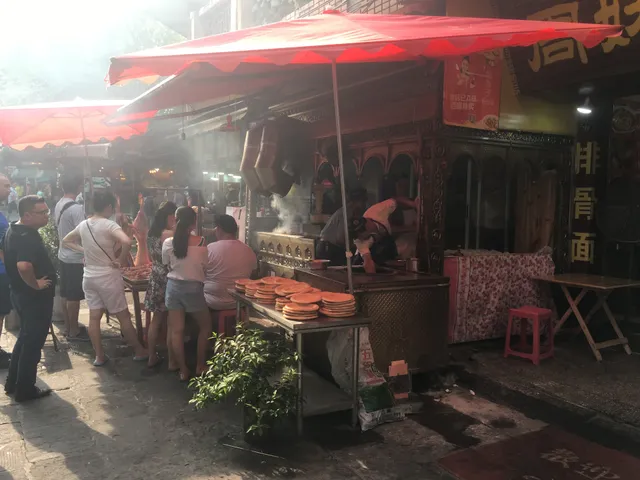
There were hawkers everywhere in the park, selling unsightly stuffs ranging from touristy souvenirs, counterfeit Disney toys, to cucumbers and extortionarily priced popsicles.
Definitely not worth the 3-hour round trip from Chengdu. If you have a day to kill, skip this place and visit some old alleys in the city, enjoy a cup of some really good tea, and watch a traditional show.
Did I mention there were tons of...
Read moreDujiangyan is an incredible testament to ancient engineering—built over 2,000 years ago, its irrigation system and suspension bridges remain flawless even by modern standards. It’s mind-boggling to think how such precise and enduring structures were created without today’s machinery.
That said, while the historical significance is impressive, the visit itself was quite taxing. We took a taxi to Station 6 at the top and walked downhill, passing shrines, the Erwang Temple (dedicated to the Qin Dynasty officials who designed the system), and the Fuqi Suspension Bridge. The temple also features a Taoist Guanyin statue, which was interesting to learn about.
However, after days of walking on our trip, our legs were exhausted, and the sheer size of the area meant even more walking—even with the shuttle vehicles. I’d recommend starting from Station 6 and descending, as those going uphill looked utterly drained.
The ticket price felt steep, and unless you have a deep interest in ancient waterworks, the experience may not justify the cost. Personally, I’d rather spend my time watching pandas or enjoying Sichuan’s famous noodles. If you have extra time and strong legs, it’s worth a visit, but otherwise, you might want to prioritize other Chengdu...
Read more