Lake Manasarovar and Mount Kailash are believed to be the abode of Shiva. This is where the holy river the Ganges is believed to be tamed by Shiva and sent to nourish the fertile valleys below the Himalayas. It is sometimes conflated with Meru.[3] For the Khas Hindu shamans of the nearby region of Humla (northwest Nepal), a ritual bath in Lake Manasarovar is an important step in gaining their shamanic powers.[14]
In the Bon religion Edit The Bon religion is also associated with the holy place of Zhang Zhung Meri sacred deity. When Tonpa Shenrab, the founder of the Bon religion, visited Tibet for the first time and bathed in the lake.
In Buddhism Edit Buddhists associate the lake as the mother principle, with Kailash as the father principle. The Yamantaka shrine here is one of the eight guardian deities, who is shown in the act of a sexual embrace to unite compassion and wisdom. A traditional 32-mile circuit around the mountain, called kora, is believed to be particularly holy walk.[3] According to legend, Queen Maya bathed at Manasarovar before she gave birth to Buddha.[15]
The lake has a few monasteries on its shores, the most notable of which is the ancient Chiu Monastery built on a steep hill, looking as if it has been carved right out of the rock.
In Jainism Edit In Jainism, Lake Manasarovar is associated with the first Tirthankara, Rishabha.[3] As per Jain scriptures, the first Tirthankar, Bhagwan Rishabhdev, had attained nirvana on the Ashtapad Mountain. The son of Bhagwan Rishabhdev, Chakravati Bharat, had built a palace adorned with gems on the Ashtapad Mountain located in the Himalayas. There are many stories related to Ashtapad Maha Tirth like Kumar and Sagar's sons, Tapas Kher Parna, Ravan and Mandodri Bhakti, among...
Read moreKailash Mansarovar: A Journey of Faith and Wonder
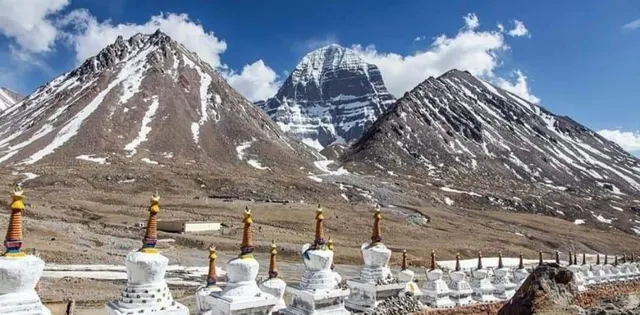
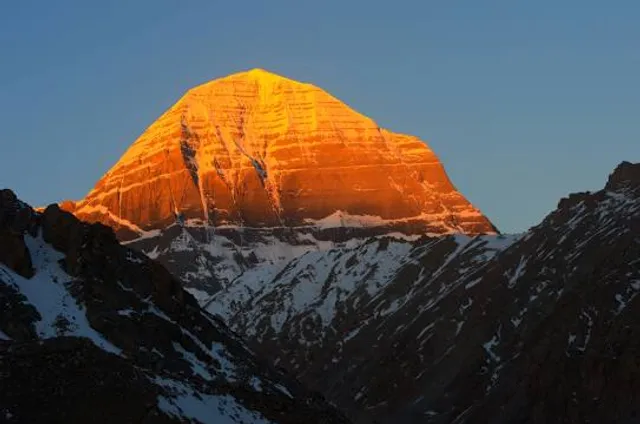
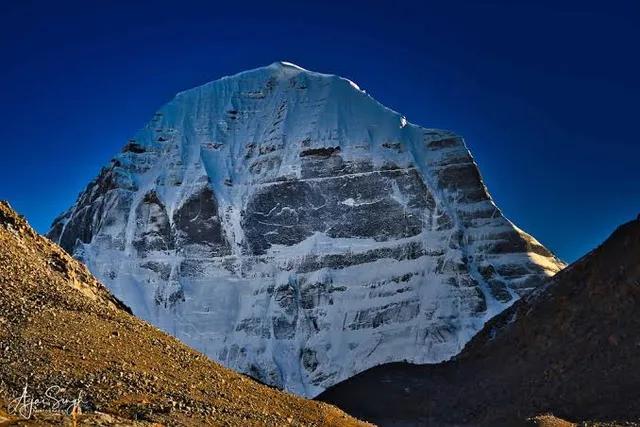
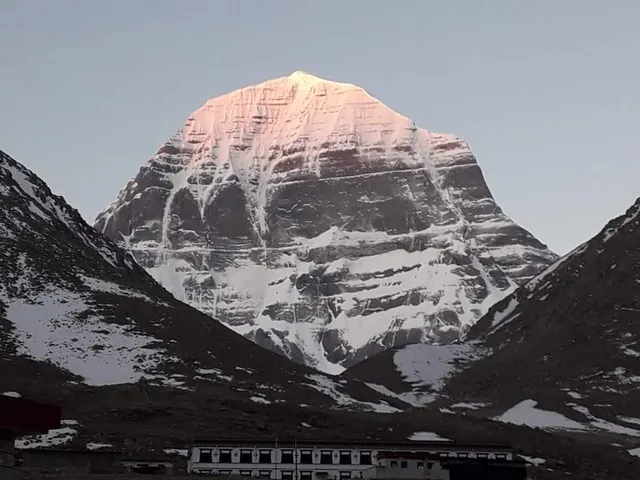
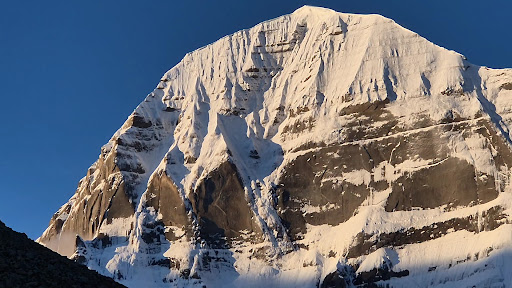
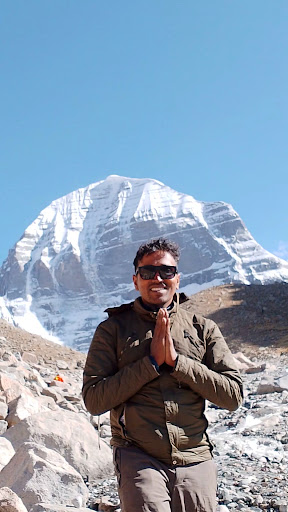
High in the Tibetan Plateau, far beyond the reach of ordinary life, stands Mount Kailash, a peak shrouded in mystery and devotion. At 6,638 meters, it is not just a mountain—it is the cosmic home of Lord Shiva, the place where the divine meets the earthly. At its feet lies the breathtaking Mansarovar Lake, whose pure, shimmering waters are said to cleanse the soul. Together, they form one of the most sacred destinations on earth, drawing pilgrims and adventurers from across the world.
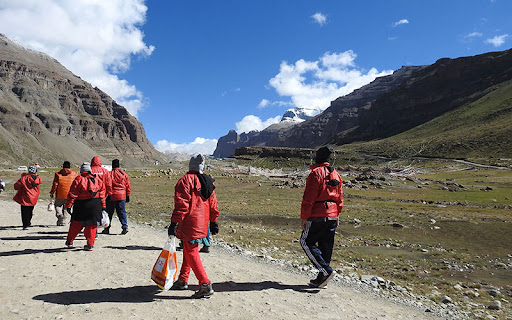
For many, the Kailash Mansarovar Yatra is not just a trek but a deeply personal journey. The pilgrimage involves walking 52 kilometers around the mountain, a sacred ritual believed to wash away lifetimes of sins. The path is not easy—the air is thin, the terrain rugged, and the Dolma La Pass (5,630 meters) tests both body and spirit. But with every step, there is a sense of purpose, a feeling that something greater is guiding the way.
Then, there is Mansarovar Lake, a vision of stillness and serenity. Pilgrims bathe in its icy waters, believing it purifies the soul and brings them closer to enlightenment. Just beside it, Rakshas Tal, a darker, wilder lake, reminds visitors of the eternal balance between light and shadow, good and evil.
The journey to Kailash Mansarovar is not just about reaching a destination; it is about transformation. Whether one comes seeking blessings, peace, or simply the awe of nature, something about this place lingers in the heart. The cold winds, the vast landscapes, the hum of prayers—they stay with you, long after the journey ends, whispering that you have touched something...
Read moreTwo things are best-known for the Kailash Mansarovar Yatra: making a Mount Kailash parikrama and taking a saintly dip in Lake Of Mansarovar. The Yatra requires walking in high altitudes of up to 19,500 feet in harsh conditions like extreme weather, and rugged terrain, which can be risky for those who don't fit mentally or physiologically or even psychologically. The planned itinerary is timely, and site visits are subject to local conditions at any time.
Mount Kailash–regarded as Lord Shiva's home at the height of 22,000 meters, is one of the most respected shrines in the world. Mount Kailash, a peak of the Kailash range, belongs to the Transhimalayas of Tibet. Thanks to the high altitude and remote position of the Kailash Mansarovar Yatra in West Tibet, only a few thousand pilgrims are permitted every year.
After the difficult journey up to Mount Kailash, pilgrims will then have to walk around the mountain top. This walk is known as parikrama, either clockwise or anti clockwise. There is the option of doing the famous parikrama on a yak or a pony for those who can't do it on foot (as it normally takes 3 days).
Mount Kailash is considered to be a sacred place mainly by Hindus, Bons, Jains, and Buddhists too. Lord Shiva and his wife Parvati, according to Hindu beliefs, reside in a state of meditation at the peak of Mount Kailash. The first Jain Tirthankara has reached the Nirvana, according to Jains, is Kailash. It is in Buddhism that the Buddha, representing supreme bliss, is found in Kailash Parvat. However, Bon (a religion which precedes Tibetan Buddhism) thinks the region as a whole is the seat of every...
Read more