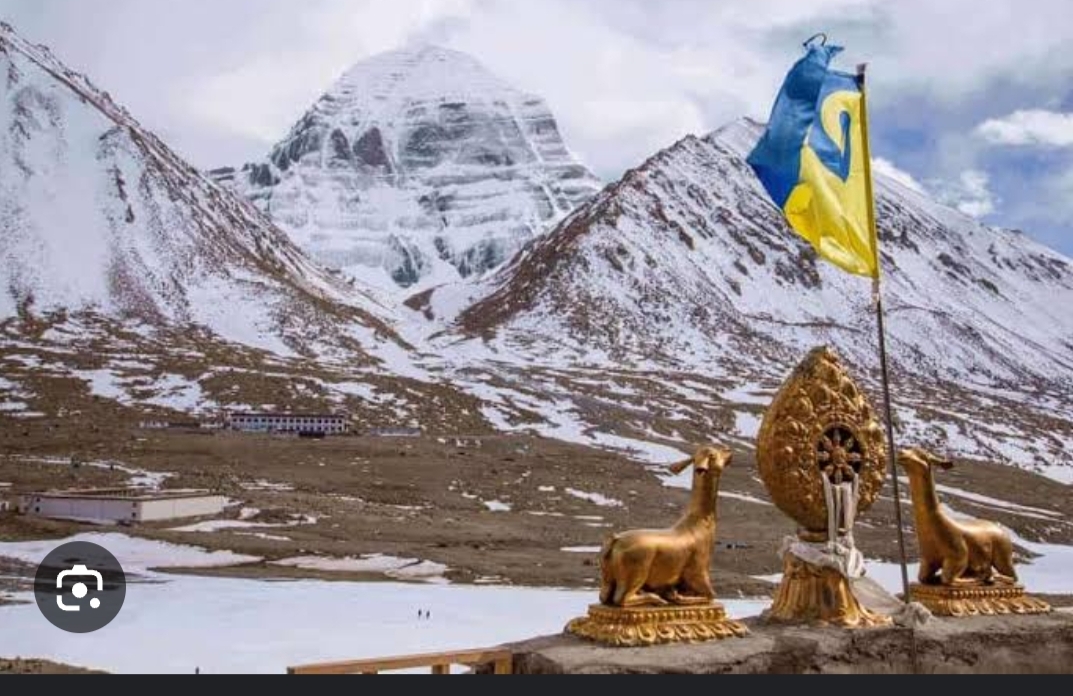
The History of Kailash Mansarovarv:
In the Hindu religion, Lord Shiva is known to reside at Mount Kailash, as it is the holy center of the planet and a manifestation of heaven. According to Jainism, Mount Kailash, also recognised at Mount Ashtapada, is the site where the founder of the religion, Rishabhanatha attained liberation or ‘Nirvana’. Moreover, Demchok Buddhists believe Kailash Mansarovar to be a symbol of harmony. Finally, according to the Bon religion of Tibet, Mount Kailash is regarded to be a foundation of spiritual power.
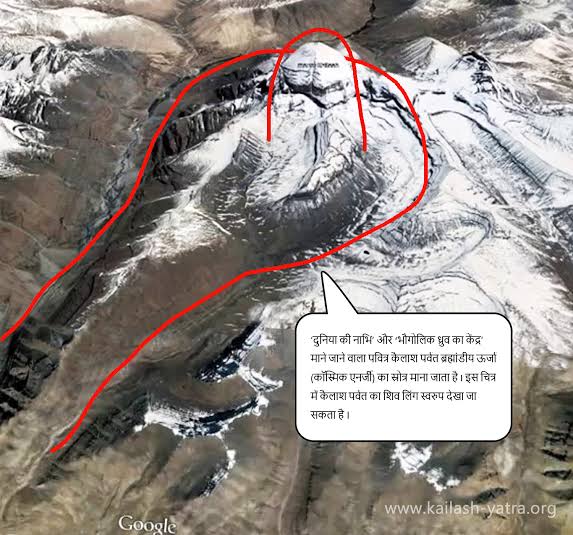
A major highlight of Kailash Mansarovar Yatra is just 20 kms away. The highest (4500 m) freshwater, pure, immaculate and blue, Lake Mansarovar. It is believed that the turquoise lake was first formed in the mind of Lord Brahma where later Lord Shiva and Lord Brahma appeared here as swans. The holy water of Lake Mansarovar is said to have the power of washing away our sins. Therefore, circumambulating Mount Kailash can expunge wrongdoings. And 😊 Hindus pay reverence to Mount Kailash as a throne of Lord Shiva, the great Tirtha and the ultimate pilgrimage site on earth. It is considered most auspicious to make a religious pilgrimage around its fifty-three kilometers circuit which is also known as Kailash Parikrama.Jains refer to Mount Kailash as Mt. Asthapada and believe that their religious founder, Rishavdev, attained Nirvana – The Ultimate Happiness there.Buddhists have named Mount Kailash Garu Rimpoche, meaning “precious jewel of snow” and a gigantic mandala. According to the legend it is the abode of Chakra Samvara and Guru Rinpoche – Padma Sambhava, who brought Buddhism to Tibet and beyond.In Tibetan Buddhism it is believed that Mt Kailash is the dwelling place of Chakra Samvara Demchog (the Wheel of Bliss) and his consort, Dorje Phagmo. It is also venerated as the abode of one of the great Tibetan yogi – Milarepa. Buddhist pilgrims perambulate clockwise around the mountain and it is called Kailash Kora. Kailash Kora has the greatest spiritual significance for the Buddhists.In Tibet’s pre-Buddhist, Shamanic Bon religion, Mt Kailash is abode of Sky Goddess Sipaimen, and is in the form of a giant Mandala that is the central point of all Tantra Rituals and Forces. The founder of Bon Religion, Tonpa Shenrab Miwoche is believed to live on Mt Kailash, which is considered as nine- story Swastika Mountain, and the axis mundi – the central pillar of the world. The Bonpo Pilgrims walk counter-clockwise around the Mt Kailash.In fact, the entire region of Mt. Kailash has religious significance. The region also includes the two turquoise-blue, pristine high-altitude lakes of Mansarovar and Rakshesa.Another uniqueness contributing to the mystical and spiritual aspects of Kailash is that four most sacred rivers of the Indian sub-continent begin from here – Sutlej, Karnili, Brahmaputra and Indus. The end of these rivers is more than 2,000 kilometers apart, yet they all have their source within hundred kilometers of Mt. Kailash.Mt. Kailash, the holy region, is known as navel of the universe, attracting scholars and researchers from all over the world. Mt. Kailash (also known as the ‘Sumeru Parbat’ in Hindu epics) provides a spiritually enriching, naturally unique and a truly rewarding journey of a life-time....
@OM...
Read moreLegend has it that Mount Meru is the central axis of the Universe, sitting at the centre of the Himalaya. Four rivers emerged from the mountain and a lake encircled it. It was said to be the stairway to Heaven and was the abode of many Gods. As Kailash, the 22,028-ft high snow covered sacred mountain in the Ngari District of Western Tibet, had all these qualifications, it came to be revered by the Buddhists, Jains, Hindus and Tibetans as the ‘axis mundi’ that runs centrally through the various planes of creation, Mount Meru that defines the centre of the earth. This watershed of Asia has four rivers flowing down its slopes in the four cardinal directions — the Senge Khambab (Indus) in the North, the Tamchok Khambab (Brahmaputra) to the East, The Mapchu Khambab (Karnali), in the South draining into the Ganga and the Langchen Khambab (Sutlej) flowing towards the West.
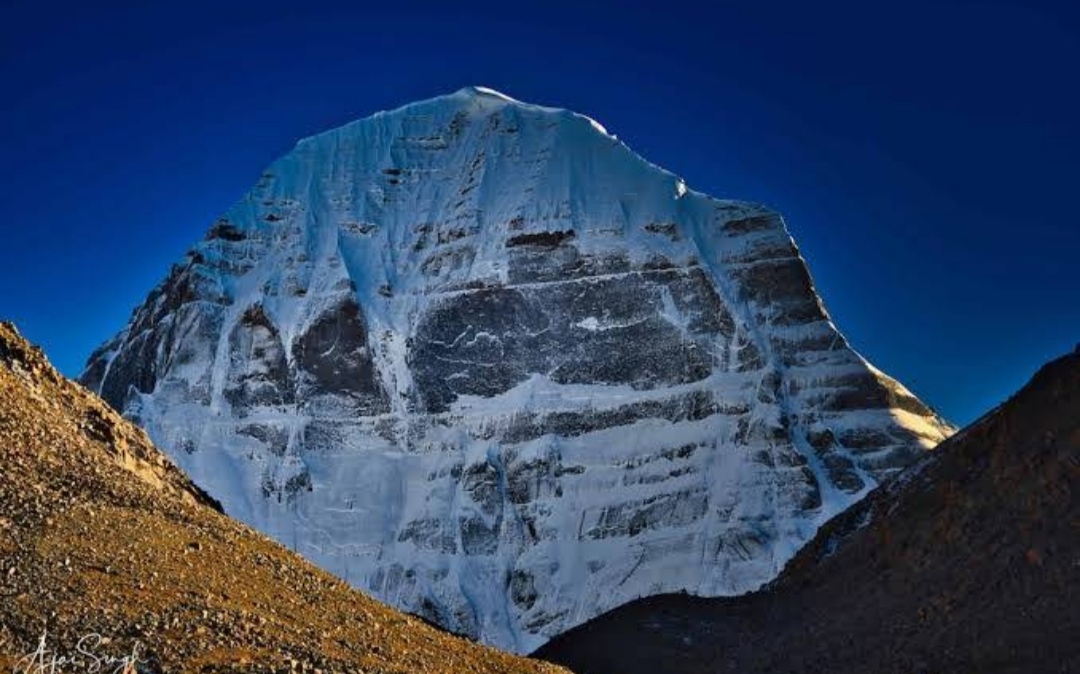
Fierce contest The Tibetans and the Buddhists identify this ‘supreme mandala’ as the Kangrinboque or Gang Rinpoche. Milarepa, a poet saint and pupil of the great Guru Marpa, the translator belonging to the late eleventh and early twelfth centuries wanted to legitimise Buddhism over the more ancient, animalistic Bon religion. The result was a fierce contest between the two gurus representing the Buddhist and the Bonpo sects. The contestants had to scale the sacred Kailash. The Bonpo priest, Naro Bon-Chung started the journey on his ritual drum, beating it all the way even before Milarepa awoke. When the Sun rose, Milarepa rode on its rays and in a flash reached the summit before the Bon priest. Naro Bon Chung was totally dismayed. His drum fell breaking into two and came hurtling down banging against the mountain. The couloir that one sees on the South face is believed to be the path drawn by Naro’s drum. Buddhism gained prominence over Bon and Naro had to leave the place and establish his monastery far away from this holy land. The Jains revere it as Sumeru or Meru Parvat. It is here, at the Ashtapada, that the first Jain Tirthankara, Rishabadeva attained nirvana. To the Bons, who are a shamanistic sect, this ‘Yung Drung Gutsek’ is a nine-storey swastika mountain, which they circumambulate counter-clockwise. The devout Hindu considers the dazzling dome of Mt. Kailash as the meditative abode of Lord Siva and Mother Parvati. The striations that resembles a stairway, on the Dakshinamoorthy face (South) is considered to be the spinal column through which the Kundalini rises. Till date, Milarepa is the only one who has summited this sacred mountain of Kailash. The writers are ace photographers known for...
Read moreMount Kailash, also known as Kailash Parvat, is a sacred mountain in Tibet, located near the western border of China. It is considered one of the most revered and holy places in Hinduism, Buddhism, Jainism, and the Bon religion. Mount Kailash holds deep spiritual significance and is a destination for pilgrims and seekers of enlightenment from various religious traditions.
Key information about Mount Kailash includes:
Spiritual Significance: Mount Kailash is believed to be the abode of Lord Shiva in Hinduism. It is considered the earthly manifestation of the sacred Mount Meru and is revered as the centre of the universe. In Buddhism, it is associated with the legendary Mount Sumeru, the cosmic centre of the universe.
Location: Mount Kailash is situated in the Kailash Range, part of the Transhimalaya in Tibet's Autonomous Region, China. It lies near the source of some of Asia's major rivers, including the Indus, Brahmaputra, and Sutlej.
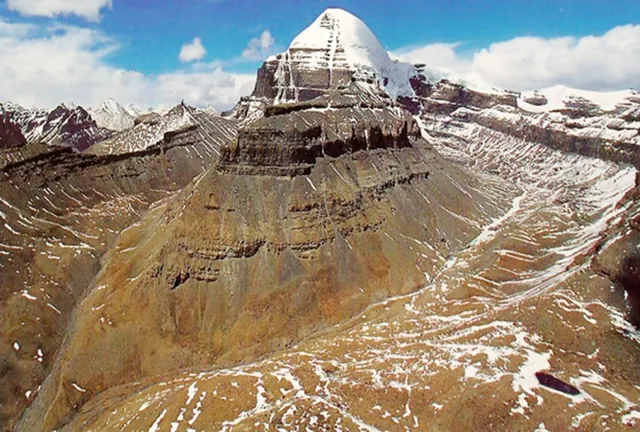
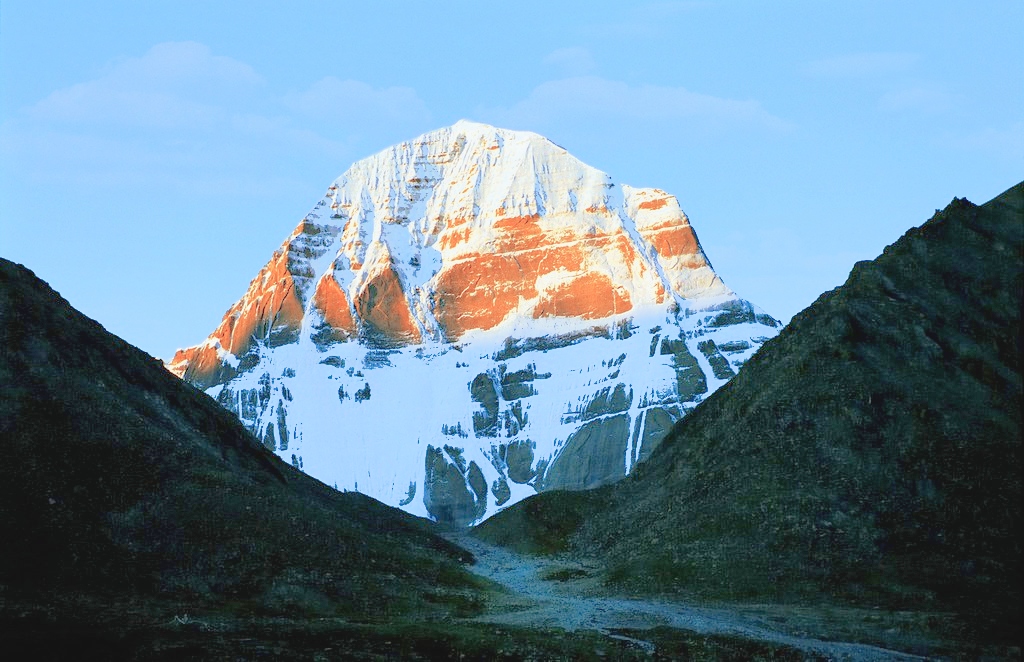
Unique Features: The mountain is distinctive because of its pyramid-like shape and its perennial snow-capped peaks. It is surrounded by smaller peaks and pristine natural beauty.
Pilgrimage Destination: Mount Kailash is a major pilgrimage destination for Hindus, Buddhists, Jains, and Bon practitioners. Devotees circumambulate (perform kora or parikrama) the mountain as an act of devotion and purification. This circumambulation is believed to erase one's sins and lead to spiritual liberation.
Circumambulation: The circumambulation or parikrama around Mount Kailash is approximately 52 kilometres (32 miles) in length and usually takes several days to complete on foot. It is a physically challenging journey due to the high altitude and rugged terrain.
Restricted Access: Access to Mount Kailash is carefully regulated by the Chinese government to protect the environment and preserve its spiritual sanctity. Pilgrims and tourists need permits to visit the area.
Multifaith Destination: Mount Kailash is unique in that it is revered by multiple religious traditions, making it a symbol of interfaith harmony and unity.
Natural Beauty: Beyond its religious significance, Mount Kailash is celebrated for its stunning natural beauty, including pristine lakes, lush valleys, and wildlife.
Visiting Mount Kailash is considered a profound spiritual experience, and pilgrims undertake the journey with deep devotion and reverence. The mountain's spiritual aura, coupled with its natural splendour, makes it a destination that resonates with seekers and...
Read more