Amazing experience.
I recommend ariving there in the morning, before the tour groups arrive. The walk down the stairs is very narrow and while some people are respectful and wait, you wouldn want to avoid going there with the groups of people trying to pass you in the tiny gaps in clearly 1 person wide walk.
You can take half a day to visit this area (recommending the morning).
Beware if you are catching the train from Chengdu in the morning - there is a lot of people travelling at this time and even the subway on the way to the train station is extremely crowded. You can book tickets in advance the day before and make sure to arrive early.
We took a taxi from the train station to the boat terminal, so i dont know anything about the buses to get there. The boat terminal is nirth from the entrance of the park and it called Baxiandong Cruise Terminal
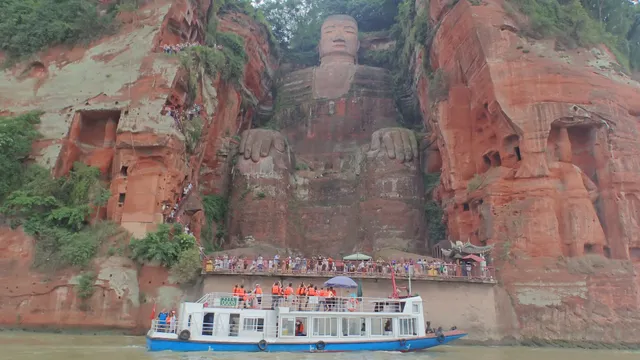
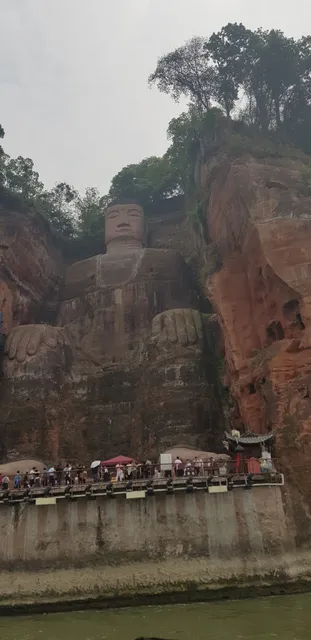
I recommend doing the boat trip first. It has the best opportunity to observe the full size of the statue from a distance. Early in the morning there was no queue and it took around 15-20 mins. After the boat trip you can take the 10 min walk along the river, under the shade to the entrance of the park.
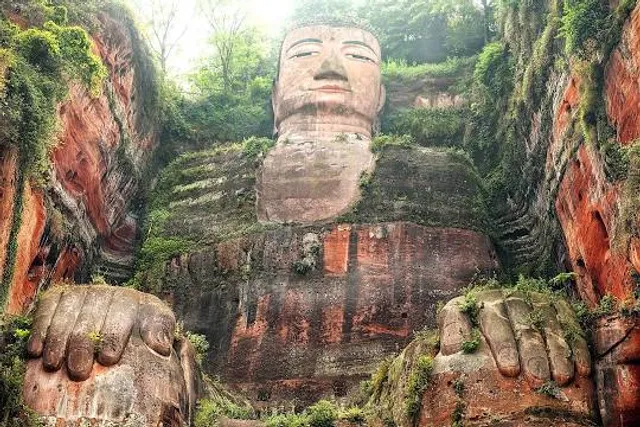
Be prepared that there is a lot of stairs from the entrance to the top of the hill (where you can see the head of statue from close distance). After this you will go down on a very narrow staircase to the bottom of the statue. The viewing platform at the bottom doesn't offer so good view as the boat and probably you won't spend long time there. The experience getting there and seeing from close distance all the parts from the statue and the other cravings in the walls is definitely the thing to remember.
After the platform there is another (wider) staircase going up the hill to the top, so be aware there will be a lot of stairs.
We took a walk in the park after this, but i dont think it was worth doing if you dont have enough time on your visit. There isnt much to see. The fishing village nearby was turned in to souvenirs village. There will be a lot of people harassing you to sell you things and follow you around even if they know you dont understand them. I dont recommend doing this part of the park.
If you are going back to Chengdu, make sure you get tickets early if you plan to leave in the evening. There were available tickets at the station after lunch time but the queue was very...
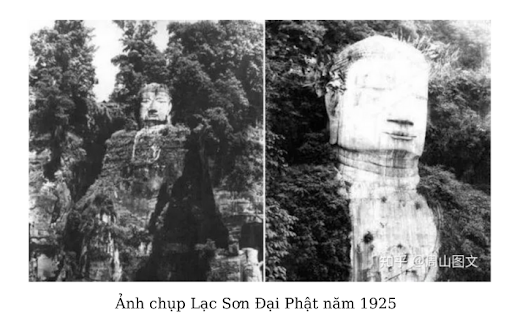
Read moreErection of Statue Calms Turbulent Waters below * TA It was with great anticipation that our guided group of 14 got into the private coach on a clear morning on 4th June 2018. We were accompanied by an English speaking guide. During the 170 km – 2 ½ hour journey, from Chengdu to Leshan, the guide explained the history, significance and the importance of the Leshan Giant Buddha statue now protected as a UNESCO World Heritage. When we arrived at the boat pier it was around 1130 hours. From here we got into a steamship that took us along the river and stopped for about 15 minutes in front of the 71 metre tall colossal Buddha statue in seated posture. Although we took the boat, we could see many others, looking tiny next to the colossal statue, walking along on the curved path by the statue, up towards the top of the mountain. The seated Buddha appeared to be looking down at us through half closed eyes. We were all amazed at the beauty and the serenity of the statue sculpted and moulded out of the reddish rock face. If I were to visit again, I would take a speed boat rather than this large steamboat and time my visit either earlier in the morning or later in the evening so that the statue would be better lit by the sun for better photographic opportunities. A speedboat could take you further away to give you a better or a different perspective of the statue. During the ancient times, the waters passing through the confluence of the three rivers nearby were turbulent, constantly plaguing passing boats causing many accidents. A monk commenced the building of the statue in 713 AD, believing that a statue overlooking the confluence of the three rivers below, would appease the river gods, by calming the river. Although there were a number of stoppages, the work continued for three generations and completed in 803 AD after 90 years. The large quantity of stone extracted from the face of the cliff got deposited in the river, altering the flow pattern of the river and making it safe for boats. An ingenious drainage system in the design prevents stagnant water in/on the statue directing rain water safely away leading to preservation and longevity of this largest stone statue of...
Read moreThe Leshan Giant Buddha, located in Sichuan Province, China, is a monumental statue carved out of a cliff face. Construction of this colossal figure began in 713 AD during the Tang Dynasty and was completed in 803 AD. The initiative was taken by a Chinese monk named Haitong, who hoped that the Buddha would calm the turbulent waters that plagued the shipping vessels along the river.
The statue stands 71 meters (233 feet) tall and depicts Maitreya, the Buddha of the future. The Leshan Giant Buddha is the largest stone Buddha in the world and by far the tallest pre-modern statue. The work involved thousands of laborers over several decades, showcasing the extraordinary craftsmanship and engineering skills of ancient Chinese artisans.
Haitong's dedication was so profound that he is said to have gouged out his own eyes to demonstrate his sincerity and devotion when funding for the project was at risk. The completion of the statue brought prosperity to the region as the waters became calmer, benefiting the local fishermen and traders.
Over the centuries, the Leshan Giant Buddha has withstood natural disasters and human conflicts, remaining a symbol of resilience and spiritual significance. In 1996, it was listed as a UNESCO World Heritage Site, attracting millions of visitors annually who marvel at its grandeur and historical importance. The Leshan Giant Buddha remains a testament to the religious devotion, artistic achievement, and architectural prowess of...
Read more