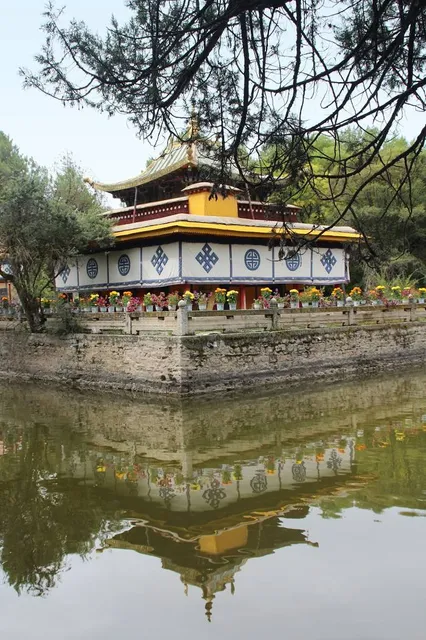
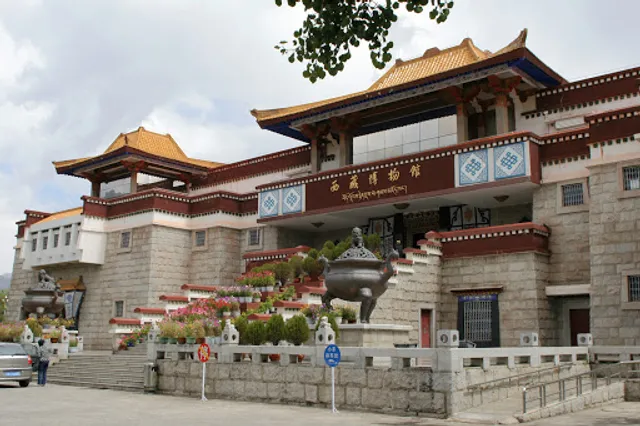
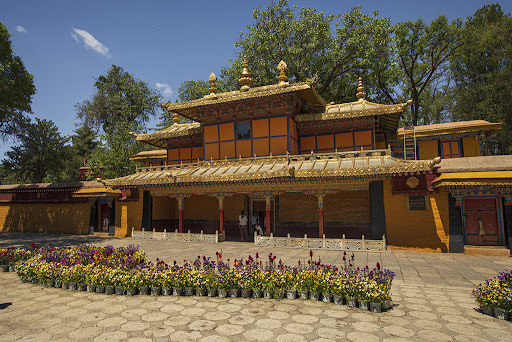
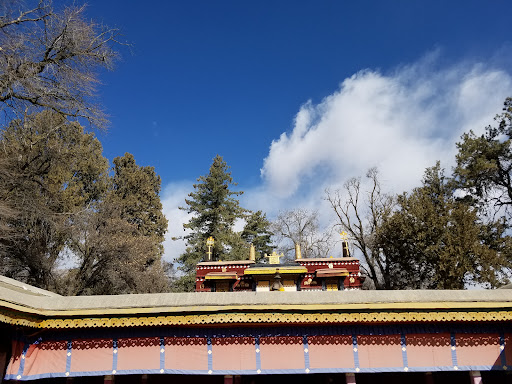
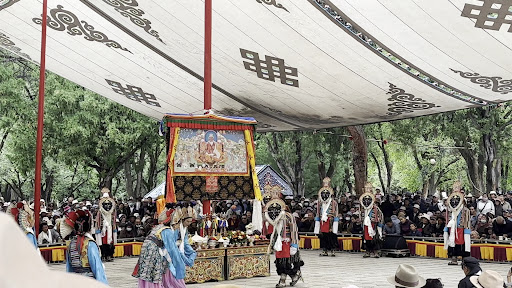
PALACE IN THE CENTRE OF TREASURE GARDEN! Our group of 14 visited the UNESCO World Heritage site, Norbulingka Palace, on 9th June 2018. After purchasing the tickets (60 CNY per person), we passed through the security to enter the vast garden surrounding the Palace. Our guide told us that this park, at 3650 metre height, is the world’s highest horticultural garden. Norbu-lingka in Tibetan language literally translates to Treasure-Garden. At the entry gate, on either side were two beautifully sculpted “snow lions”, with the one on the left cradling a cub. After entry, we had a very pleasant walk through the well conserved and maintained garden with various flowers – marigolds, Chrysanthemums, petunias, roses and many more both planted and also in pots. Bamboo trees were on either side of the access roads. There were also fruit trees, some of which apparently do not ripen in the Lhasa climate. The first place we visited was “Kalsang Podrang” meaning “Kalsang Palace” built by the 7th Dalai Lama in the mid-18th century. This three storeyed palace consisted of an assembly hall on the first floor, Buddha statues and other breath-takingly beautiful murals on the second floor and living rooms on the top floor. No photographs were permitted beyond the entry door. Next stop was at Khamsum Zilnon, the two storeyed pavilion. In front of the pavilion was a large quadrangle used for opera and theatrical performances. The Dalai Lamas, during their reign, are supposed to have watched and enjoyed these performances from the balcony on the second floor. Our final stop was at “Migyur Phodrang”, the “Eternal Palace”. This had been built by the exiled Dalai Lama in 1954. Though the building is relatively new its architecture resembles Tibetan appearance and style. This palace too has attractive and superbly done murals of Buddha and related stories. The exiled Dalai Lama’s conference room, meditation room, bedroom and other living areas are also on display to the public. I feel so sad that I was not permitted to get a few photographs so that I could remember these murals whenever I look at my...
Read moreThe summer palace.
Children are free. Adults pay less than ¥100 each. The ticket is beautiful.
It is a beautiful place to visit and should be on anyone's list when they come to lhasa.
There are many buildings and each is beautiful.
The grounds are beautiful and there are many nomads and other Tibetan people walking around to visit each of the temples and buildings.
We spent two hours here and it was serene.
Only one negative comment is that the toilet is awful and so plan your trip properly and aim at not needing to use the...
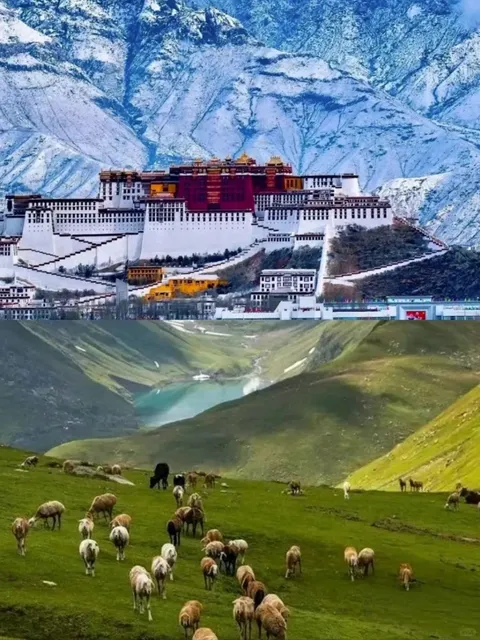
Read moreDer Norbulingka Palast hat eine ähnliche Historie wie der Potala Palast. Er wurde ursprünglich als Sommerresidenz für den achten Dalai Lama geplant, aber erst zu Zeiten des 13. und 14. Religionsführers tatsächlich auch als solche genutzt. Fortwährende architektonische Veränderungen und Erweiterungen, teilweise Zerstörung und Wiederaufbau gehören zur Geschichte von Norbulingka.
Seit der Dalai Lama den Palast als Sommerresidenz nutzte, wurde der Potala als 'Winterpalast' bezeichnet. In einer großen Prozession zog der Dalai Lama mit seiner Gefolgschaft jedes Frühjahr von seiner Winterresidenz in den 'Juwelengarten', wie Norbulingka übersetzt heißt. Hier befand sich der 14. Dalai Lama im Jahre 1959, als die chinesische Armee Tibets Hauptstadt Lhasa angriff. Von Norbulingka rettete er sich durch eine nächtliche Flucht nach Indien. 3.000 Leibwächter geleiteten ihn dabei zu seinem Schutz vor den nahenden chinesischen Truppen.
Der Name geht sicherlich auf die herrlichen Parkanlagen zurück, die heute mit einer Fläche von 36 Hektar öffentlich zugänglich sind, neben dem Norbulingka Museum. Museum und Park stellen eine der attraktivsten Sehenswürdigkeiten Tibets dar. Zusammen mit dem Potala Palast zählt der Sommerpalast zum UNESCO Welterbe. Der Park ist der höchstgelegene der Welt. Die Anlage gliedert sich in drei Teile, den Vorderhof, den Palast und den Waldteil. An fünf Stellen sind die weitläufigen Bauwerke verteilt, darunter eine Theaterbühne, auf der noch heute jeden Sommer tibetische Stücke...
Read more