HTML SitemapExplore
logo
Find Things to DoFind The Best Restaurants

Longmen Grottoes — Attraction in Luoyang

Name
Longmen Grottoes
Description
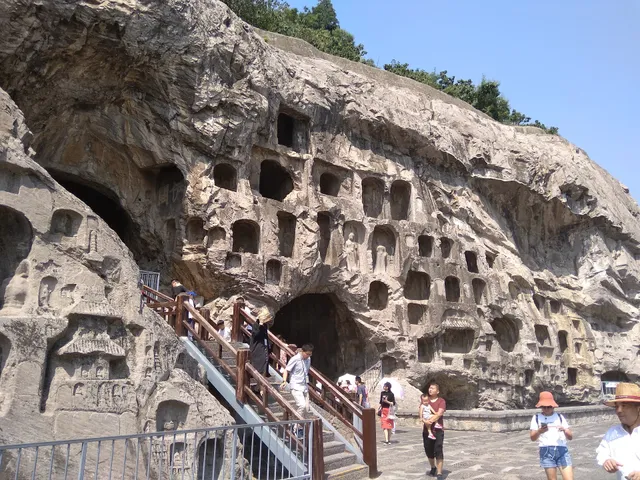
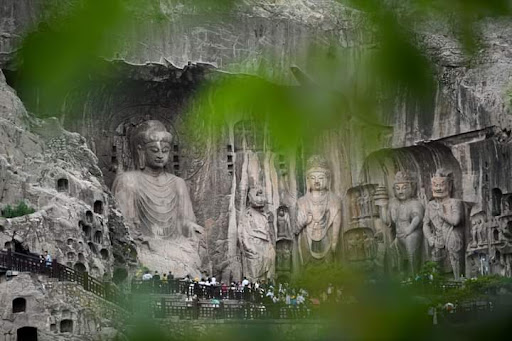
The Longmen Grottoes or Longmen Caves are some of the finest examples of Chinese Buddhist art. Housing tens of thousands of statues of Shakyamuni Buddha and his disciples, they are located 12 kilometres south of present-day Luoyang in Henan province, China.
Nearby attractions
万佛洞
HF4G+6P2, Luolong District, Luoyang, Henan, China, 471023
Nearby restaurants
Longmen Hotel
HF7G+6QM, Longmen Middle St, Luolong District, Luoyang, Henan, China, 471023
Nearby hotels
Related posts
Keywords
Longmen Grottoes tourism.Longmen Grottoes hotels.Longmen Grottoes bed and breakfast. flights to Longmen Grottoes.Longmen Grottoes attractions.Longmen Grottoes restaurants.Longmen Grottoes travel.Longmen Grottoes travel guide.Longmen Grottoes travel blog.Longmen Grottoes pictures.Longmen Grottoes photos.Longmen Grottoes travel tips.Longmen Grottoes maps.Longmen Grottoes things to do.
Longmen Grottoes things to do, attractions, restaurants, events info and trip planning
Longmen Grottoes
ChinaHenanLuoyangLongmen Grottoes

Basic Info

Longmen Grottoes

13 Long Men Zhong Jie, Luolong District, Luoyang, Henan, China, 471023
4.6(939)
Open 24 hours
Save
spot

Ratings & Description

Info

The Longmen Grottoes or Longmen Caves are some of the finest examples of Chinese Buddhist art. Housing tens of thousands of statues of Shakyamuni Buddha and his disciples, they are located 12 kilometres south of present-day Luoyang in Henan province, China.

Cultural
Scenic
Family friendly
Accessibility
attractions: 万佛洞, restaurants: Longmen Hotel
logoLearn more insights from Wanderboat AI.
Phone
+86 379 6598 0972

Plan your stay

hotel
Pet-friendly Hotels in Luoyang
Find a cozy hotel nearby and make it a full experience.
hotel
Affordable Hotels in Luoyang
Find a cozy hotel nearby and make it a full experience.
hotel
The Coolest Hotels You Haven't Heard Of (Yet)
Find a cozy hotel nearby and make it a full experience.
hotel
Trending Stays Worth the Hype in Luoyang
Find a cozy hotel nearby and make it a full experience.

Reviews

Nearby attractions of Longmen Grottoes

万佛洞

万佛洞

万佛洞

4.4

(15)

Open 24 hours
Click for details

Nearby restaurants of Longmen Grottoes

Longmen Hotel

Longmen Hotel

Longmen Hotel

5.0

(1)

Click for details
Get the Appoverlay
Get the AppOne tap to find yournext favorite spots!
Wanderboat LogoWanderboat

Your everyday Al companion for getaway ideas

CompanyAbout Us
InformationAI Trip PlannerSitemap
SocialXInstagramTiktokLinkedin
LegalTerms of ServicePrivacy Policy

Get the app

© 2025 Wanderboat. All rights reserved.
logo

Reviews of Longmen Grottoes

4.6
(939)
avatar
5.0
1y

The Longmen Grottoes, located near Luoyang in Henan Province, China, are one of the most remarkable examples of Chinese Buddhist art. Carved into the limestone cliffs along the banks of the Yi River, these grottoes house tens of thousands of statues, stupas, and inscriptions that span several centuries, beginning in the late Northern Wei dynasty (around 493 CE) and continuing through the Tang Dynasty. The sheer scale of the site and the intricacy of its artwork make it a UNESCO World Heritage Site, highlighting its cultural and historical significance.

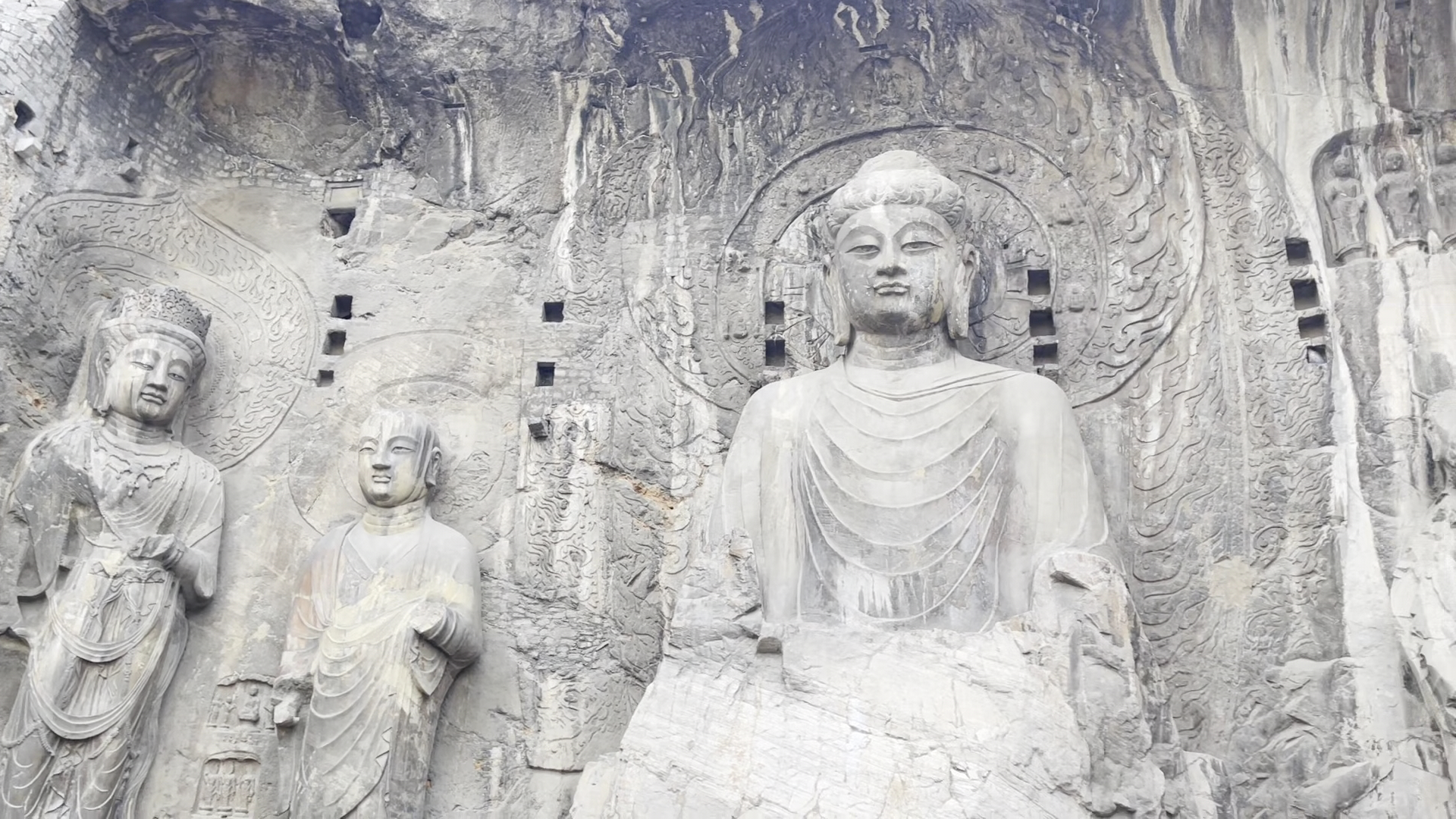
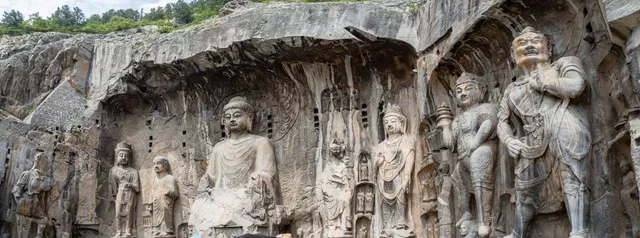
Artistic and Religious Significance The Longmen Grottoes are famous for their stunning Buddhist sculptures, which reflect the development of Buddhist art in China. Many of the statues portray serene Buddhas, bodhisattvas, and guardian figures, some as small as a few centimeters, while others reach up to 17 meters in height. Among the most famous is the Vairocana Buddha in the Fengxian Temple, a giant statue that exudes both peacefulness and grandeur, emblematic of the sophistication of Tang Dynasty artistry.

The carvings also serve as a chronicle of Buddhist influence on Chinese culture, blending native artistic traditions with elements from India and Central Asia, as Buddhism spread along the Silk Road. The thousands of inscriptions and calligraphic texts inscribed into the grottoes offer valuable insights into the religious devotion and craftsmanship of their creators, as well as the patronage of emperors and wealthy families.

Historical and Cultural Value The Longmen Grottoes are not just an artistic achievement but a historical archive that documents the social, political, and religious history of ancient China. Over 1,300 caves and niches contain an estimated 100,000 statues, ranging from tiny figurines to monumental works, alongside nearly 2,800 inscriptions, making the site a treasure trove of cultural heritage.

The grottoes also provide a glimpse into the evolving styles of Chinese Buddhist art. Earlier works display a more Indian or Central Asian influence, while later Tang Dynasty sculptures showcase a distinctly Chinese aesthetic, with softer, more naturalistic figures. The sheer number of Buddha images also reflects the growing importance of Buddhism in China during this period.

Conservation and Challenges While the Longmen Grottoes remain one of the most well-preserved examples of ancient Chinese sculpture, they face challenges related to environmental degradation and tourism. Weathering, pollution, and human impact have eroded some of the carvings over time, leading to ongoing conservation efforts to protect the site for future generations.

Conclusion Visiting the Longmen Grottoes is an awe-inspiring experience that offers a deep connection to the spiritual and artistic heritage of China. Its breathtaking scale, combined with the intricacy of its carvings, makes it one of the world’s great cultural treasures. As both a religious and historical site, it holds a unique place in the history of Chinese art and Buddhism, symbolizing the rich interplay of spirituality, politics, and culture over more than...

   Read more

avatar
5.0
2y

The Longmen Grottoes, located in Luoyang, China, are indeed a remarkable site of cultural and historical significance. They are one of China's most renowned Buddhist art treasures and have been recognized as a UNESCO World Heritage site since 2000. The grottoes were carved into the limestone cliffs over a span of several centuries, from 386 to 1130 during the Northern Wei, Tang, and Song dynasties.

The site stretches for about 1 kilometer along the banks of the Yi River, which divides the grottoes into two sections: the east hill and the west hill. The eastern hill has the majority of the caves, while the western hill features fewer but larger caves. The grottoes are home to approximately 2,345 caves, niches, and rock-cut sculptures, with more than 100,000 Buddhist statues and images.

The statues found in the Longmen Grottoes are varied in size and style. They range from tiny figurines, measuring only 25 millimeters, to colossal statues towering at 17 meters in height. These sculptures exhibit the artistic achievements of different dynasties and reflect the evolution of Buddhist art in China.

The Longmen Grottoes are not only significant for their artistic and religious value but also serve as a historical record of the social, political, and cultural changes that occurred during the time of their creation. They provide insights into the spiritual beliefs, patronage of the ruling elite, and the interplay between Buddhism and other religious traditions in ancient China.

Visiting the Longmen Grottoes allows one to marvel at the intricate carvings, explore the caves, and appreciate the cultural legacy they represent. The site remains an important pilgrimage destination for Buddhists and attracts tourists from around the world who are captivated by its historical and artistic...

   Read more
avatar
5.0
1y

The Longmen Grottoes, located on bothsides of the Yi River to the south of the ancient capital of Luoyang, Henan province, comprise more than 2,300 caves and niches carved into the steep limestone cliffs over a 1km long stretch. These contain almost 110,000 Buddhist stone statues, more than 60 stupas and 2,800 inscriptions carved on steles. Luoyang was the capital during the late Northern Wei Dynasty and early Tang Dynasty, and the most intensive period of carving dates from the end of the 5th century to the mid-8th century. The earliest caves to be carved in the late 5th and early 6th centuries in the West Hill cliffs include Guyangdong and the Three Binyang Caves, all containing large Buddha figures. Yaofangdong Cave contains 140 inscription recording treatments for various diseases and illnesses. Work on the sculpture in this cave continued over a 150 year period, illustrating changes in artistic style. The sculptural styles discovered in the Buddhist caves of the Tang Dynasty in the 7th and 8th centuries, particularly the giant sculptures in the Fengxiansi Cave are the most fully representative examples of the Royal Cave Temples’ art, which has been imitated by artists from various regions. The two sculptural art styles, the earlier “Central China Style” and the later “Great Tang Style” had great influence within the country and throughout the world, and have made important contributions to the development of the sculptural arts in other...

   Read more
Page 1 of 7
Previous
Next

Posts

Nguyễn NhânNguyễn Nhân
The Longmen Grottoes, located near Luoyang in Henan Province, China, are one of the most remarkable examples of Chinese Buddhist art. Carved into the limestone cliffs along the banks of the Yi River, these grottoes house tens of thousands of statues, stupas, and inscriptions that span several centuries, beginning in the late Northern Wei dynasty (around 493 CE) and continuing through the Tang Dynasty. The sheer scale of the site and the intricacy of its artwork make it a UNESCO World Heritage Site, highlighting its cultural and historical significance. Artistic and Religious Significance The Longmen Grottoes are famous for their stunning Buddhist sculptures, which reflect the development of Buddhist art in China. Many of the statues portray serene Buddhas, bodhisattvas, and guardian figures, some as small as a few centimeters, while others reach up to 17 meters in height. Among the most famous is the Vairocana Buddha in the Fengxian Temple, a giant statue that exudes both peacefulness and grandeur, emblematic of the sophistication of Tang Dynasty artistry. The carvings also serve as a chronicle of Buddhist influence on Chinese culture, blending native artistic traditions with elements from India and Central Asia, as Buddhism spread along the Silk Road. The thousands of inscriptions and calligraphic texts inscribed into the grottoes offer valuable insights into the religious devotion and craftsmanship of their creators, as well as the patronage of emperors and wealthy families. Historical and Cultural Value The Longmen Grottoes are not just an artistic achievement but a historical archive that documents the social, political, and religious history of ancient China. Over 1,300 caves and niches contain an estimated 100,000 statues, ranging from tiny figurines to monumental works, alongside nearly 2,800 inscriptions, making the site a treasure trove of cultural heritage. The grottoes also provide a glimpse into the evolving styles of Chinese Buddhist art. Earlier works display a more Indian or Central Asian influence, while later Tang Dynasty sculptures showcase a distinctly Chinese aesthetic, with softer, more naturalistic figures. The sheer number of Buddha images also reflects the growing importance of Buddhism in China during this period. Conservation and Challenges While the Longmen Grottoes remain one of the most well-preserved examples of ancient Chinese sculpture, they face challenges related to environmental degradation and tourism. Weathering, pollution, and human impact have eroded some of the carvings over time, leading to ongoing conservation efforts to protect the site for future generations. Conclusion Visiting the Longmen Grottoes is an awe-inspiring experience that offers a deep connection to the spiritual and artistic heritage of China. Its breathtaking scale, combined with the intricacy of its carvings, makes it one of the world’s great cultural treasures. As both a religious and historical site, it holds a unique place in the history of Chinese art and Buddhism, symbolizing the rich interplay of spirituality, politics, and culture over more than a millennium.
MD. Roman MunshiMD. Roman Munshi
The Longmen Grottoes, located in Luoyang, China, are indeed a remarkable site of cultural and historical significance. They are one of China's most renowned Buddhist art treasures and have been recognized as a UNESCO World Heritage site since 2000. The grottoes were carved into the limestone cliffs over a span of several centuries, from 386 to 1130 during the Northern Wei, Tang, and Song dynasties. The site stretches for about 1 kilometer along the banks of the Yi River, which divides the grottoes into two sections: the east hill and the west hill. The eastern hill has the majority of the caves, while the western hill features fewer but larger caves. The grottoes are home to approximately 2,345 caves, niches, and rock-cut sculptures, with more than 100,000 Buddhist statues and images. The statues found in the Longmen Grottoes are varied in size and style. They range from tiny figurines, measuring only 25 millimeters, to colossal statues towering at 17 meters in height. These sculptures exhibit the artistic achievements of different dynasties and reflect the evolution of Buddhist art in China. The Longmen Grottoes are not only significant for their artistic and religious value but also serve as a historical record of the social, political, and cultural changes that occurred during the time of their creation. They provide insights into the spiritual beliefs, patronage of the ruling elite, and the interplay between Buddhism and other religious traditions in ancient China. Visiting the Longmen Grottoes allows one to marvel at the intricate carvings, explore the caves, and appreciate the cultural legacy they represent. The site remains an important pilgrimage destination for Buddhists and attracts tourists from around the world who are captivated by its historical and artistic significance.
Gunnar CayaGunnar Caya
Saying the Longmen Grottoes are a must see if you're in Luoyang is a bit silly, because chances are the grottoes are the whole reason you came to Luoyang in the first place (unless maybe you were using Luoyang as a base to see Mount Song / Shaolin Temple). But to take it a step further, these grottoes are so fantastic that they are a must see if you are in Central or Northern China. Carved into the side of a mountain are countless Buddhist statutes, some of which are 1600 years old, each with incredible levels of detail and intricacy. Ranging in size from Buddhas the size of your thumb to some carvings many meters high, the scale of these carvings (both in size and sheer numbers) cannot be described in words. I can't even imagine how much more impressive they were before vandals / unscrupulous treasure hunters chopped off heads or removed entire statues, or before some were defaced in the cultural revolution. There is quite a bit of walking and stairs here and in the summer this place is a furnace, so paying the 10 kuai each way for the shuttle bus from the tourist center to save a total of 4 km of walking is probably worth the price (although I can say from experience it is more than doable without the shuttle bus). The crowds here can be awful, I'm not going to pretend otherwise, but even with the hordes of Chinese tourists this is absolutely one of my favorite places in China and I would wholeheartedly recommend it to anyone.
See more posts
See more posts
hotel
Find your stay

Pet-friendly Hotels in Luoyang

Find a cozy hotel nearby and make it a full experience.

The Longmen Grottoes, located near Luoyang in Henan Province, China, are one of the most remarkable examples of Chinese Buddhist art. Carved into the limestone cliffs along the banks of the Yi River, these grottoes house tens of thousands of statues, stupas, and inscriptions that span several centuries, beginning in the late Northern Wei dynasty (around 493 CE) and continuing through the Tang Dynasty. The sheer scale of the site and the intricacy of its artwork make it a UNESCO World Heritage Site, highlighting its cultural and historical significance. Artistic and Religious Significance The Longmen Grottoes are famous for their stunning Buddhist sculptures, which reflect the development of Buddhist art in China. Many of the statues portray serene Buddhas, bodhisattvas, and guardian figures, some as small as a few centimeters, while others reach up to 17 meters in height. Among the most famous is the Vairocana Buddha in the Fengxian Temple, a giant statue that exudes both peacefulness and grandeur, emblematic of the sophistication of Tang Dynasty artistry. The carvings also serve as a chronicle of Buddhist influence on Chinese culture, blending native artistic traditions with elements from India and Central Asia, as Buddhism spread along the Silk Road. The thousands of inscriptions and calligraphic texts inscribed into the grottoes offer valuable insights into the religious devotion and craftsmanship of their creators, as well as the patronage of emperors and wealthy families. Historical and Cultural Value The Longmen Grottoes are not just an artistic achievement but a historical archive that documents the social, political, and religious history of ancient China. Over 1,300 caves and niches contain an estimated 100,000 statues, ranging from tiny figurines to monumental works, alongside nearly 2,800 inscriptions, making the site a treasure trove of cultural heritage. The grottoes also provide a glimpse into the evolving styles of Chinese Buddhist art. Earlier works display a more Indian or Central Asian influence, while later Tang Dynasty sculptures showcase a distinctly Chinese aesthetic, with softer, more naturalistic figures. The sheer number of Buddha images also reflects the growing importance of Buddhism in China during this period. Conservation and Challenges While the Longmen Grottoes remain one of the most well-preserved examples of ancient Chinese sculpture, they face challenges related to environmental degradation and tourism. Weathering, pollution, and human impact have eroded some of the carvings over time, leading to ongoing conservation efforts to protect the site for future generations. Conclusion Visiting the Longmen Grottoes is an awe-inspiring experience that offers a deep connection to the spiritual and artistic heritage of China. Its breathtaking scale, combined with the intricacy of its carvings, makes it one of the world’s great cultural treasures. As both a religious and historical site, it holds a unique place in the history of Chinese art and Buddhism, symbolizing the rich interplay of spirituality, politics, and culture over more than a millennium.
Nguyễn Nhân

Nguyễn Nhân

hotel
Find your stay

Affordable Hotels in Luoyang

Find a cozy hotel nearby and make it a full experience.

Get the Appoverlay
Get the AppOne tap to find yournext favorite spots!
The Longmen Grottoes, located in Luoyang, China, are indeed a remarkable site of cultural and historical significance. They are one of China's most renowned Buddhist art treasures and have been recognized as a UNESCO World Heritage site since 2000. The grottoes were carved into the limestone cliffs over a span of several centuries, from 386 to 1130 during the Northern Wei, Tang, and Song dynasties. The site stretches for about 1 kilometer along the banks of the Yi River, which divides the grottoes into two sections: the east hill and the west hill. The eastern hill has the majority of the caves, while the western hill features fewer but larger caves. The grottoes are home to approximately 2,345 caves, niches, and rock-cut sculptures, with more than 100,000 Buddhist statues and images. The statues found in the Longmen Grottoes are varied in size and style. They range from tiny figurines, measuring only 25 millimeters, to colossal statues towering at 17 meters in height. These sculptures exhibit the artistic achievements of different dynasties and reflect the evolution of Buddhist art in China. The Longmen Grottoes are not only significant for their artistic and religious value but also serve as a historical record of the social, political, and cultural changes that occurred during the time of their creation. They provide insights into the spiritual beliefs, patronage of the ruling elite, and the interplay between Buddhism and other religious traditions in ancient China. Visiting the Longmen Grottoes allows one to marvel at the intricate carvings, explore the caves, and appreciate the cultural legacy they represent. The site remains an important pilgrimage destination for Buddhists and attracts tourists from around the world who are captivated by its historical and artistic significance.
MD. Roman Munshi

MD. Roman Munshi

hotel
Find your stay

The Coolest Hotels You Haven't Heard Of (Yet)

Find a cozy hotel nearby and make it a full experience.

hotel
Find your stay

Trending Stays Worth the Hype in Luoyang

Find a cozy hotel nearby and make it a full experience.

Saying the Longmen Grottoes are a must see if you're in Luoyang is a bit silly, because chances are the grottoes are the whole reason you came to Luoyang in the first place (unless maybe you were using Luoyang as a base to see Mount Song / Shaolin Temple). But to take it a step further, these grottoes are so fantastic that they are a must see if you are in Central or Northern China. Carved into the side of a mountain are countless Buddhist statutes, some of which are 1600 years old, each with incredible levels of detail and intricacy. Ranging in size from Buddhas the size of your thumb to some carvings many meters high, the scale of these carvings (both in size and sheer numbers) cannot be described in words. I can't even imagine how much more impressive they were before vandals / unscrupulous treasure hunters chopped off heads or removed entire statues, or before some were defaced in the cultural revolution. There is quite a bit of walking and stairs here and in the summer this place is a furnace, so paying the 10 kuai each way for the shuttle bus from the tourist center to save a total of 4 km of walking is probably worth the price (although I can say from experience it is more than doable without the shuttle bus). The crowds here can be awful, I'm not going to pretend otherwise, but even with the hordes of Chinese tourists this is absolutely one of my favorite places in China and I would wholeheartedly recommend it to anyone.
Gunnar Caya

Gunnar Caya

See more posts
See more posts