HTML SitemapExplore
logo
Find Things to DoFind The Best Restaurants

Maijishan Grottoes — Attraction in Tianshui

Name
Maijishan Grottoes
Description
Nearby attractions
Nearby restaurants
Yanyuge Restaurant
82X5+HQG, Maiji District, Tianshui, Gansu, China, 741026
Nearby hotels
Related posts
Keywords
Maijishan Grottoes tourism.Maijishan Grottoes hotels.Maijishan Grottoes bed and breakfast. flights to Maijishan Grottoes.Maijishan Grottoes attractions.Maijishan Grottoes restaurants.Maijishan Grottoes travel.Maijishan Grottoes travel guide.Maijishan Grottoes travel blog.Maijishan Grottoes pictures.Maijishan Grottoes photos.Maijishan Grottoes travel tips.Maijishan Grottoes maps.Maijishan Grottoes things to do.
Maijishan Grottoes things to do, attractions, restaurants, events info and trip planning
Maijishan Grottoes
ChinaGansuTianshuiMaijishan Grottoes

Basic Info

Maijishan Grottoes

Maiji District, Tianshui, China, 741026
4.7(96)
Open 24 hours
Save
spot

Ratings & Description

Info

Cultural
Scenic
Adventure
Off the beaten path
attractions: , restaurants: Yanyuge Restaurant
logoLearn more insights from Wanderboat AI.
Phone
+86 938 273 1407

Plan your stay

hotel
Pet-friendly Hotels in Tianshui
Find a cozy hotel nearby and make it a full experience.
hotel
Affordable Hotels in Tianshui
Find a cozy hotel nearby and make it a full experience.
hotel
The Coolest Hotels You Haven't Heard Of (Yet)
Find a cozy hotel nearby and make it a full experience.
hotel
Trending Stays Worth the Hype in Tianshui
Find a cozy hotel nearby and make it a full experience.

Reviews

Nearby restaurants of Maijishan Grottoes

Yanyuge Restaurant

Yanyuge Restaurant

Yanyuge Restaurant

5.0

(1)

Click for details
Get the Appoverlay
Get the AppOne tap to find yournext favorite spots!
Wanderboat LogoWanderboat

Your everyday Al companion for getaway ideas

CompanyAbout Us
InformationAI Trip PlannerSitemap
SocialXInstagramTiktokLinkedin
LegalTerms of ServicePrivacy Policy

Get the app

© 2025 Wanderboat. All rights reserved.
logo

Reviews of Maijishan Grottoes

4.7
(96)
avatar
4.0
35w

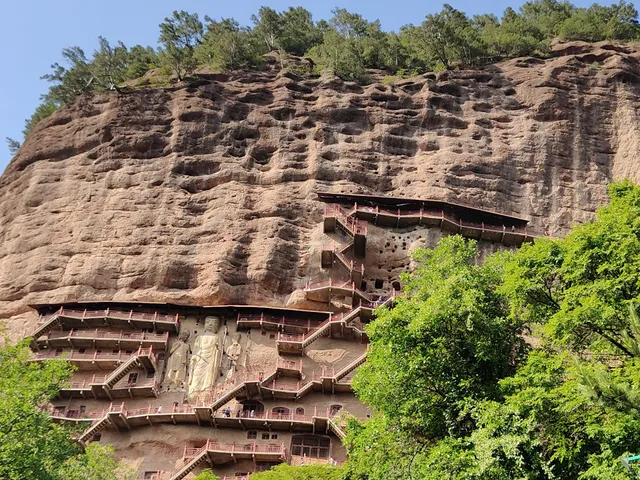
The Maijishan Grottoes, located in the Maiji District of Tianshui, Gansu Province, China, stand as one of the most remarkable examples of Buddhist rock-cut architecture in the world.

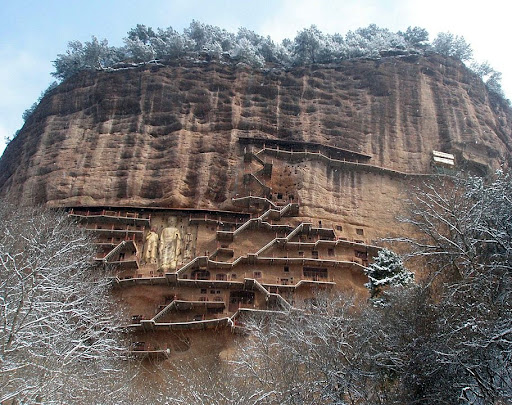
Carved into the soft purplish-red sandstone cliffs of Maijishan, or "Wheat Stack Mountain," these grottoes rise dramatically 142 meters above the lush Xiaolongshan forest.

Their history spans over 1,600 years, beginning during the Later Qin era (384–417 CE), and they continue to captivate visitors with their stunning artistry and historical significance.

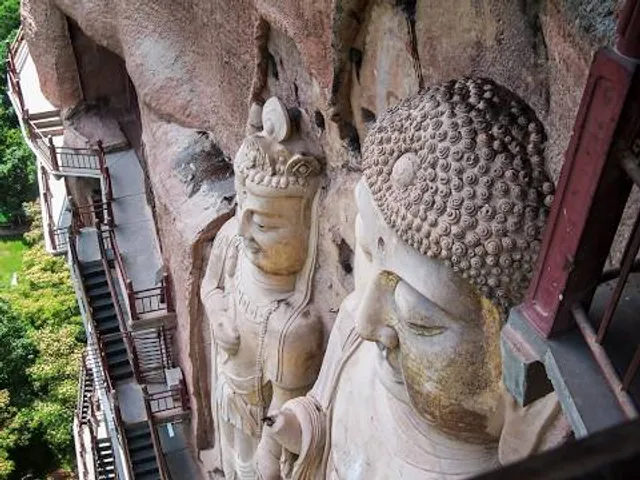
The site comprises 194 caves adorned with over 7,200 Buddhist sculptures and more than 1,000 square meters of murals. These works reflect a blend of artistic influences from India, Central Asia, and native Chinese traditions, charting the evolution of Buddhist art in China.

The earliest sculptures exhibit Indian and Central Asian features, likely brought by monks and artisans traveling along the Silk Road. Over time, these influences gave way to distinctly Chinese styles during later dynasties such as the Song and Ming.

The grottoes are divided into two sections: caves #1–50 on the western cliff face and caves #51–191 on the eastern side. Each cave holds unique treasures, ranging from serene seated Buddhas to intricate depictions of bodhisattvas and lay worshippers.

The most common figure is Amitābha Buddha, associated with the Pure Land sect of Mahayana Buddhism. The sculptures are primarily made of clay reinforced with binding agents since the sandstone itself was too soft for direct carving.

Construction at Maijishan was not a single event but a continuous process spanning numerous dynasties. The Northern Wei (386–534 CE), Western Wei (535–556 CE), and Northern Zhou (557–581 CE) periods were particularly active in expanding and embellishing the grottoes. Later dynasties like the Tang, Song, and Qing also contributed to their restoration and preservation. This long history has made Maijishan a living repository of Chinese Buddhist art and architecture.

The grottoes are also steeped in legend. According to historical texts, two monks named Tanhung and Xuangao established a monastic community at Maijishan in the early 5th century CE. Over time, their settlement grew to include hundreds of disciples. While much about this early community remains speculative due to limited archaeological evidence, its story adds a layer of mystique to this sacred site.

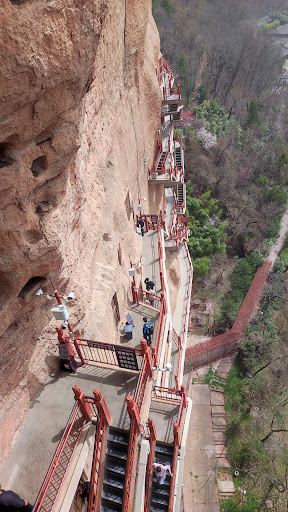
Today, visitors can explore Maijishan via a network of walkways that cling to the cliff face, offering breathtaking views of both the sculptures and the surrounding landscape. The site is part of the UNESCO World Heritage-listed "Silk Roads: The Routes Network of Chang'an-Tianshan Corridor," highlighting its historical importance as a cultural crossroads.

The Maijishan Grottoes are not just an architectural marvel but also a testament to China's rich spiritual and artistic heritage. They continue to inspire awe among pilgrims, historians, and tourists alike, making them an essential destination for anyone interested in ancient art or Buddhism's journey...

   Read more

avatar
5.0
1y

A far walk from the ticket booth to this supposedly well preserved mountains, passing through many local Souvenirs stalls, finally we get a closed up view Maijishan Grottoes.

Our local guide told me these Grottoes holds some famous Buddhist rock carvings along the Silk Road.

Almost 194 grottoes connected by a series of constructed walkway clinging the to the cliff, rises in a steep ascent.

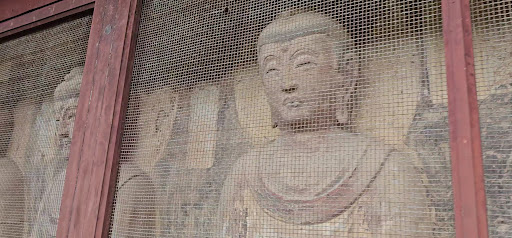
Could see that some pigment still stuck on to many of the statues, these statues seems to be made of clay rather than being hewn from rock. Some could not be seen clearly as it is being boxed up ,protected by grilled mesh with very little light to take a good pic of it.

As we climbed higher , we noticed the more impressive sculptures are displayed.

Believe it or not, we have indeed climbed up approximately 34 flights of catwalks & steep stairways to browse through almost 7200 statues !!!!

Indeed a valuable collection of clay Buddha...

   Read more
avatar
4.0
20w

It is worth coming here, really cool to see the grottos carved into the rock face like that. However the lines were out of control, it took me 2 1/2 hours to get to the point were you could even visit them. Unfortunately there’s only set route essentially trapping everyone to move at a shuffle pace. If you want to see this, I thought it was worth it. Bring patience. From the train station go to the basement there’s a picture of the grottos with an arrow that’s the bus. It takes you to the tourist center which is pretty close but from there you can buy a ticket which includes another bus that takes you 3km away. Then you need to take an electric tram thing to the base then walk up the hill. It’s a lot of stair so if you’re not in good shape don’t fool yourself it’s basically all stairs, nothing to crazy but...

   Read more
Page 1 of 7
Previous
Next

Posts

A J BashhaA J Bashha
The Maijishan Grottoes, located in the Maiji District of Tianshui, Gansu Province, China, stand as one of the most remarkable examples of Buddhist rock-cut architecture in the world. Carved into the soft purplish-red sandstone cliffs of Maijishan, or "Wheat Stack Mountain," these grottoes rise dramatically 142 meters above the lush Xiaolongshan forest. Their history spans over 1,600 years, beginning during the Later Qin era (384–417 CE), and they continue to captivate visitors with their stunning artistry and historical significance. The site comprises 194 caves adorned with over 7,200 Buddhist sculptures and more than 1,000 square meters of murals. These works reflect a blend of artistic influences from India, Central Asia, and native Chinese traditions, charting the evolution of Buddhist art in China. The earliest sculptures exhibit Indian and Central Asian features, likely brought by monks and artisans traveling along the Silk Road. Over time, these influences gave way to distinctly Chinese styles during later dynasties such as the Song and Ming. The grottoes are divided into two sections: caves #1–50 on the western cliff face and caves #51–191 on the eastern side. Each cave holds unique treasures, ranging from serene seated Buddhas to intricate depictions of bodhisattvas and lay worshippers. The most common figure is Amitābha Buddha, associated with the Pure Land sect of Mahayana Buddhism. The sculptures are primarily made of clay reinforced with binding agents since the sandstone itself was too soft for direct carving. Construction at Maijishan was not a single event but a continuous process spanning numerous dynasties. The Northern Wei (386–534 CE), Western Wei (535–556 CE), and Northern Zhou (557–581 CE) periods were particularly active in expanding and embellishing the grottoes. Later dynasties like the Tang, Song, and Qing also contributed to their restoration and preservation. This long history has made Maijishan a living repository of Chinese Buddhist art and architecture. The grottoes are also steeped in legend. According to historical texts, two monks named Tanhung and Xuangao established a monastic community at Maijishan in the early 5th century CE. Over time, their settlement grew to include hundreds of disciples. While much about this early community remains speculative due to limited archaeological evidence, its story adds a layer of mystique to this sacred site. Today, visitors can explore Maijishan via a network of walkways that cling to the cliff face, offering breathtaking views of both the sculptures and the surrounding landscape. The site is part of the UNESCO World Heritage-listed "Silk Roads: The Routes Network of Chang'an-Tianshan Corridor," highlighting its historical importance as a cultural crossroads. The Maijishan Grottoes are not just an architectural marvel but also a testament to China's rich spiritual and artistic heritage. They continue to inspire awe among pilgrims, historians, and tourists alike, making them an essential destination for anyone interested in ancient art or Buddhism's journey across Asia.
susan chowsusan chow
A far walk from the ticket booth to this supposedly well preserved mountains, passing through many local Souvenirs stalls, finally we get a closed up view Maijishan Grottoes. Our local guide told me these Grottoes holds some famous Buddhist rock carvings along the Silk Road. Almost 194 grottoes connected by a series of constructed walkway clinging the to the cliff, rises in a steep ascent. Could see that some pigment still stuck on to many of the statues, these statues seems to be made of clay rather than being hewn from rock. Some could not be seen clearly as it is being boxed up ,protected by grilled mesh with very little light to take a good pic of it. As we climbed higher , we noticed the more impressive sculptures are displayed. Believe it or not, we have indeed climbed up approximately 34 flights of catwalks & steep stairways to browse through almost 7200 statues !!!! Indeed a valuable collection of clay Buddha sculptures !!!
Isabella WagnerIsabella Wagner
I visited the Maijishan Grottoes on a daytrip from Lanzhou. I took a train from Lanzhou West Railway Station to Tianshui South Railway station, which took less than 90min. From the train station, bus number 60 goes directly to the Grottoes, which takes around 1 hour. I strongly recommend visiting the Grottoes on a weekday, because there is not much space. The caves can be visited by walking on a metal construction with many stairs. It is important not to have any fear of heights. The visit itself takes 1-2 hours if one uses the battery cars to the caves (recommended to avoid walking 1h each way along the road). I was incredibly impressed by this place, I highly recommend a visit!
See more posts
See more posts
hotel
Find your stay

Pet-friendly Hotels in Tianshui

Find a cozy hotel nearby and make it a full experience.

The Maijishan Grottoes, located in the Maiji District of Tianshui, Gansu Province, China, stand as one of the most remarkable examples of Buddhist rock-cut architecture in the world. Carved into the soft purplish-red sandstone cliffs of Maijishan, or "Wheat Stack Mountain," these grottoes rise dramatically 142 meters above the lush Xiaolongshan forest. Their history spans over 1,600 years, beginning during the Later Qin era (384–417 CE), and they continue to captivate visitors with their stunning artistry and historical significance. The site comprises 194 caves adorned with over 7,200 Buddhist sculptures and more than 1,000 square meters of murals. These works reflect a blend of artistic influences from India, Central Asia, and native Chinese traditions, charting the evolution of Buddhist art in China. The earliest sculptures exhibit Indian and Central Asian features, likely brought by monks and artisans traveling along the Silk Road. Over time, these influences gave way to distinctly Chinese styles during later dynasties such as the Song and Ming. The grottoes are divided into two sections: caves #1–50 on the western cliff face and caves #51–191 on the eastern side. Each cave holds unique treasures, ranging from serene seated Buddhas to intricate depictions of bodhisattvas and lay worshippers. The most common figure is Amitābha Buddha, associated with the Pure Land sect of Mahayana Buddhism. The sculptures are primarily made of clay reinforced with binding agents since the sandstone itself was too soft for direct carving. Construction at Maijishan was not a single event but a continuous process spanning numerous dynasties. The Northern Wei (386–534 CE), Western Wei (535–556 CE), and Northern Zhou (557–581 CE) periods were particularly active in expanding and embellishing the grottoes. Later dynasties like the Tang, Song, and Qing also contributed to their restoration and preservation. This long history has made Maijishan a living repository of Chinese Buddhist art and architecture. The grottoes are also steeped in legend. According to historical texts, two monks named Tanhung and Xuangao established a monastic community at Maijishan in the early 5th century CE. Over time, their settlement grew to include hundreds of disciples. While much about this early community remains speculative due to limited archaeological evidence, its story adds a layer of mystique to this sacred site. Today, visitors can explore Maijishan via a network of walkways that cling to the cliff face, offering breathtaking views of both the sculptures and the surrounding landscape. The site is part of the UNESCO World Heritage-listed "Silk Roads: The Routes Network of Chang'an-Tianshan Corridor," highlighting its historical importance as a cultural crossroads. The Maijishan Grottoes are not just an architectural marvel but also a testament to China's rich spiritual and artistic heritage. They continue to inspire awe among pilgrims, historians, and tourists alike, making them an essential destination for anyone interested in ancient art or Buddhism's journey across Asia.
A J Bashha

A J Bashha

hotel
Find your stay

Affordable Hotels in Tianshui

Find a cozy hotel nearby and make it a full experience.

Get the Appoverlay
Get the AppOne tap to find yournext favorite spots!
A far walk from the ticket booth to this supposedly well preserved mountains, passing through many local Souvenirs stalls, finally we get a closed up view Maijishan Grottoes. Our local guide told me these Grottoes holds some famous Buddhist rock carvings along the Silk Road. Almost 194 grottoes connected by a series of constructed walkway clinging the to the cliff, rises in a steep ascent. Could see that some pigment still stuck on to many of the statues, these statues seems to be made of clay rather than being hewn from rock. Some could not be seen clearly as it is being boxed up ,protected by grilled mesh with very little light to take a good pic of it. As we climbed higher , we noticed the more impressive sculptures are displayed. Believe it or not, we have indeed climbed up approximately 34 flights of catwalks & steep stairways to browse through almost 7200 statues !!!! Indeed a valuable collection of clay Buddha sculptures !!!
susan chow

susan chow

hotel
Find your stay

The Coolest Hotels You Haven't Heard Of (Yet)

Find a cozy hotel nearby and make it a full experience.

hotel
Find your stay

Trending Stays Worth the Hype in Tianshui

Find a cozy hotel nearby and make it a full experience.

I visited the Maijishan Grottoes on a daytrip from Lanzhou. I took a train from Lanzhou West Railway Station to Tianshui South Railway station, which took less than 90min. From the train station, bus number 60 goes directly to the Grottoes, which takes around 1 hour. I strongly recommend visiting the Grottoes on a weekday, because there is not much space. The caves can be visited by walking on a metal construction with many stairs. It is important not to have any fear of heights. The visit itself takes 1-2 hours if one uses the battery cars to the caves (recommended to avoid walking 1h each way along the road). I was incredibly impressed by this place, I highly recommend a visit!
Isabella Wagner

Isabella Wagner

See more posts
See more posts