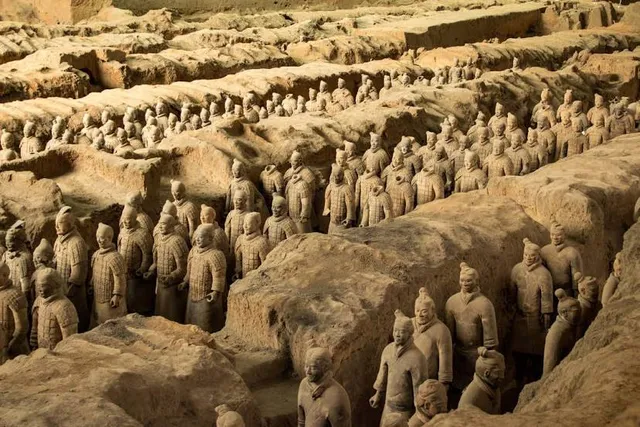
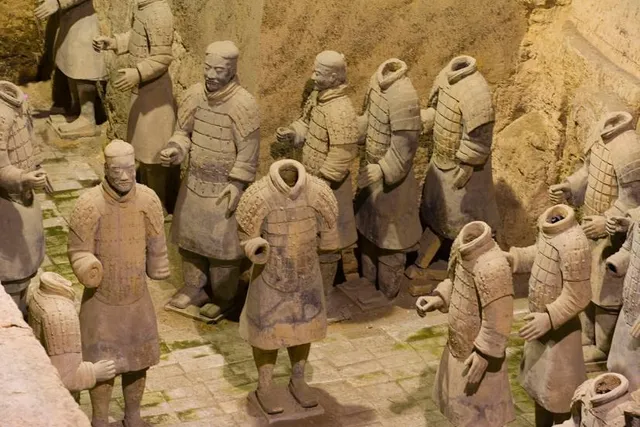
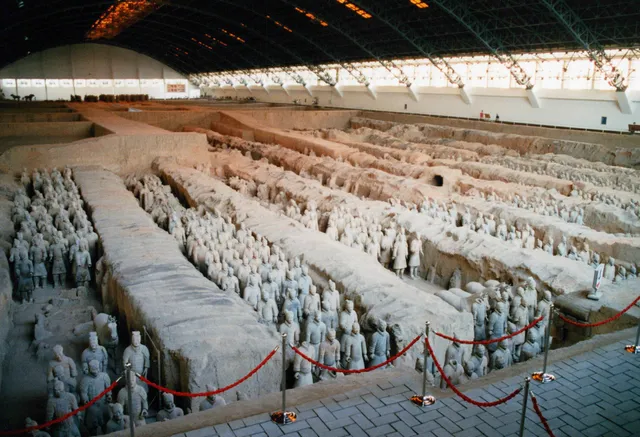
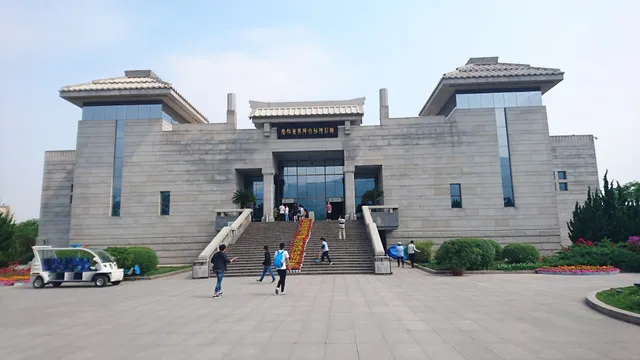
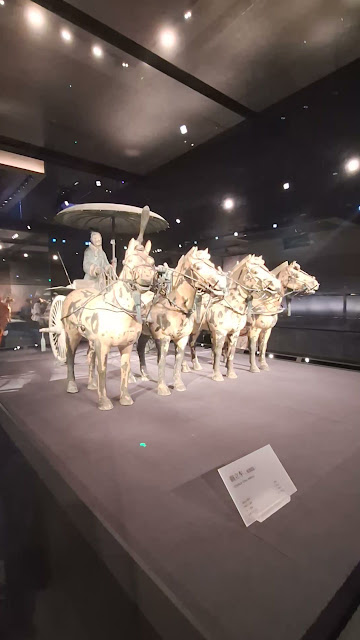
The Emperor Qinshihuang's Mausoleum Site Museum, also known as the Terracotta Army Museum, is located near Xi'an in Lintong District, Shaanxi Province, China. It is one of the most famous and significant archaeological sites in the world, attracting millions of visitors annually. The museum is dedicated to the mausoleum of Qin Shi Huang, the first emperor of China, and the site where the Terracotta Army was discovered in 1974. The Terracotta Army is a collection of life-sized terracotta sculptures depicting the armies of Qin Shi Huang buried with him to protect him in the afterlife. Visitors to the museum can explore the three main pits where the Terracotta Army figures are displayed, along with various artifacts and exhibits related to the Qin Dynasty. The museum offers insights into ancient Chinese history, art, and culture, making it a must-visit destination for history enthusiasts and tourists interested in archaeological discoveries. To get to the Emperor Qinshihuang's Mausoleum Site Museum from Xi'an, visitors can take a taxi, join a guided tour, or use public transportation such as buses that operate between Xi'an and the museum. Private car services and tours are also available for a more comfortable and personalized experience. Overall, a visit to the Emperor Qinshihuang's Mausoleum Site Museum provides a unique opportunity to witness the incredible craftsmanship and historical significance of the Terracotta Army, offering a fascinating glimpse into C
Discounts for students or seniors visiting the Mausoleum of the First Qin Emperor, where the Terracotta Army is located, may be available. Here are some common considerations regarding discounts for students and seniors: Student Discounts: Students, both local and international, often qualify for discounted admission tickets at cultural and historical sites, including the Mausoleum of the First Qin Emperor. To avail of the student discount, a valid student ID card may be required at the ticket counter. Senior Discounts: Seniors, typically aged 60 and above, may also be eligible for discounted admission tickets at various attractions, including the Mausoleum. Proof of age, such as a valid ID card or passport, may be necessary to qualify for the senior discount. Special Promotions: The Mausoleum of the First Qin Emperor or ticket vendors may occasionally offer special promotions or discount packages that include reduced rates for students or seniors. It's advisable to check the official website or inquire directly at the ticket counter for any ongoing promotions. Group Discounts: If visiting as part of a group that includes students or seniors, group discounts may be available. Group rates often apply to a certain number of visitors and may include discounted rates for students and seniors within the group. Tour Packages: Tour packages or guided tours to the Mausoleum of the First Qin Emperor may offer discounted rates for students or seniors as part of the overall package cost. These packages can provide additional value and convenience for visitors. Before your visit, it is recommended to check the official website of the Mausoleum or inquire with the ticket counter regarding any available discounts for students or seniors. Being prepared with the necessary identification and information can help you make the most of any potential discounts and enjoy your visit to this...
Read moreThis place is great, but in order to fully enjoy it you need to temper your expectations a bit. I have many friends who visited it while in China thinking it would be an incredible and life-changing experience. They wound up all feeling somewhat disappointed by the place. Luckily for me, I had heard all of the things they disliked about it before going, and as a result of my expectations being lowered, my experience there wound up being great.
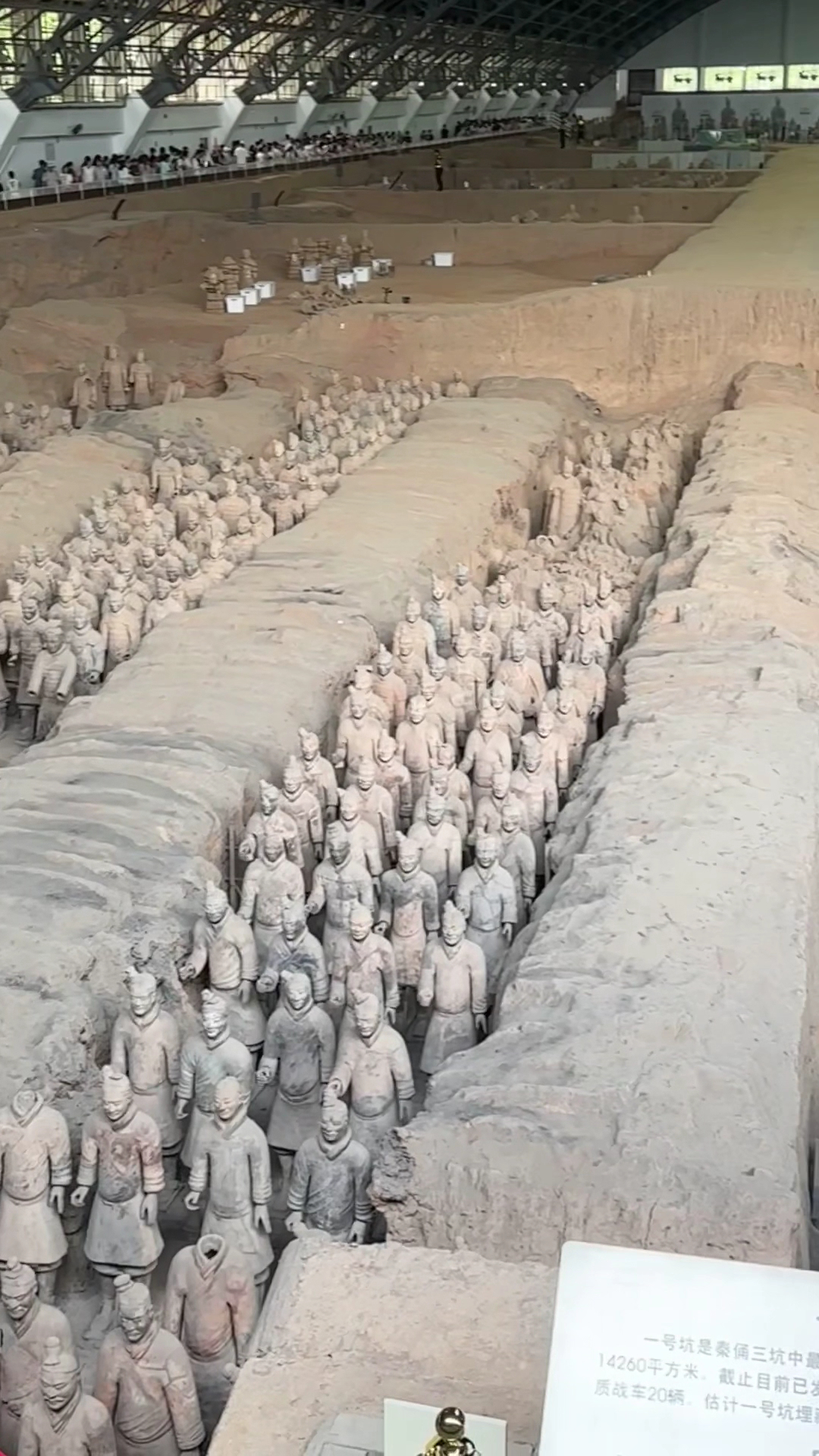
First, the positives: The detail on the warriors is amazing, the scale is incredible, and the historical and cultural significance of this place is almost without parallel in China, let alone the world. There are three buildings to see, but the first building is the one everyone thinks of when they see the warriors, and is far and away the most impressive. It truly is a sight to behold, guaranteed to make you say "wow" out loud the first time you see it (it's a shame the building they are housed in is pretty drab and industrial). Buildings 2 and 3 are newer and are much earlier in the process of excavation and restoration, but they are still absolutely worth a visit in their own right.
Now the negatives: The crowds are insane here, even for China. If you haven't lived in China before or spend a considerable amount of time seeing tourist attractions in China, you are going to want to commit murder during the experience. Once the hordes of tourists arrive with their tour guides on loudspeakers waving goofy flags, you will be pushed out of the way so people can take selfies or lift their kids up to get a peek. If you aren't prepared to push yourself or hold your ground, you won't see that much and will leave with a sour taste in your mouth. Forget about seeing the chariots/carriages in the museum, you're lucky if you can get within 15 feet of the enclosure (and there will be about 200 Chinese people in front of you). You will also encounter tons of souvenir sellers trying to pawn off overpriced replica warriors, T-shirts, and other useless trinkets. And once you see building 1, the rest of the place will be somewhat of a let-down.
But by tempering your expectations, you can enjoy this place a lot. Leave as early as possible in the morning and get there as the ticket booths open (or before to stake out a place in line). If you arrive anytime after 10:00am, you're going to have a miserable experience. If you have the money, I recommend getting a taxi from Xi'an to the museum, as it avoids the hassle of dealing with a Chinese tour bus (where little to no English will be spoken). Round trip taxi fare with a driver who speaks rudimentary English (a rarity in China) cost only 500 kuai (about $70) even without haggling, and it gets you there when you want to be there. Also, although I'm usually not big on tour guides they can be a lifesaver here, as the walk from the parking area to the ticket office is long and confusing, and they all have friends waiting in line who can help get your tickets faster. Plus they know how to avoid the crowds as much as possible, and the historical perspective they offer is great and welcomed, since there is very little signage or information in most of the areas (especially building 1). Ours cost only 150 kuai (about $22) and was well worth the price.
By realizing the above and following some of the advice, it will make your experience better, and you will leave glad...
Read moreA Fascinating Journey Through Ancient China's Legacy. My recent visit to the Terracotta Warriors Museum (Emperor Qinshihuang’s Mausoleum Museum) was an awe-inspiring experience that transported me back in time to ancient China. Located near Xian, this UNESCO-listed site holds the renowned treasures of the 210 BC Terracotta Warriors, which continue to captivate people worldwide.
Upon entering the museum, one cannot help but be overwhelmed by the scale and grandeur of the discovery. The life-sized warriors, meticulously crafted and assembled, stand as a testament to the craftsmanship and artistic genius of the bygone era. It is truly a remarkable sight to behold, as if the warriors have been perfectly frozen in time.
The museum offers a comprehensive layout, providing visitors with a glimpse into the rich history and cultural significance of Emperor Qinshihuang's Mausoleum. Informative displays and exhibits guide you through the entire process of excavation and restoration, shedding light on how these extraordinary treasures were unearthed.
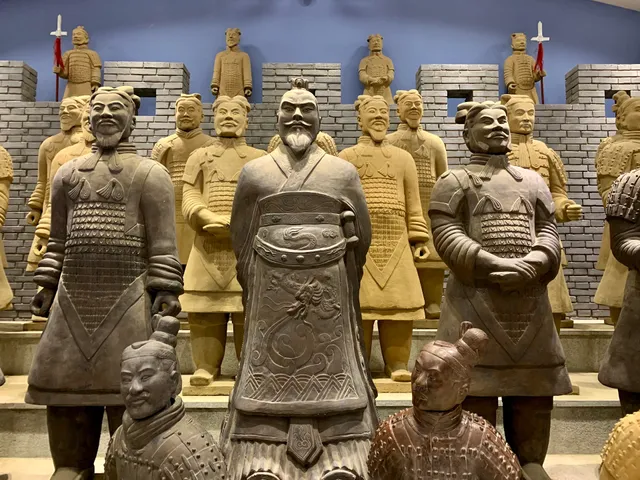
What struck me the most was the attention to detail in each warrior's appearance. The unique facial expressions, hairstyles, and clothing of the figures reflect the social hierarchy and military organization of the time. It is astonishing to think that each statue was individually crafted, making each one a work of art in its own right.
The interactive displays and multimedia presentations further enhance the visit, allowing visitors to delve deeper into the historical context and unravel the mysteries surrounding the creation of these iconic warriors. The museum curators have done an exceptional job in presenting the information in a captivating and easily understandable manner.
Aside from the main exhibit of the Terracotta Warriors, there are also other interesting artifacts and relics on display, providing a comprehensive overview of the Qin Dynasty and Emperor Qinshihuang's reign. It is fascinating to explore the various chambers and witness the archaeological wonders preserved within.
The museum also offers the opportunity to witness ongoing excavation and restoration work, allowing visitors to witness firsthand the dedicated efforts being made to preserve this invaluable heritage. This adds another layer of authenticity and appreciation to the overall experience.
Furthermore, the museum grounds are beautifully landscaped, providing a serene environment to relax and reflect after immersing oneself in the enchanting world of the Terracotta Warriors. It is the perfect place to contemplate the magnitude of this historical marvel.
In conclusion, a visit to the Terracotta Warriors Museum is an absolute must for anyone interested in ancient history, art, or cultural heritage. It is an experience that will leave you in awe of the artistic prowess and historical significance of the Terracotta Warriors. The museum's well-designed exhibits, informative displays, and ongoing preservation efforts make it a top attraction in China and a destination that should not be missed.
Note: This review is based on my personal experience and opinions as of the time...
Read more