HTML SitemapExplore

Fengguo Temple — Attraction in Yi County

Name
Fengguo Temple
Description
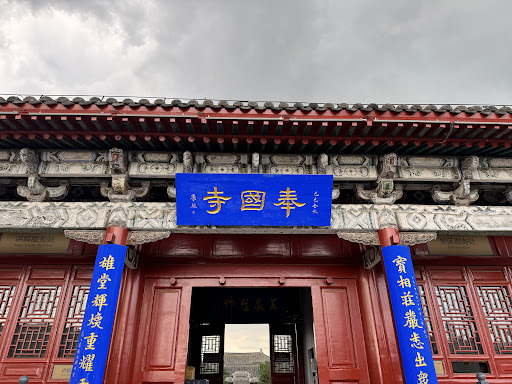
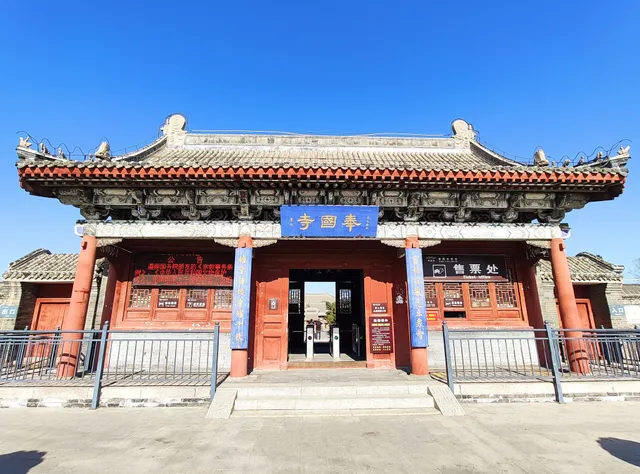
Fengguo Temple is a Buddhist temple located in Yixian, Liaoning Province, China. The temple was first founded in 1020 during the Liao dynasty, and grew quite large during the subsequent centuries. Today, only two halls, two gates, and a decorative arch survive.
Nearby attractions
Nearby restaurants
Nearby local services
Nearby hotels
Related posts
Keywords
Fengguo Temple tourism.Fengguo Temple hotels.Fengguo Temple bed and breakfast. flights to Fengguo Temple.Fengguo Temple attractions.Fengguo Temple restaurants.Fengguo Temple local services.Fengguo Temple travel.Fengguo Temple travel guide.Fengguo Temple travel blog.Fengguo Temple pictures.Fengguo Temple photos.Fengguo Temple travel tips.Fengguo Temple maps.Fengguo Temple things to do.
Fengguo Temple things to do, attractions, restaurants, events info and trip planning
Fengguo Temple
ChinaLiaoningYi CountyFengguo Temple

Basic Info

Fengguo Temple

18 Dongjie St, Yi County, Liaoning, Jinzhou, Liaoning, China, 121199
4.8(26)
Open 24 hours
Save
spot

Ratings & Description

Info

Fengguo Temple is a Buddhist temple located in Yixian, Liaoning Province, China. The temple was first founded in 1020 during the Liao dynasty, and grew quite large during the subsequent centuries. Today, only two halls, two gates, and a decorative arch survive.

Cultural
Family friendly
attractions: , restaurants: , local businesses:

logoLearn more insights from Wanderboat AI.
Phone
+86 416 772 1535

Plan your stay

hotel
Pet-friendly Hotels in Yi County
Find a cozy hotel nearby and make it a full experience.
hotel
Affordable Hotels in Yi County
Find a cozy hotel nearby and make it a full experience.
hotel
The Coolest Hotels You Haven't Heard Of (Yet)
Find a cozy hotel nearby and make it a full experience.
hotel
Trending Stays Worth the Hype in Yi County
Find a cozy hotel nearby and make it a full experience.

Reviews

Get the Appoverlay
Get the AppOne tap to find yournext favorite spots!
Wanderboat LogoWanderboat

Your everyday Al companion for getaway ideas

CompanyAbout Us
InformationAI Trip PlannerSitemap
SocialXInstagramTiktokLinkedin
LegalTerms of ServicePrivacy Policy

Get the app

© 2025 Wanderboat. All rights reserved.

Posts

Vivi TsuiVivi Tsui
The temple was first founded in 1020 during the Liao dynasty (916–1125), and grew quite large during the subsequent centuries. Today, only two halls, two gates, and a decorative arch survive. The most important surviving building is the Mahavira Hall, a very large hall that dates from 1020. The main hall is one of the three Liao style structures left in China and it is the earliest Chinese building that uses bracket sets in between columns instead of just simple struts. The structure of the hall uses more than 30 types of timber pieces in between the column tops and the roof. The main hall is also notable for containing seven large Buddha sculptures ad Sakyamuni (the Buddha of the present age), Vipashyin, Sikhin, Visvabhu, Krakucchanda, Kanakamuni and Kashyapa. Each of the seven Buddhas is flanked by two bodhisattvas, and a guardian king faces the south entry at each side of the altar. Behind the seven Buddhas, facing the back door, is a statue of Guanyin, all dating from the Liao Dynasty. With the entrance ticket you can enjoy a free vegetarian meal
hotel
Find your stay

Pet-friendly Hotels in Yi County

Find a cozy hotel nearby and make it a full experience.

The temple was first founded in 1020 during the Liao dynasty (916–1125), and grew quite large during the subsequent centuries. Today, only two halls, two gates, and a decorative arch survive. The most important surviving building is the Mahavira Hall, a very large hall that dates from 1020. The main hall is one of the three Liao style structures left in China and it is the earliest Chinese building that uses bracket sets in between columns instead of just simple struts. The structure of the hall uses more than 30 types of timber pieces in between the column tops and the roof. The main hall is also notable for containing seven large Buddha sculptures ad Sakyamuni (the Buddha of the present age), Vipashyin, Sikhin, Visvabhu, Krakucchanda, Kanakamuni and Kashyapa. Each of the seven Buddhas is flanked by two bodhisattvas, and a guardian king faces the south entry at each side of the altar. Behind the seven Buddhas, facing the back door, is a statue of Guanyin, all dating from the Liao Dynasty. With the entrance ticket you can enjoy a free vegetarian meal
Vivi Tsui

Vivi Tsui

hotel
Find your stay

Affordable Hotels in Yi County

Find a cozy hotel nearby and make it a full experience.

Get the Appoverlay
Get the AppOne tap to find yournext favorite spots!
hotel
Find your stay

The Coolest Hotels You Haven't Heard Of (Yet)

Find a cozy hotel nearby and make it a full experience.

hotel
Find your stay

Trending Stays Worth the Hype in Yi County

Find a cozy hotel nearby and make it a full experience.

create-post
Turn your ideas into a post and inspire others!
Create

Reviews of Fengguo Temple

4.8
(26)
avatar
5.0
30w

The temple was first founded in 1020 during the Liao dynasty (916–1125), and grew quite large during the subsequent centuries. Today, only two halls, two gates, and a decorative arch survive. The most important surviving building is the Mahavira Hall, a very large hall that dates from 1020.

The main hall is one of the three Liao style structures left in China and it is the earliest Chinese building that uses bracket sets in between columns instead of just simple struts. The structure of the hall uses more than 30 types of timber pieces in between the column tops and the roof.

The main hall is also notable for containing seven large Buddha sculptures ad Sakyamuni (the Buddha of the present age), Vipashyin, Sikhin, Visvabhu, Krakucchanda, Kanakamuni and Kashyapa. Each of the seven Buddhas is flanked by two bodhisattvas, and a guardian king faces the south entry at each side of the altar. Behind the seven Buddhas, facing the back door, is a statue of Guanyin, all dating from the Liao Dynasty.

With the entrance ticket you can enjoy a free...

   Read more
avatar
5.0
1y

The Fengguo Temple, situated in Yi County, Liaoning Province, is a renowned Buddhist temple and a prominent cultural landmark in northeastern China. Built in 1020 during the Liao Dynasty, the temple boasts a rich history spanning over 1,000 years and is celebrated for its stunning architecture, intricate carvings, and vibrant murals.

As one of the largest and best-preserved wooden structures in China, Fengguo Temple showcases exceptional craftsmanship, featuring an impressive array of halls, pavilions, and courtyards. The temple's main hall, Daxiong Baodian, houses an impressive collection of Buddhist artifacts, including statues, scriptures, and relics.

Fengguo Temple has played a significant role in the development of Buddhism in China, serving as a major center for Buddhist learning, art, and culture. Today, the temple remains an important pilgrimage site for Buddhists and a popular tourist destination, attracting visitors from around the world with its breathtaking beauty, rich history, and spiritual...

   Read more
avatar
5.0
3y

Several scenes of Kongfu master were shot here. I visited Fengguo Temple a few years ago. It is a hidden gem and definitely...

   Read more
Page 1 of 3
Previous
Next