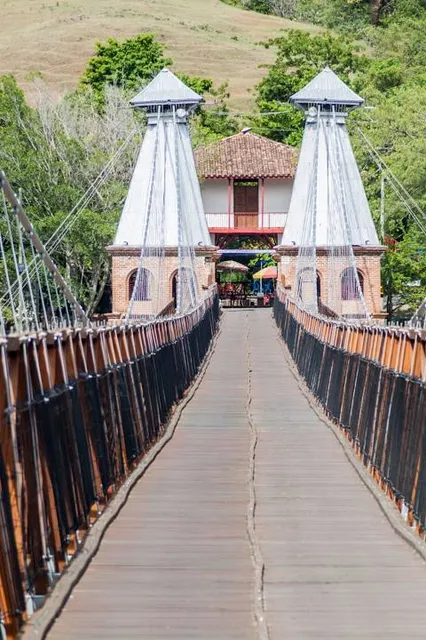
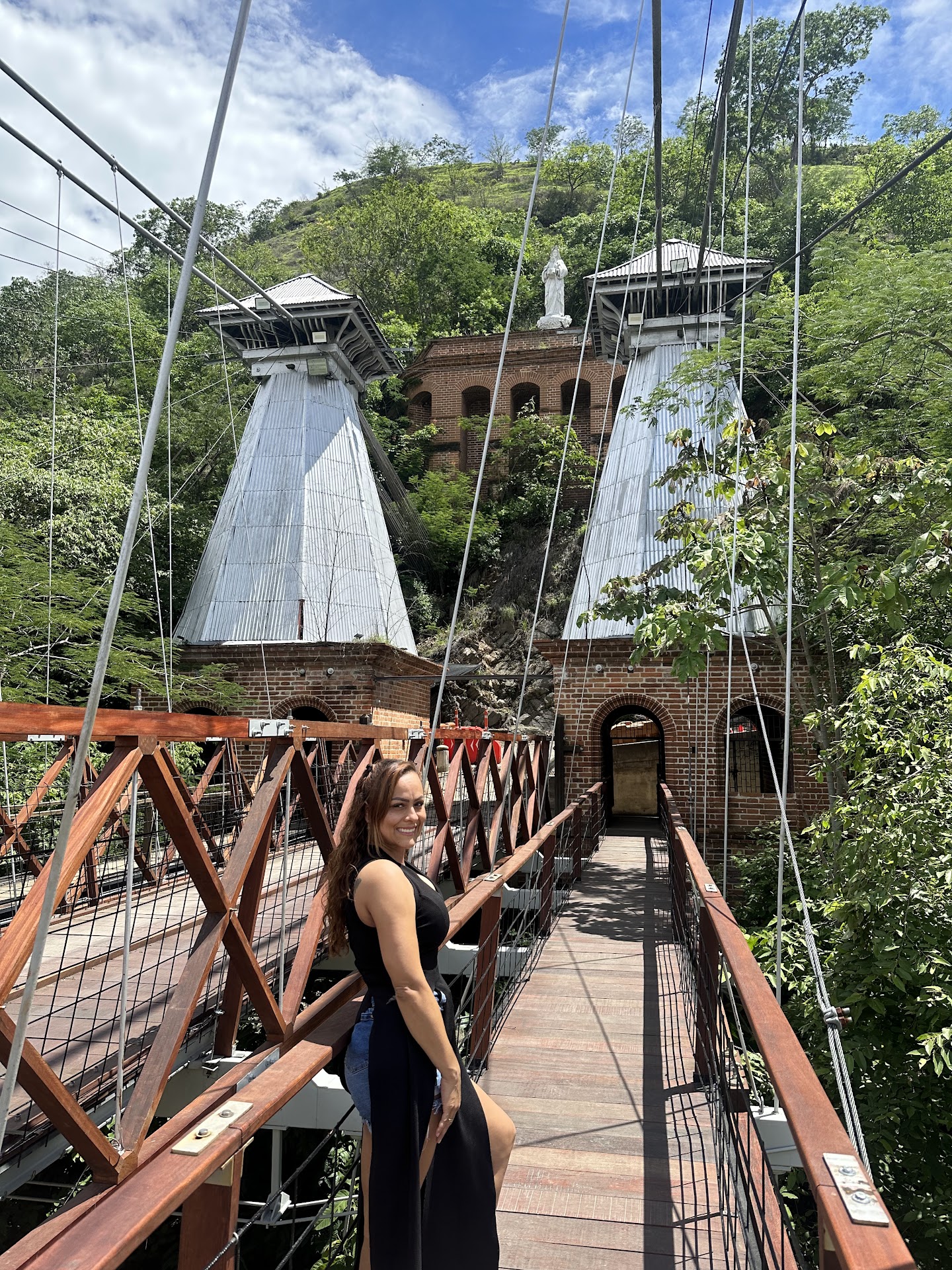
Sure, it’s an magnificent feat of engineering and offers spectacular views of the mountains yonder, but the surrounding areas are not worth the visit. The river is barely there with global warming drying its banks. The drive there is quite pleasant, it once there, it’s not exactly inviting. Motorcycles fill the remaining areas of the dried-up river and a look out point allows visitors to see the other side of the river (which is a whole lot of nothing. On the bridge itself, it’s narrow and creaky, but definitely solidly built. The cables holding the structure together are visible at the ends, but nothing to be impressed about. When we went the whole thing was under renovations so no motor taxis allowed, just foot traffic. Because it was so narrow, it’s inconvenient to stop in the middle to take photos or breathe in nature. We just walked to the other side which had vendors and a restaurant and public washrooms. The place was messy with garbage littered everywhere. The riverbank also smelled of sewage. The bridge is more of a “been there, done that”. Is it a “tourist attraction”? More of a waste of time. Skip it if you are...
Read moreVery interesting piece of architecture and a magnificently engineered bridge by none other than Jose Maria Villa the same guy that also engineered the Brooklyn Bridge in New York City!! Amazing history here!
Built in 1895! Over 125 years old! Total length 291 m (955 ft)
Designer José María Villa
Construction start 4 December 1887
Construction cost $171,300
When you walk across the bridge bounces and sways around under your feet but don't worry it's super strong and safe.
You can get some great epic views and pictures before the bridge on the hill and on the other side on the hill as well. Or just take pics while you are on the bridge.
This is a real suspension bridge as there are no supports hanging down the the Cauca River below.
What a beautiful bridge!!
Please follow @bouncingplaces on YOUTUBE as it helps support the channel so I can continue sharing amazing places like this to eat and fun adventures as I travel the world full time 🌎 🙏
See you in the next one!
Keep on Bouncing...
Read moreEl Puente de Occidente se erige majestuosamente como un hito histórico y arquitectónico que atraviesa el río Cauca en el departamento de Antioquia, Colombia. Esta imponente estructura, que conecta los municipios de Santa Fe de Antioquia y Olaya, no solo es una maravilla de la ingeniería sino también un testamento a la habilidad humana de superar desafíos geográficos.
Construido a finales del siglo XIX y completado en 1887, el Puente de Occidente es un símbolo perdurable de progreso y conexión entre comunidades. Diseñado por el ingeniero José María Villa, este puente colgante se destacó como una proeza tecnológica en su época y aún hoy cautiva a visitantes con su imponencia y elegancia clásica.
La estructura del puente es una obra maestra de la ingeniería. Con una longitud de 291 metros y una altura de 85 metros sobre el río Cauca, el Puente de Occidente se erige como un coloso de hierro que desafía las corrientes del río y conecta las orillas opuestas con gracia y solidez. Sus imponentes torres de hierro y sus cables suspendidos crean una silueta distintiva contra el paisaje natural que lo rodea.
Pero más allá de su impactante presencia física, el Puente de Occidente también encierra en su estructura una rica historia. A lo largo de los años, ha sido testigo de cambios significativos en la región y ha desempeñado un papel fundamental en el desarrollo económico y social de las comunidades a ambos lados del río.
A medida que cruzas este icónico puente, se experimenta una conexión tangible entre el pasado y el presente. La brisa que sopla a través de los cables y la vista panorámica del río Cauca crean una experiencia inolvidable para aquellos que se aventuran a caminar sobre su tablero suspendido.
Además, el Puente de Occidente ha sido declarado Monumento Nacional, lo que destaca su importancia cultural y arquitectónica para Colombia. La preservación y el cuidado de esta joya histórica son fundamentales para asegurar que las generaciones futuras también puedan maravillarse ante su grandeza y apreciar su contribución al patrimonio colombiano.
En resumen, el Puente de Occidente es mucho más que una estructura de ingeniería; es un símbolo de conexión, perseverancia y progreso que ha resistido la prueba del tiempo. Al recorrer sus pasarelas, uno no solo atraviesa un río, sino que también se embarca en un viaje a través de la historia y la magnificencia de la...
Read more