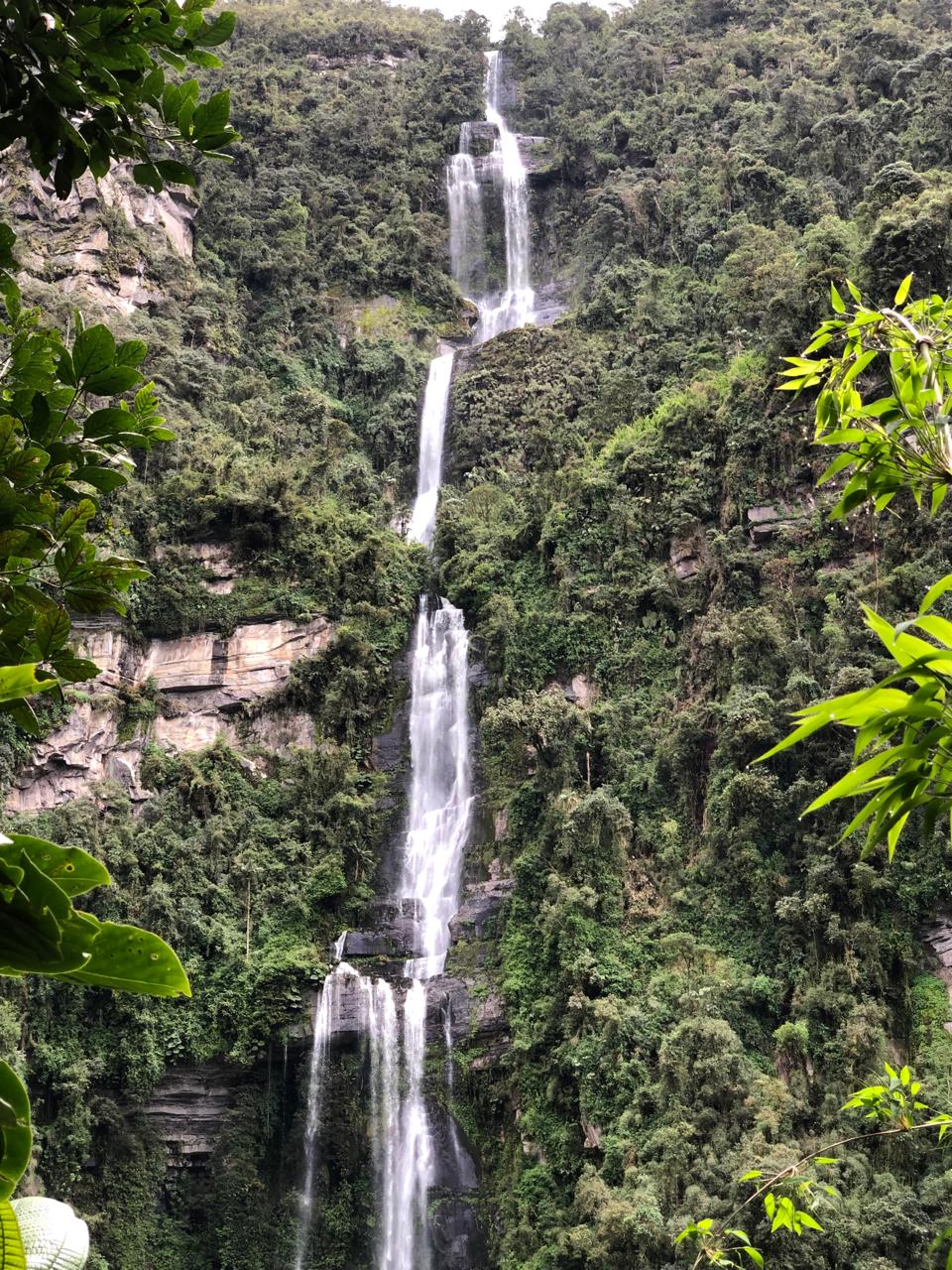
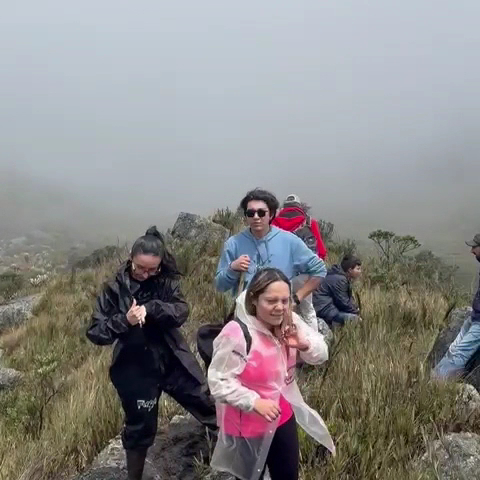
Last February 12, life smiled at me yet again, as I was lucky to be invited to a beautiful hike through a natural reserve near to Bogotá: The Chingaza National Natural Park. Full day activity that included a 4-hour walk inside the protected area.
Our excursion started at 7am when our tour company pick me up at home. Our guide, Hugo and his friendly driver, William, arrive very punctual. Later my friend Tito also joined us as well as the lovely Emilse as the assigned Corpo-Chingaza interpreter-guide, to teach us about the park. She told us that the path that we will follow is via the route of Santa Maria de las Lagunas, better known as the route Lagunas de Siecha, where we can appreciate the flora of the Páramo, including the splendid frailejones.
Due to the terrible traffic in Bogota, it took us two and a half hours just to get to La Calera, when normally this would take no more than 40 minutes. Hugo told us that there is an alternate route, via Hacienda Marques, through the Codito area, where La Calera is reached much faster, but for security reasons in that area, this route is largely ignored.
The Chingaza National Natural Park, it is considered a native treasure, by contemplating its mountains you can feel even the charm and secrets of our ancestral cultures: the Muiscas and the Guayupes, indigenous people who lived in this territory.
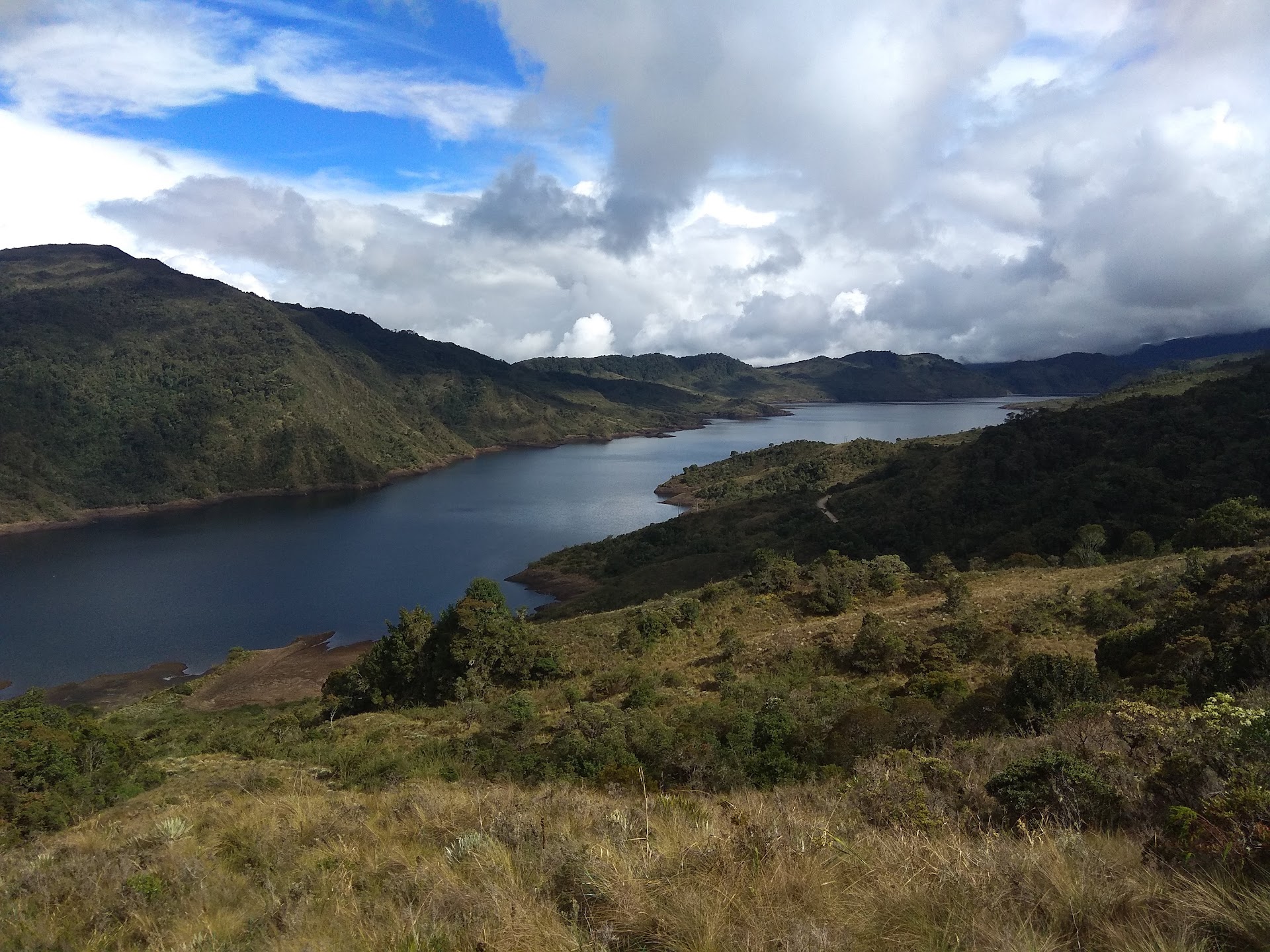
The páramo is known as the force of water! and includes among others the Chuza Reservoir, which provides the water we drink in Bogota, which by the way is one of the purest waters in the world !!!, the park is also home to endangered species and vital ecosystems.
Currently, this area is a protected national park, which serves as a refuge for majestic ecosystems of Andean fauna and flora.
After 10am, we passed through Guasca and near the El Ensenillo forest reserve, until we found the deviation towards the entrance to the park, where we continued on the uncovered road. Around 10:50 am we reached the point where parked the car.
At 3000 meters above sea level, at 11am, we arrived at the park entrance, where we had to register our arrival (and later our departure) time. We were given a small introduction to the park and its regulation.
Chingaza Park is part of the 60 protected areas that make up the natural national parks system of Colombia, seen from the air, the park has the shape of a butterfly.
It has more than 76,000 hectares and is located in the eastern mountain range, northeast of Bogotá. The park has two wings, the western wing that is dedicated to ecotourism where visitors have the option of hiking seven different trails, ours today as I mentioned earlier, is the Lagunas de Siecha trail, gateway to Guasca.
And the eastern wing towards Piedemonte, which is strictly for research and investigation.
11 municipalities form part of the park, 7 of Cundinamarca: Fómeque, Choachí, La Calera, Guasca, Junín, Gachalá and Medina, and 4 municipalities of the Meta: San Juanito, El Calvario, Restrepo and Cumaral. The park has four access points: Guasca, La Calera which is the main entrance, Fómeque and San Juanito.
Emilse told us that the park has a population of approximately 70 Andean bears, also known as the spectacle bear. Other fauna includes white-tailed deer and soche, curies, cusumbos, rabbits, condors and other birds. That’s when I start to get excited about the possibility of being able to see these animals. The bears are herbivores with some scavenging bears exceptions (20% of them), therefore, and according to Emilse, they present no risk to humans. The male can reach 2.20 meters and the female 1.65 meters.
So, we started our hike up the slope of the mountain with the aim of reaching the viewpoint, which is 3700 meters high.
Just before reaching the viewpoint we found a depiction of “ Tejido Muisca “a representation of the solstices, the Muiscas, as well as many other cultures of South America, were exceptional astronomers. They divided the calendar into...
Read more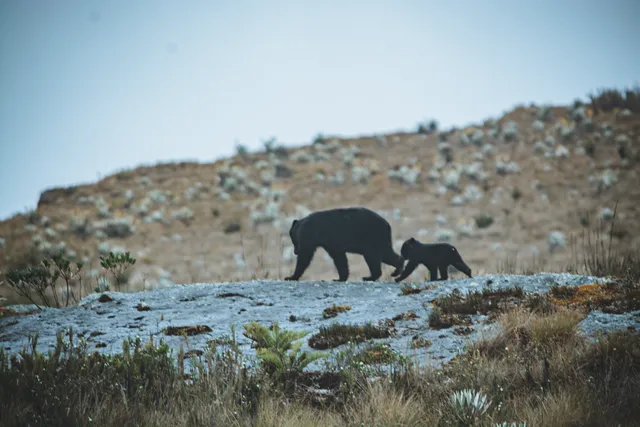

 Learn more insights from Wanderboat AI.