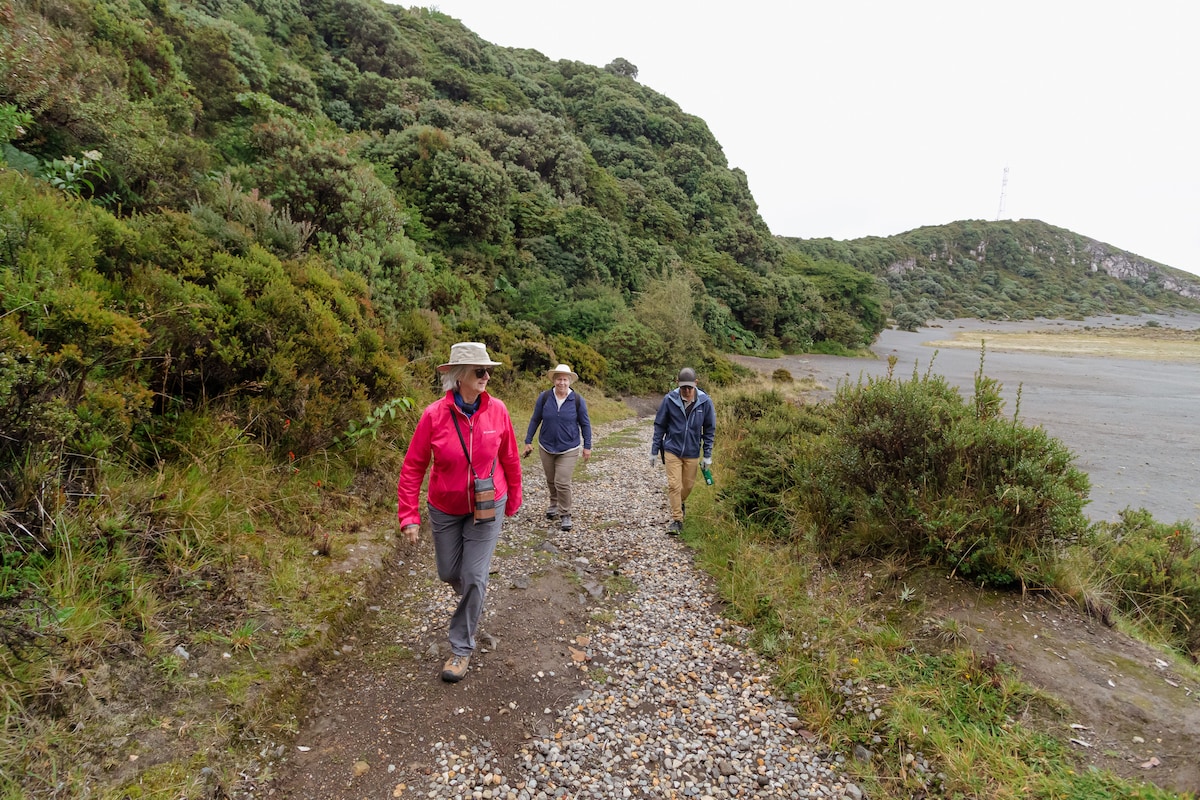
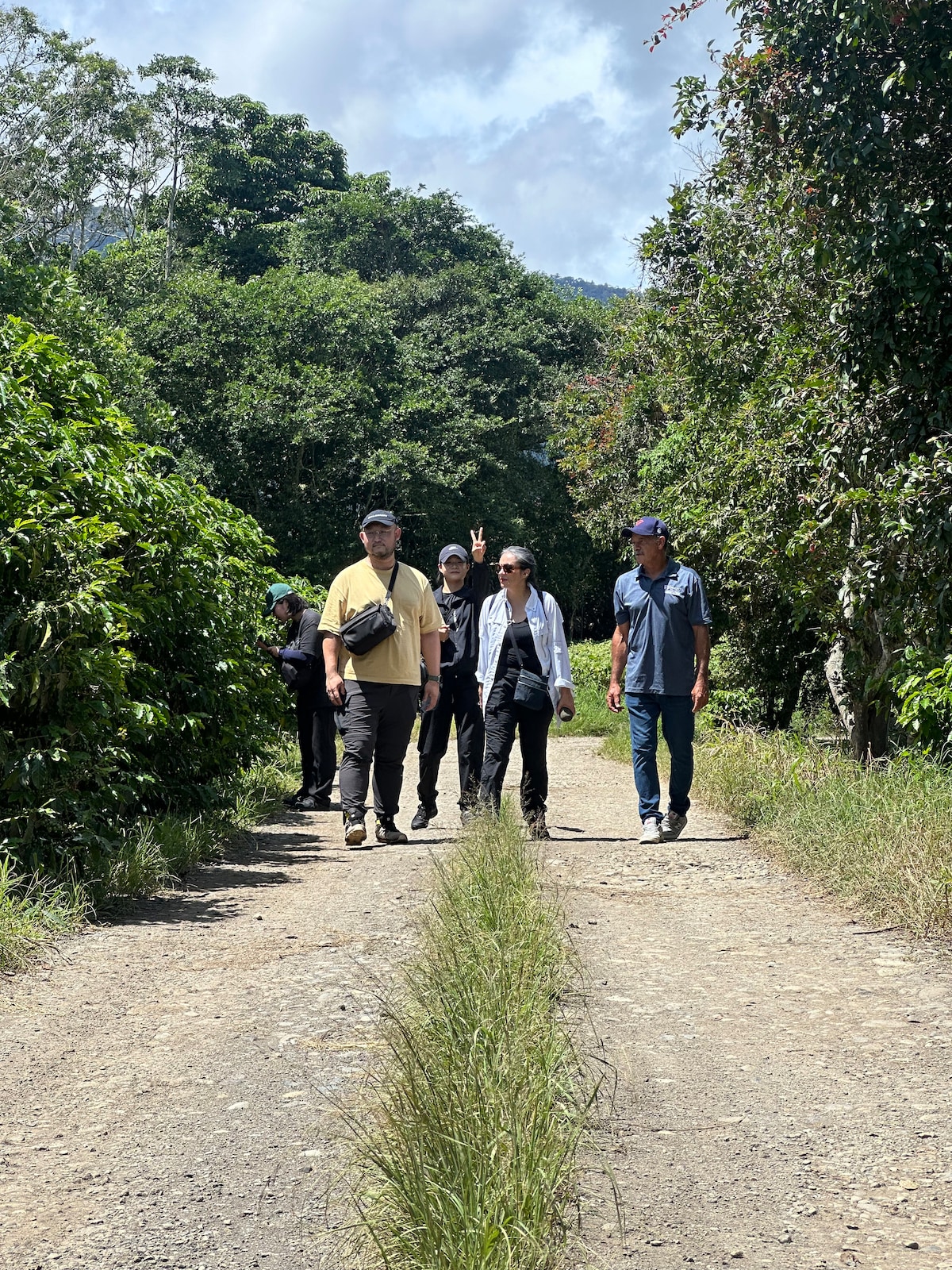
What a great experience to walk around (with a guide), and take it all in. None of the pictures do justice to the physical experience of being there, and everything feels much larger and more varied in person than it looks from the photos. And the guides add quite a bit of rain-forest environmental knowledge as you walk along, too.
Despite what Google Maps shows, the entrance is right on the road (see pics) -- a small (30 feet across?) conical thatched pavillion built to resemble the original structures of prehistoric Guayabo. The (small but nice) souvenir shop is right across the street, as are the bathrooms (very clean and well maintained, I might add). There is also a "lunch area" with covered picnic tables to eat any food you may have brought with you (but see below for Covid situation).
The Transtusa bus from Turrialba is cheap (490 colones each way!), but only runs a few times a day, and is sometimes late. A taxi will run more like 12000 colones. Cars are fine, but the roads are rough -- paved, but rough. The views on the drive are lovely.
Trails have interpretive signs, mostly Spanish with abbreviated paragraphs in English. You can certainly walk around on your own, but getting a guide ($20 US for non-Costa Ricans) is well worth it! So much more than you would get from the signs alone! However: there may or may not be an English-speaking guide on the particular day you visit, so bring a Spanish-speaking friend (if needed).
If you are at all handicapped, you should know that if you are using canes, crutches, or (especially) a wheelchair (and I've done all 3 in my past), you're going to be limited in how much you'll be able to take in here. The paths are rough, natural, and not all all paved (although some occasional gravel, and definitely some steps). And everything will probably be wet and slippery. You certainly could do some or all of the trails with crutches or a cane (depending on your stamina, strength, and stability), but very very little on a wheelchair.
Also, at least for now (written September 2021), the lunch area is entirely closed. This means there really is nowhere to sit and eat food you've brought with you (food isn't allowed in the archeological portions of the park). There are some good sodas (restaurants) in the very close by town of Colonia Guayabo, but only a few bagged snacks in the park's gift shop. If you drove a car, no problem: go get some food. If you're waiting for the bus back to Turrialba for an hour or two, more of a problem -- although the Colonia is only a kilometer or so away, so not super far to walk.
But seriously: go! If you enjoy history and/or natural...
Read more
 Learn more insights from Wanderboat AI.