Fortezza di San Nicola o Nicolò.
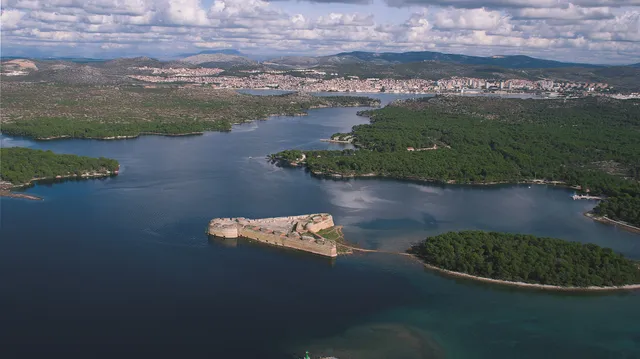
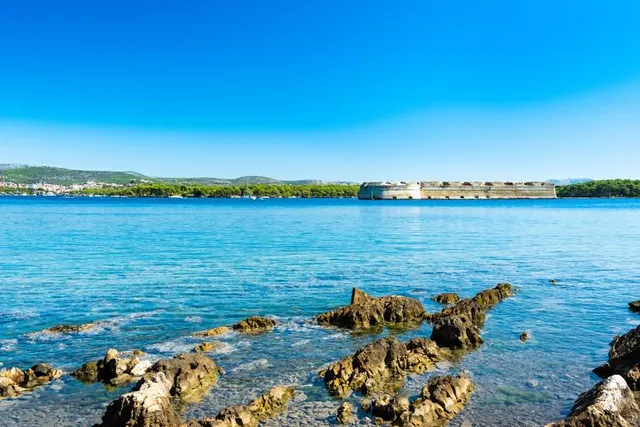
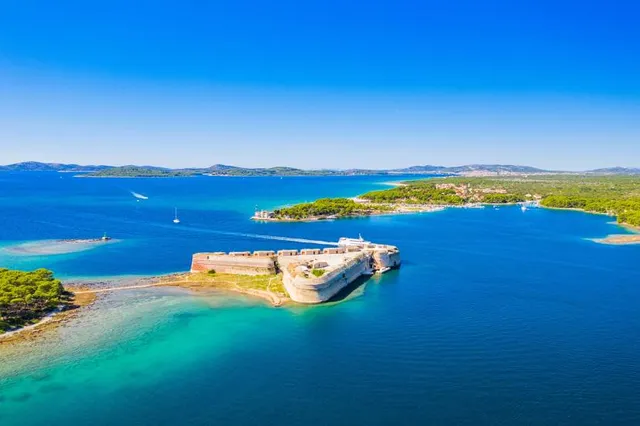
La fortezza di San Nicola (Tvrđava Sv. Nikole) è un forte marittimo situato nelle vicinanze della città di Sebenico, nella Dalmazia centrale, in Croazia.
Il forte di San Nicolò venne costruito dalla Repubblica di Venezia nel XVI secolo sull'isola di Ljuljevac, che si trova di fronte al faro della spiaggia di punta Sant'Andrea Jadrija sul lato sinistro dello sbocco del canale marittimo di Sant'Antonio (kanal Sv. Ante), il quale conduce alla città di Sebenico.
La Fortezza prese il nome dal monastero benedettino che esisteva precedentemente e fu distrutto per realizzare la fortificazione stessa.
La prima proposta per costruirla risale al 1524 e nel 1525 su richiesta della città di Sebenico, Aloisio De Canal capitano veneziano decise di realizzare la fortificazione per difendere la città dall’invasione Ottomana, Ma l’avvio dei lavori fu atteso fino al 1540 con l’arrivo degli ingegneri militari veneziani Michele Sanmicheli e il nipote Giangirolamo e si conclusero nel 1547.
La struttura rinascimentale costituisce uno dei rari esempi di fortificazione a forma triangolare nonché una delle prime realizzazioni della cosiddetta opera a corno o a tenaglia.
Dal 9 luglio 2017 la fortezza di San Nicolò è stata riconosciuta dall'UNESCO quale patrimonio mondiale dell'umanità all'interno del sito transnazionale delle Opere di difesa veneziane tra XVI e XVII secolo.
Sono iniziati i primi lavori per la ristrutturazione.
Prima si poteva visitarla anche via terra con una simpatica passerella che collega la Fortezza alla terraferma e arrampicandosi per salirci sopra, mentre ora si può visitarla esclusivamente dal mare e entrare dall’ingresso principale.
Per chi fosse interessato a vederla, partendo dalla periferia di Sebenico zona Mandaline inizia un bellissimo percorso ciclopedonabile che prosegue fino alla passerella per poi proseguire fino ai piedi della Fortezza, vicino a Zablaće.
ortress of San Nicola or Nicolò.
The fortress of St. Nicholas (Tvrđava Sv. Nikole) is a maritime fort located near the town of Šibenik in central Dalmatia, Croatia.
The fort of San Nicolò was built by the Venetian Republic in the 16th century on the island of Ljuljevac, which is located in front of the lighthouse of the Sant'Andrea Jadrija peak beach on the left side of the mouth of the sea canal of Sant'Antonio (kanal Sv Ante), which leads to the town of Šibenik.
The Fortress took its name from the Benedictine monastery that existed previously and was destroyed to make the fortification itself.
The first proposal to build it dates back to 1524 and in 1525 at the request of the town of Šibenik, Aloisio De Canal Venetian captain decided to build the fortification to defend the city from the Ottoman invasion, But the start of work was expected until 1540 with the the arrival of the Venetian military engineers Michele Sanmicheli and his nephew Giangirolamo and ended in 1547.
The Renaissance structure is one of the rare examples of triangular-shaped fortification and one of the earliest achievements of the so-called horn or pincer work.
Since 9 July 2017 the fortress of San Nicolò has been recognized by UNESCO as a World Heritage Site within the transnational site of the Venetian Defense Works between the 16th and 17th centuries.
The first renovations started.
Before you could also visit it by land with a nice walkway that connects the Fortress to the mainland and climbing to climb on it, while now you can only visit it from the sea and enter the main entrance.
For those interested in seeing it, starting from the outskirts of Šibenik, the Mandaline area begins a beautiful cycle route that continues to the runway and then continues to the foot of the Fortress,...
Read more
 Learn more insights from Wanderboat AI.