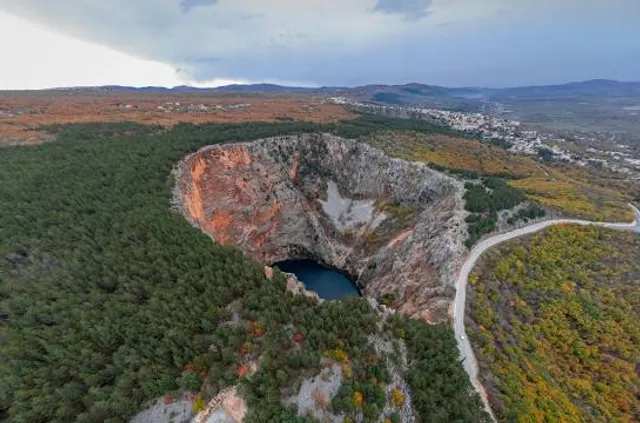
If you're cruising through southern Croatia near Imotski, make a stop at Crveno Jezero — the Red Lake. It’s not your typical postcard lake, and that's exactly why it’s worth seeing. Just off the main road, there's a small parking area tucked away in the woods. In mid-May, it was completely empty — no crowds, no chaos, just birds and wind. From there, it’s a super short hike — five minutes tops — through a piney path that leads you to the rim of this insane natural sinkhole.
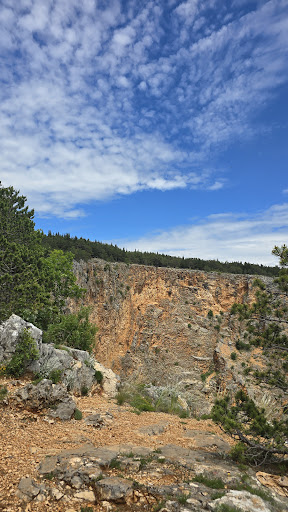
The first few viewpoints don’t actually let you see the lake water itself, but the hole alone — that yawning, vertical drop — hits hard. It’s deep, almost eerily silent, and surrounded by rust-red cliffs that look like something out of a sci-fi movie. You stand there staring into this massive natural crater, and it’s genuinely unsettling in the best way. It feels ancient, raw, like nature flexing.
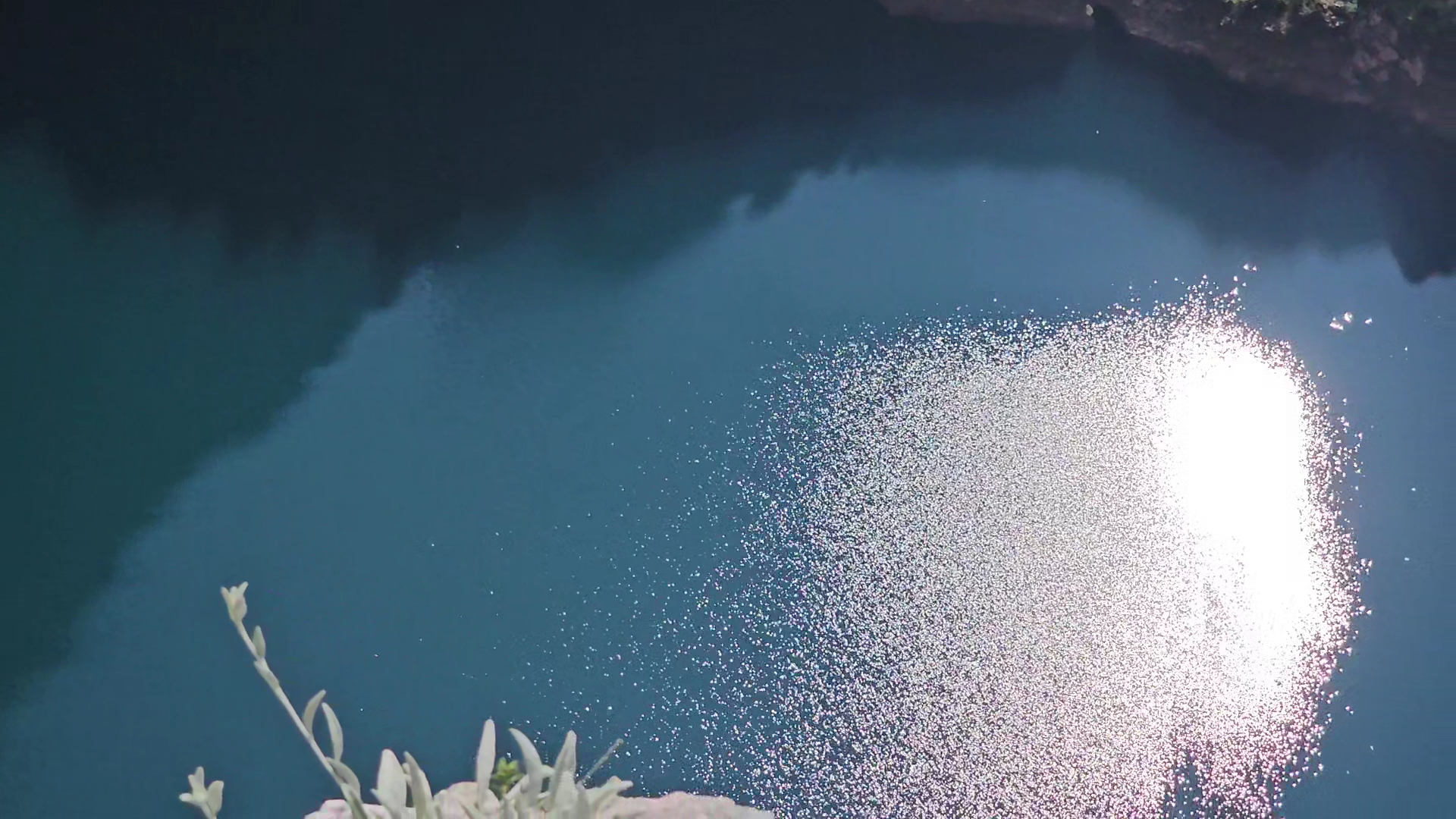
Keep walking around the edge and eventually you’ll get to what I’d call the money shot — probably the fifth viewpoint. From there, you get a proper look down into the lake itself, and that’s when it really hits you: the scale, the color, the depth. It’s breathtaking. The cliffs drop straight down, and the contrast of the dark water against the red rock is wild.
If you’re driving along the main road, there’s also a parking spot for buses where a lot of people stop just to peek in from that side. It works if you’re short on time — you can probably pull over with a car too — but if you want the proper, more natural vibe, take the route through the woods to the main viewpoint area. It’s quiet, shaded, and gets you close to the real edge of this geological monster.
Not for the faint-hearted if you’ve got a fear of heights, but...
Read moreRed Lake is a sinkhole containing a karst lake near the city of Imotski, Croatia. It is known for its numerous caves and remarkably high cliffs, reaching over 241 metres above normal water level and continuing below the water level. The total explored depth of this sinkhole is approximately 530 metres with a volume of roughly 25–30 million cubic meters, thus it is the third largest sinkhole in the world. Water drains out of the basin through underground waterways that descend below the level of the lake floor. The deepest known point of the lake is 4 meters below sea level. The sinkhole is named after the reddish-brown color of the surrounding cliffs, colored by iron oxides. Like the nearby Blue Lake, it is presumed that the lake emerged when the ceiling of a large cave hall collapsed. The lake is inhabited with endemic and endangered spotted minnow (Delminichthys adspersus). In the dry period of the year, this fish can be occasionally seen in surrounding springs, rivers and lakes, suggesting that there is an underground connection between Red Lake and other water bodies. At the 13th International Congress of Speleology in 2001, new findings were revealed. An inflow cave-shaped canal that measured approximately 30 x 30 meters was discovered in the eastern part of the lake at a depth...
Read moreWe visited the Red Lake (Crveno jezero) in Imotski in September when it was still warm, but we were lucky to have the place all to ourselves – no crowds, no tourists. This spectacular natural wonder is absolutely breathtaking!
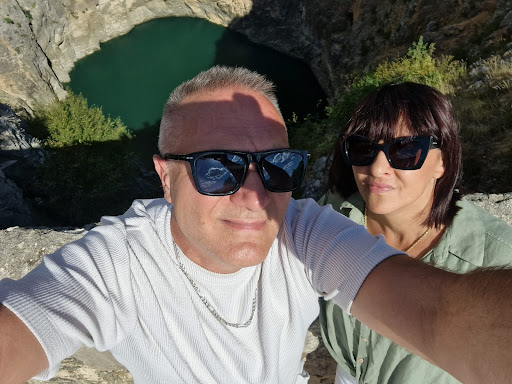
Although it’s not possible to reach the water due to the steep cliffs, the view alone is impressive, and the intense red color of the surrounding rocks creates a perfect backdrop for unforgettable selfies. What makes this place truly fascinating are the stories and legends surrounding it. According to local lore, the lake was formed when the castle of the cruel lord Gavan collapsed, blending natural phenomena with mystique and making it even more appealing.
This lake offers more than just natural beauty; it has a soul, woven through the legends that surround it. It’s the perfect destination for nature lovers, history buffs, and anyone looking to experience a piece of local heritage. If you’re searching for a spot with unique character and no tourist hustle, the Red Lake...
Read more