Our extra excursion through Infotur with Jesús and Orlando was great. We drove out of Havana via a different route than from the airport the previous night as was cool to see the city, the people, the colours and the buildings in sunshine.
Once on the motorway, we made pretty good progress although it was very weird overtaking small horse and cart vehicles because of the cost of buying and maintaining a car. Lots of people hitching along the roadside was explained as being due to amost non-existent publc transport.
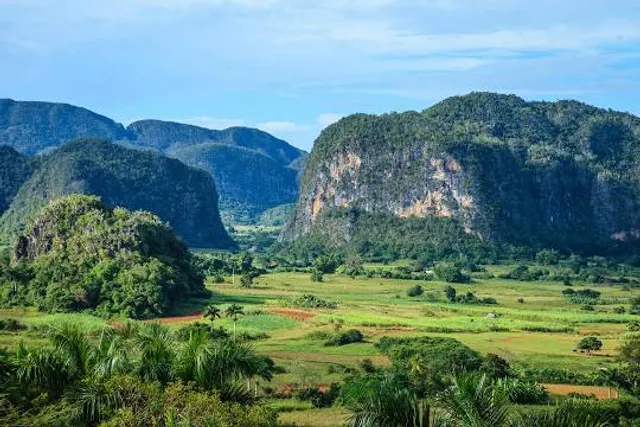
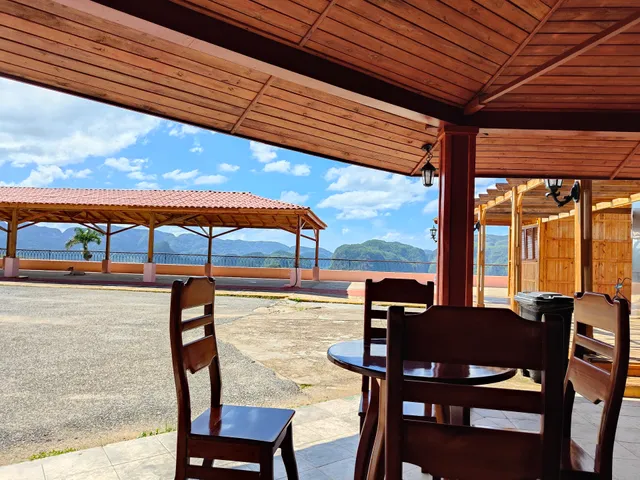
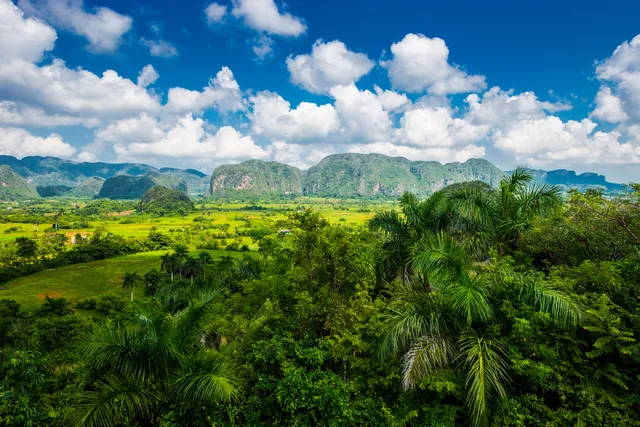
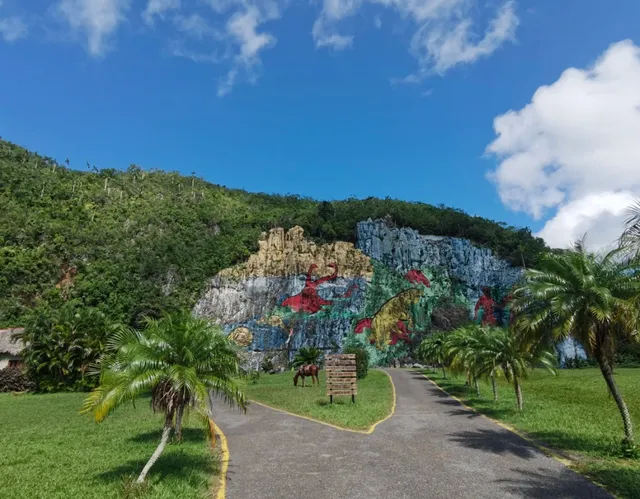
We made good progress on the motorway and after a couple of hours stopped for a toilet and drinks break at Las Palmas roadside bar/restaurant/private accommodation where we learned two more Cuban lessons - 1. it is customary to pay a small amount to use the public toilets and there is usually a woman sitting outside as a guardian of the toilet paper, so you don't really have a choice. It was no problem doing so here, except we had no Pesos, as the toilets were spotless and 2, you can pay fot things in USD or EUR in most places and they have an exchange rate in CUP (300 to the Euro) so in the bar we ordered 2 drinks, paid in Euros, received our change in CUP, paid a relative pittance for the toilets and were ready to continue on to Viñales. Once off the motorway, things were very different. The uncovered roads were terrible to be driven along in places with enormous potholes and general erosion due to the weather. This made for a very bouncy ride, so anyone prone to travel sickness should be wary. However, we drove through village after village on the outskirts of Viñales with brightly coloured houses, neat little gardens at the front. and probably fruit and vegetables growing at the rear. There were lots of well-fed dogs running around as well as goats and cattle. Once we were in Viñales itself the road improved and we stopped at a building that looked like the village church. Jesús got out of the minibus and went inside and after about 10 minutes came back out and beckoned us to go with him. inside the building there were rows of desks with a couple of women - they were all women - sitting in each row and which reminded me of a 1920s school. it turned out we were in a place where huge bundles of tobacco leaves would come straight from the farms/plantations and the women at the desks were sorting the leaves individually and by hand into 3 different types of leaf to be used in different stages of the cigar making process. A woman who seemed to be the boss and with whom Jesús was giving some paperwork gave us a very thorough explanation of the entire process. It was so educational that we didn't have any questions at the end. It was also a relief to get out and back into 34º heat as inside it felt much hotter and the humidity was so fierce, I was sweating rivers! Next, we continued up a mountain where we ere greeted with a small cocktail and allowed time to cool down from high above the famous Viñales Valley, which we were told dates from the Jurassic period. Just a shame there' so little fauna in Cuba. After having recovered from the tobacco experience, we went to see the Mural of Prehistory before having lunch beside it in what we would become used to in Cuba - very basic, but good quality food included for lunch every day, but no choices and no menus. Everyone gets the same. Before leaving I went to a real Cuban public toilet. Despite being part of the restaurant, I would soon get used to the dark, very humid cubicles often with no seat on the porcelain.re leaving. Heading back to Havana seemed a lot quicker than it felt heading to Viñales earlier in the day, but the potholes and bumpy roads were still there. On the motorway we got caught in a torrential downpour which required Orlando to improvise repairs to the windscreen wipers as the rain was too hard for them. He managed to do this and get us back to Havana and the enormous puddles that had overflowed the drains. Now I found out the answer to a question I'd been meaning to ask about why the kerbs...
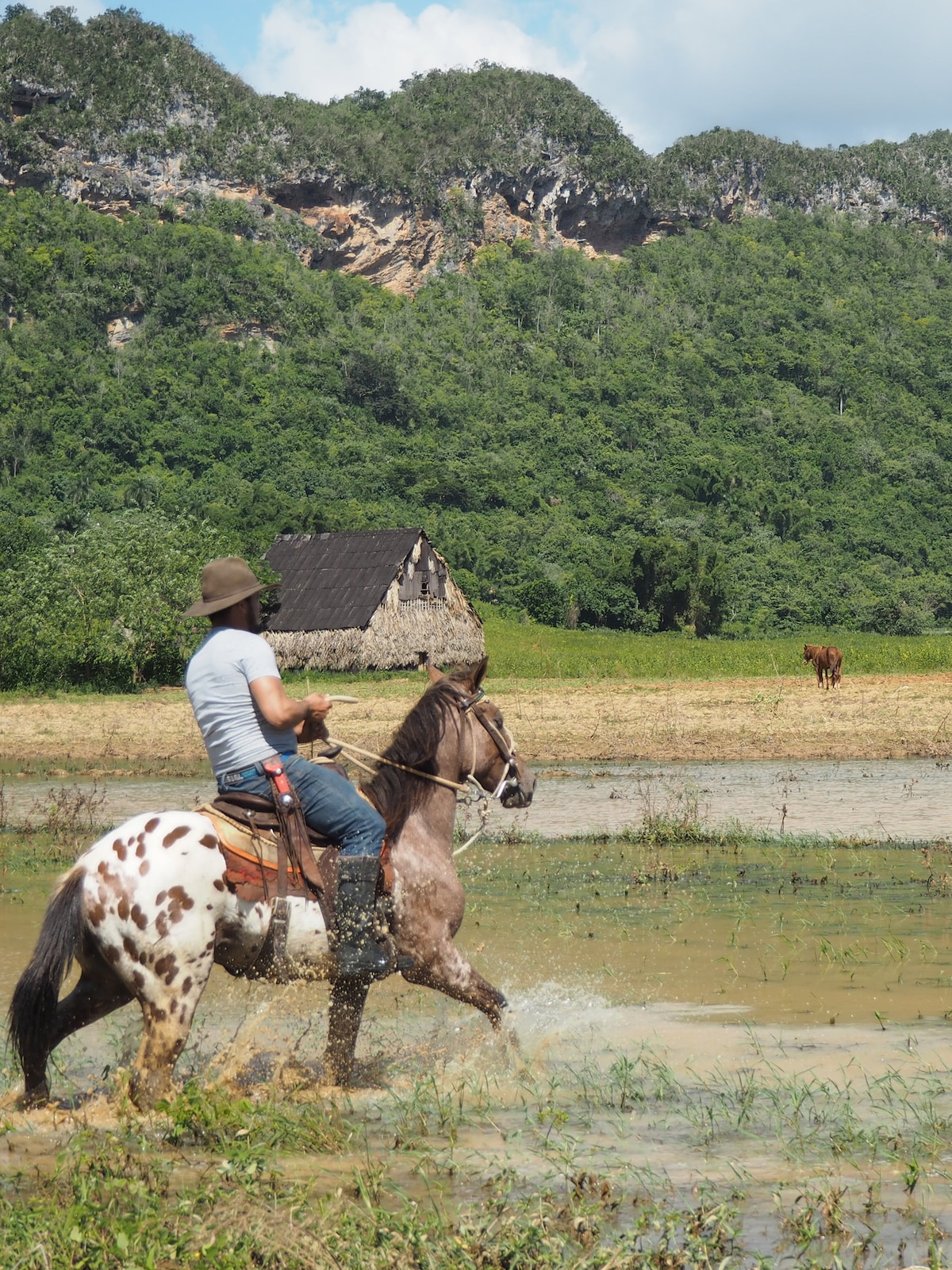
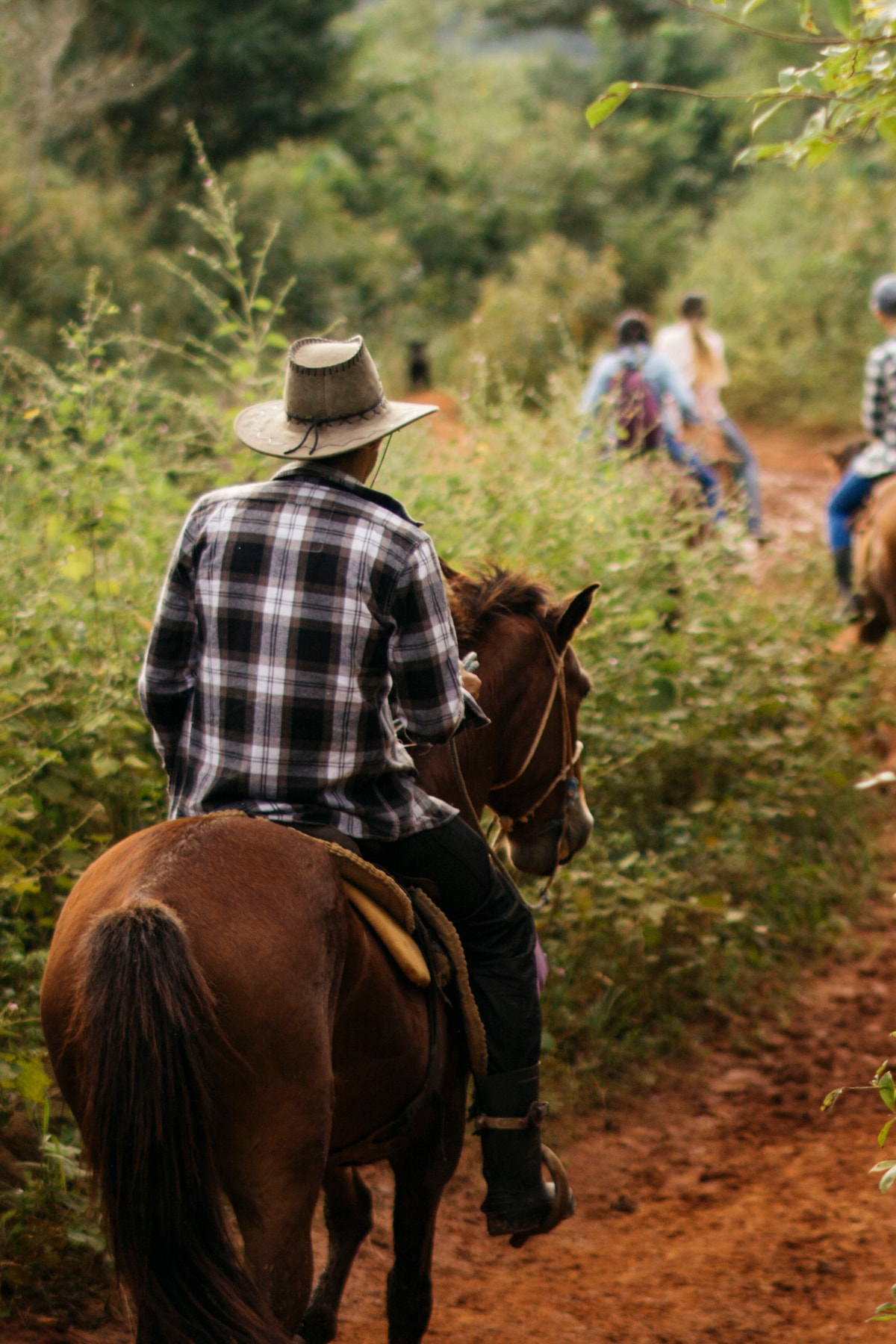
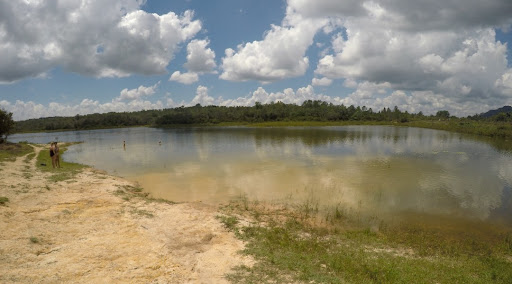
Read moreI first came to Vinales in 2008 from Havana, I took the Viazul bus. The bus is very comfortable with air conditioning and only cost 12 pesos CUC. Stepping off the bus I was surrounded by ladies carrying signs and offering me a room to stay in their house. One of them, named Marilyn, took me to one of her friends' home just a couple of blocks away behind the hospital. Marilyn could speak English and this was helpful although I knew some Spanish. The Cuban dialect is originally Spanish but has evolved so much that it was difficult for me to understand what was said when people talked fast. I was greeted by Maritza and her husband Omar who took me for a tour of their small house; the room I was going to sleep in was nice, clean and spacious. The bathroom was perfect for me; there was a shower with hot water and it was private. They offered breakfast and supper if I wanted. They were very friendly and helpful. On the second day I went to visit the town which has kept its colonial style with many homes still featuring a front porch with columns. The village consists mainly of the main street which has the stores, the church, the tourist offices and a bar which offers Cuban music at night. I took the Green Bus which runs all day through the area. For 5 cuc you can ride all day and stop and get back on the bus. It will take you to the main points of interest like the mirador overlooking the mogotes - these geological formations unique in Cuba and which have made Viñales a world heritage site - and the Cueva del Indio (an underground stream which you can visit by getting on a boat). Outside of Viñales, you can also visit the Santo Tomas caves (a taxi will take you there and back) and do a bit of spelunking with a helmet equipped with a lamp. Through openings in the mountain, you can get a beautiful view of the valley. One day I had a chance to go horse riding with 2 other persons and a guide. We went quite a distance in the country and the hills, and ended up in a cave with a small lake and crystal clear water. On the way back to the village we stopped at sugar farm where the owner crushed some sugar cane and put the juice on a grapefruit. A short distance from there we visited a tobacco farm where we were shown the whole cycle of tobacco production, and how it is harvested and hung to dry in special barns. I certainly enjoyed my three days in Viñales and recommend this trip wholeheartedly and I have no hesitation recomending...
Read moreViñales Valley Viñales Valley (Spanish: Valle de Viñales) is a karstic depression in Cuba. The valley has an area of 132 km2 (51 sq mi) and is located in the Sierra de los Órganos mountains (part of Guaniguanico range), just north of Viñales in the Pinar del Río Province. Overview
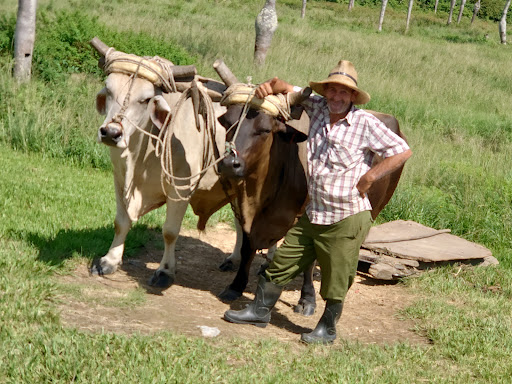
Manuel Rivera-Ortiz: Tobacco Harvesting, Viñales Valley, Cuba 2002 Tobacco and other crops are cultivated on the bottom of the valley, mostly by traditional agriculture techniques. Many caves dot the surrounding hillfaces (Cueva del Indio, Cueva de José Miguel).
The conspicuous limestone cliffs rising like islands from the bottom of the valley are called mogotes. They can be up to 300m tall.
Viñales is a major tourist destination offering mainly hiking and rock climbing. The local climbing scene has started to take off in the last few years with many new routes being discovered resulting in an increase in local tourism.
Geography There are some mountain formations, unique in the island, called mogotes. These mogotes constitute unique geomorphological formations where some of them come to measure great height. These mogotes resemble a great diversity of forms because they are only comparable with those located in China and the peninsula of Malacca.
In the valley, there are other elevations, such as Alturas de Pizarras, which are formed by a variety of rocks, the oldest existing throughout the country and also in the Caribbean area. Conservation Many endemic plants and animals are specific to this valley. Flora found in the region include Bombax emarginatum, mountain palm (Gaussia princeps), Ekmanianthe actinophilla, and Microcycas calocoma. Fauna includes bee hummingbird (Mellisuga helenae, zunzún), Cuban trogon (Priotelus temnurus), Cuban tody (Todus multicolor), Cuban solitaire (Myadestes elisabeth) and Cuban grassquit...
Read more