Apostolos Andreas Monastery (Greek: Απόστολος Ανδρέας; Turkish: Apostolos Andreas Manastırı) is a monastery situated just south of Cape Apostolos Andreas, the north-easternmost point of the island of Cyprus, in Rizokarpaso in the Karpass Peninsula. The monastery is dedicated to Saint Andrew and is an important site for the Cypriot Orthodox Church. It was once known as "the Lourdes of Cyprus", served not by an organized community of monks but by a changing group of volunteer priests and laymen. Both Greek Cypriot and Turkish Cypriot communities consider the monastery a holy place. As such it is visited by many people for votive prayers. The contents of the monastery are also noteworthy. The traditional story of the monastery's founding says that, during a journey to the Holy Land, the ship transporting Saint Andrew went off course and struck rocks here. On coming ashore, Andrew hit the rocks with his staff, at which point a spring gushed forth. The waters proved to have healing powers and restored the sight of the ship's captain who had been blind in one eye. Thereafter, the site became a place of pilgrimage. A fortified monastery stood here in the 12th century, from which Isaac Comnenus negotiated his surrender to Richard the Lionheart. In the 15th century, a small chapel was built close to the shore. The church of the main monastery dates to the 18th century, while the main buildings are 100 years later. Mass pilgrimage, however, is only comparatively recent, dating back to the 20th century. The story is told that in 1895 the son of Maria Georgiou was kidnapped. Seventeen years later, Saint Andrew appeared to her in a dream, telling her to pray for her son's return at the monastery. Living in Anatolia, she embarked on the crossing to Cyprus on a very crowded boat. Telling her story during the journey, one of the passengers, a young Dervish priest became more and more interested. Asking if her son had any distinguishing marks, and on hearing of a pair of birthmarks, he stripped off his clothes to reveal the same marks, and mother and son were reunited. After the Turkish invasion of Cyprus in 1974, the number of pilgrims to the monastery dwindled, but with the opening of crossing points in 2004 more pilgrims have begun to visit the monastery. The monastery has fallen into a state of disrepair in recent years, and UN funding is in place to pay for refurbishment.
A bi-communal technical committee was created in 2008 to be responsible for protecting the island’s cultural heritage. The committee has been coordinating Apostolos Andreas’ restoration efforts for the past year. Initially the Church of Cyprus refused to co-operate because a document prepared by the United Nations Development Programme did not name it as the owner of the monastery, but merely donors, with Archbishop Chrysostomos II saying he was willing to let the historic monastery collapse rather than sign up to a plan that did not recognize the Church of Cyprus as the owner. However, this position was reconsidered, in late January 2013, when the United Nations formulated a proposal that the project would go ahead on a “multi-donor partnership” allowing more than one donor to fund the project. The UNDP signed separate protocol agreements with the Church of Cyprus and Turkish Cypriot EVKAF’s religious foundation EVKA. On 12 January 2013, authorities in the north of Cyprus stated that the monastery will undergo extensive restoration costing more than 5 million Euros.The restoration work is currently being conducted by an international team of experts and is being funded by the Church of Cyprus (2,500,000EUR), EVKAF Administration (2,500,000EUR) and the United States Agency for International Development (USAID)...
Read moreThis place is one of a kind and although it’s close to 2000 years, looks amazingly in mint condition. Once has been a home to one of the Jesus’s deciple Andreas. . (AKA StAndrew)It is named after St Andrew, who was a follower of John the Baptist, and was the first to be called by Jesus Christ to spread Christianity. It is a place of reverence by both Turkish and Greek Cypriots.
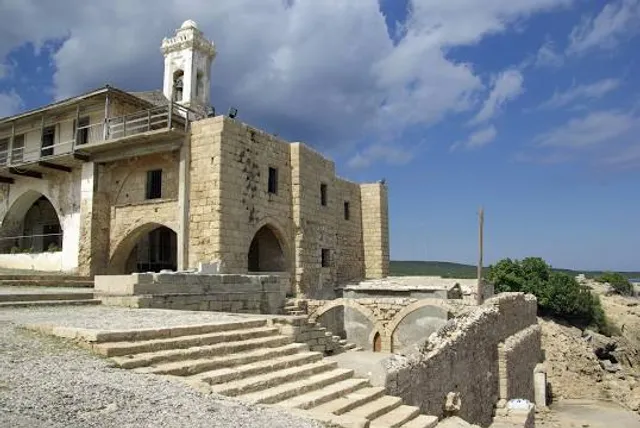
It is thought that there has been a monastery here since Byzantine times, and is possibly the location of the surrender of Isaac Commenos to Richard the Lionheart in 1191, although no trace of any structure . The monastery was supposedly founded here, as during a journey to Palestine, the ship which was transporting Andrew went off course and struck the rocks here. On coming ashore, Andrew struck the rocks with his staff, at which point a spring gushed forth. The waters proved to have healing powers, and restored the sight of the ship's captain who had been blind in one eye. Thereafter, the site became a place of pilgrimage, and in the 15th century, a small chapel was built close to the shore, where to this day, you can still collect the healing water. The church of the main monastery dates to the 18th century, while the main buildings are 100 years younger.
Mass pilgrimage, however, is only comparatively recent, dating back to the early years of the 20th century. The story is told that in 1895, the son of Maria Georgiou was kidnapped. Seventeen years later, the Apostle appeared to her in a dream, telling her to pray for her son's return at the monastery. Living in Anatolia, she embarked on the crossing to Cyprus on a very crowded boat. Telling her story during the journey, one of the passengers, a young Dervish priest became more and more interested. Asking if her son had any distinguishing marks, and on hearing of a pair of birthmarks, he stripped off his cloths to reveal the same marks, and mother and son were reunited.
After 1974, most of the Greek Cypriots in the area moved to the south, although a few remained in Dipkarpaz. For 30 years, very few pilgrims visited the monastery, but with the opening of the crossing points, this flow is now increasing.
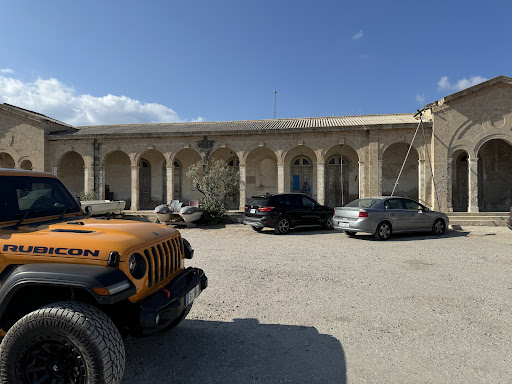
On your arrival, you will park in a courtyard, surrounded by cloisters where the pilgrims once stayed. Looking towards the sea, you will see the bell tower of the church. here you will find some icons, and normally some nuns or a retired priest acting as caretakers. Further down the slope you will reach the oldest part of the monastery and the holy well.
On two days of the year, the monastery becomes very busy; August the 15th (Assumption Day), and the 30th November, which is St Andrew's saints day. (Andrew is not only the patron saint of Scotland, but of Greece, Cyprus and Russia.)it is a...
Read moreThere is really not much reminiscing memory except for the donkeys and their petite but ironically big eyes. Since the first time I came here, I have known that the only thing worthy of seeing is the local residents, which are yet again the donkeys. However, the roads are diabolical, I broke measly 20 bones until we actually reached the intended destination. The beach is also worth a visit since you would have to drive through the roads impaled into literal craters. The way back home would not help with concussion. Jokes aside, the roads really need to be fixed. One more thing to remember is the fact that surrounding the monastery are scammers willing to sell you a wooden fork for more than 15 pounds, don't buy anything from the stores perched on the edge of the district, they will also try to exploit the one attribute that makes the monastery sacred, the water dispenser outside from which you can fill your water bottle yourself, I don't recommend drinking it though. They sell it for 2 euros as of recently, a person with a functional brain would not buy such useless stuff,...
Read more