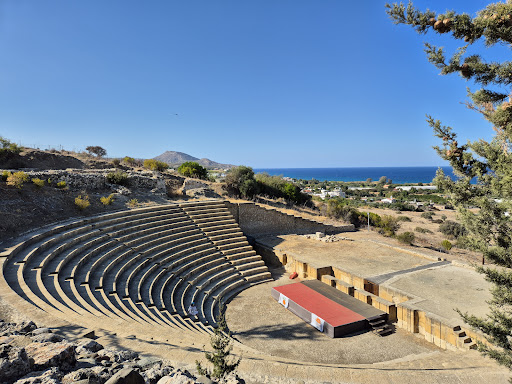
oli is an ancient settlement, one of the ten ancient kingdoms of Cyprus, and is located in the north-western part of the island, just outside the village of Gemikonagi, on the coast near Lefke. Its history can be dated back to the 11th century BC. It was probably established here because of a good water supply, fertile soil, an abundance of copper deposits, and a protected harbour. The city we can see today, was built around the 6th century BC, and is thought to have been named after the Greek philosopher, Solon. Soli was one of the most important capitals of Cyprus because of its port facilities and fertile soil. As with many ancient ruins, the stones of Soli were re-cycled, those of the theatre being used by the British, for the construction of Port Said in Egypt in the second half of the 19th century.
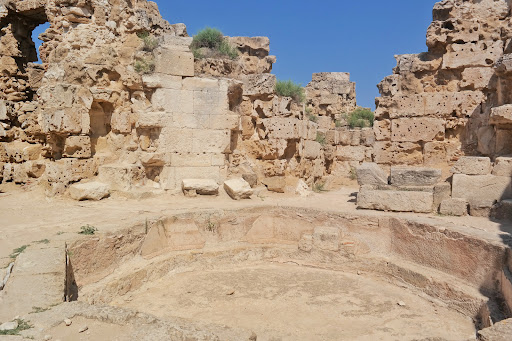
Excavations at Soli in the 1920s have unearthed a theatre, temples, palace ruins, agora, church and necropolis. After the excavation of the theatre building, the Isis, Aphrodite and Serapis temples were unearthed. The Aphrodite temple is situated on a hill above the theatre, but is not accessible by the public. A sculpture of Aphrodite dating back to the 1st century was found here, and is now exhibited at the Museum of Cyprus in South Cyprus. The palace buildings from the Helenistic period are also on this hill. Excavations continued in the 1960s by Canadian archaeologists. They unearthed the early Christian church, and tombs from the Geometric and Roman periods. they also unearthed the city agora with the remains of a marble fountain, shops dating back to the early Roman period, and ruins from the Helenistic period. Most recently, excavations by TRNC archaeologists in 2005 have unearthed more tombs. One tomb that was carved into the rocks is famous for its three tomb architecture, and is thought to have belonged to a noble. This tomb housed a golden throne, diadem and gold jewellery as well as other metal cups, which are exhibited at the Guzelyurt Museum of...
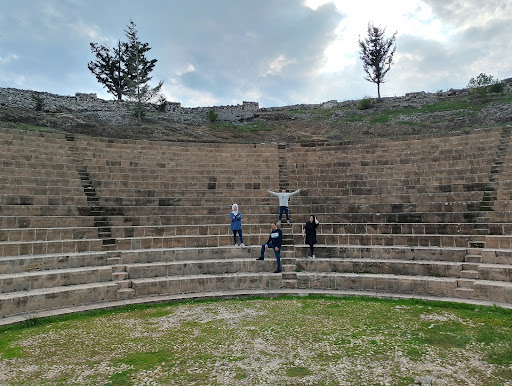
Read moreHighly recommended if you like historical ruins. You might not want to go in the summer heat, as it can be quite unpleasant. We had 37 degrees Celsius and a light breeze from the nearby sea, but only in the upper tiers of the amphitheater. The short loop is doable in the hot temperatures, but the long route of over 7 kilometers is a challenge. We did the short loop and were very lucky because when we were taking photos, it was deserted, and when we wanted to head back later, we encountered groups of tourists, and we were glad to have had the amphitheater all to ourselves for half an hour. The adjacent restrooms are unfortunately extremely modest; the so-called café is just a small shop with drinks, ice cream, and postcards, with a few seats in the shade under the trees. I have to deduct points for the restrooms, and for the ruins, some of which are no longer recognizable because they are overgrown. All in all, 4/5. A must-see if you're in the region. There's a great sandy beach right next to the resort to cool off, good music, cold drinks, etc. If you like ruins, history, and beaches,...
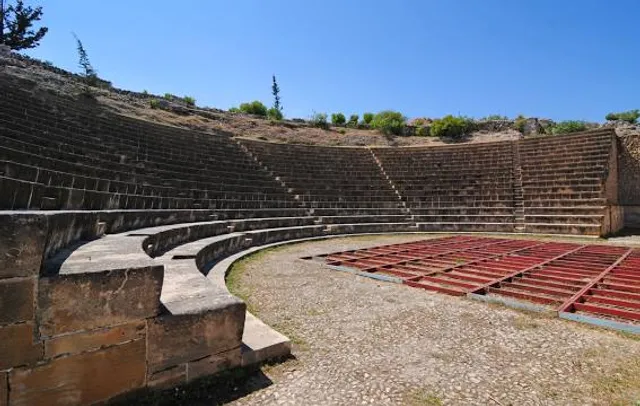
Read moreA voir pour les passionnés...amphithéatre romain de taille moyenne. Soli est connu pour être le lieu de naissance d’Aphrodite, la déesse grecque et aussi le lieu où l’apôtre Paul a baptisé Saint Marc. Car c’est à cette époque que la religion chrétienne devint la religion officielle de l’empire romain. On attribuerait cette officialisation par l’empereur Constantin suite à une bataille pour le commandement de Rome. En 313, Constantin autorisa la religion chrétienne suite à une vision qu’il avait eu avant la bataille du pont Milvius. Bien que l’armée de Constantin soit dépassée en nombre, il remporta la bataille ce qui sauva ses partisans des persécutions. Les hommes de Constantin portaient une croix chrétienne sur leurs tuniques pendant la bataille et Constantin était convaincu que le Christ les avait conduit à la victoire.
L’église de Constantin a été construite selon les plans de la célèbre Basilique de Rome. Après la légalisation du christianisme, les gens sortirent de leurs cachettes et commencèrent à bâtir des lieux de culte. Ceux qui n’étaient pas encore baptisés se tenaient dans la cour avant la cérémonie.
Tout ce qui reste de la basilique aujourd’hui n’est que ruines. Vous pouvez les découvrir avec une visite guidée. La section ronde des ruines est appelée apse. C’est l’endroit où se tenaient les fidèles, vêtus de couleurs chatoyantes. Avant le début des cérémonies, des porteurs d’encens parfumaient l’église avec de la fumée à l’odeur douce. L’évêque entrait ensuite, vêtu de luxueuses robes rouge et or, suivi par le chœur et les porteurs de la croix. Les descriptions du tour vous permettront d’imaginer à quoi ressemblaient les cérémonies. A cette époque, l’empereur était vénéré comme un dieu même si la plupart des anciens romains ne pensaient pas qu’il soit un dieu, puis l’empereur perdit son caractère sacré, même s’il était encore très respecté. L’empereur exerçait le pouvoir au nom de Dieu. A l’époque de Constantin, le statut des individus dépendait de leurs talents. Pour que les chrétiens s’élèvent dans la hiérarchie, l’habileté et l’éducation étaient primordiales. Constantin choisissait aussi les familles qui pratiquaient l’art de la mosaïque. De petits morceaux de pierre peuvent être transformés en œuvres d’art. Les artistes mosaïstes utilisaient des carrés de la taille d’un ongle faits de différentes matières comme le porphyre et le marbre. Ils utilisaient aussi différentes couleurs. Certaines mosaïques sont à base de céramique et de verre et la plupart des artistes utilisent du verre pour ajouter du contraste.
Les dessins des motifs étaient très importants pour la réalisation des projets, spécialement pour les projets de grande taille. Les carrés étaient appelé des tessères et étaient placés sur du ciment argileux. L’espace entre les tessères était aussi rempli avec ce même ciment. Comme vous pouvez le constater, les mosaïques ont traversé le temps et le monde peut encore...
Read more