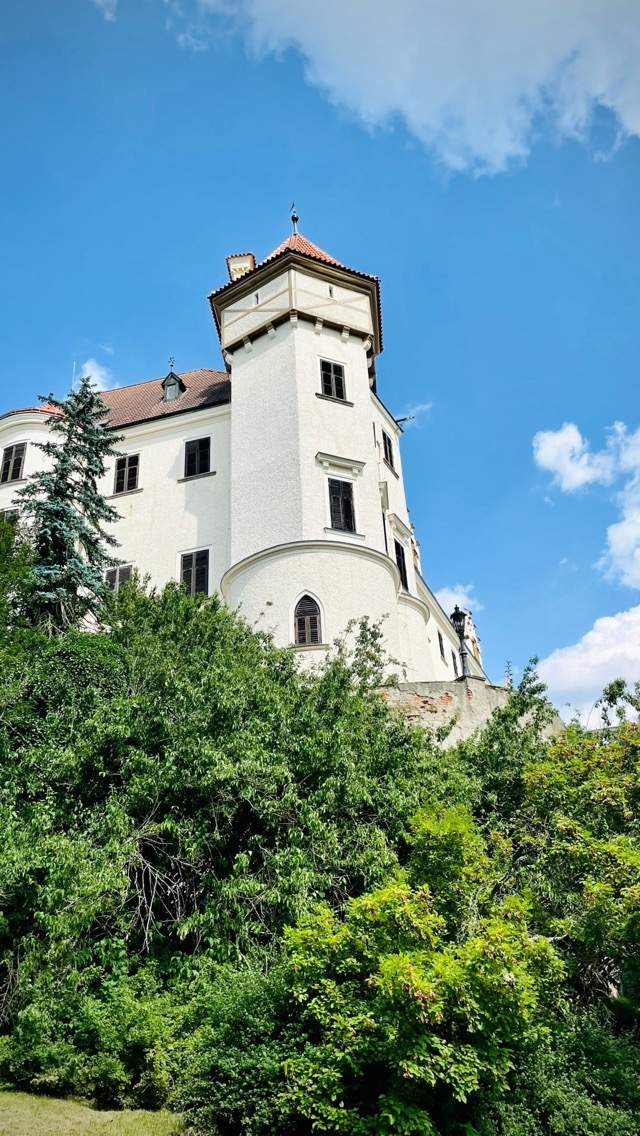
The castle was apparently established in the 1280s by Prague Bishop Tobiaš as a Gothic fortification in the style of a French castle with a rectangular plan and round towers protruding from the corners, making the most effective defence possible.Accounts show that the Benešévic family from nearby Benešov were the owners in 1318, and that in 1327 the castle passed into the hands of the Šternberks. In 1468, it was conquered by the troops of George of Poděbrady after a siege that lasted almost two years.
In 1603, the estate was purchased by Dorota Hodějovská of Hodějov, who made Renaissance alterations to the old gothic fortification.The Hodějovský family fortified their property because of their active participation in the anti-Habsburg rebellion in 1620. Albrecht von Waldstein acquired the castle, and after him it was passed to Adam Michna of Vacínov. Michna gained notoriety through his repression of the serfs, who revolted against him and conquered Konopiště in 1657.
The Swedes occupied and plundered Konopiště in 1648, and the Vrtba family then purchased the dilapidated structure. After 1725, they had it transformed into a Baroque style château.The drawbridge was replaced by a stone bridge, and near the east tower a new entrance was inserted in the wall. The gate which embellished it was designed by František Maxmilián Kaňka and featured statues from the workshop of Matthias Bernard Braun. In 1746, the upper levels of four of the towers were destroyed and one tower was completely demolished. During repair of the interiors, mythological and allegorical frescoes were painted on the ceilings of the great hall, and marble fireplaces with carved decorations by Lazar Wildmann were created.
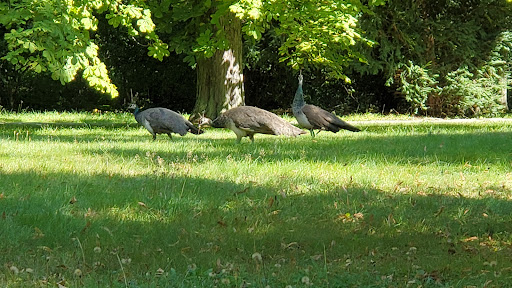
Archduke Franz Ferdinand of Austria bought Konopiště in 1887 with his inheritance from the last reigning Duke of Modena. He had it repaired between 1889 and 1894 by the architect Josef Mocker into a luxurious residence, suitable for a future Emperor, which he preferred to his official residence in Vienna. The extensive 225 ha (550-acre) English-style park, with terraces, a rose garden and statues, was established at the same time.
He invited Wilhelm II, German Kaiser to see his roses early in June 1914. Insofar as they discussed politics, they discussed Romania, but undocumented conspiracy theories about their planning an attack on Serbia or a division of the Austro-Hungarian Empire arose at the time.
Since 1921, the castle has been the property of the Czechoslovak and later Czech state, one of 90 such properties in state ownership. The Ministry of Culture was said to spend more than US$800,000 per year to maintain the castle, and it recovers about as much from entrance ticket sales and rental fees for occasional functions.
In 2000, 'Princess' Sophie von Hohenberg, great-granddaughter of Franz Ferdinand and his morganatic wife Sophie von Hohenberg, filed a lawsuit seeking restitution of the castle to the Hohenberg family, which however was never recognized as part of the House of Habsburg.The lawsuit, filed in Benešov (former German name: Beneschau), sought restitution of the castle, 6,070 hectares (15,000 acres) of woodland...
Read more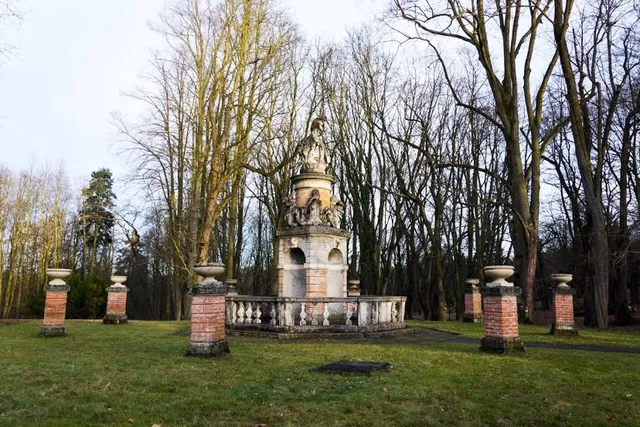

 Learn more insights from Wanderboat AI.