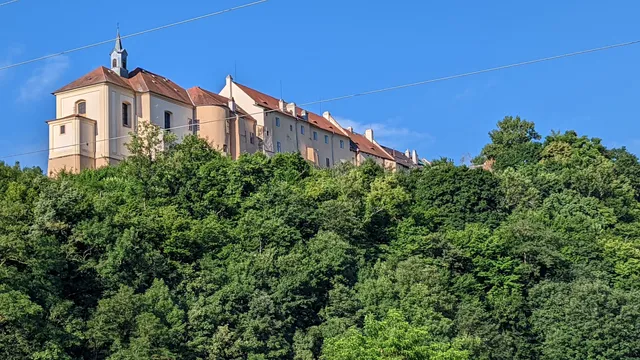
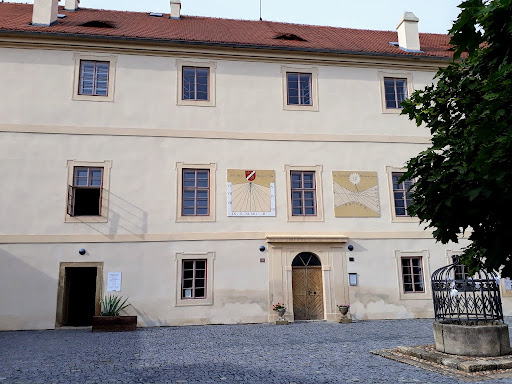
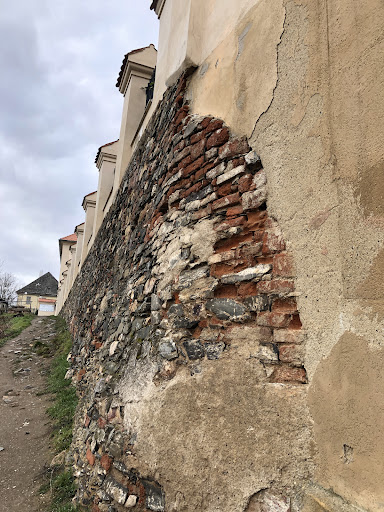
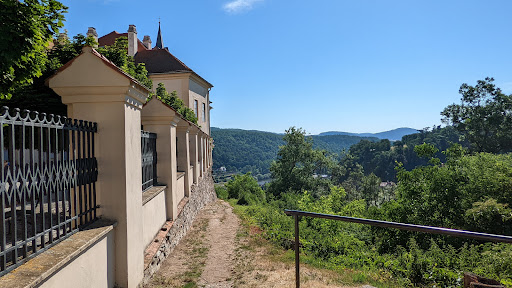
Původní hrad byl postaven v polovině 13. století zřejmě králem Přemyslem Otakarem II. Kolem roku 1265 již sloužil jako správní centrum celého Podbrdského kraje namísto nevyhovujícího tetínského hradiště. První název hradu byl Miesenburg, česky “Hrad nad Mží”, jak se tehdy řeka Berounka jmenovala. Název prošel různými změnami a v roce 1785 se již objevuje jako Nyžbor. V roce 1425 hrad dobyla husitská vojska. Majitelé se v průběhu staletí měnili, až jej po bitvě na Bílé Hoře získal i s přilehlým panstvím rod Valdštejnů, který zámek proměnil na honosnou barokní rezidenci. Dalším majitelem zámku se stal rod Fürstenbergů (dcera Jana Josefa z Valdštejna, který držel zámek byla provdána do rodu Fűrstenbergů). Po její smrti veškerý majetek připadl jejímu synovi Karlu Egonovi I. Ten roku 1736 převedl celé Nižborsko pod správu Rakovnického kraje, která trvala téměř do poloviny dvacátého století. Za socialistické éry zámek značně zpustl a ocitl se v havarijním stavu. V roce 1996 objekt zakoupila obec do svého vlastnictví. Od roku 2004 tu působí (vždy od května do listopadu) Informační centrum keltské kultury.
Zajímavost: kamenný pomníček ve stráni jen několik metrů severně od zámku vyznačuje místo křížení 14. poledníku východní délky a 50. rovnoběžky severní šířky.
The original castle was built in the middle of the 13th century probably by King Přemysl Otakar II. Around 1265 it served as the administrative center of the entire Podbrdský region instead of the unsuitable Tetín fortified settlement. The first name of the castle was Miesenburg, in Czech "Castle above Mže", as the Berounka River was then named Mže. The name underwent various changes, and in 1785 it appeared as Nyžbor. In 1425 the castle was conquered by Hussite troops. The owners changed over the centuries, after the Battle of Bílá Hora, the Valdstein family acquired it with the adjoining manor, and they transformed the chateau into a baroque residence. Another owner of the castle became the Fürstenberg family (the daughter of Jan Josef of Valdstein who held the castle was married to the Fűrstenberg family). After her death, all the property belonged to her son Karel Egon I. In 1736 he transferred the entire Nižbor region under the administration of the Rakovník Region and that state remained almost to the middle of the 20th century. During the socialist era, the chateau was very deserted and literally in a state of emergency. In 1996 the property was purchased by the municipality. Since 2004, the Information Center of Celtic Culture has been operating here (from May to November).
Iterestig fact: a stone memorial in the hillside just a few meters north of the chateau marks the crossing point of the 14th meridian of the eastern longitude and the 50th parallel of the...
Read moreNice chateau. In 2004-5 it underwent a series of very successful reconstructions. Nowadays it houses expos of Celtic culture and Czech archeological excavation sites of said culture. They very well done. That being said, it is not for everyone. People who expect a chateau will be disappointed as there is very little left of the original interiors and furniture. The chateau is an excellent example of how can a devastated old building find a new use in spite of being owned by the city council. I would recommend visiting to everyone who has interest in Celts and related...
Read moreAs the castle has been nearly destroyed by the communists there was nothing left from the interiors to show. So the castle is not a museum of itself as castles use to be, instead there's interesting exposition of nearby Celtic opidium and separate exposition of how archeology has been done in 20es and 30es in Czechoslovakia. Being on hill the place provides beautiful...
Read more