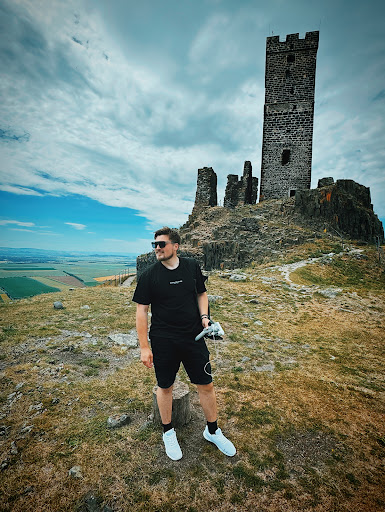
In the heart of Luxembourg, nestled between the bustling city and the verdant wilderness, lay a single, solitary seed - the Seed of Vershaffelt. An artifact of remarkable power, it was said to contain the essence of the land, the spirit of the mountains, and the wisdom of the skies. According to an ancient prophecy, the one who possessed the Seed could command the elements themselves.
One day, the Seed was stolen by a mischievous wind spirit named Aerwyn, who was enamored with the idea of holding such power. With a gusty laugh, Aerwyn carried the Seed away from Luxembourg, crossing mountains, valleys, and vast expanses of land until it arrived at a hill in what is now the Czech Republic. There, it dropped the Seed, creating an enormous explosion of energy that sculpted the hill into what we now know as Hazmburk Castle.
But Aerwyn quickly realized that the Seed couldn't be controlled so easily. The forces of nature, imbued in the stone walls and towers, started to rebel against their wind captor. Vines spiraled upwards to the sky, challenging the winds, and rocks emerged like giants from the ground. Despite Aerwyn's efforts, the castle held firm, standing tall and unyielding against the tumultuous winds. Eventually, Aerwyn had to retreat, leaving the castle in peace.
Today, Hazmburk Castle stands as a testament to this legendary tale, a majestic symbol of the balance between nature and the elements. The robust stone walls, scarred yet standing, whisper tales of their struggle against the winds. The ruins, weathered and worn, bear the marks of a timeless legend, offering a glimpse into the fantastic tale of a wind spirit, a powerful Seed, and the castle that resisted the whims of both.
--
You should be aware that the above legend is completely fictional. The castle ruins however, are very real. If you have a chance, make the trek to the top. There is ample reward, even if you don't splurge on the entrance fee. Which I recommend you do anyway, for the view from the main tower is nothing short of...
Read moreBeautiful castle ruins, Hazmburk Castle, located in the Libocovice region of the Czech Republic, has a rich history that dates back to the 13th century. Here are some key points about its history:
Foundation: The castle was founded around the year 1280 by the noble family of Házmburk, who were vassals of the Czech king. Its strategic location allowed it to control important trade routes.
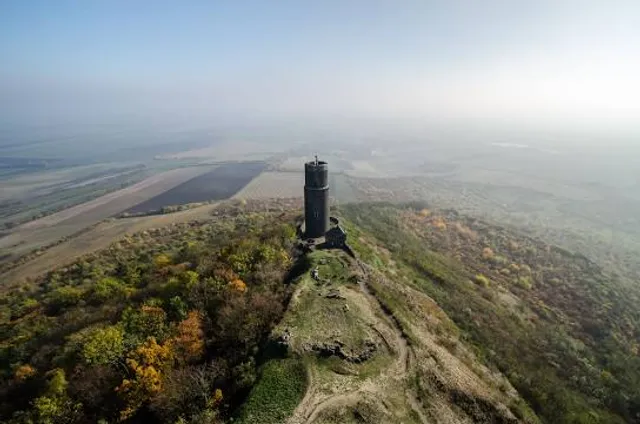
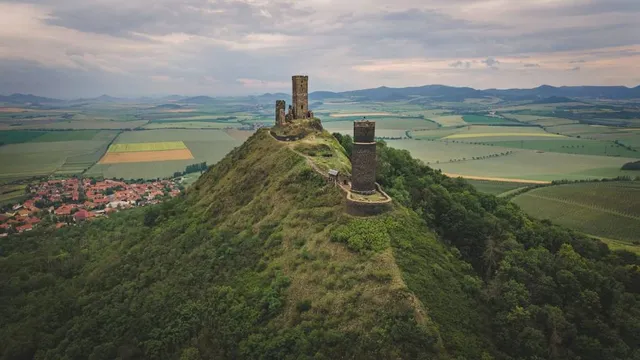
Architectural Features: Initially built in the Romanesque style, Hazmburk later saw Gothic modifications. The castle is known for its two distinctive towers, which are prominent features of its silhouette.
Royal Connections: The castle was often associated with the royal family and served as a residence for various noble families over the centuries. It played a role in regional politics and military conflicts.
Decline: By the 16th century, the castle began to fall into disrepair, especially after it was abandoned in the early 17th century during the Thirty Years' War. The gradual neglect led to its ruin.
Current Status: Today, Hazmburk Castle is a protected cultural monument. It attracts visitors for its historical significance and scenic views of the surrounding landscape. Restoration efforts have been undertaken to preserve its remaining structures.
Hazmburk Castle stands as a testament to medieval architecture and history in the Czech Republic, offering insight into the...
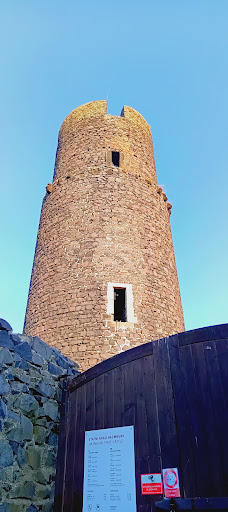
Read moreThe hillsides are protected as a natural monument Vrch Hazmburk. The hill is the dominant landscape on lower Poohří. The ruin is protected as a cultural monument and since 2002 managed by the National Monument Institute. Hazmburk Gothic Castle, located on a 418-meter-high basalt hill, together with the highest mountain in the Central Bohemian Mountains Milešovka, creates the clear dominant of lower Poohří. It is also called Klapý, Hanžburek, Zaječí Castle, Zajíc Castle or Hasenburg. Its dominance consists of two towers - a black oval (25 m) and a white prismatic tower (26 m). The Black Tower, which was built of dark basalt and served as a prison, was an important defensive element. Access to it was only possible after the passage hanging over the floor. The White Tower gets its name according to its light sandstone – the tower's foundations are made of basalt, the middle part is of hewn sandstone, and only the top is of well-worked sandstone blocks. The White Tower is currently adapted for tourists as an observation tower. From a height you can see a beautiful scenery in the Central...
Read more