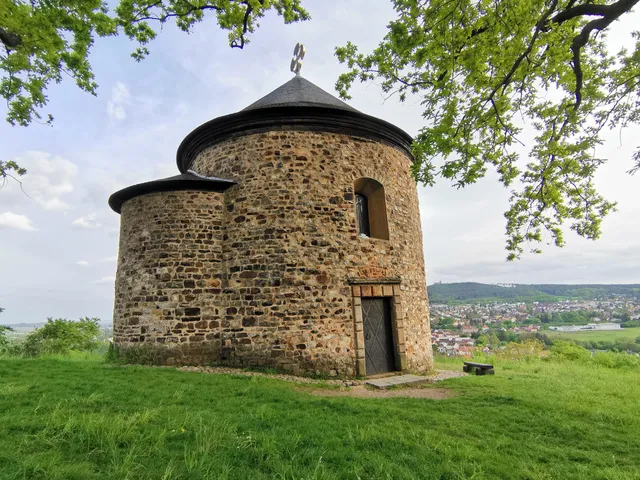
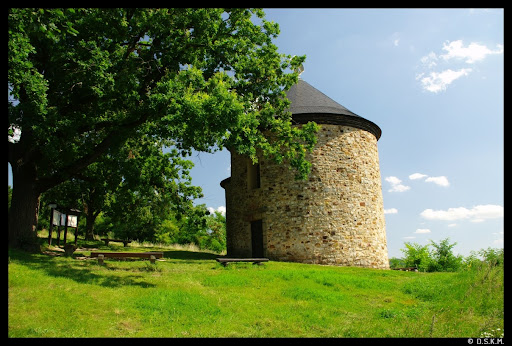
Původně rotunda sv. Petra je jedinou dodnes stojící stavbou na někdejším přemyslovském knížecím hradu ve Staré Plzni. Válcová loď a polokruhová apsida je vybudována z nepravidelných křemencových kamenů spojených vápennou maltou. Podlahu pokrývaly dlaždice s motivem císaře Nerona a gryfů, kteří symbolizují nepřátelství vůči křesťanům. Věřící po nich tak mohli alespoň symbolicky šlapat. Stavba se poprvé připomíná až v listině krále Přemysla Otakara II. roku 1266, podle níž se stal premonstrátský klášter v Chotěšově patronem všech 8 kostelů ve Staré Plzni. V roce 1421, po vyplenění městečka husity, začalo pravděpodobně chátrání celé stavby. Koncem 15. století nebo počátkem 16. století se zřítila část kruhové lodi i její strop. Po roce 1561 rod Kokořovců z Kokořova naštěstí obnovili rotundu do původního stavu. Na dostavbu použili materiál z chátrajících budov na hradišti.
Originally the rotunda of St. Peter is the only building still standing today at the former Premyslid princely castle in Old Plzeň. The cylindrical nave and semicircular apse are constructed from irregular quartzite stones connected by lime mortar. The floor was tiled with the motif of Emperor Neron and the gryphs, symbolizing hostility toward Christians. So the believers could at least symbolically tread on them. The building was first mentioned in the charter of King Přemysl Otakar II. in 1266, according to which the Premonstratensian monastery in Chotěš was the patron saint of all 8 churches in Old Plzeň. In 1421, after the Hussite town was plundered, the building began to deteriorate. By the end of the 15th century or early 16th century, part of the circular ship and its ceiling had collapsed. After 1561 the Kokořovec family from Kokořov fortunately restored the rotunda to it´s original state. On completion, they used the material from dilapidated buildings on the...
Read moreNice sacral rotunda, unfortunately it is closed and cannot be visited. Nice view above the surrounding landscape, village below and the castle on the hill on the opposite mountain side. The information boards put there give explanations in Czech, English and even German. Very positively surprised by that fact. Wouldn't have visited though if I knew that one can't enter. Only recommend going up there if you enjoy a...
Read moreOne of the oldest christian buildings in the region, it hides some ancient historic gems as well as shows origins of christian culture mixed with pagan influences - such as original floor cobbles depicting cesar Nero. The place is mystical, offers wonderful views over the nearby town of Stary Plzenec. A few steps away you find restored foundations of the midevil administration seat of Old Pilsen, dating to...
Read more