Incredible place that’s very much worth seeing. You can drive there easily with a rental car. It looks, feels & is considerably saltier than the Dead Sea.
This could be a big source of tourism revenue for Djibouti, but absolutely nothing has been done to develop tourism here. Don’t count on as much as a bathroom or kiosk to buy soda between here and Djibouti. There’s zero tourism infrastructure.
If the main that Google Maps wants to take you on by the lake is closed, take Rue de Assal in grey on the map (I put red over it in the photos) which will also take you by the lake.
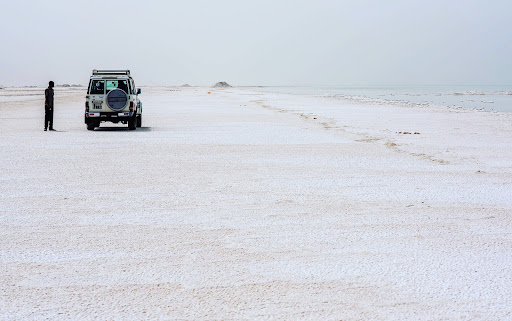
At the end of the road there is a parking lot. Children who beg in the parking lot will ask for money when you get out of & back into your car, but they will not pursue you onto the lake past the sign. The entire site—parking & everything—is free, so you do not have to give any money to anyone unless you want to. Walking on the salt plain by the lake itself is very peaceful.
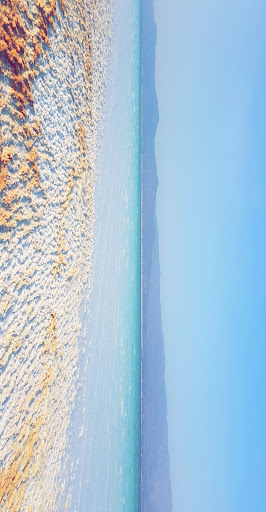
On the road you will see many areas where you can go swimming in the water. The saltiness is intense so if you get in, make sure you have no cuts & that you brought fresh water in bottles from the city to rinse off with. I wore a bikini with no problem (everything was secluded with no other tourists anyway). Wear shoes into the water because the salt crystals are jagged.
I recommend buying food & water from the Géant in Badawi Mall before you drive out, since there’s no food stops on the way. Fill up on petrol too since I saw no gas stations en route.
The road is really interesting. The whole thing from downtown Djibouti toon about 2.5 hours going & 1.45 hours coming back because there’s just one lane in either direction, so traffic can be bad. You’ll see wrecked trucks & cars along the road of indeterminate age. But brace yourself for the poverty. It’s the worst I’ve seen anywhere, including next door Ethiopia. Many adults & children you pass will hold their hands to their mouths asking for food.
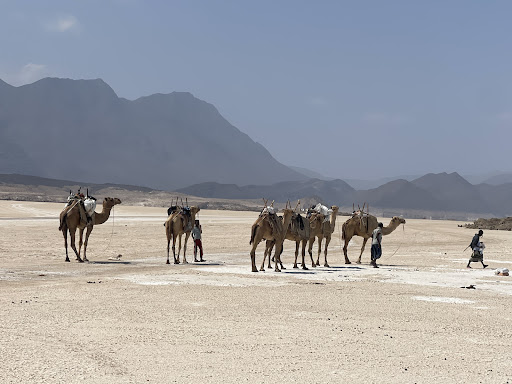
I’ve never seen a superlative tourism site so completely undeveloped by a government as Lac Assal. You’ll see camel herders on the vast salt plain, for example, but no one even offers paid-for camel rides, let alone an industry of spa wellness & hotels like the Dead Sea. Crushing poverty visible en route makes this reality feel more depressing than romantic.
But it’s still 1000% worth seeing. A must-see...
Read more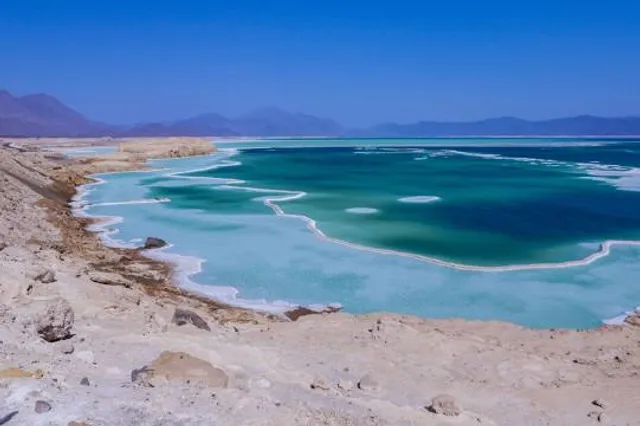
 Learn more insights from Wanderboat AI.