A Majestic Tribute to History: Faro a Colón
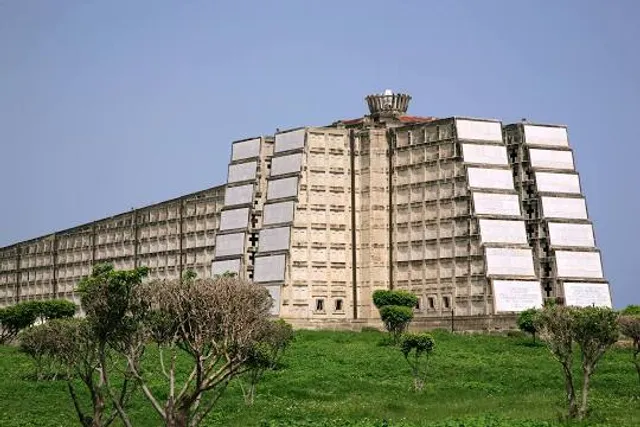
Nestled along the picturesque coastline of Santo Domingo, Faro a Colón stands as a magnificent testament to both the spirit of exploration and the rich cultural heritage of the Dominican Republic. As a visitor, stepping foot into this awe-inspiring monument is nothing short of a transformative journey through time.
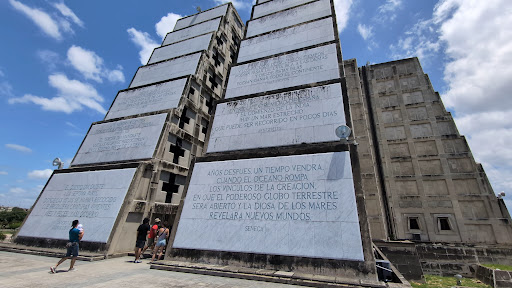
Faro a Colón, or the Columbus Lighthouse, is not merely a beacon guiding ships to safe harbor; it is a beacon of enlightenment, illuminating the remarkable history of Christopher Columbus and his monumental voyage to the New World. From its towering stature to its intricate architectural design, every facet of this monument exudes grandeur and reverence.
Upon entering the colossal structure, one is immediately struck by the sheer magnitude of its interior. The vastness of the space is accentuated by the monumental cross-shaped layout, symbolizing the crossroads of cultures that Columbus's voyage brought together. Adorned with intricate carvings and symbolic motifs, the interior walls serve as a living tapestry of Dominican history, showcasing the convergence of indigenous, European, and African influences.
Ascending the spiral staircase to the pinnacle of the lighthouse offers a breathtaking panorama of the surrounding landscape, where the azure waters of the Caribbean Sea meet the vibrant cityscape of Santo Domingo. It's a moment of reflection, a chance to contemplate the profound impact of Columbus's journey on the course of human history.
Beyond its architectural marvels, Faro a Colón serves as a cultural hub, hosting exhibitions and events that celebrate the diversity and resilience of the Dominican people. From art exhibitions to educational programs, the monument fosters a deeper understanding of the nation's heritage and its place in the global tapestry of civilizations.
For history enthusiasts, cultural aficionados, and curious travelers alike, Faro a Colón is a must-visit destination that promises to enlighten, inspire, and captivate. It's more than just a monument; it's a living testament to the enduring legacy of exploration, discovery, and the boundless...
Read more70 million dollars spent on a light house designed by a foreign scotmans that doesn’t even have the remains of Columbus since DNA has proven that his remains are in Spain and the Dominican government won’t allow the dna of the random guy buried here to be tested. What does it matter the whole city is dedicated to him anyway? Here’s what matters: the infrastructure hasn’t improved healthcare and profilaxis access for women hasn’t improved. The colonial caste system is still clearly in place, when you stay at local hotels it’s obvious. I’d be happier to visit my fathers ancestral home if I didn’t have to witness children risking their lives daily throwing themselves into oncoming traffic like a deadly real life game of frogger. Traffic flows in all directions no access at all for ambulances. Years pass and the population has exploded with no accommodation to better the living of the common citizen. Colonialism still reigns in DR. This monument is a stain on the nation. Truly a disgusting display of political corruption and...
Read moreЭто мавзолей Христофора Колумба в Доминиканской Республике. Испанский мореплаватель итальянского происхождения, знаком нам еще со школьной программы открытием Америки. Сейчас это одно из наиболее известных имен в истории, но при жизни после четырех экспедиций в Новый Свет Колумб не получил ни богатства, ни славы. Умер он после тяжелой болезни 20 мая 1506 г. в Севилье (Испания), где его и похоронили. Но сам Колумб завещал похоронить его на земле открытой им Вест-Индии.
Значение Нового Света для Испании все больше повышалось, когда конкистадоры начали привозить все больше и больше золота и серебра, а на картах появлялось все больше новых территорий. О Колумбе снова вспомнили. В 1540 г. император Карл V решил исполнить его последнее желание и останки мореплавателя перевезли на остров Эспаньола (сейчас известный как Гаити). Но и там кости Колумба не нашли покоя. На Гаити пришли французы и испанцы перенесли прах в кафедральный собор Гаваны (Куба). Но Кубу Испания потеряла во время Испано-Американской войны. И останки Христофора Колумба снова вернулись на Гаити, в кафедральный собор Санто-Доминго.
Дальше официальная версия утверждает, что прах мореплавателя был отправлен обратно в Севилью. В 2003 г. были исследованы севильские останки. По заключениям экспертов, они принадлежали мужчине субтильного телосложения, умершему приблизительно в 45 лет. Это никак не подходит Колумбу, весьма крепкому телом и дожившему до 54.
А, между тем, еще в XIX в. в соборе Санто-Доминго был обнаружен ящичек с костями, на котором было написано, что они принадлежат Колумбу. Испанцы всегда с недоверием относились к этой находке, но после экспертизы севильских останков шансы на их подлинность считаются очень высокими. Тем более доминиканцами. В 1920-х гг. был объявлен международный конкурс на мемориал Колумбу в Санто-Доминго. В нем приняли участие 455 участников из 48 стран, в том числе русский и советский архитектор К. С. Мельников (в его идеях мемориал должен был стать огромным вращающимся механизмом), но жюри выбрало проект шотландца Глива (J. L. Gleave) в виде гигантского бетонного сооружения. Вроде бы, начинались какие-то работы по строительству, но денег не нашлось аж до 500-летнего юбилея открытия Америки (1992 г.). Строительство началось в 1986 г. а затраты составили действительно большую сумму в 70 миллионов американских долларов. Открыл мемориал в 1992 г., в год 500-летия открытия Америки ныне причисленный к лику святых папа римский Иоанн Павел II (Кароль Войтыла). Высота сооружения — 33, ширина — 44, а длина — 310 м. Мавзолей не случайно называется маяком. На его крыше установлено 157 прожекторов, которые светят вверх, в небо. Мощный столб света виден на многие десятки километров. Говорят, его видно даже из Пуэрто-Рико, а это более 400 (!) км. Прожектора проецируют на небо тот же крест, что представляет собой в плане маяк.
Правда, экономика вносит коррективы в проект. Электричество дорого, поэтому увидеть маяк работающим можно не всегда, а только...
Read more