HTML SitemapExplore

Dowa Ancient Rock Temple — Attraction in Uva Province

Name
Dowa Ancient Rock Temple
Description
Dhowa Rock Temple or Dowa Raja Maha Viharaya is a heritage listed rock temple in Sri Lanka, located in the central mountains of the Uva Province. It is adjacent to Dhowa, a small village situated on the Badulla-Bandarawela main road. The temple is 210 km east of Colombo and 120 km south of Kandy.
Nearby attractions
Nearby restaurants
Nearby local services
Nearby hotels
Ella Heaven Inn
638, Badulla Road, Udukumbalwela, Ella 90090, Sri Lanka
Ksara Holiday Home & Tea Centre
V23C+Q5J, Badulla Road, Dowa, Bandarawela, Sri Lanka
Dowa Elegance Resort
Uva Dickarawa Estate , kithal Ella, Road, Bandarawela 90100, Sri Lanka
The Tea Tree Resort
Kitalella, Sri Lanka
The Bandarawela Bungalow
Kitelella Rd, Bandarawela, Sri Lanka
Ella Sisilasa
No 2 uva dicarawa watthe, kithalella, Bandarawela 90100, Sri Lanka
Coz Haven Ella Homestay
Badulla Road, Dowa, Ella 90100, Sri Lanka
Related posts
Keywords
Dowa Ancient Rock Temple tourism.Dowa Ancient Rock Temple hotels.Dowa Ancient Rock Temple bed and breakfast. flights to Dowa Ancient Rock Temple.Dowa Ancient Rock Temple attractions.Dowa Ancient Rock Temple restaurants.Dowa Ancient Rock Temple local services.Dowa Ancient Rock Temple travel.Dowa Ancient Rock Temple travel guide.Dowa Ancient Rock Temple travel blog.Dowa Ancient Rock Temple pictures.Dowa Ancient Rock Temple photos.Dowa Ancient Rock Temple travel tips.Dowa Ancient Rock Temple maps.Dowa Ancient Rock Temple things to do.
Dowa Ancient Rock Temple things to do, attractions, restaurants, events info and trip planning
Dowa Ancient Rock Temple
Sri LankaUva ProvinceDowa Ancient Rock Temple

Basic Info

Dowa Ancient Rock Temple

V24C+GWC, Sri Lanka
4.5(206)
Open 24 hours
Save
spot

Ratings & Description

Info

Dhowa Rock Temple or Dowa Raja Maha Viharaya is a heritage listed rock temple in Sri Lanka, located in the central mountains of the Uva Province. It is adjacent to Dhowa, a small village situated on the Badulla-Bandarawela main road. The temple is 210 km east of Colombo and 120 km south of Kandy.

Cultural
Scenic
Family friendly
Off the beaten path
attractions: , restaurants: , local businesses:
logoLearn more insights from Wanderboat AI.

Plan your stay

hotel
Pet-friendly Hotels in Uva Province
Find a cozy hotel nearby and make it a full experience.
hotel
Affordable Hotels in Uva Province
Find a cozy hotel nearby and make it a full experience.
hotel
The Coolest Hotels You Haven't Heard Of (Yet)
Find a cozy hotel nearby and make it a full experience.
hotel
Trending Stays Worth the Hype in Uva Province
Find a cozy hotel nearby and make it a full experience.

Reviews

Live events

Ella One Day Tour by Tuk-Tuk or Mini van
Sat, Jan 17 • 9:00 AM
Ella, Uva Province 90090, Sri Lanka
View details
Ride a day trip to Ellas hidden places on Jeep
Sat, Jan 17 • 9:30 AM
Ella, Uva Province -, Sri Lanka
View details
Make traditional Sri Lankan feast
Sun, Jan 18 • 6:00 PM
Bandarawela, Uva Province 90100, Sri Lanka
View details
Get the Appoverlay
Get the AppOne tap to find yournext favorite spots!
Wanderboat LogoWanderboat

Your everyday Al companion for getaway ideas

CompanyAbout Us
InformationAI Trip PlannerSitemap
SocialXInstagramTiktokLinkedin
LegalTerms of ServicePrivacy Policy

Get the app

© 2025 Wanderboat. All rights reserved.

Reviews of Dowa Ancient Rock Temple

4.5
(206)
avatar
5.0
5y

Visit this temple along the main road towards Badulla (closer to Bandarawela) and a few moments of experiencing the mysteries and people of the past is guaranteed.

It's easy to find and just like the tip of an iceberg, the temple is larger than it looks from the level of the main road. The temple is situated opposite to the large Bo tree where otherwise you might think that the latter is the entrance.

There is a small parking space right at the front that can hold up to 8 to 10 vehicles. If that's full it's not much of a problem as there's miles and miles (if you don't mind the trek) of safe parking space along the main road.

Once inside you have to walk a short path that leads to steps that will take you down to the temple.

Unlike most other temples, this one conserves the history and holiness that makes the temple unforgettable.

Look down from the flight of steps and you will see the temple proper and a Bo tree that has branches spreading wide and far, even as far as the railing you're holding onto.

To your right a river runs alongside the temple, adding the soothing sound of streaming water to the already cool and serene air within the premises.

The temple consists of only a few buildings. There's a wooden open hall like building where the priest preaches and the devotees sit with their legs bowed and listen.

To the left there are a few spaces to leave your shoes, wash your hands and dispose whatever you don't need.

Oh and there's a building right at the beginning of the steps, built on top of another rock and I think that's where the monks /priests reside. Not a place to visit of course.

Getting back to the temple, the "budu geya" or the 3rd place of worship in any temple where all the frescoes, statues and treasures (religious ones... nothing to see here Mr. Looter)are placed, can be seen.

What's so special about this is that it's built into the huge boulder that rests beside the river that I mentioned earlier (and hence the name: temple in the rock). You can see that this part of the temple is inside the rock because its roof touches the posterior part of the boulder (see the photos at the end).

Inside it's pure history, magic and serenity. Colorful frescoes adorn the walls and ceiling. The ceiling is the inner surface of the rock and the paints and patterns are drawn upon its uneven, rough surface.

Get to the side of this part and you can see the river running along the side, sending an occasional cool spray if you're near enough. It is a bit sad to see the negative effect of humans where the river banks are sometimes full of washed up or thrown out rubbish and plastic.

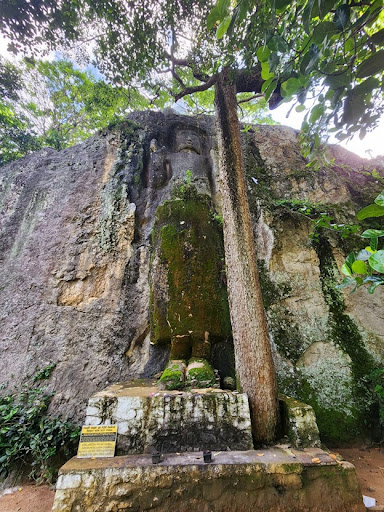
After that's over head up more towards the back and you can see the rest of the boulder. To the left there's a tall and majestic statue of Lord Buddha hewn in rock, His eyes gazing down upon us calmly and in peace , instilling the same within us (if our minds are open enough to understand).

And that's not the end of it. Right at the top of the boulder (er underneath?) there's an entrance to a cave that leads to a tunnel that runs for many kilometers. This tunnel ends at the Bogoda temple and bridge (my review on that temple is also available).

This secret tunnel was used by historic heroes, sinhalese soldiers and priests to travel in between the two temples and evade invasive forces of that era.

The tunnel has caved in now but the entrance is still visible within the rock. A small statue of a snake and Lord Buddha guards this entrance but you have to shine a light and peer hard to spot it in the darkness.

Just looking at this entrance takes you back in time and even though you may not be familiar with the course of the tunnel, if you have seen both ends, your imagination will help you to take a brief magical journey in its darkness and share the courage, fear and trepidation of whoever took this path centuries ago.

On a final note, if you're suffering from shortness of breath, the descent is not much of an issue but climbing back up can be a bit taxing on your vital organs.

But...

   Read more

avatar
5.0
1y

Dowa Raja Maha Viharaya lies a few kilometers away from the Bandarawela town on the Bandarawela – Badulla Road. This temple is thought to have been built by King Walagamba in the first century BC. This is one of the many temples built by the king while taking refuge in the Uva province after an Indian invasion.

The temple has gained popularity mainly due to its massive 38 feet Buddha Statue carved in granite rock. But this temple also hides some secrets that time has forgotten.

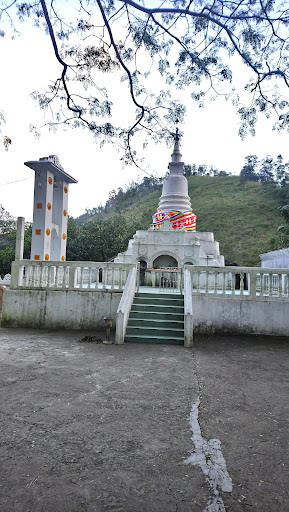
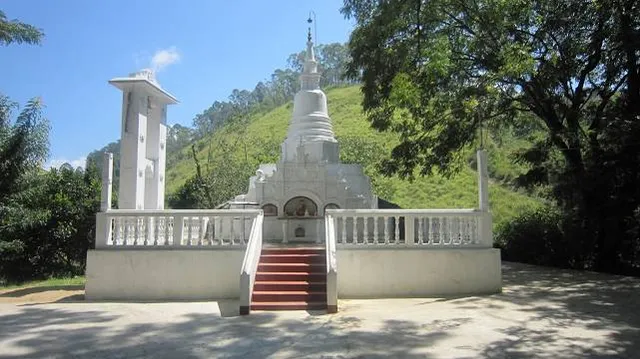
The uncompleted image of the Buddha is carved out of a rock boulder which is well hidden from the main road. Not much of attention has been given to this statue and it seems to be slowly breaking up. At the top of the boulder is a small stupa. This stupa is on the same level as the road and it is the only indication of a temple to a traveler on the road.

At the rear of the image house is a small stupa inside a cave. The cave functions as a Stupaghara for the stupa. These are generally called Chetiya Len. Behind this stupa, inside the cave is a tunnel called the Ravana Guhawa guarded by a figure of a Clay King Cobra. This 11 km long tunnel is said to be connecting the Ravana Maha Viharaya at Ella and the Bogoda Raja Maha Viharaya. Unfortunately, this tunnel entrance has been sealed off with cement by the temple due to various vandalism acts by treasure hunters. It said that the king disappeared from the area overnight using the tunnels and thus the work on the Buddha Statue was abruptly stopped.

The Image house built inside the cave is full of colorful murals and Buddha Images and consists of 3 chambers. On the sides of the main entrance to the image house is two guardians, one with an elephant in its mouth and the other with a bull (?) in its mouth. It is said that they are Watuka and Kuvera, two Rakshasa tribal leaders, guarding the entrance to the shrine room. The door frame of the Image House in the temple is made out of solid rock and has an inscription to say it was built in 1880. The outermost chamber is filled with murals from the Kandyan Era. The entrance to the second chamber is decorated with an elaborated Makara Thorana. In the second chamber is a row of Buddha images along with paintings. The rock canopy is decorated with various motifs. Hidden in these decorations is a rare painting of “Eth – Gon Satana” (an elephant – bull fight )

Entrance to the 3rd chamber is a simple wooden door and inside are two reclining statues of Buddha along the contours of the cave.

The Bo Tree is on a higher elevation than the image house. On this platform is a small pond surrounding a rock. This rock forms a natural water sprout and water continuously flows through small openings at the the top...

   Read more
avatar
5.0
1y

Dowa Raja Maha Viharaya is a heritage listed rock temple in Sri Lanka, located on the Badulla-Bandarawela main road. (1996 Nov 1st Gazette number 948 ) The temple is believed to have been constructed by King Valagamba in the first century BC during his exile from Anuradhapura following a south Indian invasion. Initially the temple also known as Kumbaltissa Ariyagala Viharaya after the chief priest who provided refuge to the king. So, the temple dates back over 2000 years ! The temple is renowned for its large 12 m (38 ft) high unfinished Buddha image, which is carved into the vertical granite rockface. The image is said to be as an example of Mahayana sculpture.

This Buddha statues is carved on light gray granite. Unfortunately, the rock Buddha sculpture on the rock temple seems to be in a neglected condition at present. It shows pegmatite patches. The surface of the statues is remarkably irregular due to granular disintegration and the differential weathering. Nasty agents of weathering, like poorly drain water, sunrays, fluctuating temperature has its toll on this unprotected and poorly maintained rock statue. It is visible this erosion has transported the bits of rock and mineral away. Horizontal and vertical cracks in the host rock have promoted mechanical weathering. The lower parts of the stature under the influence of water and areas with severely broken surfaces showed prominent biological colonization of dark gray and yellowish green lichen, dark green plants etc. Therefore, scientific conservation treatment and long-term maintenance is a must to preserve this ancient historical stature. Unfortunately, today, many of our historically valuable temples are in a dilapidated condition. It’s pathetic to see in the meantime many new temples mushrooming with huge statues, in daily basis in major junctions and mountain tops creating traffic jams, environmental damage etc. Most of them looks sophisticated , artificially modern, overriding the key principle of Buddhism, the simplicity. It’s up to the authorities to introduce some kind of regulations regarding these kinds of activities. Also, scientific conservation of this temples is a paramount importance. They should intervene and implement a method to coordinate and get the support of University academists, relevant ministries etc. for this purpose. This will help to preserve our heritage sites, improve tourism and prevent using religion for mere economical purposes. I am sure many will support financially if they...

   Read more
Page 1 of 7
Previous
Next

Posts

Chamindra WeerawardenaChamindra Weerawardena
Visit this temple along the main road towards Badulla (closer to Bandarawela) and a few moments of experiencing the mysteries and people of the past is guaranteed. It's easy to find and just like the tip of an iceberg, the temple is larger than it looks from the level of the main road. The temple is situated opposite to the large Bo tree where otherwise you might think that the latter is the entrance. There is a small parking space right at the front that can hold up to 8 to 10 vehicles. If that's full it's not much of a problem as there's miles and miles (if you don't mind the trek) of safe parking space along the main road. Once inside you have to walk a short path that leads to steps that will take you down to the temple. Unlike most other temples, this one conserves the history and holiness that makes the temple unforgettable. Look down from the flight of steps and you will see the temple proper and a Bo tree that has branches spreading wide and far, even as far as the railing you're holding onto. To your right a river runs alongside the temple, adding the soothing sound of streaming water to the already cool and serene air within the premises. The temple consists of only a few buildings. There's a wooden open hall like building where the priest preaches and the devotees sit with their legs bowed and listen. To the left there are a few spaces to leave your shoes, wash your hands and dispose whatever you don't need. Oh and there's a building right at the beginning of the steps, built on top of another rock and I think that's where the monks /priests reside. Not a place to visit of course. Getting back to the temple, the "budu geya" or the 3rd place of worship in any temple where all the frescoes, statues and treasures (religious ones... nothing to see here Mr. Looter)are placed, can be seen. What's so special about this is that it's built into the huge boulder that rests beside the river that I mentioned earlier (and hence the name: temple in the rock). You can see that this part of the temple is inside the rock because its roof touches the posterior part of the boulder (see the photos at the end). Inside it's pure history, magic and serenity. Colorful frescoes adorn the walls and ceiling. The ceiling is the inner surface of the rock and the paints and patterns are drawn upon its uneven, rough surface. Get to the side of this part and you can see the river running along the side, sending an occasional cool spray if you're near enough. It is a bit sad to see the negative effect of humans where the river banks are sometimes full of washed up or thrown out rubbish and plastic. After that's over head up more towards the back and you can see the rest of the boulder. To the left there's a tall and majestic statue of Lord Buddha hewn in rock, His eyes gazing down upon us calmly and in peace , instilling the same within us (if our minds are open enough to understand). And that's not the end of it. Right at the top of the boulder (er underneath?) there's an entrance to a cave that leads to a tunnel that runs for many kilometers. This tunnel ends at the Bogoda temple and bridge (my review on that temple is also available). This secret tunnel was used by historic heroes, sinhalese soldiers and priests to travel in between the two temples and evade invasive forces of that era. The tunnel has caved in now but the entrance is still visible within the rock. A small statue of a snake and Lord Buddha guards this entrance but you have to shine a light and peer hard to spot it in the darkness. Just looking at this entrance takes you back in time and even though you may not be familiar with the course of the tunnel, if you have seen both ends, your imagination will help you to take a brief magical journey in its darkness and share the courage, fear and trepidation of whoever took this path centuries ago. On a final note, if you're suffering from shortness of breath, the descent is not much of an issue but climbing back up can be a bit taxing on your vital organs. But it's worth it.
Jan BaJan Ba
Dowa Raja Maha Viharaya is a heritage listed rock temple in Sri Lanka, located on the Badulla-Bandarawela main road. (1996 Nov 1st Gazette number 948 ) The temple is believed to have been constructed by King Valagamba in the first century BC during his exile from Anuradhapura following a south Indian invasion. Initially the temple also known as Kumbaltissa Ariyagala Viharaya after the chief priest who provided refuge to the king. So, the temple dates back over 2000 years ! The temple is renowned for its large 12 m (38 ft) high unfinished Buddha image, which is carved into the vertical granite rockface. The image is said to be as an example of Mahayana sculpture. This Buddha statues is carved on light gray granite. Unfortunately, the rock Buddha sculpture on the rock temple seems to be in a neglected condition at present. It shows pegmatite patches. The surface of the statues is remarkably irregular due to granular disintegration and the differential weathering. Nasty agents of weathering, like poorly drain water, sunrays, fluctuating temperature has its toll on this unprotected and poorly maintained rock statue. It is visible this erosion has transported the bits of rock and mineral away. Horizontal and vertical cracks in the host rock have promoted mechanical weathering. The lower parts of the stature under the influence of water and areas with severely broken surfaces showed prominent biological colonization of dark gray and yellowish green lichen, dark green plants etc. Therefore, scientific conservation treatment and long-term maintenance is a must to preserve this ancient historical stature. Unfortunately, today, many of our historically valuable temples are in a dilapidated condition. It’s pathetic to see in the meantime many new temples mushrooming with huge statues, in daily basis in major junctions and mountain tops creating traffic jams, environmental damage etc. Most of them looks sophisticated , artificially modern, overriding the key principle of Buddhism, the simplicity. It’s up to the authorities to introduce some kind of regulations regarding these kinds of activities. Also, scientific conservation of this temples is a paramount importance. They should intervene and implement a method to coordinate and get the support of University academists, relevant ministries etc. for this purpose. This will help to preserve our heritage sites, improve tourism and prevent using religion for mere economical purposes. I am sure many will support financially if they are convinced.
JAYASI TVJAYASI TV
Dowa Rock Temple in Bandarawela is a captivating historical and spiritual site that offers a unique glimpse into Sri Lanka's rich heritage. Nestled amidst the picturesque landscapes, this ancient temple carries with it a sense of reverence and historical significance that continues to resonate with visitors to this day. The temple's history dates back centuries, with its origins rooted in the Anuradhapura period, making it a repository of cultural and religious heritage. The remarkable cave temple is adorned with intricate and well-preserved rock carvings, frescoes, and statues that depict various scenes from Buddhist teachings and legends. These artistic marvels not only showcase the craftsmanship of the era but also provide a visual narrative of the country's cultural evolution. The site's spiritual ambiance is palpable, and its tranquil surroundings make it an ideal retreat for meditation and reflection. The rock-cut architecture, with its chambers and meditation niches, reflects the architectural ingenuity of ancient Sri Lanka and adds an air of mystique to the temple complex. In the present day, Dowa Rock Temple continues to attract visitors from all walks of life who seek to explore its historical treasures and connect with its spiritual aura. The temple remains an active place of worship and pilgrimage, further highlighting its enduring relevance in the lives of the local community. While the temple's historical significance and cultural value are undeniable, it's worth noting that the site may have faced challenges related to preservation and infrastructure over the years. As with many historical sites, efforts to maintain and protect the temple for future generations remain crucial. In conclusion, Dowa Rock Temple in Bandarawela stands as a testament to the artistic prowess and religious devotion of ancient Sri Lanka. Its intricate carvings, serene ambiance, and deep-rooted historical connections make it a must-visit destination for those seeking to immerse themselves in the country's rich past and spiritual heritage. While exploring the temple, consider respecting local customs and guidelines to ensure its preservation for generations to come.
See more posts
See more posts
hotel
Find your stay

Pet-friendly Hotels in Uva Province

Find a cozy hotel nearby and make it a full experience.

Visit this temple along the main road towards Badulla (closer to Bandarawela) and a few moments of experiencing the mysteries and people of the past is guaranteed. It's easy to find and just like the tip of an iceberg, the temple is larger than it looks from the level of the main road. The temple is situated opposite to the large Bo tree where otherwise you might think that the latter is the entrance. There is a small parking space right at the front that can hold up to 8 to 10 vehicles. If that's full it's not much of a problem as there's miles and miles (if you don't mind the trek) of safe parking space along the main road. Once inside you have to walk a short path that leads to steps that will take you down to the temple. Unlike most other temples, this one conserves the history and holiness that makes the temple unforgettable. Look down from the flight of steps and you will see the temple proper and a Bo tree that has branches spreading wide and far, even as far as the railing you're holding onto. To your right a river runs alongside the temple, adding the soothing sound of streaming water to the already cool and serene air within the premises. The temple consists of only a few buildings. There's a wooden open hall like building where the priest preaches and the devotees sit with their legs bowed and listen. To the left there are a few spaces to leave your shoes, wash your hands and dispose whatever you don't need. Oh and there's a building right at the beginning of the steps, built on top of another rock and I think that's where the monks /priests reside. Not a place to visit of course. Getting back to the temple, the "budu geya" or the 3rd place of worship in any temple where all the frescoes, statues and treasures (religious ones... nothing to see here Mr. Looter)are placed, can be seen. What's so special about this is that it's built into the huge boulder that rests beside the river that I mentioned earlier (and hence the name: temple in the rock). You can see that this part of the temple is inside the rock because its roof touches the posterior part of the boulder (see the photos at the end). Inside it's pure history, magic and serenity. Colorful frescoes adorn the walls and ceiling. The ceiling is the inner surface of the rock and the paints and patterns are drawn upon its uneven, rough surface. Get to the side of this part and you can see the river running along the side, sending an occasional cool spray if you're near enough. It is a bit sad to see the negative effect of humans where the river banks are sometimes full of washed up or thrown out rubbish and plastic. After that's over head up more towards the back and you can see the rest of the boulder. To the left there's a tall and majestic statue of Lord Buddha hewn in rock, His eyes gazing down upon us calmly and in peace , instilling the same within us (if our minds are open enough to understand). And that's not the end of it. Right at the top of the boulder (er underneath?) there's an entrance to a cave that leads to a tunnel that runs for many kilometers. This tunnel ends at the Bogoda temple and bridge (my review on that temple is also available). This secret tunnel was used by historic heroes, sinhalese soldiers and priests to travel in between the two temples and evade invasive forces of that era. The tunnel has caved in now but the entrance is still visible within the rock. A small statue of a snake and Lord Buddha guards this entrance but you have to shine a light and peer hard to spot it in the darkness. Just looking at this entrance takes you back in time and even though you may not be familiar with the course of the tunnel, if you have seen both ends, your imagination will help you to take a brief magical journey in its darkness and share the courage, fear and trepidation of whoever took this path centuries ago. On a final note, if you're suffering from shortness of breath, the descent is not much of an issue but climbing back up can be a bit taxing on your vital organs. But it's worth it.
Chamindra Weerawardena

Chamindra Weerawardena

hotel
Find your stay

Affordable Hotels in Uva Province

Find a cozy hotel nearby and make it a full experience.

Get the Appoverlay
Get the AppOne tap to find yournext favorite spots!
Dowa Raja Maha Viharaya is a heritage listed rock temple in Sri Lanka, located on the Badulla-Bandarawela main road. (1996 Nov 1st Gazette number 948 ) The temple is believed to have been constructed by King Valagamba in the first century BC during his exile from Anuradhapura following a south Indian invasion. Initially the temple also known as Kumbaltissa Ariyagala Viharaya after the chief priest who provided refuge to the king. So, the temple dates back over 2000 years ! The temple is renowned for its large 12 m (38 ft) high unfinished Buddha image, which is carved into the vertical granite rockface. The image is said to be as an example of Mahayana sculpture. This Buddha statues is carved on light gray granite. Unfortunately, the rock Buddha sculpture on the rock temple seems to be in a neglected condition at present. It shows pegmatite patches. The surface of the statues is remarkably irregular due to granular disintegration and the differential weathering. Nasty agents of weathering, like poorly drain water, sunrays, fluctuating temperature has its toll on this unprotected and poorly maintained rock statue. It is visible this erosion has transported the bits of rock and mineral away. Horizontal and vertical cracks in the host rock have promoted mechanical weathering. The lower parts of the stature under the influence of water and areas with severely broken surfaces showed prominent biological colonization of dark gray and yellowish green lichen, dark green plants etc. Therefore, scientific conservation treatment and long-term maintenance is a must to preserve this ancient historical stature. Unfortunately, today, many of our historically valuable temples are in a dilapidated condition. It’s pathetic to see in the meantime many new temples mushrooming with huge statues, in daily basis in major junctions and mountain tops creating traffic jams, environmental damage etc. Most of them looks sophisticated , artificially modern, overriding the key principle of Buddhism, the simplicity. It’s up to the authorities to introduce some kind of regulations regarding these kinds of activities. Also, scientific conservation of this temples is a paramount importance. They should intervene and implement a method to coordinate and get the support of University academists, relevant ministries etc. for this purpose. This will help to preserve our heritage sites, improve tourism and prevent using religion for mere economical purposes. I am sure many will support financially if they are convinced.
Jan Ba

Jan Ba

hotel
Find your stay

The Coolest Hotels You Haven't Heard Of (Yet)

Find a cozy hotel nearby and make it a full experience.

hotel
Find your stay

Trending Stays Worth the Hype in Uva Province

Find a cozy hotel nearby and make it a full experience.

Dowa Rock Temple in Bandarawela is a captivating historical and spiritual site that offers a unique glimpse into Sri Lanka's rich heritage. Nestled amidst the picturesque landscapes, this ancient temple carries with it a sense of reverence and historical significance that continues to resonate with visitors to this day. The temple's history dates back centuries, with its origins rooted in the Anuradhapura period, making it a repository of cultural and religious heritage. The remarkable cave temple is adorned with intricate and well-preserved rock carvings, frescoes, and statues that depict various scenes from Buddhist teachings and legends. These artistic marvels not only showcase the craftsmanship of the era but also provide a visual narrative of the country's cultural evolution. The site's spiritual ambiance is palpable, and its tranquil surroundings make it an ideal retreat for meditation and reflection. The rock-cut architecture, with its chambers and meditation niches, reflects the architectural ingenuity of ancient Sri Lanka and adds an air of mystique to the temple complex. In the present day, Dowa Rock Temple continues to attract visitors from all walks of life who seek to explore its historical treasures and connect with its spiritual aura. The temple remains an active place of worship and pilgrimage, further highlighting its enduring relevance in the lives of the local community. While the temple's historical significance and cultural value are undeniable, it's worth noting that the site may have faced challenges related to preservation and infrastructure over the years. As with many historical sites, efforts to maintain and protect the temple for future generations remain crucial. In conclusion, Dowa Rock Temple in Bandarawela stands as a testament to the artistic prowess and religious devotion of ancient Sri Lanka. Its intricate carvings, serene ambiance, and deep-rooted historical connections make it a must-visit destination for those seeking to immerse themselves in the country's rich past and spiritual heritage. While exploring the temple, consider respecting local customs and guidelines to ensure its preservation for generations to come.
JAYASI TV

JAYASI TV

See more posts
See more posts