HTML SitemapExplore
Find Things to DoFind The Best Restaurants

Suez Canal โ€” Attraction in Al Ismailiya

Name
Suez Canal
Description
Nearby attractions
Nearby restaurants
Nearby hotels
TOLIP Alfairoz Hotel
Al Temsah, El Qantara El Sharqiya, Ismailia Governorate 8390243, Egypt
Related posts
Suez Canal & Port Said: Where Two Continents Meet in 10 Minutes! ๐ŸŒโš“
Keywords
Suez Canal tourism.Suez Canal hotels.Suez Canal bed and breakfast. flights to Suez Canal.Suez Canal attractions.Suez Canal restaurants.Suez Canal travel.Suez Canal travel guide.Suez Canal travel blog.Suez Canal pictures.Suez Canal photos.Suez Canal travel tips.Suez Canal maps.Suez Canal things to do.
Suez Canal things to do, attractions, restaurants, events info and trip planning
Suez Canal
EgyptAl IsmailiyaSuez Canal

Basic Info

Suez Canal

Egypt
4.4(3.2K)
Open 24 hours
Save
spot

Ratings & Description

Info

Cultural
Scenic
attractions: , restaurants:
logoLearn more insights from Wanderboat AI.

Plan your stay

hotel
Pet-friendly Hotels in Al Ismailiya
Find a cozy hotel nearby and make it a full experience.
hotel
Affordable Hotels in Al Ismailiya
Find a cozy hotel nearby and make it a full experience.
hotel
The Coolest Hotels You Haven't Heard Of (Yet)
Find a cozy hotel nearby and make it a full experience.
hotel
Trending Stays Worth the Hype in Al Ismailiya
Find a cozy hotel nearby and make it a full experience.

Reviews

Things to do nearby

Navigate Cairos historic sites
Sun, Dec 28 โ€ข 8:00 AM
Ismailia 1, Ismailia Governorate, 2000, Egypt
View details
Get the Appoverlay
Get the AppOne tap to find yournext favorite spots!
Wanderboat LogoWanderboat

Your everyday Al companion for getaway ideas

CompanyAbout Us
InformationAI Trip PlannerSitemap
SocialXInstagramTiktokLinkedin
LegalTerms of ServicePrivacy Policy

Get the app

ยฉ 2025 Wanderboat. All rights reserved.

Reviews of Suez Canal

4.4
(3,184)
avatar
5.0
7y

Il Canale di Suez (in arabo: ู‚ู†ุงุฉ ุงู„ุณูˆูŠุณโ€Ž, Qanฤt al-Suways), รจ un canale artificiale navigabile situato in Egitto, a ovest della penisola del Sinai, tra Porto Said (Bรปr Sa'รฎd) sul mar Mediterraneo e Suez (al-Suways) sul Mar Rosso. L'opera fu completata nel 1871. Il canale consiste di due tratte, a nord e a sud del Grande Lago Amaro. Il canale venne realizzato dal francese Ferdinando de Lesseps su progetto dell'ingegnere trentino Luigi Negrelli. Nel 2015 รจ stato completato il raddoppio di alcuni tratti del canale. Nel canale transitano in media 78 navi al giorno e il tempo di percorrenza รจ di circa 15h. La costruzione durรฒ 15 anni, lavoro svolto grazie ad una cooperazione tra molte nazioni europee tra cui la Francia che diede il contributo maggiore. Annualmente oltre 17000 navi (7,5% del traffico mercantile mondiale) scelgono il canale come via di navigazione. Il canale permette la navigazione diretta dal Mediterraneo all'oceano Indiano, senza la necessitร  di circumnavigare l'Africa sull'Oceano Atlantico lungo la rotta del capo di Buona Speranza, come si era fatto fino all'apertura del canale, avvenuta il 17 novembre 1869. Prima della costruzione del canale era comunque possibile trasportare le merci via terra da costa a costa. Alla costruzione il canale misurava 164 km di lunghezza, 8 m di profonditร , 53 m di larghezza e consentiva il transito di navi con pescaggio massimo di 6,7 m. In seguito ai lavori di allargamento (iniziati nel 2010) oggi il canale misura: 193,30 km di lunghezza, 24 m di profonditร , 205/225 metri di larghezza e consente il transito di navi con pescaggio massimo di 20,12 m. Il canale si compone di: accesso a nord di 22 km; corpo del canale di 162,3 km; accesso a sud di 9 km. Il transito delle navi รจ organizzato in tre convogli alternati al giorno (da nord a sud, da sud a nord e ancora da nord a sud), che si incrociano al Grande Lago Amaro e al by-pass di al-Balla. Le navi si susseguono a una distanza di circa un miglio marino, e la velocitร  รจ di circa nove nodi. Il transito dura in media circa 15 ore. Ogni nave imbarca alla partenza uno o due piloti, che sono responsabili del rispetto dell'ordine dei convogli e della puntualitร  dei passaggi ai vari semafori, o posti di segnalazione, presenti ogni 10 km circa; a Ismailia si ha un cambio di pilota. Per ovviare a qualsiasi avaria, partecipano ai convogli dei rimorchiatori locali e le navi devono imbarcare un elettricista. Anche le barche a vela devono imbarcare personale specializzato locale. Inoltre ogni imbarcazione deve avere un proiettore (noleggiabile), per ovviare alla bassa visibilitร  in caso di tempeste di sabbia. Secondo le Storie del Greco Erodoto, intorno al 600 a.C. il faraone Nekao II intraprese lavori di scavo, senza perรฒ terminarli. Il canale fu terminato dal re Dario I, il conquistatore persiano dell'antico Egitto. Il canale fu restaurato dal faraone ellenistico Tolomeo II nel 250 a.C. Nel 30 a.C., come ci racconta Plutarco nella Vita di Marco Antonio, la regina Cleopatra d'Egitto aveva tentato di far passare quello che restava della sua imponente flotta, dopo la battaglia di Azio, attraverso il canale di Suez, per avere accesso al Mar Rosso: tuttavia non vi riuscรฌ, il canale era ormai insabbiato. La regina tentรฒ allora di far trasportare le sue navi, cariche del tesoro d'Egitto, su dei tronchi, ma a causa delle ostilitร  incontrate da parte di alcune tribรน, che diedero fuoco alle prime navi, dovette desistere anche da questo ambizioso progetto. Il canale divenne completamente inutilizzabile in epoca imperiale (Plinio il Vecchio ne descrive i tentativi di costruzione, ma pare non essere a conoscenza del fatto che fosse stato in funzione). Nel corso dei successivi 1.000 anni fu piรน volte modificato, distrutto e ricostruito, fino al definitivo abbandono del progetto nell'VIII secolo sotto il califfo abbaside al-Mansur. Giร  nel 1504 alcuni mercanti veneziani proposero ai sultani mamelucchi regnanti in Egitto di collegare il Mar Rosso con il Mediterraneo tagliando...

ย ย ย Read more
avatar
5.0
2y

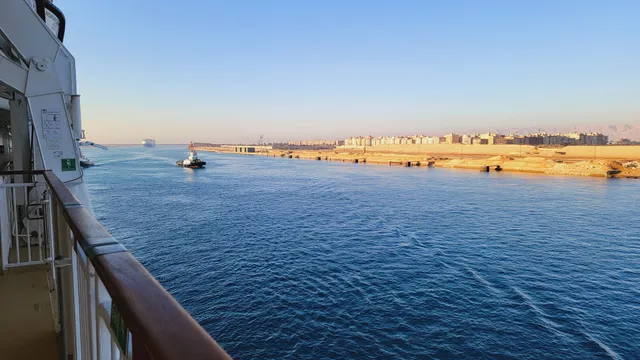
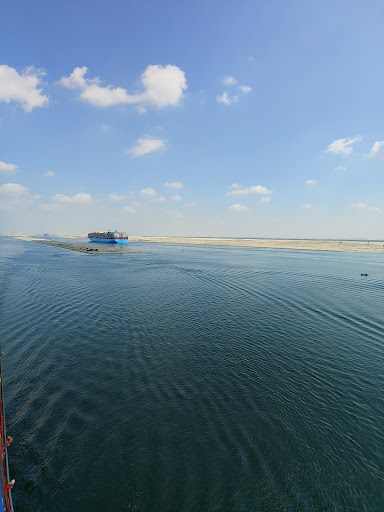
The Suez Canal is an artificial sea-level waterway in Egypt, connecting the Mediterranean Sea to the Red Sea. Opened 17 November 1869, after 10 years of construction, it allows ships to travel between Europe and South Asia without navigating around Africa thereby reducing the sea voyage distance between Europe and India by about 7,000 kilometres. A new stretch of the canal was just opened in 2015. The northern terminus is Port Said, where there are two outlets to the sea; the southern terminus is Port Tewfik at the city of Suez, where there is one outlet to the sea. Ismailia is on its west bank, 3 km from the half-way point. In 2012, 17,225 vessels traversed the canal (47 per day).

When built, the canal was 164 km long and 8 m deep. After several enlargements, it is 193.30 km long, 24 m deep and 205 metres wide. It consists of the northern access channel of 22 km, the canal itself of 162.25 km and the southern access channel of 9 km.

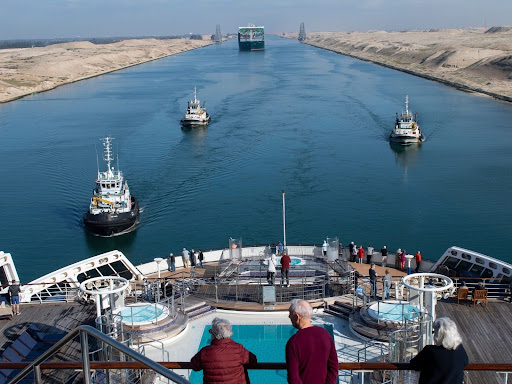
The canal is single-lane with passing places in the Ballah Bypass and the Great Bitter Lake. It contains no locks; seawater flows freely through it. In general, the canal north of the Bitter Lakes flows north in winter and south in summer. South of the lakes, the current changes with the tide at Suez.

The canal is owned and maintained by the Suez Canal Authority...

ย ย ย Read more
avatar
5.0
1y

The Suez Canal, a vital artificial waterway in Egypt, connects the Mediterranean Sea to the Red Sea, facilitating maritime trade between Europe and Asia. Spanning approximately 120 miles, it serves as a crucial shortcut, saving ships from the lengthy journey around the southern tip of Africa. The canal's construction began in 1859 and was completed in 1869, primarily by French engineer Ferdinand de Lesseps.

The strategic importance of the Suez Canal has made it a focal point in global geopolitics. It has witnessed numerous historical events, including the Suez Crisis in 1956, when Egypt nationalized the canal, leading to a conflict involving the United Kingdom, France, and Israel.

The canal underwent significant expansions and modernization projects, enhancing its capacity and accommodating larger vessels. Its importance was underscored by the Ever Given incident in 2021, when a massive container ship blocked the canal, disrupting global trade for several days.

Despite occasional challenges, the Suez Canal remains a key artery for international shipping, playing a pivotal role in the movement of goods and fostering economic connectivity between regions. Its continued relevance underscores the enduring impact of infrastructure on global...

ย ย ย Read more
Page 1 of 7
Previous
Next

Posts

Suez Canal & Port Said: Where Two Continents Meet in 10 Minutes! ๐ŸŒโš“
Hazel LilyHazel Lily
Suez Canal & Port Said: Where Two Continents Meet in 10 Minutes! ๐ŸŒโš“
Dippu NarzaryDippu Narzary
The Suez Canal, a vital artificial waterway in Egypt, connects the Mediterranean Sea to the Red Sea, facilitating maritime trade between Europe and Asia. Spanning approximately 120 miles, it serves as a crucial shortcut, saving ships from the lengthy journey around the southern tip of Africa. The canal's construction began in 1859 and was completed in 1869, primarily by French engineer Ferdinand de Lesseps. The strategic importance of the Suez Canal has made it a focal point in global geopolitics. It has witnessed numerous historical events, including the Suez Crisis in 1956, when Egypt nationalized the canal, leading to a conflict involving the United Kingdom, France, and Israel. The canal underwent significant expansions and modernization projects, enhancing its capacity and accommodating larger vessels. Its importance was underscored by the Ever Given incident in 2021, when a massive container ship blocked the canal, disrupting global trade for several days. Despite occasional challenges, the Suez Canal remains a key artery for international shipping, playing a pivotal role in the movement of goods and fostering economic connectivity between regions. Its continued relevance underscores the enduring impact of infrastructure on global trade dynamics.
Chamara EdirisingheChamara Edirisinghe
The Suez Canal is a human-made waterway that cuts north-south across the Isthmus of Suez in Egypt. The Suez Canal connects the Mediterranean Sea to the Red Sea, making it the shortest maritime route to Asia from Europe. Since its completion in 1869, it has become one of the worldโ€™s most heavily used shipping lanes. The Suez Canal is important because it is the shortest maritime route from Europe to Asia. Prior to its construction, ships headed toward Asia had to embark on an arduous journey around the Cape of Good Hope at the southern tip of Africa. Because of its strategic location, the canal is both heavily used and heavily protected. The original canal did not permit two-way traffic, and ships would stop in a passing bay to allow the passage of ships in the other direction. Transit time then averaged 40 hours, but by 1939 it had been reduced to 13 hours.
See more posts
See more posts
hotel
Find your stay

Pet-friendly Hotels in Al Ismailiya

Find a cozy hotel nearby and make it a full experience.

Suez Canal & Port Said: Where Two Continents Meet in 10 Minutes! ๐ŸŒโš“
Hazel Lily

Hazel Lily

hotel
Find your stay

Affordable Hotels in Al Ismailiya

Find a cozy hotel nearby and make it a full experience.

Get the Appoverlay
Get the AppOne tap to find yournext favorite spots!
The Suez Canal, a vital artificial waterway in Egypt, connects the Mediterranean Sea to the Red Sea, facilitating maritime trade between Europe and Asia. Spanning approximately 120 miles, it serves as a crucial shortcut, saving ships from the lengthy journey around the southern tip of Africa. The canal's construction began in 1859 and was completed in 1869, primarily by French engineer Ferdinand de Lesseps. The strategic importance of the Suez Canal has made it a focal point in global geopolitics. It has witnessed numerous historical events, including the Suez Crisis in 1956, when Egypt nationalized the canal, leading to a conflict involving the United Kingdom, France, and Israel. The canal underwent significant expansions and modernization projects, enhancing its capacity and accommodating larger vessels. Its importance was underscored by the Ever Given incident in 2021, when a massive container ship blocked the canal, disrupting global trade for several days. Despite occasional challenges, the Suez Canal remains a key artery for international shipping, playing a pivotal role in the movement of goods and fostering economic connectivity between regions. Its continued relevance underscores the enduring impact of infrastructure on global trade dynamics.
Dippu Narzary

Dippu Narzary

hotel
Find your stay

The Coolest Hotels You Haven't Heard Of (Yet)

Find a cozy hotel nearby and make it a full experience.

hotel
Find your stay

Trending Stays Worth the Hype in Al Ismailiya

Find a cozy hotel nearby and make it a full experience.

The Suez Canal is a human-made waterway that cuts north-south across the Isthmus of Suez in Egypt. The Suez Canal connects the Mediterranean Sea to the Red Sea, making it the shortest maritime route to Asia from Europe. Since its completion in 1869, it has become one of the worldโ€™s most heavily used shipping lanes. The Suez Canal is important because it is the shortest maritime route from Europe to Asia. Prior to its construction, ships headed toward Asia had to embark on an arduous journey around the Cape of Good Hope at the southern tip of Africa. Because of its strategic location, the canal is both heavily used and heavily protected. The original canal did not permit two-way traffic, and ships would stop in a passing bay to allow the passage of ships in the other direction. Transit time then averaged 40 hours, but by 1939 it had been reduced to 13 hours.
Chamara Edirisinghe

Chamara Edirisinghe

See more posts
See more posts