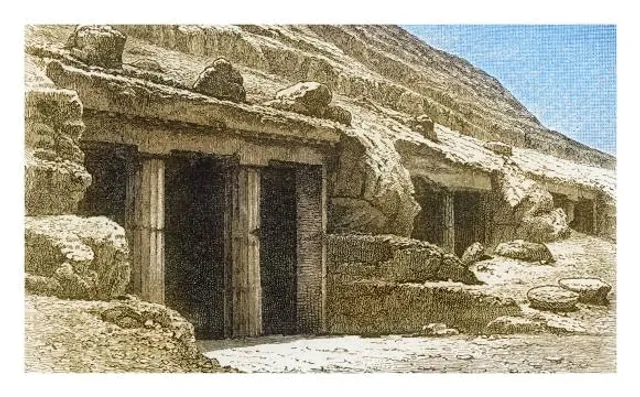
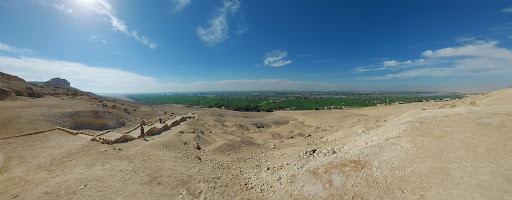
The area of Bani Hassan al-Shorouk in Abu Qurqas, south of Minya, is one of the most important archaeological and tourist areas in the Upper Egypt bride.
The cemetery was mainly used during the Middle Kingdom, which extends from the 21st century BC although it includes some tombs from the era of the Old Kingdom.
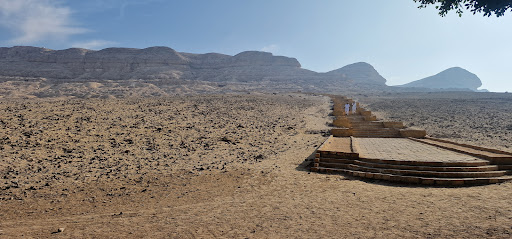
In the south of the Bani Hassan region there is a temple built by Queen Hatshepsut and succeeded by King Tuthmosis the Third, as a tool of the local goddess of this region Bakht, known at the present time as the Cave of Artemis, because the Greeks united the Egyptian goddess Bakht and the Greek goddess Artemis, and the temple was called a cave because it is an underground building.
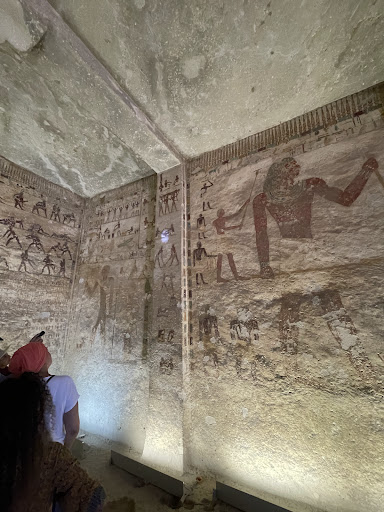
The rulers of the provinces in the middle state were buried in local tombs cut in stone and decorated with inscriptions and drawings, just as the custom at that time was that the person who ruled over a specific area transferred their positions by inheritance, and during the reign of the 12th Dynasty the power of local rulers began to be subject to restrictions, and the appointment of provincial governors or At least be installed on their thrones by legalizing them only through the king
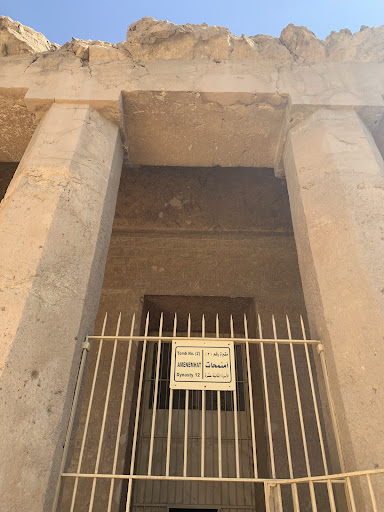
There are approximately 39 ancient tombs in the Bani Hassan Archaeological Zone belonging to the Middle Kingdom, specifically from the 21st century to the 19th century B.C. for the rulers of Ghazal Province, “District 16 of Lower Egypt’s Districts” and were built on the East Bank unusually in building Egyptian tombs Which was mostly built on the West Bank of the Nile, where there are two types of tombs "upper-range tombs and lower-range tombs," and this diversity is due to the economic condition of the deceased
And he was buried in the upper tombs, they were elite when we find their tombs express their distinguished economic condition and their social and political centers as leaders in Ghazal province, and the tombs were located in a single row on the north-south axis, designed by special methods containing an external courtyard and a room with...
Read moreGreat place! There are 4 tombs opened with beautiful scenes. The most unique ones are the one of wrestling 🤼♀️ different positions. While there are some Old Kingdom burials at the site, it was primarily used during the Middle Kingdom, spanning the 21st to 17th centuries BCE (Middle Bronze Age).
There are 39 ancient tombs here of Middle Kingdom (ca. 21st to 19th centuries BCE) nomarchs of the Oryx nome, who governed from Hebenu. Due to the quality of, and distance to the cliffs in the west, these tombs were constructed on the east bank. There is a spatial distribution in this cemetery (there are two cemeteries here: the upper range and the lower necropolis) associated with the different levels of resources available to the deceased; the most important people were buried near the top of the cliff. 80 In the lower cemetery there are 888 shaft tombs, dating to the Middle Kingdom, that were excavated by John Garstang; for the most part these tombs shared a similar general design which included a small chamber or recess at the foot of the shaft (facing south) to receive the coffin and the...
Read moreOne of the gems of ancient egypt that are not on the standard tour schedules. Here you will find 4 tombs from the middle kingdom. Very different to what you will see in the valley of the kings etc. Single room to each and the 4 tombs span 2 dynasties. There are some subtle changes between them esp. the last one khnumhotep II. Although like the others they were high up in the power base on this region (but not now a nomarch) the amount of solders in training is much reduced due to the increased strength of the king who took control of the army etc. Get a guide to explain all the items on the walls though. Note that it is 100 steps up to the tombs and the roads in the last part of the journey...
Read more