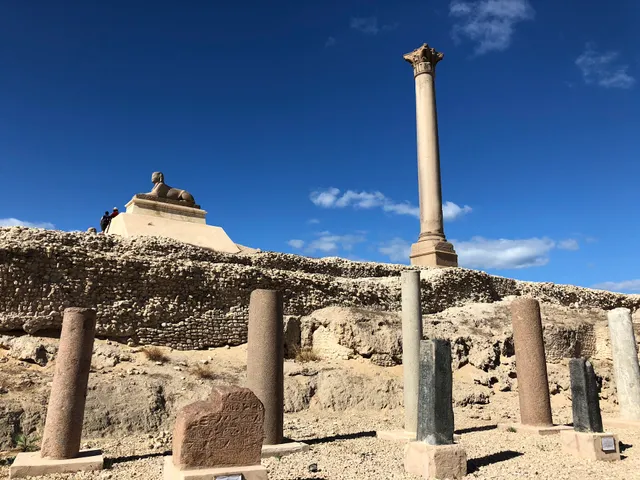
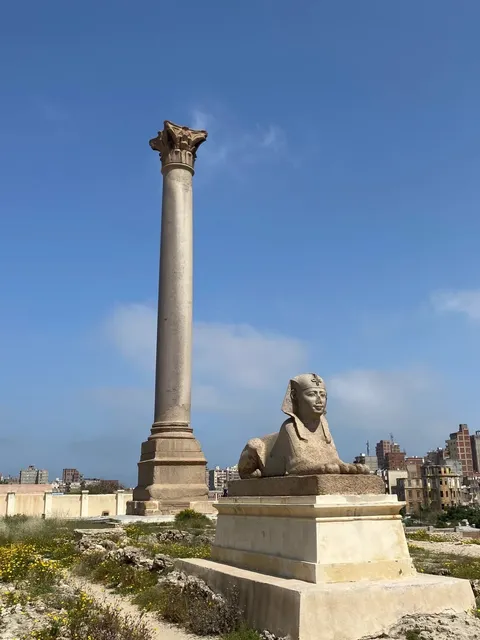
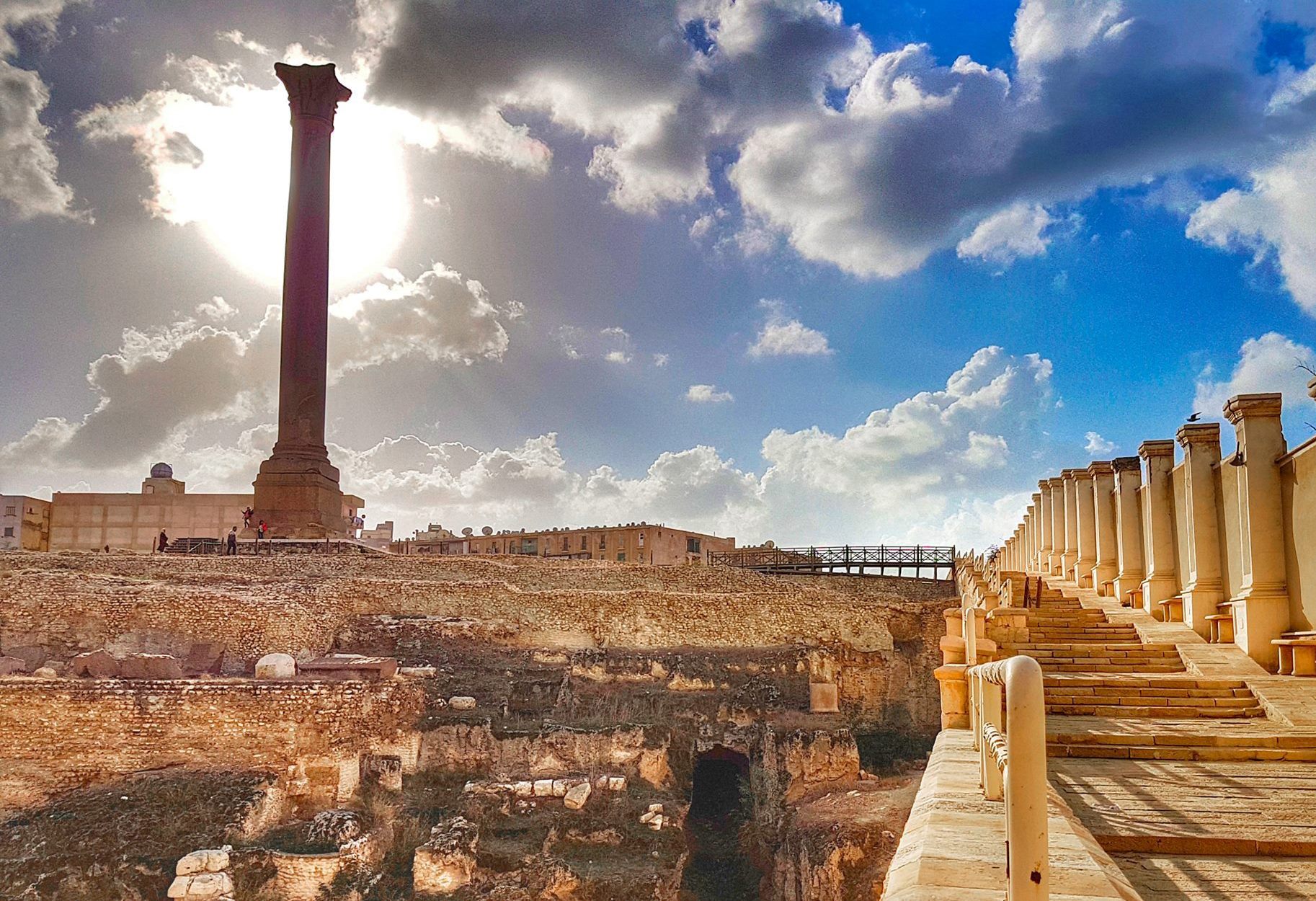
A massive 30m column looms over the debris of the glorious ancient settlement of Rhakotis, the original township from which Alexandria grew. Known as Pompey’s Pillar, for centuries the column, hewn from red Aswan granite, has been one of the city’s prime sights: a single, tapered shaft, 2.7m at its base and capped by a fine Corinthian capital. The column rises out of the sparse ruins of the Temple of Serapeum, a magnificent structure that stood here in ancient times
The column was named by travellers who remembered the murder of the Roman general Pompey by Cleopatra’s brother, but an inscription on the base (presumably once covered with rubble) announces that it was erected in AD 291 to support a statue of the emperor Diocletian.
Underneath the column, steps lead downward to the ruins of the great temple of Serapis, the hybrid Greek and Egyptian god of Alexandria. Also here was the ‘daughter library’ of the Great Library of Alexandria, which was said to have contained copies and overflow of texts. These scrolls could be consulted by anyone using the temple, making it one of the most important intellectual and religious centres in the Mediterranean.
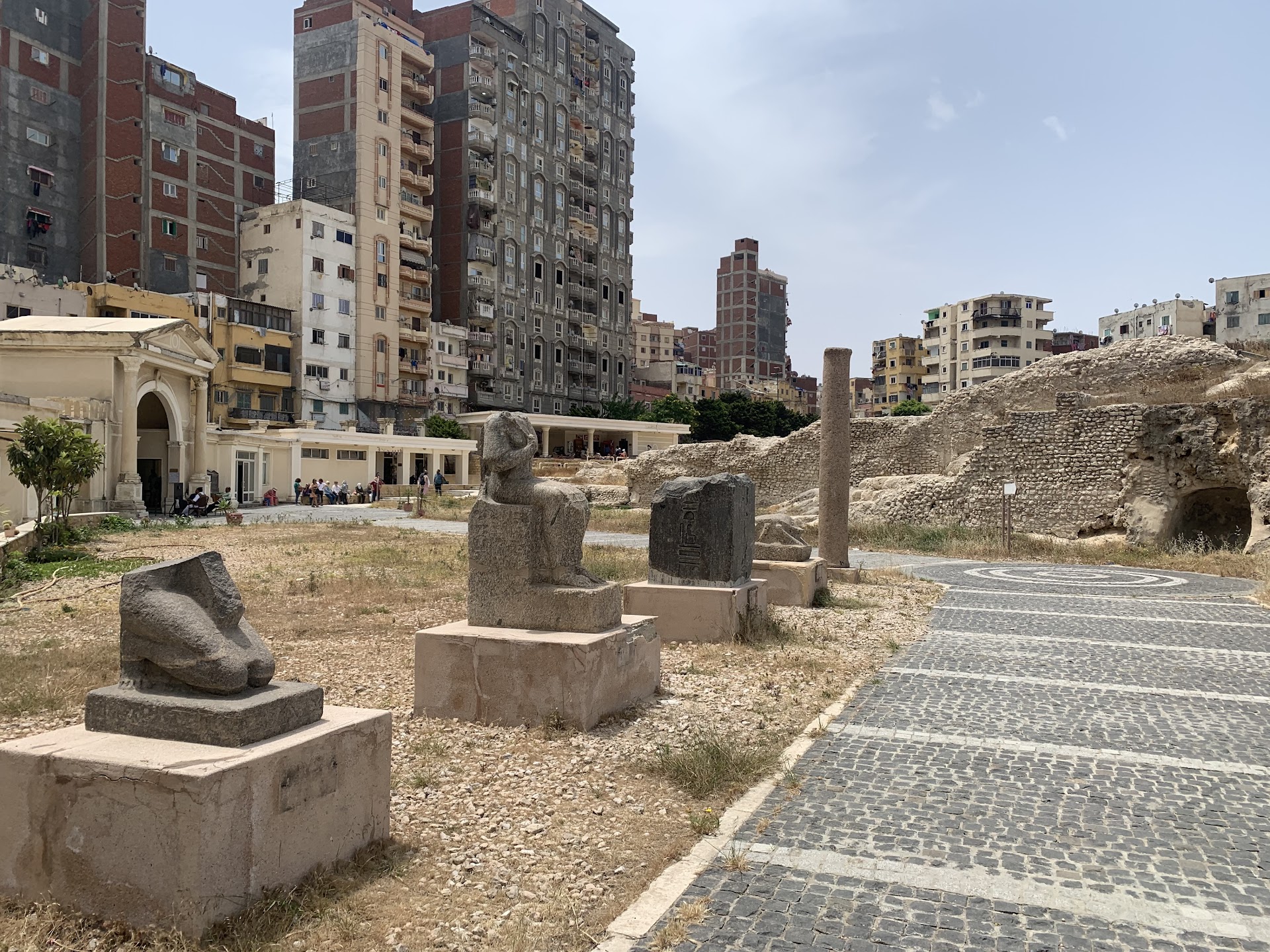
The temple was attacked during the Jewish Revolt in AD 115–117, but it was the Christians who launched a final assault in AD 391 on pagan intellectuals and destroyed the Serapeum and its library, leaving just the lonely pillar standing. The site is now very forlorn, little more than rubble pocked by trenches and holes, with a couple of narrow shafts from the Serapeum to explore below, a few sphinxes (originally from Heliopolis) and a surviving Nilometer (a structure used to measure and record the level of the Nile in ancient times). The pillar on top is the only ancient monument remaining whole and standing in Alexandria today. The guards can be slightly pushy here.
When taking a taxi here, ask for it by the Arabic name, Amoud Al Sawari. The fare should be LE30 to LE35 from Midan...
Read moreThe Serapeum of Alexandria was an ancient Greek temple built by Ptolemy III Euergetes and dedicated to Serapis, who was made the protector of Alexandria. It has been referred to as the daughter of the Library of Alexandria.
By all detailed accounts, the Serapeum was the largest and most magnificent of all temples in the Greek quarter of Alexandria.
Besides the image of the god, the temple precinct housed an offshoot collection of the Library of Alexandria. The geographer Strabo tells that this stood in the west of the city.
The Serapeum of Alexandria was closed in July of 392 CE, on the orders of the Alexandrian patriarch Theophilus. Emperor Theodosius I gradually made pagan feasts into workdays, banned public sacrifices, and closed pagan temples.
The Serapeum was destroyed by Roman soldiers in 391 and not rebuilt. After the destruction, the Monastery of Metanoia was established, and a church was built for St. John the Baptist, known as Angelium or Evangelium. However, the church fell to ruins around 600 AD, restored by Pope Isaac of Alexandria, and finally destroyed in the 10th century.
Nothing now remains above ground, except the enormous Pompey's Pillar, which is a Roman triumphal column. Despite its modern name, it was actually set up in honour of the Roman emperor Diocletian between 298–302 AD.
The giant Corinthian column originally supported a colossal porphyry statue of the emperor in armour. The porphyry statue of Diocletian in armour is known from large fragments that existed at the column's foot in the...
Read moreOne of the famous archaeological sites in Alexandria. It is located in Karmouz area and is considered one of the old city of Alexandria. Roman archaeological column,. It was built on Tell Bab Sidra between the area of the current Muslim cemeteries known as Al-Amoud cemeteries and the archaeological plateau of Kom el Shoqafa. It is about 27 meters long and is made of red granite. Held in honor of the Emperor Diocletian in the third century AD. It is the last surviving relic of the temple of the Serapeum erected by Bustumus. It is considered the highest monument in the world. The name of the pillar is named after the pillars of the Arab era, where it is believed that it came as a result of the rise of this towering column among 400 other columns, which is similar to the masts of ships, so the Arabs called the column masts من الأماكن الأثرية الشهيرة في محافظة الإسكندرية. ويقع بمنطقة كرموز وهي تعتبر من ضمن مدينة الإسكندرية القديمة. وهوعمود روماني أثري ،. أقيم فوق تل باب سدرة بين منطقة مدافن المسلمين الحالية والمعروفة باسم مدافن العمود وبين هضبة كوم الشقافة الأثرية. ويصل طوله إلى حوالي 27 متراً ومصنوع من حجر الغرانيت الأحمر. أقيم تخليدا للإمبراطور دقلديانوس في القرن الثالث الميلادي. وهو آخر الآثار الباقية من معبد السيرابيوم الذي أقامه بوستوموس. ويعتبر أعلى نصب تذكاري في العالم. وتعود تسمية العمود باسم عمود السواري إلى العصر العربي حيث يعتقد أنها جاءت نتيجة ارتفاع هذا العمود الشاهق بين 400 عمود آخر وهو ما يشبه صواري السفن ولذلك أطلق عليه العرب...
Read more