HTML SitemapExplore
logo
Find Things to DoFind The Best Restaurants

Sahara Desert — Attraction in New Valley

Name
Sahara Desert
Description
Nearby attractions
Nearby restaurants
Nearby hotels
Related posts
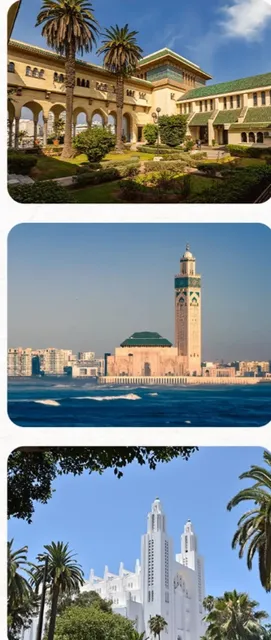
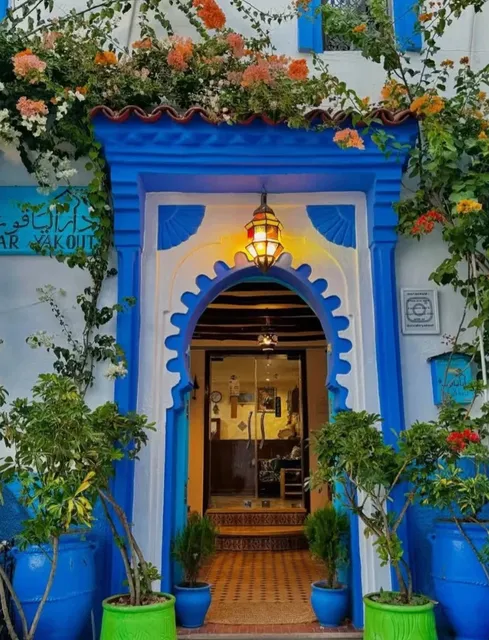
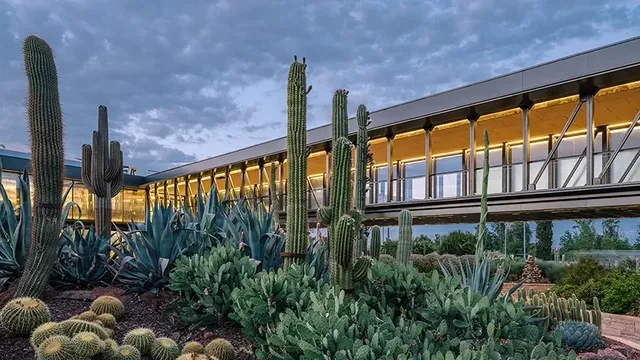
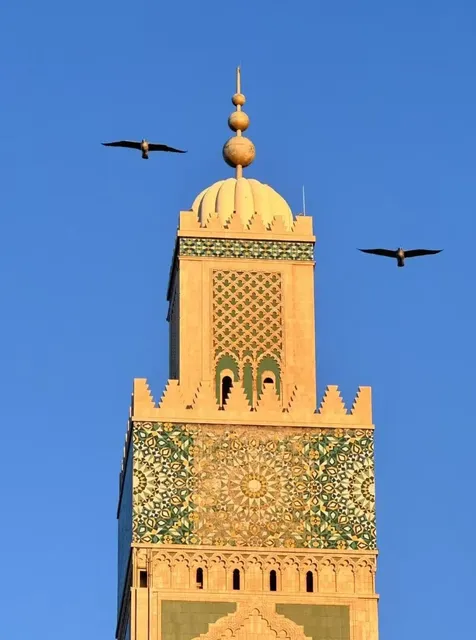
​​Life Advice: Visit These 15 Landmarks Before Leaving Morocco 🇲🇦​​​​After 10 Trips to Europe, Morocco is the Ultimate Budget Travel GemCacti Capital of Madrid Free Admission 🌵​​Morocco: A 12-Layer Fantasy Symphony of North Africa​​
Keywords
Sahara Desert tourism.Sahara Desert hotels.Sahara Desert bed and breakfast. flights to Sahara Desert.Sahara Desert attractions.Sahara Desert restaurants.Sahara Desert travel.Sahara Desert travel guide.Sahara Desert travel blog.Sahara Desert pictures.Sahara Desert photos.Sahara Desert travel tips.Sahara Desert maps.Sahara Desert things to do.
Sahara Desert things to do, attractions, restaurants, events info and trip planning
Sahara Desert
EgyptNew ValleySahara Desert

Basic Info

Sahara Desert

Sahara Desert
4.0(3.2K)
Open 24 hours
Save
spot

Ratings & Description

Info

Outdoor
Adventure
Scenic
attractions: , restaurants:
logoLearn more insights from Wanderboat AI.

Plan your stay

hotel
Pet-friendly Hotels in New Valley
Find a cozy hotel nearby and make it a full experience.
hotel
Affordable Hotels in New Valley
Find a cozy hotel nearby and make it a full experience.
hotel
The Coolest Hotels You Haven't Heard Of (Yet)
Find a cozy hotel nearby and make it a full experience.
hotel
Trending Stays Worth the Hype in New Valley
Find a cozy hotel nearby and make it a full experience.

Reviews

Get the Appoverlay
Get the AppOne tap to find yournext favorite spots!
Wanderboat LogoWanderboat

Your everyday Al companion for getaway ideas

CompanyAbout Us
InformationAI Trip PlannerSitemap
SocialXInstagramTiktokLinkedin
LegalTerms of ServicePrivacy Policy

Get the app

© 2025 Wanderboat. All rights reserved.
logo

Reviews of Sahara Desert

4.0
(3,215)
avatar
5.0
5y

The Sahara Desert is located in the northern portion of Africa and covers over 3,500,000 square miles (9,000,000 sq km) or roughly 10% of the continent. It is bounded in the east by the Red Sea and it stretches west to the Atlantic Ocean. To the north, the Sahara Desert's northern boundary is the Mediterranean Sea, while in the south it ends at the Sahel, an area where the desert landscape transforms into a semi-arid tropical savanna.

Since the Sahara Desert makes up nearly 10% of the African continent, the Sahara is often cited as the world's largest desert. This is not entirely true, however, as it is only the world's largest hot desert. Based on the definition of a desert as an area receiving less than 10 inches (250 mm) of precipitation per year, the world's largest desert is actually the continent of Antarctica.

Geography of the Sahara Desert


Stocktrek Images / Getty Images

The Sahara covers parts of several African nations including Algeria, Chad, Egypt, Libya, Mali, Mauritania, Morocco, Niger, Sudan, and Tunisia. Most of the Sahara Desert is undeveloped and features a varied topography. Most of its landscape has been shaped over time by wind and includes sand dunes, sand seas called ergs, barren stone plateaus, gravel plains, dry valleys, and salt flats. Around 25% of the desert is sand dunes, some of which reach over 500 ft (152 m) in height.

There are also several mountain ranges within the Sahara and many are volcanic. The highest peak found in these mountains is Emi Koussi, a shield volcano that rises to 11,204 ft (3,415 m). It is a part of the Tibesti Range in northern Chad. The lowest point in the Sahara Desert is in Egypt's Qattara Depression at -436 ft (-133 m) below sea level.

Most of the water found in the Sahara today is in the form of seasonal or intermittent streams. The only permanent river in the desert is the Nile River that flows from Central Africa to the Mediterranean Sea. Other water in the Sahara is found in underground aquifers and in areas where this water reaches the surface, there are oases and sometimes small towns or settlements like the Bahariya Oasis in Egypt and Ghardaïa in Algeria.

Since the amount of water and topography varies based on location, the Sahara Desert is divided into different geographic zones. The center of the desert is considered hyper-arid and has little to no vegetation, while the northern and southern portions have sparse grasslands, desert shrub and sometimes trees in areas with more moisture.

Climate of the Sahara Desert


Samere Fahim Photography / Getty Images

Although hot and extremely dry today, it is believed that the Sahara Desert has undergone various climatic shifts for the last few hundred thousand years. For example, during the last glaciation, it was bigger than it is today because precipitation in the area was low. But from 8000 BCE to 6000 BCE, precipitation in the desert increased because of the development of low pressure over ice sheets to its north. Once these ice sheets melted, however, the low pressure shifted and the northern Sahara dried out but the south continued to receive moisture due to the presence of a monsoon.

Around 3400 BCE, the monsoon moved south to where it is today and the desert again dried out to the state it is in today. In addition, the presence of the Intertropical Convergence Zone, ITCZ, in the southern Sahara Desert prevents moisture from reaching the area, while storms north of the desert stop before reaching it as well. As a result, the annual rainfall in the Sahara is below 2.5 cm (25 mm) per year.

In addition to being extremely dry, the Sahara is also one of the hottest regions in the world. The average annual temperature for the desert is 86°F (30°C) but during the hottest months temperatures can exceed 122°F (50°C), with the highest temperature ever recorded at 136°F (58°C) in...

   Read more

avatar
5.0
1y

The Sahara Desert, a seemingly endless ocean of golden sands, sprawls across North Africa like a vast, sun-baked tapestry. It is a place where time seems to stand still, and the world is stripped down to its barest, most elemental form. As far as the eye can see, the landscape is a mesmerizing dance of towering dunes, their sinuous curves sculpted by the whispering winds into shapes that shift and change with each passing day.

In the day’s fierce heat, the desert shimmers beneath a relentless sun, the air itself wavering like a mirage. The sand, hot enough to burn, stretches out in waves, only to be interrupted by jagged mountains and ancient rock formations that rise abruptly from the earth, their dark silhouettes stark against the pale sky. Here and there, the landscape gives way to barren gravel plains, their rough surfaces cracked and parched, or to salt flats that glisten with a ghostly white sheen, remnants of ancient lakes long evaporated.

Yet, beneath its harsh and unforgiving exterior, the Sahara holds secrets of life. In the cool, quiet hours of dawn and dusk, the desert awakens. A lone acacia tree stands defiant against the desolation, its gnarled branches reaching out to the sky. From beneath the sand, resilient grasses and spiny shrubs emerge, clinging to life with roots that delve deep into the earth in search of moisture. Camouflaged creatures—desert foxes, lizards, and beetles—move silently across the dunes, perfectly adapted to the extreme conditions.

The nights in the Sahara are a world apart. As the sun sets, the sky transforms into a canvas of deep purples and blues, and a chill descends. The stars, uncountable and brilliant, stretch from horizon to horizon, illuminating the desert with a cold, silver light. The silence is absolute, broken only by the occasional whisper of wind across the sand or the distant call of a nocturnal animal.

Oases, like hidden jewels, are scattered throughout the vast expanse. These verdant pockets of life, with their palm trees and shimmering pools, offer a stark contrast to the surrounding desert. They are havens of green where life flourishes, supported by underground rivers that weave unseen beneath the sand.

The Sahara is a land of extremes, of beauty and barrenness, where the landscape’s raw power evokes both awe and humility. It is a place that has tested the endurance of nomadic tribes for centuries, a place where survival is both an art and a testament to the resilience of life. The Sahara, with its vast, timeless landscape, is a reminder of the earth's ancient rhythms, a place where nature's grandeur and solitude...

   Read more
avatar
5.0
4y

Open main menu


Search

Sahara

Language

Download PDF

Watch

Edit

For other uses, see Sahara (disambiguation).

The Sahara (/səˈhɑːrə/, /səˈhærə/; Arabic: الصحراء الكبرى‎, aṣ-ṣaḥrāʼ al-kubrá, 'the Greatest Desert') is a desert on the African continent. With an area of 9,200,000 square kilometres (3,600,000 sq mi), it is the largest hot desert in the world and the third largest desert overall, smaller only than the deserts of Antarctica and the Arctic.13]

SaharaThe Greatest Desert

A satellite image of the Sahara by NASA WorldWind

Length4,800 km (3,000 mi)Width1,800 km (1,100 mi)Area9,200,000 km2 (3,600,000 sq mi)NamingNative namesa'hraGeographyCountries

List

Algeria

Chad

Egypt

Libya

Mali

Mauritania

Morocco

Niger

Sudan

Tunisia

Coordinates23°N 13°E

Play media

This video over the Sahara and the Middle East was taken by the crew of Expedition 29 on board the International Space Station.

The name "Sahara" is derived from the Arabic word for "desert" in the feminine irregular form, the singular ṣaḥra' (صحراء /ˈsˤaħra/), plural ṣaḥārā (صَحَارَى /ˈsˤaħaːraː/[46), ṣaḥār (صَحَار), ṣaḥrāwāt (صَحْارَاوَات), ṣaḥāriy (صَحَارِي).

The desert comprises much of North Africa, excluding the fertile region on the Mediterranean Sea coast, the Atlas Mountains of the Maghreb, and the Nile Valley in Egypt and Sudan. It stretches from the Red Sea in the east and the Mediterranean in the north to the Atlantic Ocean in the west, where the landscape gradually changes from desert to coastal plains. To the south, it is bounded by the Sahel, a belt of semi-arid tropical savanna around the Niger River valley and the Sudan Region of Sub-Saharan Africa. The Sahara can be divided into several regions, including the western Sahara, the central Ahaggar Mountains, the Tibesti Mountains, the Aïr Mountains, the Ténéré desert, and the Libyan Desert.

For several hundred thousand years, the Sahara has alternated between desert and savanna grassland in a 20,000 year cycle[8] caused by the precession of the Earth's axis as it rotates around the Sun, which changes the location of the North African Monsoon. The area is next expected to become green in about 15,000 years (17,000 CE).

Geography

Climate

Ecoregions

Flora and fauna

History

People, culture, and languages

See also

References

Bibliography

External links

Last edited 4 days ago by Harfarhs

RELATED ARTICLES

Sahara desert (ecoregion)

Sahel

Ecoclimatic and biogeographic transition zone in Africa

Prehistoric North Africa


Content is available under CC BY-SA 3.0 unless...

   Read more
Page 1 of 7
Previous
Next

Posts

​​Life Advice: Visit These 15 Landmarks Before Leaving Morocco 🇲🇦​​
Eleanor SageEleanor Sage
​​Life Advice: Visit These 15 Landmarks Before Leaving Morocco 🇲🇦​​
​​After 10 Trips to Europe, Morocco is the Ultimate Budget Travel Gem
Eleanor SageEleanor Sage
​​After 10 Trips to Europe, Morocco is the Ultimate Budget Travel Gem
Cacti Capital of Madrid Free Admission 🌵
EllaElla
Cacti Capital of Madrid Free Admission 🌵
See more posts
See more posts
hotel
Find your stay

Pet-friendly Hotels in New Valley

Find a cozy hotel nearby and make it a full experience.

​​Life Advice: Visit These 15 Landmarks Before Leaving Morocco 🇲🇦​​
Eleanor Sage

Eleanor Sage

hotel
Find your stay

Affordable Hotels in New Valley

Find a cozy hotel nearby and make it a full experience.

Get the Appoverlay
Get the AppOne tap to find yournext favorite spots!
​​After 10 Trips to Europe, Morocco is the Ultimate Budget Travel Gem
Eleanor Sage

Eleanor Sage

hotel
Find your stay

The Coolest Hotels You Haven't Heard Of (Yet)

Find a cozy hotel nearby and make it a full experience.

hotel
Find your stay

Trending Stays Worth the Hype in New Valley

Find a cozy hotel nearby and make it a full experience.

Cacti Capital of Madrid Free Admission 🌵
Ella

Ella

See more posts
See more posts