Visited 26 October 2022
80 EGP
After completing our four night Felucca sail ( in which we only went from Aswan to short of Edfu ) we met our Luxor guide and driver and set off from Edfu to Esna.
Esna, which was called Latopolis in Ptolemaic times, was known for the abundance of the Nile Perch ( Lates Niloticus ) which was revered as sacred actually had their own cemetery.
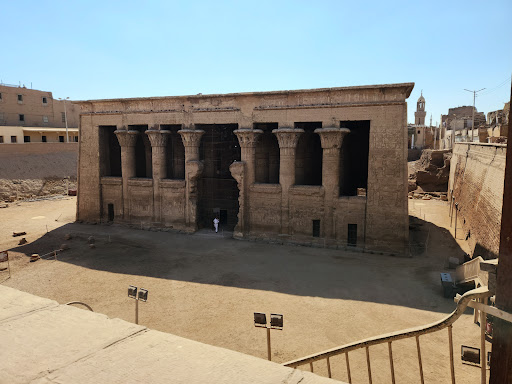
The Temple of Khnum at Esna is definitely one of the hidden gems on the Nile. Located 55km south of Luxor most of the tourist barges seldom stop here when navigating the locks. This means that you may likely be the only visitors there. When we toured the site the only other people there were another pair of tourists and the conservators working to restore the temple. The temple itself is about 200 metres from the river and to reach it you will need to traverse the souk. Make sure you view the leaning minaret on the way.
While this is an Egyptian temple it was actually only completed during Ptolemaic Egypt in the third century BC. The temple is dedicated to the Nile God and patron Khnum and his consorts Menhit and Nebtu, plus their son Heka and the goddess Neith.
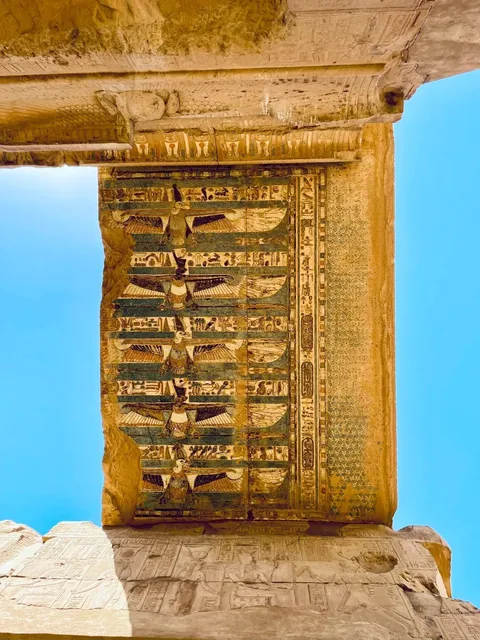
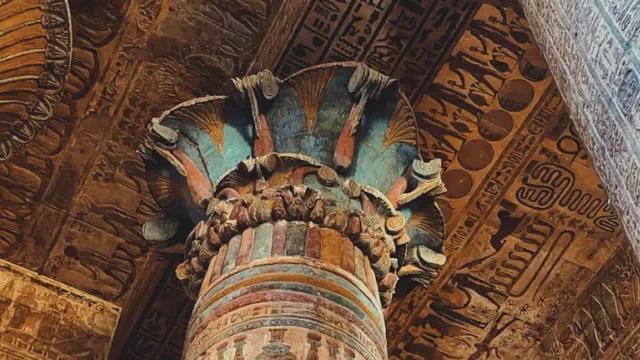
The main drawcard of this temple is the restoration work being undertaken. Considering this temple was used as a storage warehouse in the 19th century thr work to restore it to its former glory is overwhelming. The columns, walls and roof are a kaleidoscope of colour and simply breathtaking.
The temple is below ground level approximately 9 metres, with a flight of stairs that need to be traversed down and up again. There is no lift for those who are immobile. Due to its location below the streets of modern Esna, it is quite easy to see the inundation markings on the walls where the level of the Nile has lapped over the centuries.
Not to be missed especially if you're staying in Luxor for a few days. This temple can be visited in conjunction with visits to El Kab,...
Read moreThe Temple of Khnum is an ancient Egyptian temple located on the west bank of the Nile River at Esna, about 55 kilometers south of Luxor. Dedicated to the god Khnum, who was depicted as a ram-headed deity, the temple was primarily associated with creation and fertility. Khnum was believed to be the god who shaped human beings and animals on a potter's wheel, and he was also associated with the Nile, as it was believed he controlled the flow of the river.
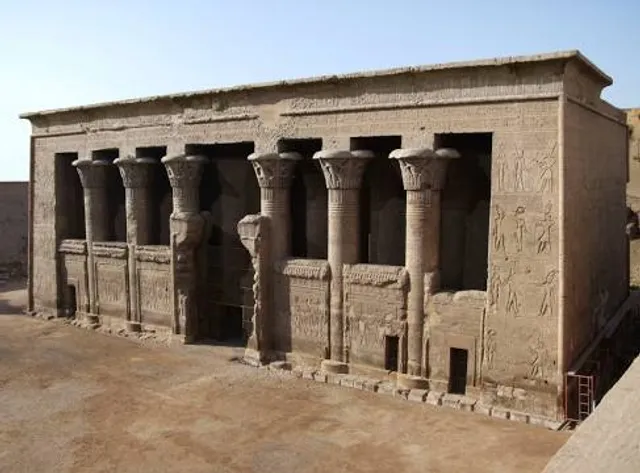
The temple was constructed during the Ptolemaic period, with significant additions made by the Roman emperors. It is known for its well-preserved structure, particularly the hypostyle hall, which features a row of towering columns with beautiful reliefs and carvings. These reliefs depict scenes of the gods, the pharaohs, and religious rituals, as well as representations of Khnum and his role in creation.
One of the most striking features of the Temple of Khnum is its unusual location beneath the modern town of Esna. This has led to the temple being partially submerged and the reliefs being particularly well preserved, although much of the temple is still buried beneath the town.
The temple remains an important archaeological site and a testament to the religious practices of ancient Egypt, especially regarding the worship of Khnum as a creator god and his influence on the Nile's fertility and annual flooding. Today, the Temple of Khnum is a popular site for visitors, offering a unique glimpse into Egypt's ancient religious practices and monumental...
Read moreVisited the temple with a splendid chariot ride on a horse drawn carriage, this extra treat made our trip more authentic and it was like traveled back in time... ( as horse lovers, we did talk to the driver and cared about the horse welfare under the heat of the Egyptian sun. no worry.) The lighting inside the temple of Khnum was so nice(!) and I did took tons of photos there, you could tell how nice the temple was kept, and even some colours on the walls of the temple were preserved. This was out of our expectation and this gave us new knowledge than those we watched on tv documentaries. The location of the temple was a bit far from the river cruise pier where tourists were disembarked. That's why an effective commute is what I would like to remind anyone who would visit this tourist town. Walk all the way to the temple was not recommended for the summer heat was not a joke at all. Please take care of your valuables on the streets, though we felt very safe to travel as a small group. And people were mostly very friendly, in their standard, I would add. Guided tour was highly recommended as there is no way you could guess what the ancient Egyptians wanted to say. And the history rich temple really need a licensed docent to tell you where and what to...
Read more