HTML SitemapExplore

Kaali Crater — Attraction in Saaremaa vald

Name
Kaali Crater
Description
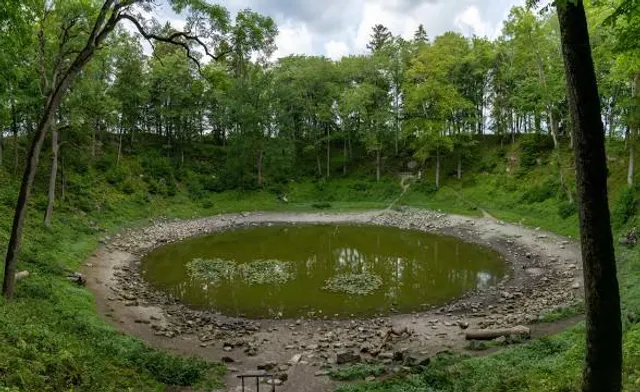
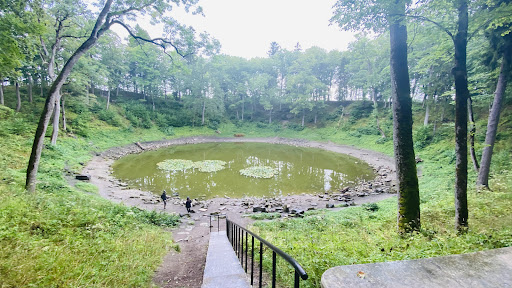
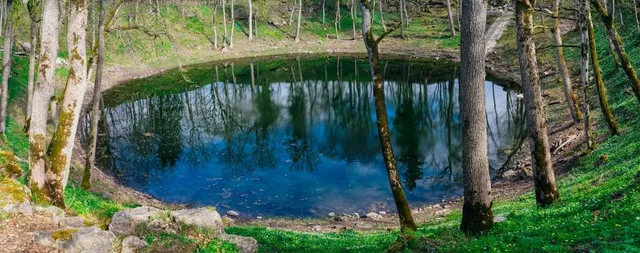
Kaali is a group of nine meteorite craters in the village of Kaali on the Estonian island of Saaremaa. Most recent estimates put its formation shortly after 1530–1450 BC. It was created by an impact event and is one of the few impact events that has occurred in a populated area.
Nearby attractions
Nearby restaurants
Kaali Tavern / Kaali Trahter
Kaali allee, Kaali, 94143 Saare maakond, Estonia
Nearby local services
Nearby hotels
Kaali Külastuskeskuse Hotell
Kaali küla, Pihtla vald, Kaali, 94102, Estonia
Related posts
Keywords
Kaali Crater tourism.Kaali Crater hotels.Kaali Crater bed and breakfast. flights to Kaali Crater.Kaali Crater attractions.Kaali Crater restaurants.Kaali Crater local services.Kaali Crater travel.Kaali Crater travel guide.Kaali Crater travel blog.Kaali Crater pictures.Kaali Crater photos.Kaali Crater travel tips.Kaali Crater maps.Kaali Crater things to do.
Kaali Crater things to do, attractions, restaurants, events info and trip planning
Kaali Crater
EstoniaSaaremaa valdKaali Crater

Basic Info

Kaali Crater

Kaali, 94143 Saare County, Estonia
4.6(316)
Open 24 hours
Save
spot

Ratings & Description

Info

Kaali is a group of nine meteorite craters in the village of Kaali on the Estonian island of Saaremaa. Most recent estimates put its formation shortly after 1530–1450 BC. It was created by an impact event and is one of the few impact events that has occurred in a populated area.

Cultural
Outdoor
Scenic
Off the beaten path
attractions: , restaurants: Kaali Tavern / Kaali Trahter, local businesses:
logoLearn more insights from Wanderboat AI.

Plan your stay

hotel
Pet-friendly Hotels in Saaremaa vald
Find a cozy hotel nearby and make it a full experience.
hotel
Affordable Hotels in Saaremaa vald
Find a cozy hotel nearby and make it a full experience.
hotel
The Coolest Hotels You Haven't Heard Of (Yet)
Find a cozy hotel nearby and make it a full experience.
hotel
Trending Stays Worth the Hype in Saaremaa vald
Find a cozy hotel nearby and make it a full experience.

Reviews

Nearby restaurants of Kaali Crater

Kaali Tavern / Kaali Trahter

Kaali Tavern / Kaali Trahter

Kaali Tavern / Kaali Trahter

3.9

(139)

Click for details
Get the Appoverlay
Get the AppOne tap to find yournext favorite spots!
Wanderboat LogoWanderboat

Your everyday Al companion for getaway ideas

CompanyAbout Us
InformationAI Trip PlannerSitemap
SocialXInstagramTiktokLinkedin
LegalTerms of ServicePrivacy Policy

Get the app

© 2025 Wanderboat. All rights reserved.

Reviews of Kaali Crater

4.6
(316)
avatar
5.0
6y

It is a well-marked and developed place. even before the summer season you can buy various souvenirs: dishes and figurines made of stone. The car can be parked in the center of the village near the store. Next to the school well marked route after 5 minutes we come to the shore of the crater. The geological reserve in the village of Kaali covers the area around the place where about 7.5 thousand. years ago a large, at least 400 tons meteorite fell before the first people arrived on the island. striking Earth, he broke up, created several craters. The largest of them, the Kaalijärv lake (also called the "Sun's Tomb") has a diameter of 110 m and a depth of up to 6 m, it is filled with water. It is surrounded by a 16 m high shaft - so high the impact has thrown the earth out of the crater.

Jest to miejsce dobrze oznaczone i zagospodarowane. można tu nawet przed letnim sezonem kupić różne pamiątki: naczynia i figurki z kamienia. Samochód możemy zaparkować w centrum wioski koło sklepu. Dalej koło szkoły dobrze oznaczona trasą po 5 minutach dojdziemy na brzeg krateru. Rezerwat geologiczny w wiosce Kaali obejmuje obszar wokół miejsca, w które około 7,5 tys. lat temu spadł duży, ważący co najmniej 400 ton meteoryt, zanim pojawili się na wyspie pierwsi ludzie. uderzając w Ziemię rozpadł się, utworzył kilka kraterów. Największy z nich jezioro Kaalijärv (nazwany też „Grobem Słońca”) ma średnicę 110 m oraz głębokość do 6 m wypełnia go woda. Otacza go wał o wysokości 16 m – tak wysoko uderzenie wyrzuciło z...

   Read more
avatar
5.0
25w

4,000 years ago, a meteorite originally weighing 400 to 10,000 tons is said to have entered the Earth's atmosphere from the northeast at a speed of 15 to 45 km/s. Due to the constant friction, it lost mass. The largest fragment weighed 20 to 80 tons and formed the Kaali meteorite crater. Additional, smaller fragments created eight secondary craters. The center of the crater is a pool of greenish water about 50 meters in diameter. It is surrounded by a 16 meter high earth wall with a diameter of around 110 meters. There are eight secondary craters in the area, which are significantly smaller with diameters between 15 and 40 meters. There are several myths among the population of Saaremaa about the formation of the craters. Out of horror at a sibling marriage, the meteorite is said to have devoured the wedding church. Another legend tells of a landowner who is said to have been swallowed up by the earth after an unrestrained orgy, complete with the estate and...

   Read more
avatar
5.0
6y

Na otoku Saaremaa, 19 km od mesta Kuressaare je znana Kaali jezero, okoli katerega je bilo dolgo časa, vse vrste govoric in legend. Prevedeno iz estonskega "Kaali" pomeni "repa". Oblika znamenitega jezera je skoraj krožno, približno 60 metrov v premeru, in spodnji topografije spominja lijak. V bližini rezervoarja, ki se nahaja le nekaj kraterjev manjši. Po eni legendi, je jezero nastala zaradi Kaali junaka Suur-velikan Talu. V skladu z drugo različico - je nastala na mestu posestva, kjer živi z bratom in sestro. Nekega dne so se odločili, da bi dobili poročen, za njih bogovi kaznovali: v poročni obred nepremičnine pahnila v zemljo, in na njenem mestu in jezera. Skrivnost porekla rezervoarja znanstvenikov, ki se zanimajo v XIX. Prvi začel zanimati za to vprašanje je nemški geograf in geolog Lyutse, ki pa ni mogel rešiti uganko. Njegov rojak znanstvenik Wangenheim hipotezo vulkanskega izvora Lake Kaali. Ruski akademik EI Eichwald verjel, da je vodno telo ni ustvarila narava, ustvarili umetno - človeške roke. Kasneje je bilo še eno zanimivo hipotezo - Kras, inženir Reynvalda. Verjel je, da je jezero dolguje svoj izvor v podzemni reki, ki v daljšem obdobju erodirane skale. In na neki točki, zemlja propadel, tvorijo kraški depresiji. Torej veliko različic, se je zdelo, skrivnost ni rešen nikoli! Leta 1927 je estonska rudarski inženir Ivan Reynvald prišel do jezera za vrtanje: to je mislil, da mora biti na območju ribnika depoziti soli. Delavci prišel uzhё do globine 60 metrov, vendar ni mogel najti ničesar in je bil približno za dokončanje študija. Vendar pa je bil Reynvald zelo zanima jezeru, njeno obliko. Opozoril je na veličastni okolici vyvorochennye koščkih dolomita in apnenca. Kot če je strašna sila stepeno in jih zmešajte v sekundi. S študijem vse vrste literature, je bilo predlagano, da je nastalo jezero v mestu Kaali kraterju meteorit, ki je padel na Zemljo, potem ko dolgo časa nazaj. Podpirajo to hipotezo ni bilo veliko. Dolgo časa je skušal najti koščke meteorit, vendar je bilo zaman. Ampak leta 1937, inženir odločil za obisk znamenitega jezera v zadnjem času. In ta čas, sreča se mu je nasmehnila. Raziskovanje Sami majhen krater sejanje zemlje Reynvaldu uspelo najti nekaj ducat pokvarjene kosov železa. Analiza teh fragmentov v Talinu potrdili teorijo Ivan Aleksandrovič. Nazadnje je skrivnost rešena jezero! Še mnogo let kasneje, so znanstveniki prišli do zaključka, da so kraterji Kaali nastalega izpred 2500 do 7500 let. Veliko železa meteorit, ki tehta 400 ton, preden doseže Zemljo, razdeljena na več delov. So izkopali v zemljo s hitrostjo 20 km / s. Največji krater, ki ostane od udarca in...

   Read more
Page 1 of 7
Previous
Next

Posts

Andreas PflegerAndreas Pfleger
4,000 years ago, a meteorite originally weighing 400 to 10,000 tons is said to have entered the Earth's atmosphere from the northeast at a speed of 15 to 45 km/s. Due to the constant friction, it lost mass. The largest fragment weighed 20 to 80 tons and formed the Kaali meteorite crater. Additional, smaller fragments created eight secondary craters. The center of the crater is a pool of greenish water about 50 meters in diameter. It is surrounded by a 16 meter high earth wall with a diameter of around 110 meters. There are eight secondary craters in the area, which are significantly smaller with diameters between 15 and 40 meters. There are several myths among the population of Saaremaa about the formation of the craters. Out of horror at a sibling marriage, the meteorite is said to have devoured the wedding church. Another legend tells of a landowner who is said to have been swallowed up by the earth after an unrestrained orgy, complete with the estate and partying party.
Kaupo LepaseppKaupo Lepasepp
Must visit. Truly unique sight - the meteorite crater is large enough to have an impact on the visitor and small enough to grasp the force and uniqueness of the event some 3-4,000 years ago. Visit also the visiting centre and museum to understand more of the impact and the cultural influence it had on people witnessing and later - when iron was found - benefiting from the event. There is a nice walkpath on the height surrounding the crater, and one can walk down to the waterline.
Aretas AretasAretas Aretas
Kalio krateris - meteoritų kraterių grupė Estijoje, Saremossaloje. Susidarė maždaug prieš 4000 metų ir yra vienas vėliausiai Žemėje susidariusių smūginių kraterių, be to, tai vienintelis didesnis krateris, susidaręs žmonių apgyvendintoje vietovėje. Seniau buvo manyta, kad Kalio krateris yra vulkaninės kilmės, tačiau 1937 m. Ivanas Reinvaldas įrodė jo kosminę kilmę. Meteorito smūgis įvyko holoceno laikotarpiu, maždaug prieš 4000 metų (±1000 metų). Apskaičiuota, kad meteoritas turėjo sverti 20-80 tonų, o jo skriejimo greitis turėjo būti 10-20 m/s. Jis 5-10 km aukštyje suskilo į smulkesnius gabalus. Didžiausias luitas išmušė 110 m skersmens ir 22 m gylio kraterį, kuriame dabar telkšo Kalio ežeras. Vieno kilometro spinduliu aplink šį kraterį, susidarė dar keli mažesni, 12-40 m skersmens krateriai. Šio susidūrimo metu Estijoje buvo bronzos amžius, tačiau ši miškinga vietovė buvo gyvenama retai. Smūgio energija siekė 80 TJ, prilygstančiu Hirošimos atominio sprogimo galiai. Nuo šio susidūrimo miškas išdegė 6 km spinduliu. Manoma, kad šis įvykis buvo užfiksuotas vietinių tautų mitologijoje. Kalio ežeras buvo ilgai garbinamas kaip šventa vieta, čia buvo aukojamos aukos. Su Kalio įvykiu siejamas ir Kalevaloje minimas „šviesos kamuolys“, nukritęs pietvakariuose už Nevos, ir degantis miškas.
See more posts
See more posts
hotel
Find your stay

Pet-friendly Hotels in Saaremaa vald

Find a cozy hotel nearby and make it a full experience.

4,000 years ago, a meteorite originally weighing 400 to 10,000 tons is said to have entered the Earth's atmosphere from the northeast at a speed of 15 to 45 km/s. Due to the constant friction, it lost mass. The largest fragment weighed 20 to 80 tons and formed the Kaali meteorite crater. Additional, smaller fragments created eight secondary craters. The center of the crater is a pool of greenish water about 50 meters in diameter. It is surrounded by a 16 meter high earth wall with a diameter of around 110 meters. There are eight secondary craters in the area, which are significantly smaller with diameters between 15 and 40 meters. There are several myths among the population of Saaremaa about the formation of the craters. Out of horror at a sibling marriage, the meteorite is said to have devoured the wedding church. Another legend tells of a landowner who is said to have been swallowed up by the earth after an unrestrained orgy, complete with the estate and partying party.
Andreas Pfleger

Andreas Pfleger

hotel
Find your stay

Affordable Hotels in Saaremaa vald

Find a cozy hotel nearby and make it a full experience.

Get the Appoverlay
Get the AppOne tap to find yournext favorite spots!
Must visit. Truly unique sight - the meteorite crater is large enough to have an impact on the visitor and small enough to grasp the force and uniqueness of the event some 3-4,000 years ago. Visit also the visiting centre and museum to understand more of the impact and the cultural influence it had on people witnessing and later - when iron was found - benefiting from the event. There is a nice walkpath on the height surrounding the crater, and one can walk down to the waterline.
Kaupo Lepasepp

Kaupo Lepasepp

hotel
Find your stay

The Coolest Hotels You Haven't Heard Of (Yet)

Find a cozy hotel nearby and make it a full experience.

hotel
Find your stay

Trending Stays Worth the Hype in Saaremaa vald

Find a cozy hotel nearby and make it a full experience.

Kalio krateris - meteoritų kraterių grupė Estijoje, Saremossaloje. Susidarė maždaug prieš 4000 metų ir yra vienas vėliausiai Žemėje susidariusių smūginių kraterių, be to, tai vienintelis didesnis krateris, susidaręs žmonių apgyvendintoje vietovėje. Seniau buvo manyta, kad Kalio krateris yra vulkaninės kilmės, tačiau 1937 m. Ivanas Reinvaldas įrodė jo kosminę kilmę. Meteorito smūgis įvyko holoceno laikotarpiu, maždaug prieš 4000 metų (±1000 metų). Apskaičiuota, kad meteoritas turėjo sverti 20-80 tonų, o jo skriejimo greitis turėjo būti 10-20 m/s. Jis 5-10 km aukštyje suskilo į smulkesnius gabalus. Didžiausias luitas išmušė 110 m skersmens ir 22 m gylio kraterį, kuriame dabar telkšo Kalio ežeras. Vieno kilometro spinduliu aplink šį kraterį, susidarė dar keli mažesni, 12-40 m skersmens krateriai. Šio susidūrimo metu Estijoje buvo bronzos amžius, tačiau ši miškinga vietovė buvo gyvenama retai. Smūgio energija siekė 80 TJ, prilygstančiu Hirošimos atominio sprogimo galiai. Nuo šio susidūrimo miškas išdegė 6 km spinduliu. Manoma, kad šis įvykis buvo užfiksuotas vietinių tautų mitologijoje. Kalio ežeras buvo ilgai garbinamas kaip šventa vieta, čia buvo aukojamos aukos. Su Kalio įvykiu siejamas ir Kalevaloje minimas „šviesos kamuolys“, nukritęs pietvakariuose už Nevos, ir degantis miškas.
Aretas Aretas

Aretas Aretas

See more posts
See more posts