Unfortunately there has been restoration work for several months, that why I would give three stars only, so I didn't feel like paying a fee this time especially in accordance with the last paragraph of Article 17 of the French 1905 law, access to the parish church (the collegiate church in this case) does not have to be paid for : "The visit of the buildings and the exhibition of listed movable objects will be public : they may not give rise to any tax or fee." Access to the outbuildings (tower and other) may be. You can therefore visit the church alone without having to pay !
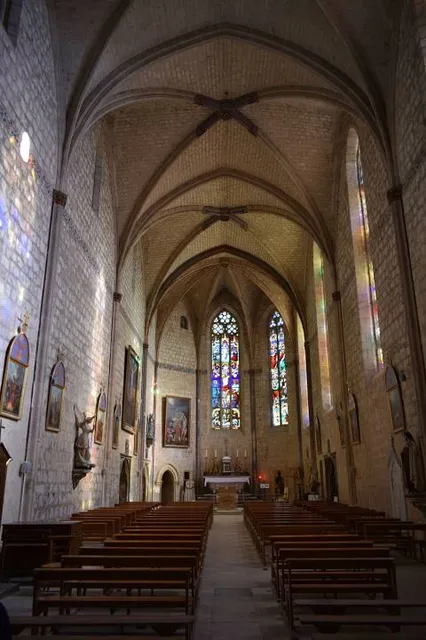
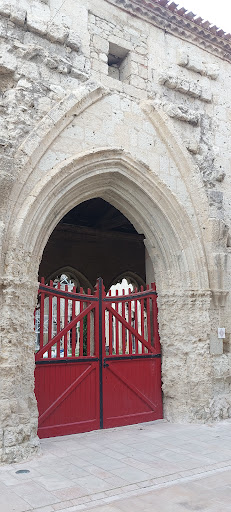
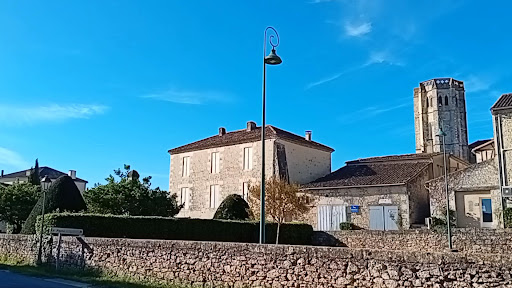
Nevertheless, this splendid collegiate church, listed as a UNESCO World Heritage Site, is undoubtedly one of the most beautiful buildings in the Gers region. Its 14th-century square and octagonal towers impose their solemnity in the very center of the village. The architectural ensemble is the result of the project of Arnaud d'Aux, a local boy, son of a wealthy lord, who became a very influential cardinal at the papal court of Clement V (based in Avignon). In 1314, then private consul to King Edward II of England, he undertook the construction of this heritage jewel. A cloister, whose sculpted Romanesque capitals can be admired, was added in 1320.
The entrance (to the north of the building) once provided direct access. Today, it is reached via the tourist office. A breathtaking view awaits you, a timeless journey into Southern Gothic style and preserved solemnity. Between the arches, sculptures, painted walls, and vaults of the single-nave church, the climb to the bell tower, its two octagonal towers (one of which contains a secret passage with a double-spiral staircase), everything is absolutely magnificent. As you move up the floors, you can finally admire the sacristy frescoes, which have been restored and made accessible (until now they were visible behind a gate). The patrol path and the gardens remain mysterious, filled with a historical aura that sends shivers down your spine. The view from the top takes you to an...
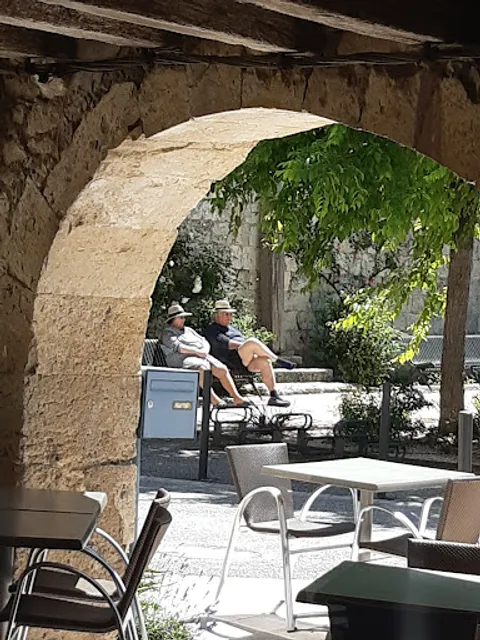
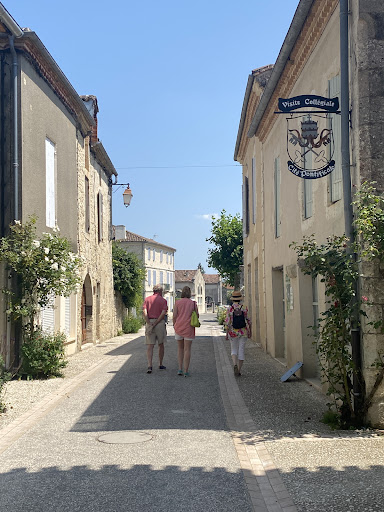
Read moreThe town is known for its beautiful old buildings and medieval streets. The town is not very big. You can take an hour to explore this beautiful village. A visit to La Romieu is not complete without a visit to its beautiful church and the accompanying monastery. Many names, signs and images of cats can be found in this town. This is due to a story from the Middle Ages, in which the cats in the village are said to have chased away a huge mouse plague. Since then, the cats in this village have been revered. When you spend your holidays in the Gers department, a visit to this charming town is...
Read moreConstruite au XIV siècle, La collégiale Saint-Pierre de La Romieu, située prés de Condom dans le département du Gers, est un ensemble constitué d'un cloître, d'une église, de deux tours et des restes d'un ancien palais. L'église et le cloître sont classés au titre des monuments historiques depuis 1901, la collégiale est également classée au Patrimoine Mondial par l'Unesco depuis 1998, dans le cadre de l'inscription des chemins de Saint-Jacques-de-Compostelle. Une des deux tours renferme un des plus vieux escalier à double révolution d’Europe. Dans la sacristie, restaurées depuis peu, les magnifiques peintures murales du XIV siècle sont un trésor exceptionnel et rare. Des visites guidées ou non sont possibles tout au long de l'année. Le village de La Romieu et ses alentours méritent vraiment le détour ! Le village de La Romieu est classé parmi les plus beaux villages de France et tient son nom du mot gascon 'Roumiou' qui signifie 'Pèlerin de Rome' . Au XI siècle, le village est né grâce à deux moines pèlerins, qui revenaient de pèlerinage de Rome et qui, alors qu'ils avaient choisis de se rendre ensuite à St Jacques de Compostelle, ont décidé de terminer leur pèlerinage ici. Autre information intéressante. Le village de La Romieu est appelé le « village des chats » car un grand nombre de chats est présent au cœur village, sur les fenêtres, les portes, les œils de bœuf et sur certains pas de portes. Ces chats sculptés sont l’œuvre de Maurice Serreau, un sculpteur Orléanais, qui, tombé amoureux du village avait décidé de...
Read more