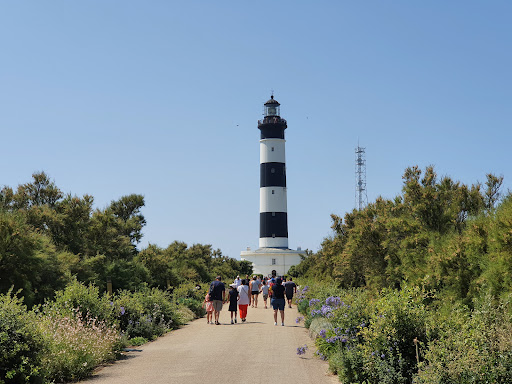
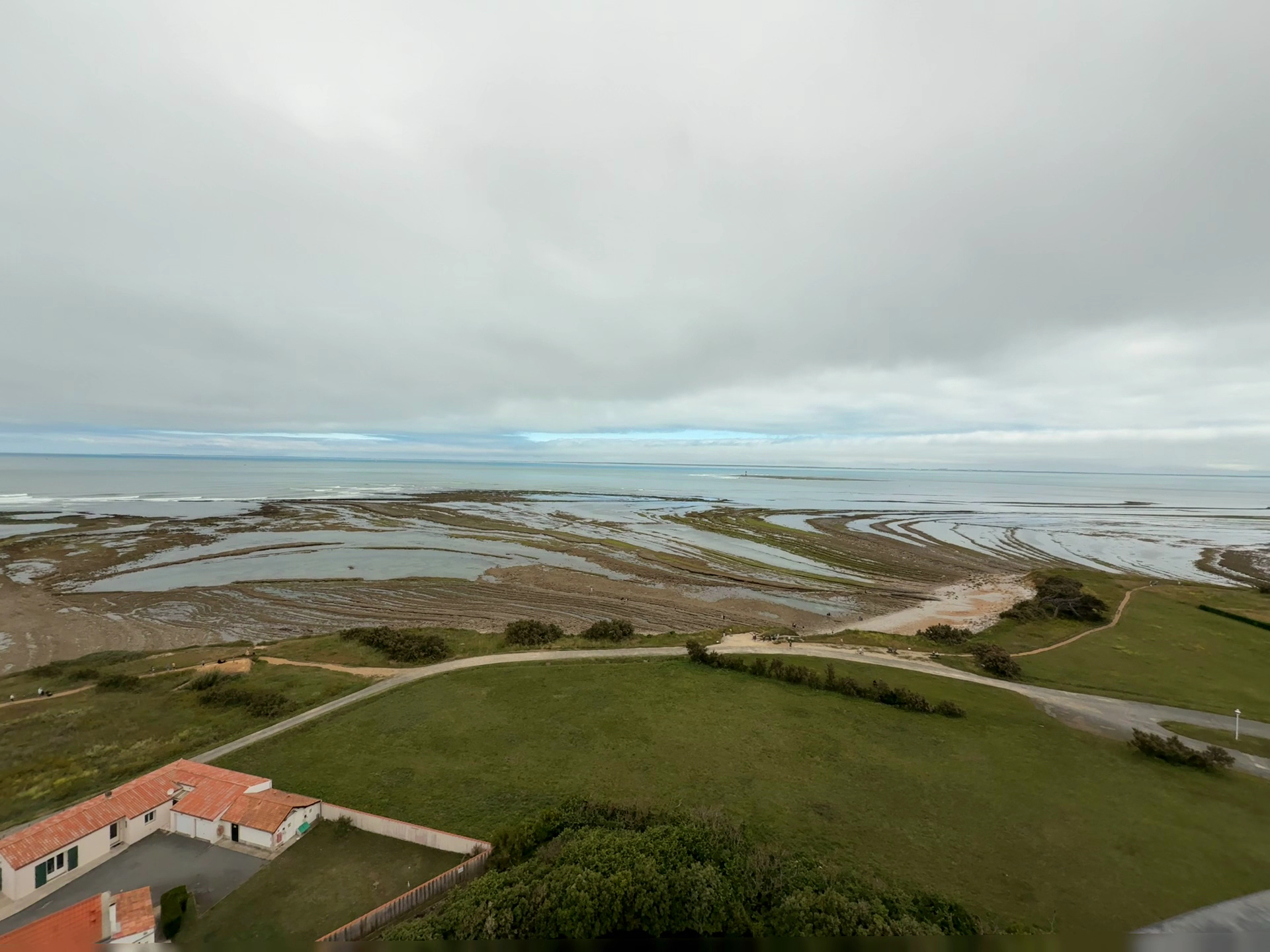
Pedestrian area only but Nice place with alof history. You can climb to the top of the lighthouse €4.60 each. The grounds are beautiful and well kept
The CHASSIRON LIGHTHOUSE
The Chassiron lighthouse is located at the northern tip of the island of Oléron, also known as the "end of the world tip".
Its strategic position allows sailors to locate the entrance to the Antioch Strait, the scene of many shipwrecks....
Features
Name : Chassiron Lighthouse
Height : 46 meters above ground level
Diameter : 18 meters
Shape : circular
Number of steps : 224
Year of construction : 1836
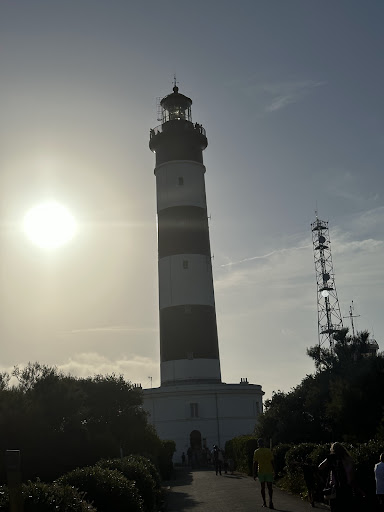
Color code : 3 black stripes and 3 white stripes
Light code : 1 white flash every 10 seconds
Bulb : 250W metal halide
Visibility : 35 km during the day and 52 km at night
Construction materials : Crazannes stone and Vendée granite
History
A first fire tower, 23.80 m high, was built in 1685 at the request of Colbert in order to mark the entrance to the Pertuis d'Antioche and thus guide the ships which joined the Charente estuary to reach the military arsenal of Rochefort.
The increase in maritime traffic, the modernization of the beaconing and the retreat of the cliff led to the construction of a new lighthouse between 1834 and 1836.
Its strategic position and its height of 46m allow the Chassiron lighthouse to effectively warn sailors of the approach to the coast and the dangerous rock banks of the Antioche strait.
Originally entirely white, the lighthouse acquired its black bands in 1926 to increase its visibility and limit confusion with its neighbor: the Baleines lighthouse.
The optic, composed of eight lenticular panels, was electrified in 1930 and today operates with a 250 W metal halide bulb.
The last lighthouse keeper left in 1998. Since then, the lighthouse has been fully automated and controlled by the La Rochelle Lighthouses and Beacons office.
The Chassiron lighthouse garden
The only true garden at the foot of a lighthouse, this one was designed based on the concept of the compass rose. It is possible to discover, in its four corners, the facets and anecdotes of each cardinal point.
The garden is oriented around two themes:
The agricultural garden consists of a vineyard and a vegetable garden
The vine:
Three grape varieties have been planted: Merlot, Sauvignon, and Uni Blanc. Oléron has a mild and very sunny climate, ideal for growing vines. The island has approximately 750 hectares of vines shared between private wineries and the cooperative. In addition to Pineau and Cognac, which remain the flagships of this viticulture, producers have converted to high-quality local wines.
The vegetable garden:
Oléron is an island of farmers before being an island of sailors. The added value brought by direct sales today allows market gardening production to be promoted to holidaymakers. Around the different varieties of vegetables (beans, onions, potatoes, artichokes, etc.), herbs (thyme, mint, bay leaf, verbena, etc.) and fruit trees (fig trees, peach trees, raspberry bushes, etc.) it is possible to imagine the life of the lighthouse keeper who cultivated his own vegetable garden on the site. This allowed him to live self-sufficiently.
The contemporary garden
This section is made up of flowerbeds with a wide variety of plants from all over the world (roses, irises, lilies, boxwood, grasses, etc.). There are also ponds decorated with aquatic species (mint, papyrus, reeds, arum lilies, etc.).
The garden is equipped with information terminals retracing the history of the lighthouse. Visitors can freely access the garden and discover, as they stroll through the paths, turntables, sighting glasses, a relief map, and an audio terminal with a magnetic loop for the hearing impaired. The latter is available in three languages: French, English, and German. These various activities help enrich visitors' knowledge of the maritime domain, marine species, and...
Read more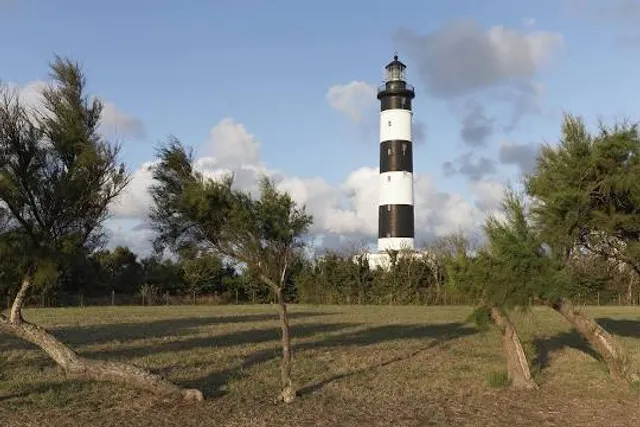

 Learn more insights from Wanderboat AI.