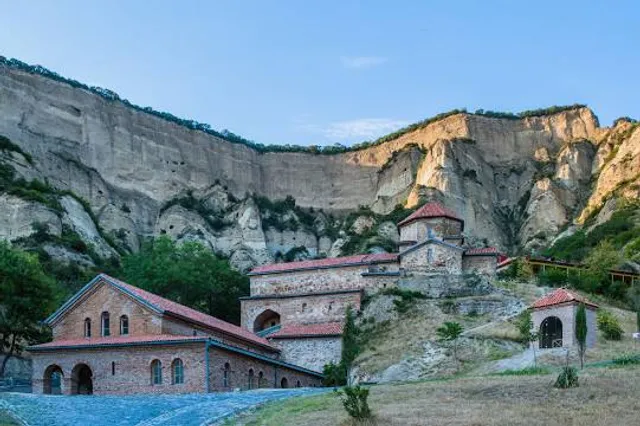
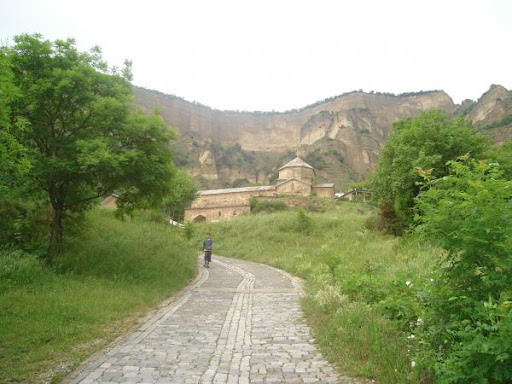
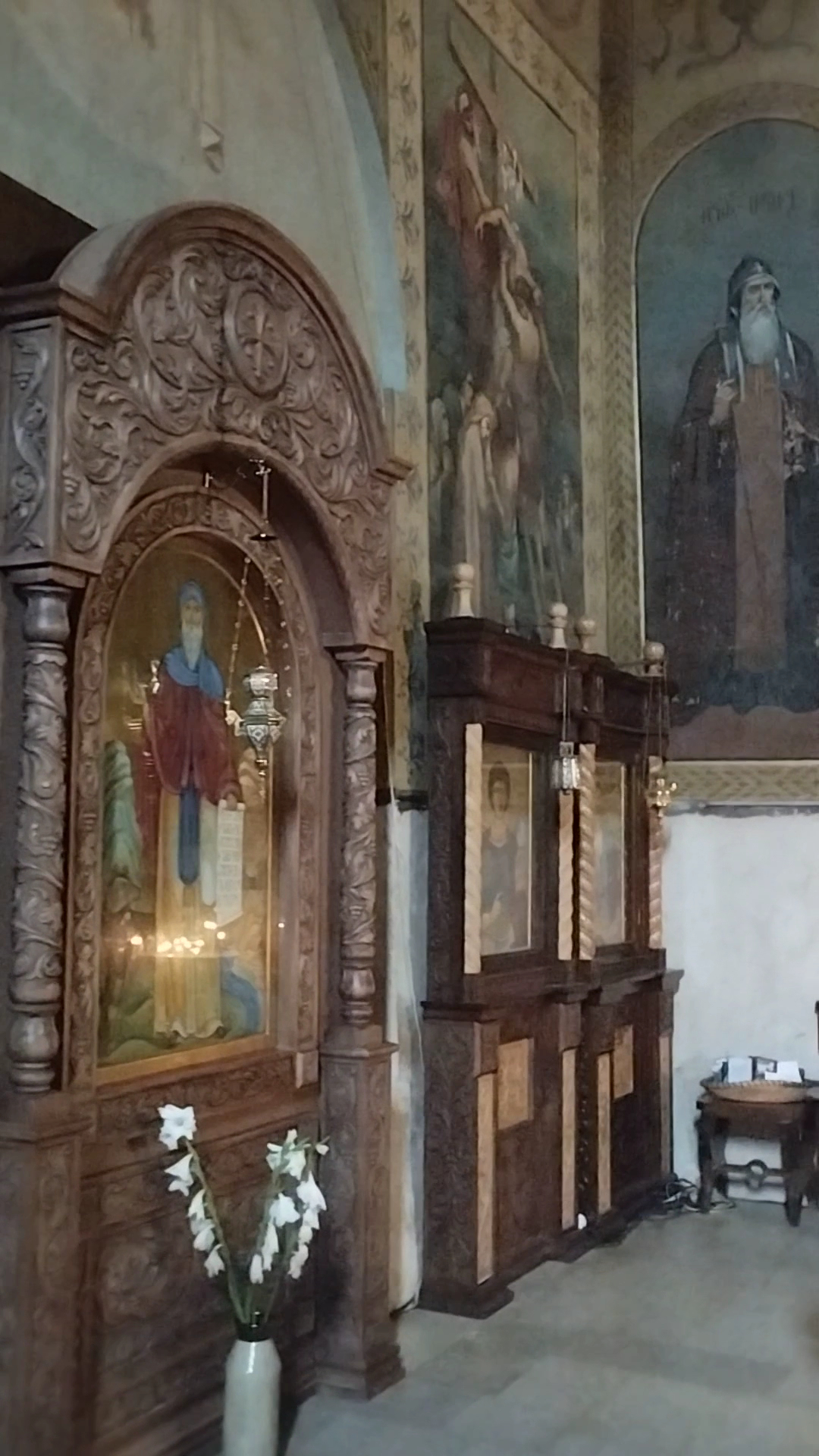
We had visited Saint Shiomghvimes burial place last week of March-2019; it was of a great landscape view from the rock mountains. is a medieval monastic complex in Georgia, near the town of Mtskheta. It is located in a narrow limestone canyon on the northern bank of the Kura River, some 30 km from Tbilisi, Georgia’s capital.
History of this saint: The Thirteen Assyrian Fathers were, according to Georgian church tradition, a group of monastic missionaries who arrived from Mesopotamia to Georgia to strengthen Christianity in the country in the 6th century. They are credited by the Georgian church historians with the foundation of several monasteries and hermitages and initiation of the ascetic movement in Georgia.
Shio-Mgvime quickly turned into the largest monastic community in Georgia and by the end of the 6th century it was populated by as many as 2,000 monks. It became a vibrant center of cultural and religious activities and remained under the personal patronage of Catholicoi of Georgia. David IV "the Builder" (1089-1125) made it a royal domain and dictated regulations (typicon) for the monastery (1123). The downfall of the medieval Georgian kingdom and incessant foreign invasions resulted in the decline of the monastery. It saw a relative revival when the Georgian king George VIII (r. 1446-1465) granted Shio-Mgvime and its lands to the noble family of Zevdginidze-Amilakhvari to whom the monastery served as a familial burial ground up to the 1810s.
The monastery was ravaged by the invading Persian troops sent by Shah Abbas I of Safavid in 1614-6. Prince Givi Amilakhvari reconstructed it in 1678, but the 1720s Ottoman occupation of Georgia brought about another devastation and depopulation of Shio-Mgvime. Restored by Prince Givi Amilakhvari in 1733, the monastery was raided and the monks massacred by the Persians less than two years later. Subsequently, Shio-Mgvime was restored and its interior renovated in the 19th century, but it never regained its past importance and role in the spiritual life of Georgia. Under Bolshevik rule, the monastery was closed, but it is now functional and attracts many...
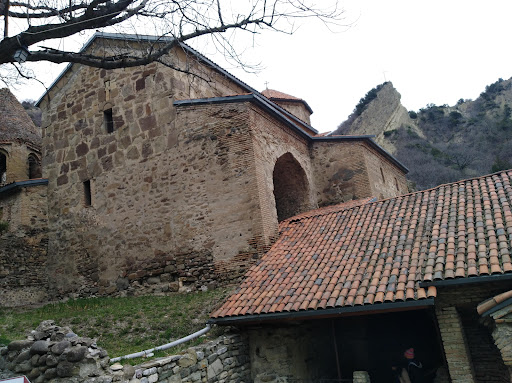
Read moreSHIO MGVIME The Shio Mgvime monastery is located in a beautiful forest place on the left bank of the river Kura in Georgia. The road follows a narrow limestone canyon from the main square in the town Mtskheta. The medieval monastery consists by several buildings from different periods: The oldest one is the Monastery of St. John the Baptist (dated 560-580) - the simple cruciform building with octagonal dome; The Upper Church Theotokos (12th c) was a domed church destroyed by invasion and in 1678 was restored as Basilica; Refectory (12th -17th cc); the Cave of St. Shio (6th c ) and a small chapel (12th c) adorned with medieval murals stands separately on a nearby hill.
In 1937, an archaeological expedition revealed, a 2 km long aqueduct supplying the monastic communities from the nearby village of Skhaltba, and chronicled in 1202 as being constructed by Bishop Anton of Chkondidi, a minister at Queen Thamar’s court.
The story of establishment of the Shio Mgvime monastery goes back to the 6th century when the one of the Thirteen Syrian Fathers, monk Shio, chose to live in a dark isolated cave near a 6th century church North-West of the ancient city of Mtskheta. It is where the name derives from: Mgvime in Georgian language means Grotto, Cave. His grave is still visible there today. In 11th century, a church was built over Shio's tomb. Another church, dedicated to the Virgin Mary, was erected by King David the builder.
Distance from Tbilisi is 30 km, from Mtskheta 13 km (30 min).
The main highlights nearby: Jvari , Svetiskhoveli, Ananuri, Samtavro,...
Read moreShiomgvime Monastery, nestled in a picturesque gorge near the town of Mtskheta, is a serene and spiritual retreat that offers visitors a glimpse into Georgia’s rich monastic tradition. Founded in the 6th century by St. Shio, one of the thirteen Assyrian Fathers who introduced monasticism to Georgia, this secluded complex is steeped in history and religious significance.
The monastery’s setting is breathtaking, surrounded by rugged cliffs and lush greenery, creating an atmosphere of peace and introspection. The main church, built in the 12th century, showcases the simplicity and elegance of medieval Georgian architecture, with its unadorned stone walls and harmonious proportions. Inside, visitors can find ancient frescoes and a tranquil space for prayer and contemplation.
A highlight of the site is the cave chapel where St. Shio is said to have lived and prayed, adding a layer of mysticism to the visit. The monastery complex also includes additional chapels, cells, and a bell tower, all of which blend seamlessly into the natural landscape.
Shiomgvime Monastery is an ideal destination for those seeking spiritual solace, historical insight, or a quiet escape into nature. Its proximity to Tbilisi and Mtskheta makes it easily accessible, yet its secluded location ensures a profound sense of tranquility and connection to Georgia’s...
Read more