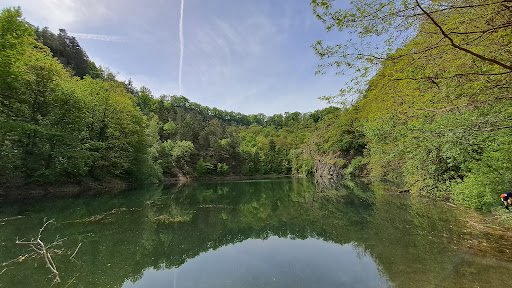
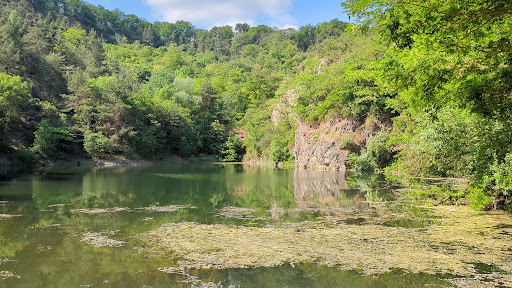
This beautiful little lake is located near the Pechsteinkopf. This mountain takes its name from the basalt that was previously called Pechstein. An approximately 625 meter long and 175 meter wide deposit runs from the southwest to the northeast from the Pechsteinkopf down into the Margarethental. It is the only basalt deposit in the entire Palatinate Forest.
Liquid magma rose through a crack here around 53 million years ago, solidified in the cracks and initially formed the typical basalt columns. Hot gases that rose with the magma caused the columns to break into basalt chunks during their eruptions.
The basalt has probably been mined here since the Middle Ages. Back then, the stones were simply collected from the surface, or chunks were broken out of the rock using hand tools. It is known that Neustadt had the right to collect “pitch stones” here to pave its streets. But only on one day a year: the Tuesday after Pentecost. This agreement was valid until 1847.
The municipality of Forst was in charge of the basalt quarries until 1910. They were then leased to the Pfälzische Hartsteinwerke company in Neustadt (today Basalt AG). The basalt was mined in opencast mines until the 1980s. This resulted in two large funnels: a smaller one in the southwest and a larger one in the northeast.
Initially, the rock was transported by a revolving cable car to a loading station with a grinder in Deidesheim, on the Neustadt–Bad Dürkheim railway line. The cable car was more than 2 km long.
The asphalt mixing plant went into operation in 1911 and was shut down in 1969. In order to protect the residents from noise and dust, transport was switched to trucks and a new grinding mill was built in the southwest of the Pechsteinkopf.
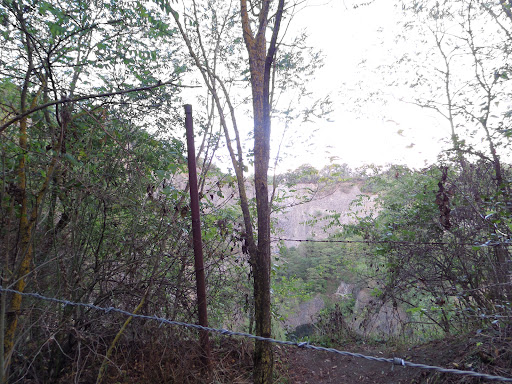
In 1991, quarry work in Margarethental was stopped. To this day, the surface of some streets in Forst still consists of basalt cobblestones from Pechsteinkopf. After the grinder and cable car were dismantled, the edges of the funnel were cordoned off to protect them from being walked on.
Because the water emerging from the mining area is no longer pumped out as it was during extraction times, two ponds are formed at the bottom of the two mining funnels. Over time they developed into natural biotopes. The larger funnel is 100 meters deep and has a diameter of around 200 meters. For security reasons, the entire area is closed. However, the original, smaller of the two lakes...
Read more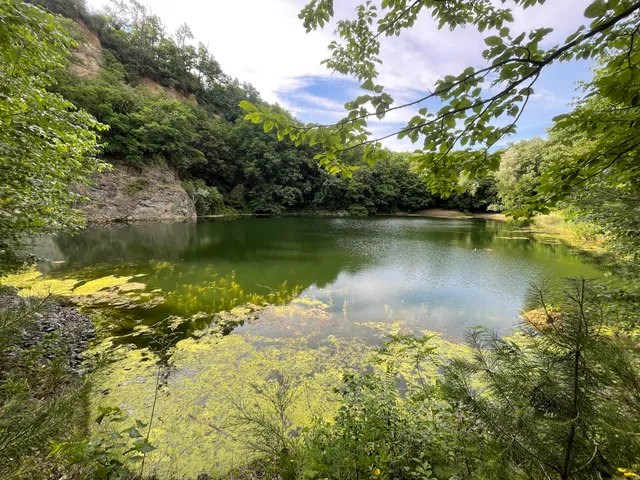
 Learn more insights from Wanderboat AI.