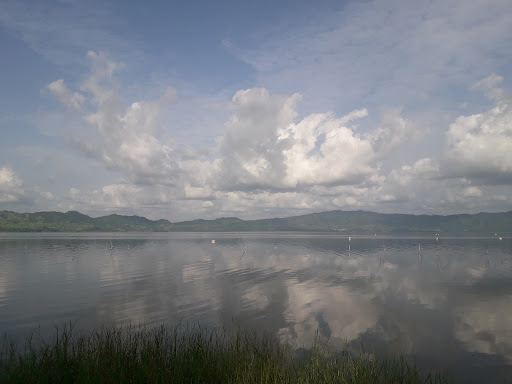
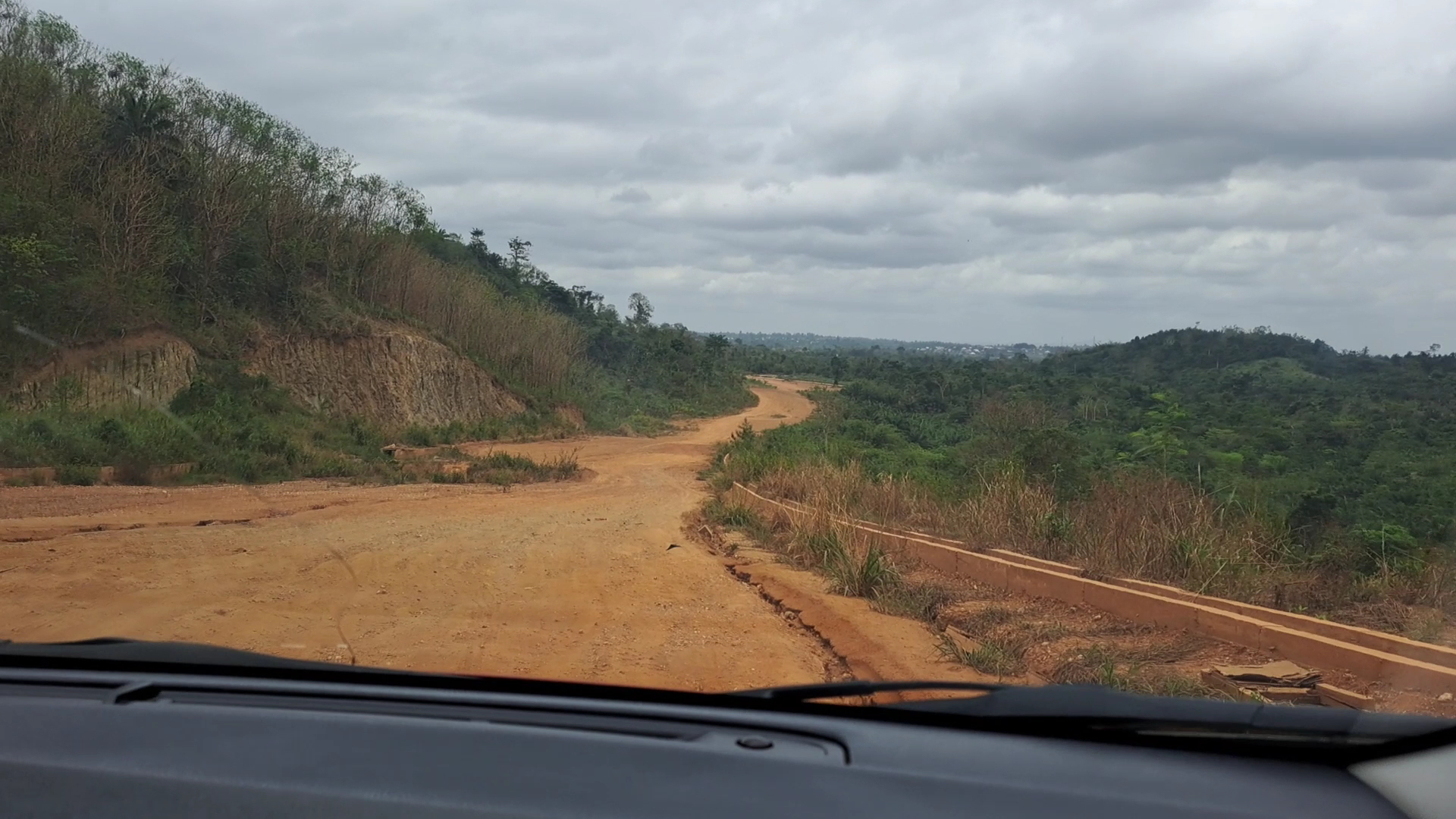
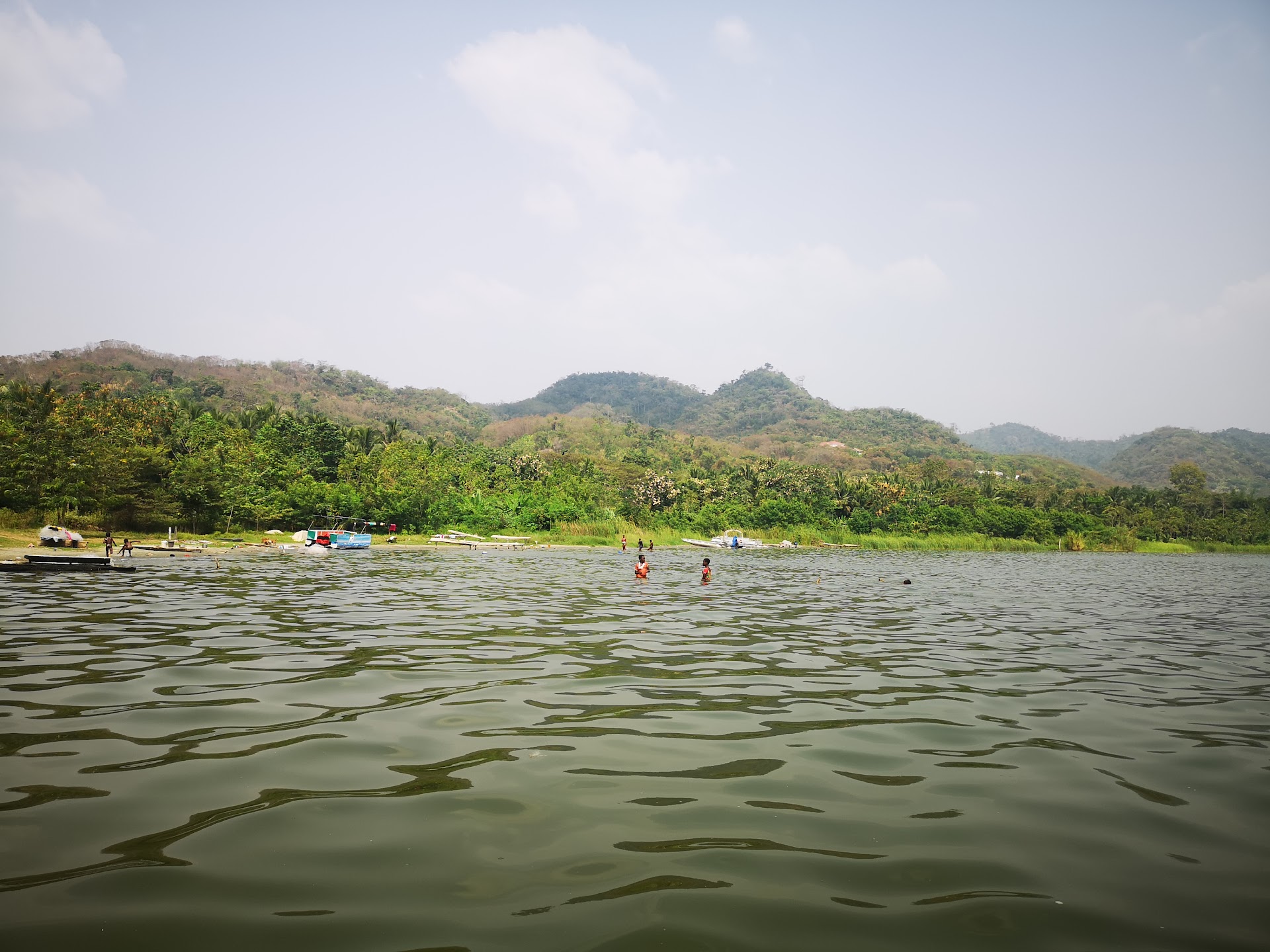
We asked in advance for a driver in our hotel in Kumasi to take us to the Lake, but we also saw people arriving by taxi. We payed 600GHC for a day, but one morning is more than enough. Half of the route is in unpaved road, so it gets bumpy in a normal car. It takes an hour and half to each side, more or less. We stopped in the top of the mountain and seeing the lake there was really worth it.
Because we saw some reviews we've tried to avoid Abono village, but he couldn't. We strongly advise you to do that. However the only solution that we can suggest is to talk in advance with a resort near the lake, like Green Ranch, and see if you can have lunch there or book a horse ride. This is what we would have done if we knew better.
At the entrance of Abono village there is a gate and you have to pay 20 GHC per car and you receive a ticket issued by the Ghana Tourism Authority.
We arrived in the village and our car was instantly surrounded by locals. When we got out of the car, they started pushing us to follow these random people without explaining why or where. I suspected that they wanted to send us to the boats, so I asked, and I was right. We already knew about the boat trip scam, so we firmly said no (they insisted another times). We learned there, listening to them explaining to our driver, that they take you for a 15 minutes boat trip and in the middle they ask for 150GHC for person.
After we said no to the boat trip, they send us to the reception office: a small room with some chairs, one desk and some information on walls. We had to listen to a 3 minutes explanation from the "boss" about the lake, the same that is on the internet, and were asked to pay 70GHC each person (because we are not nationals) and write our names in a book.
We left the room, and they presented us to our guide there - a young man that was very nice and more informative than his boss. He had two other guys following him that said nothing. Of course, at the end, this guide also asked for more money for him and "the boys". He showed us the shore, we walked a little bit in the path that we were "allowed", not even 10 minutes and decided to come back for the car. The place is very dirty, without place for you to stop, rest or just enjoy.
We are not naive and understand why the local people feel that the tourists are their golden ticket. But actually it is very sad because this place has the potential to be very nice, peaceful and even give some money to the local community. But the way is being managed makes you very uncomfortable there, always waiting for being asked more money for no reason. I would prefer to pay more for the entrance but not being bothered and knowing that the money is used to develop the community, create a decent museum, clean the trash, put some picnic tables. I think that if there was a coffee shop with some drinks and foods and a souvenir shop, people would spend more money there and a lot more willingly.
So, we didn't regret getting to see the lake, but we would not recommend at all this experience in Abono, and we went already prepared for this...
Read more
 Learn more insights from Wanderboat AI.