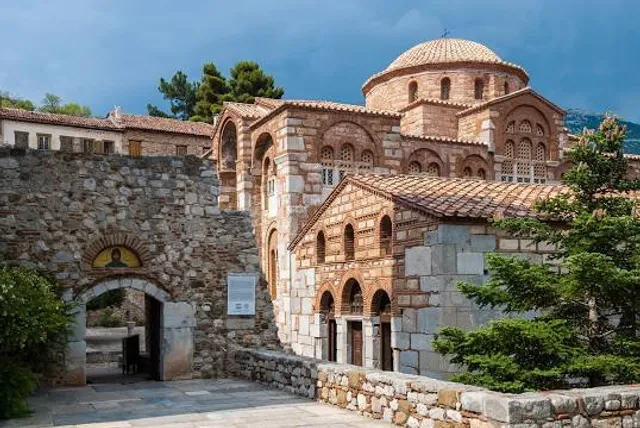
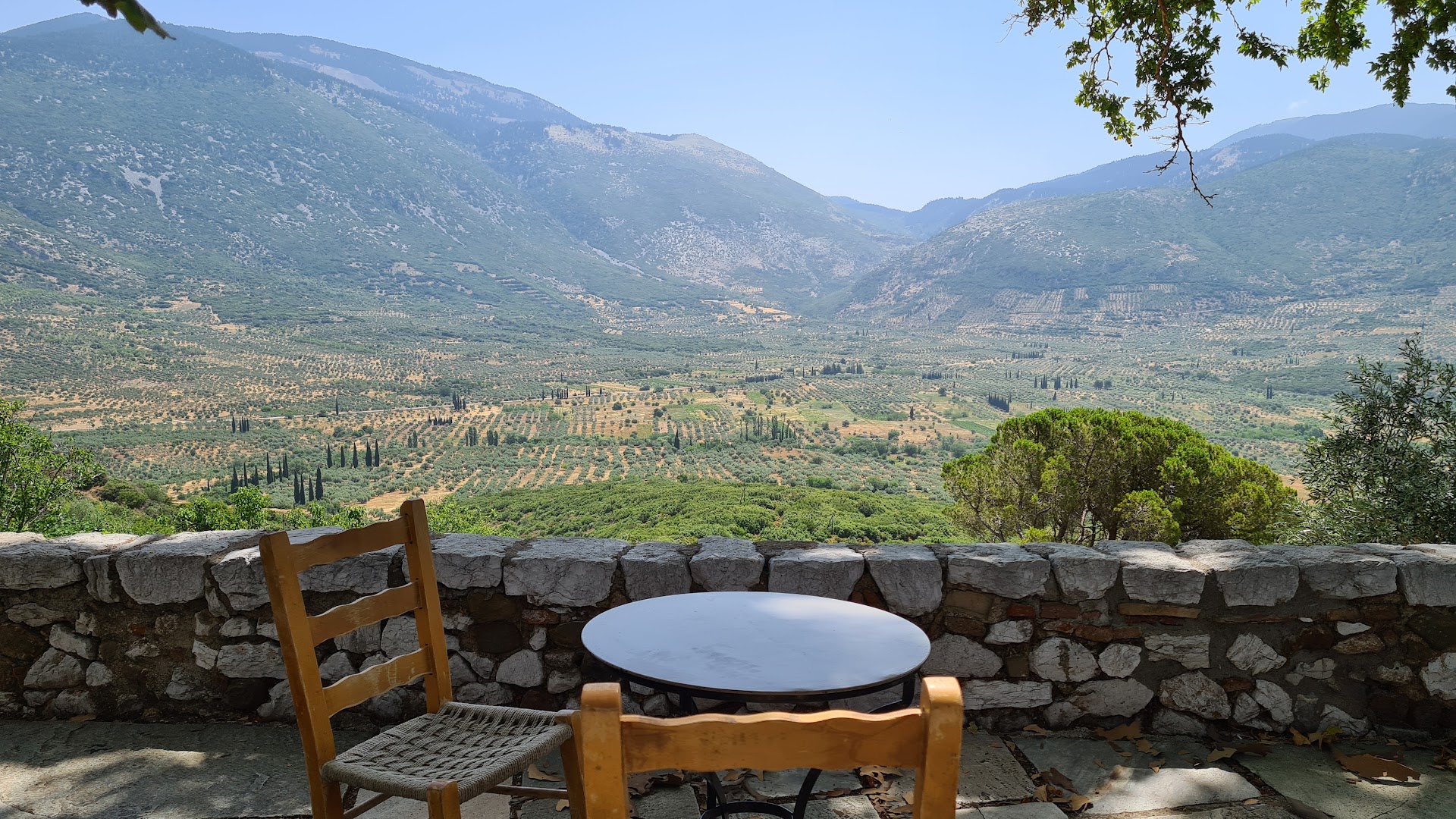
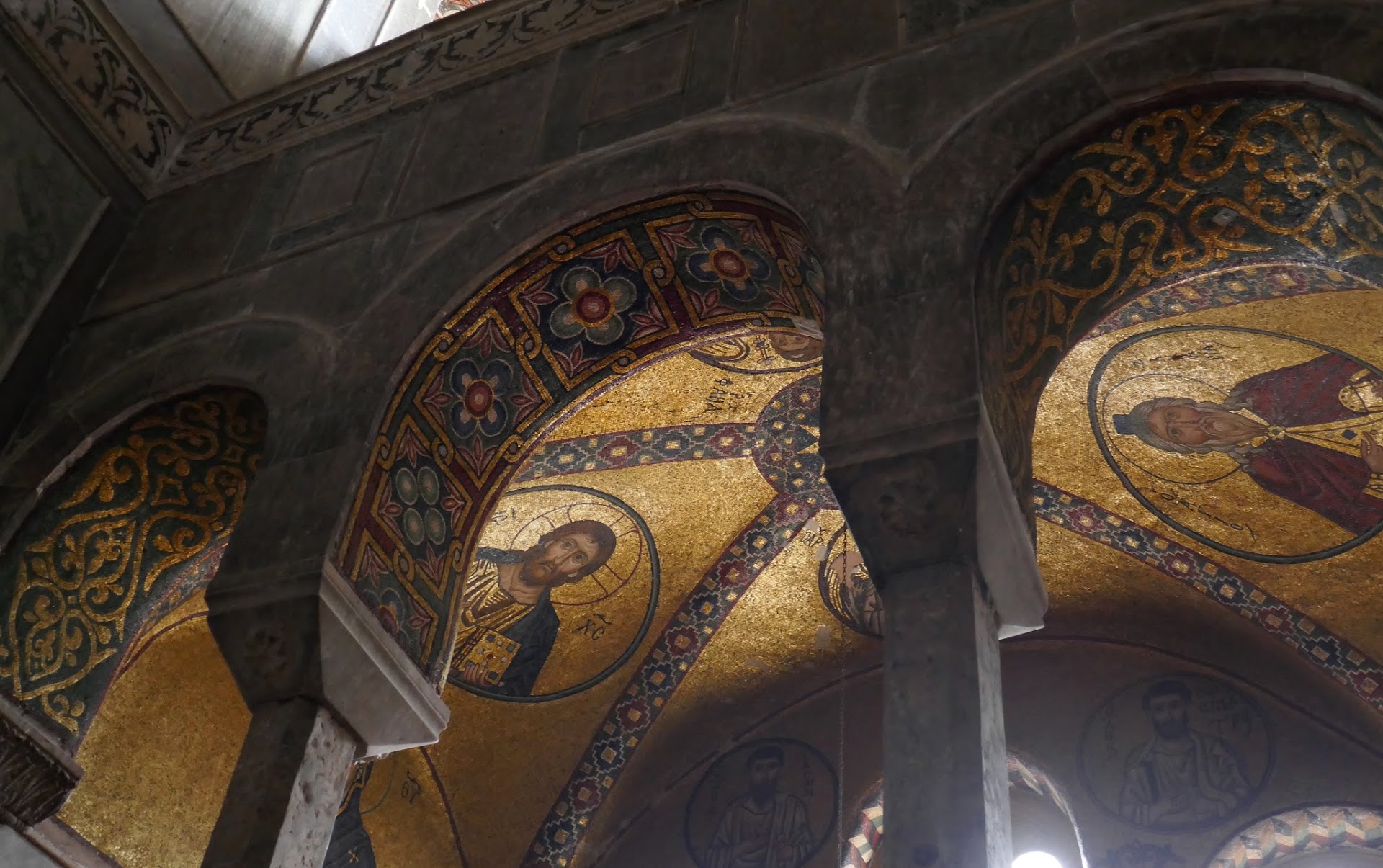
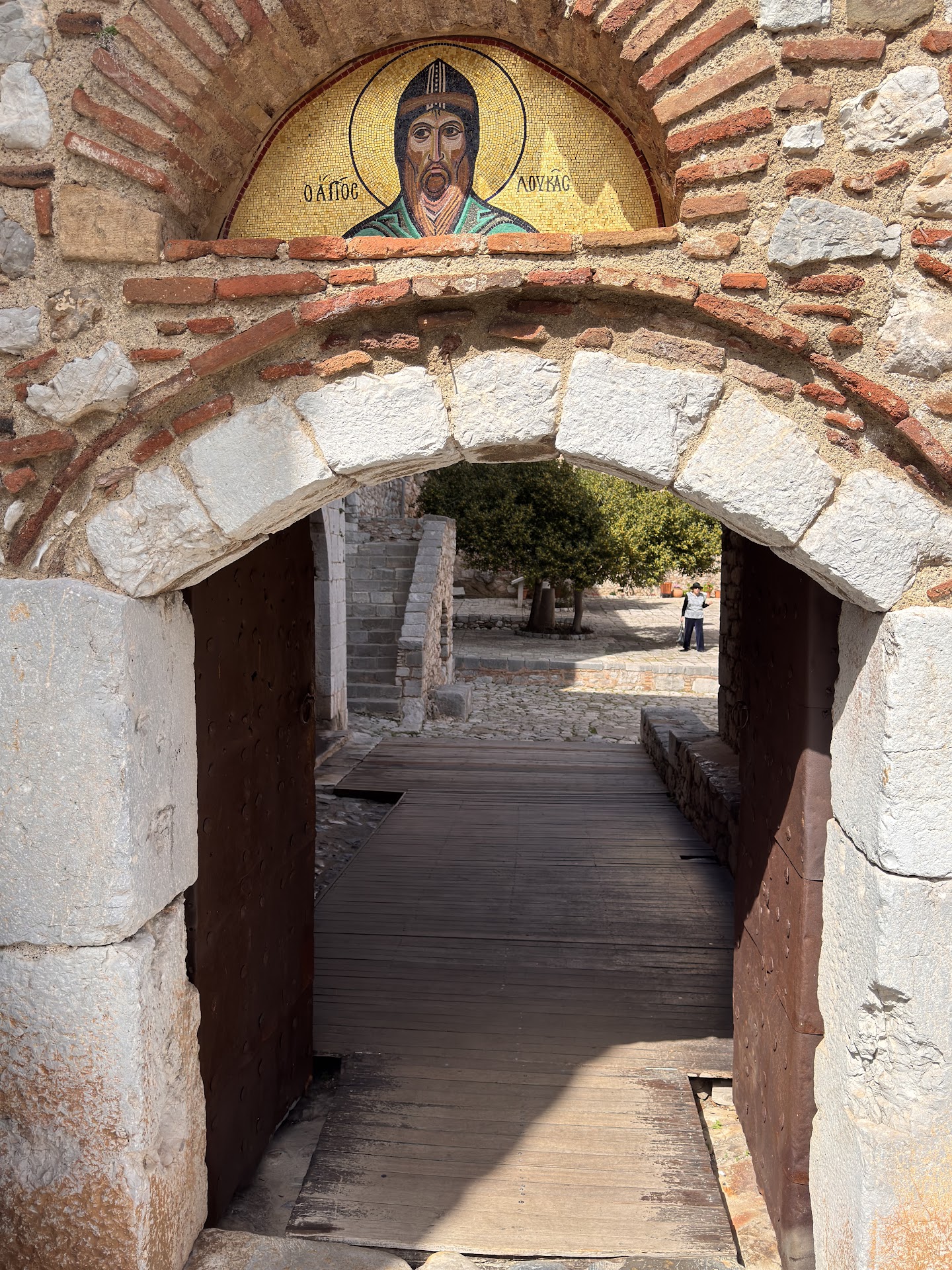
Hosios Loukas is a breath-taking Byzantine monastery in a picturesque valley full of olive and almond trees near the town of Distomo. Hosios Loukas Monastery meaning “Esteemed Saint Luke” was not built in honor of Luke the Evangelist, but was established by the Greek monk Loukas. He was buried in the crypt of the monastery when he died in AD 953. Saint Luke, born in AD 896, abandoned his home when he was an adolescent in search of spirituality. In the following years he became a healer, and was renowned for healing ailments that were practically impossible to cure. Lukas developed a great talent as a prophet and predicted that Romano II would liberate Crete from the Arabs after his death. When the emperor defeated the Saracen Arabs, he commissioned a church to be built in his honor. One of the most striking aspects of the monastery is found at the entrance. If you look up, you will see a spectacular gold mosaic of the saint. Attached to the abbey is a large church, Katholikon, which in its turn is attached to a smaller temple, or Theotokos, erected between 997 and 1011 to honor the Virgin Mary. The temples are beautifully decorated with numerous frescoes and mosaics, all perfectly preserved. Underneath the Katholikon is the crypt where the remains of the saint lie. Although Hosios Loukas is smaller, the building may remind you of Hagia Sophia in Istanbul or St. Mark’s Basilica in Venice. The landscape surrounding the Monastery of Hosios Loukas may not be as breath-taking as Meteora, but its green and golden valleys full of flowering almond and olive trees evoke harmony and well-being. If you plan to travel to Delphi by rental car, then Hosios Loukas is a must. From Delphi take the highway to Livadeia. Approximately 25 km down the highway you will see the exit to...
Read moreProche du golfe de Corinthe , entre Boétie et Phocide , raisonnablement perché et aisément accessible , se situe le monastère Hosios Loukas de facture byzantine , implantation initiale au XIème siècle qui vint s'adosser à l'église Haghia Varvara (ste Barbara) déjà existante depuis.le Xème siècle. Malgré moult revers , et facheux contretemps , il parvint à son apogée début XIX ème à l'issue de gigantesques travaux lorsque s'érigèrent l'église st Luc et de nombreux travaux annexes . Depuis , suivi restauré , entretenu soigné , paysagé , il est l'un de ces joyaux grecs de l'architecture du XII ème remarquable et immanquable. Par delà le cadre arboré somptueux et l' ensemble architectural superbes qui titille la curiosité , incontestablement le sublime réside à l'intèrieur , l'église st Luc , sa crypte et l'église de la Mère de dieu , en étant les références majeures de son art monacal abouti . Du reste, une fois le parvis franchi et votre entrée effectuée dans l'église st Luc , dés vos premiers pas sur le sol de marbre (horthostates ) d'une insoupçonnable beauté , vous n'échapperez au choc saisissant devant l'étal artistique des fresques occupant le narthex ,préface de ce sanctuaire détenant un cumul de merveilles , à savoir , mobilier , sol , murs et plafonds ornementés de fresques et mosaïques etc etc. Bref , du temps nécessaire à consentir pour le meilleur , car , vous l'avez forcément saisi , ici , rien n'est à voir , tout est à regarder , détailler , contempler , s'inspirer ... Le tout , sans omettre ( la liste étant dense ) bien évidemment après la visite de" la mère de dieu "puis la crypte d'autres batiments annexes dont le musée enrichissant. Enfin , pour mettre un terme à cette ballade byzantine superlative , une suggestion qui devrait aussi vous séduire et vous permettre de vous remettre de vos belles émotions , osez , avant de quitter les lieux , installés à la somptueuse terrasse ombragée , derrière un café frappé ou une eau gazeuse aimablement servis par une personne souriante , profiter de ce panorama exceptionnel, de cette terre en contrebas ouvragée , striée par la main de l'homme, belle à souhait . Inéluctablement , émane de ce tableau apaisant , silence , quiétude et sérénité , bel à-propos duquel découle l'inévitable thématique , mille fois ressassée en ce haut-lieu de méditation , suggérant Dieu , l'homme , le ciel et la terre... Excellente visite. ...
Read moreI do not recommend the visit. It is on the UNESCO list, so I decided to see that part of the world's Heritage. However, it was not worth it. The ticket of 10 euros per person is terribly overpriced because it has nothing interesting to offer a tourist. The church itself is preserved in an unchanged state, I believe. Nevertheless, better impression leaves an ordinary Orthodox church in a random Greek city. Also, the nearly empty museum with a collection of few stone remains is not amusing at all. If you have spare euros, you can come there. Otherwise, it is not worth the...
Read more