HTML SitemapExplore
logo
Find Things to DoFind The Best Restaurants

Archeological Site of Heraion at Perachora — Attraction in Loutraki-Perachora-Agioi Theodoroi Municipality

Name
Archeological Site of Heraion at Perachora
Description
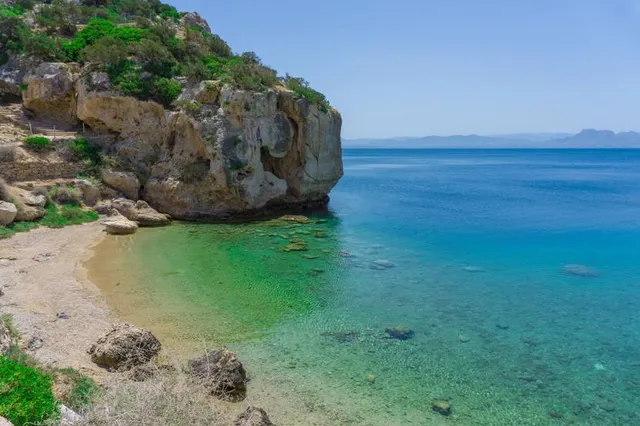
The Heraion of Perachora is a sanctuary of the goddess Hera situated in a small cove of the Corinthian gulf at the end of the Perachora peninsula.
Nearby attractions
Nearby restaurants
Nearby hotels
Related posts
Keywords
Archeological Site of Heraion at Perachora tourism.Archeological Site of Heraion at Perachora hotels.Archeological Site of Heraion at Perachora bed and breakfast. flights to Archeological Site of Heraion at Perachora.Archeological Site of Heraion at Perachora attractions.Archeological Site of Heraion at Perachora restaurants.Archeological Site of Heraion at Perachora travel.Archeological Site of Heraion at Perachora travel guide.Archeological Site of Heraion at Perachora travel blog.Archeological Site of Heraion at Perachora pictures.Archeological Site of Heraion at Perachora photos.Archeological Site of Heraion at Perachora travel tips.Archeological Site of Heraion at Perachora maps.Archeological Site of Heraion at Perachora things to do.
Archeological Site of Heraion at Perachora things to do, attractions, restaurants, events info and trip planning
Archeological Site of Heraion at Perachora
GreecePeloponnese, Western Greece and the IonianLoutraki-Perachora-Agioi Theodoroi MunicipalityArcheological Site of Heraion at Perachora

Basic Info

Archeological Site of Heraion at Perachora

Loutraki-Agioi Theodoroi Municipality 203 00, Greece
4.8(1.3K)
Closed
Save
spot

Ratings & Description

Info

The Heraion of Perachora is a sanctuary of the goddess Hera situated in a small cove of the Corinthian gulf at the end of the Perachora peninsula.

Cultural
Outdoor
Family friendly
attractions: , restaurants:
logoLearn more insights from Wanderboat AI.
Website
corinth-museum.gr
Open hoursSee all hours
Sat8 AM - 7 PMClosed

Plan your stay

hotel
Pet-friendly Hotels in Loutraki-Perachora-Agioi Theodoroi Municipality
Find a cozy hotel nearby and make it a full experience.

hotel
Affordable Hotels in Loutraki-Perachora-Agioi Theodoroi Municipality
Find a cozy hotel nearby and make it a full experience.

hotel
The Coolest Hotels You Haven't Heard Of (Yet)
Find a cozy hotel nearby and make it a full experience.

hotel
Trending Stays Worth the Hype in Loutraki-Perachora-Agioi Theodoroi Municipality
Find a cozy hotel nearby and make it a full experience.

Reviews

Things to do nearby

Epidaurus & Nafplio: Ancient Roads, Modern Culture
Sun, Dec 7 • 8:00 AM
203 00, Loutraki, Greece
View details
Ancient Corinth Private Tour with Licensed Guide
Sat, Dec 6 • 7:30 AM
200 07, Archaia Korinthos, Greece
View details

Get the Appoverlay
Get the AppOne tap to find yournext favorite spots!
Wanderboat LogoWanderboat

Your everyday Al companion for getaway ideas

CompanyAbout Us
InformationAI Trip PlannerSitemap
SocialXInstagramTiktokLinkedin
LegalTerms of ServicePrivacy Policy

Get the app

© 2025 Wanderboat. All rights reserved.
logo

Reviews of Archeological Site of Heraion at Perachora

4.8
(1,282)
avatar
4.0
1y

The Archaeological Site of Heraion at Perachora is a fascinating and lesser-known gem in Greek history, located on the northern edge of the Corinthian Gulf, near the town of Perachora. This site is dedicated to Hera, the queen of the gods in Greek mythology, and served as a significant religious sanctuary during ancient times. It is particularly noted for its stunning location on the rugged coastline, offering breathtaking views of the sea.

Historical Significance The Heraion at Perachora was an important sanctuary during the Archaic and Classical periods (approximately 8th to 4th centuries BC). The site was dedicated to Hera, the wife of Zeus, and was a place of worship and pilgrimage. The sanctuary includes the remains of several structures, including temples, altars, and a stoa (a covered walkway), all of which were part of the religious complex.

The most significant structure at the site is the Temple of Hera, which dates back to the 6th century BC. This temple was the focal point of the sanctuary, where rituals and offerings were made in honor of the goddess. The temple is relatively small compared to other Greek temples but is notable for its historical importance and the natural beauty surrounding it.

What to See - Must-See Highlights The Temple of Hera: The central feature of the site, this temple, though now in ruins, still conveys the grandeur of the ancient worship practices. The temple’s foundation and some columns remain, providing a glimpse into its original structure.

The Altar and Sacred Pool: Close to the temple, visitors can find the remains of the altar where sacrifices were made. Nearby is a sacred pool that was possibly used for ritual purification.

The Stoa: This covered walkway was likely used by pilgrims and worshippers. It is an excellent example of the public architecture that supported the sanctuary's activities.

The Views of the Corinthian Gulf: One of the most striking aspects of the Heraion is its location. Perched on the edge of the cliffs, the site offers stunning views over the Corinthian Gulf, making it one of the most scenic archaeological sites in Greece.

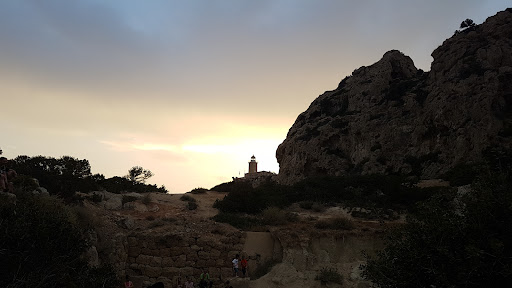
The Nearby Lighthouse: Just a short walk from the archaeological site is the Melagavi Lighthouse, which dates back to the 19th century. It’s a great spot to enjoy the panoramic views and take in the natural beauty...

   Read more
avatar
5.0
6y

So yesterday we took a trip down the coastline of Corinthia, past Porto Germano to Lake Vouliagmeni and eventually arrived at the Sanctuary of Hera Akraia-Limenia, an Archaeological site. No surprise here I guess, as delving into history of the area is so easy. You can get lost just by day dreaming about the time period. In this particular place, my imagination ran wild as I walked past the remanence of the large piled stones buildings that have tumbled over and scattered themselves across the hills and the bay in the area.

With the pressing heat that we are experiencing at the moment it was an absolute treat to eventually arrive at this beautiful little bay which looked like something out of a travel picture book. Not only is was it a picturesque scene that welcomed us, but it also has one of the most perfectly situated locations I've ever seen and would most likely have built a sanctuary here for myself if I was a goddess.. We dipped ourselves into the different shades of aqua blue and let the salty water carry us away. I floated on the blue liquid surface and stared out at the ancient ruins and wondered what it must have been like living here all those thousands of years ago. This particular sanctuary was founded at the beginning of the 8th century B.C. and it has been speculated that it was most likely the Argives or the Megarians. A century later it fell into new control, that of the Corinthians, and in the 6th century B.C., the shrine of Hera Akraia was constructed on the site of a Geometric apsidal temple, and 200 m. east of it, near the harbour, the shrine of Hera Limenia was built. The sanctuary expanded during the 5th century B.C., this saw the construction of the L-shaped stoa and an altar and the creation of an agora. A large roofed cistern was built in the 4th century B.C. After the destruction of Corinth by the Romans in 146 B.C., The sanctuary then fell into decline and was abandoned. In 1930-1933 the Sanctuary was excavated by the British School of Archaeology in Athens under the direction of H. Payne.

The finds are exhibited in National Archaeological Museum of Athens and the Archaeological Museum of...

   Read more
avatar
5.0
1y

Visited March of 2024

The Heraion of Perachora is a beautiful small site on this peninsula with the Lighthouse of Melagavi and both are worth seeing. The water is gorgeous and it has a really nice walkways to both locations. Not to be missed.

The Heraion of Perachora is a sanctuary of the goddess Hera situated in a small cove of the Corinthian gulf at the end of the Perachora peninsula. In addition to a temple of Hera of unusual construction and antiquity, the remains of a number of other structures have also been found, including an L-shaped stoa, a large cistern, dining rooms, and a second potential temple. The Sanctuary of Hera at Perachora is 14.2 kilometres north-northwest of Corinth and 75.9 kilometers west of Athens. Although there is debate between Argos, Megara and Corinth, the sanctuary was probably under the control of Corinth, as it faced the harbors of that powerful city across the Corinthian gulf. Cult activity at the site continued from perhaps the 9th century BCE to 146 BCE, when the Roman general Mummius sacked Corinth during the war with the Achaean League. In the Roman period, domestic structures were built on the site, indicating that the area was no longer a sanctuary. This site is significant for the study of the origins of Greek temple architecture and rural cults.

There is a legend recounted in Euripides that Medea buried her murdered children at a sanctuary of Hera Akraia as she fled from Corinth. This may be a reference to this site. Herodotus tells the story of Periander stripping the clothes off of the Corinthian women at a sanctuary of Hera.[2] The Greek historian Strabo wrote in the 1st century CE that there was an oracle associated with the sanctuary. If the temple was still in use by the 4th-century, it would have been closed during the persecution of pagans in the late Roman Empire, when laws against non-Christian religions and their sanctuaries were enacted by the...

   Read more
Page 1 of 7
Previous
Next

Posts

Kostas PolyzosKostas Polyzos
The Archaeological Site of Heraion at Perachora is a fascinating and lesser-known gem in Greek history, located on the northern edge of the Corinthian Gulf, near the town of Perachora. This site is dedicated to Hera, the queen of the gods in Greek mythology, and served as a significant religious sanctuary during ancient times. It is particularly noted for its stunning location on the rugged coastline, offering breathtaking views of the sea. Historical Significance The Heraion at Perachora was an important sanctuary during the Archaic and Classical periods (approximately 8th to 4th centuries BC). The site was dedicated to Hera, the wife of Zeus, and was a place of worship and pilgrimage. The sanctuary includes the remains of several structures, including temples, altars, and a stoa (a covered walkway), all of which were part of the religious complex. The most significant structure at the site is the Temple of Hera, which dates back to the 6th century BC. This temple was the focal point of the sanctuary, where rituals and offerings were made in honor of the goddess. The temple is relatively small compared to other Greek temples but is notable for its historical importance and the natural beauty surrounding it. What to See - Must-See Highlights The Temple of Hera: The central feature of the site, this temple, though now in ruins, still conveys the grandeur of the ancient worship practices. The temple’s foundation and some columns remain, providing a glimpse into its original structure. The Altar and Sacred Pool: Close to the temple, visitors can find the remains of the altar where sacrifices were made. Nearby is a sacred pool that was possibly used for ritual purification. The Stoa: This covered walkway was likely used by pilgrims and worshippers. It is an excellent example of the public architecture that supported the sanctuary's activities. The Views of the Corinthian Gulf: One of the most striking aspects of the Heraion is its location. Perched on the edge of the cliffs, the site offers stunning views over the Corinthian Gulf, making it one of the most scenic archaeological sites in Greece. The Nearby Lighthouse: Just a short walk from the archaeological site is the Melagavi Lighthouse, which dates back to the 19th century. It’s a great spot to enjoy the panoramic views and take in the natural beauty of the area.
Travelbug Rose BilbroughTravelbug Rose Bilbrough
So yesterday we took a trip down the coastline of Corinthia, past Porto Germano to Lake Vouliagmeni and eventually arrived at the Sanctuary of Hera Akraia-Limenia, an Archaeological site. No surprise here I guess, as delving into history of the area is so easy. You can get lost just by day dreaming about the time period. In this particular place, my imagination ran wild as I walked past the remanence of the large piled stones buildings that have tumbled over and scattered themselves across the hills and the bay in the area. With the pressing heat that we are experiencing at the moment it was an absolute treat to eventually arrive at this beautiful little bay which looked like something out of a travel picture book. Not only is was it a picturesque scene that welcomed us, but it also has one of the most perfectly situated locations I've ever seen and would most likely have built a sanctuary here for myself if I was a goddess.. We dipped ourselves into the different shades of aqua blue and let the salty water carry us away. I floated on the blue liquid surface and stared out at the ancient ruins and wondered what it must have been like living here all those thousands of years ago. This particular sanctuary was founded at the beginning of the 8th century B.C. and it has been speculated that it was most likely the Argives or the Megarians. A century later it fell into new control, that of the Corinthians, and in the 6th century B.C., the shrine of Hera Akraia was constructed on the site of a Geometric apsidal temple, and 200 m. east of it, near the harbour, the shrine of Hera Limenia was built. The sanctuary expanded during the 5th century B.C., this saw the construction of the L-shaped stoa and an altar and the creation of an agora. A large roofed cistern was built in the 4th century B.C. After the destruction of Corinth by the Romans in 146 B.C., The sanctuary then fell into decline and was abandoned. In 1930-1933 the Sanctuary was excavated by the British School of Archaeology in Athens under the direction of H. Payne. The finds are exhibited in National Archaeological Museum of Athens and the Archaeological Museum of Ancient Corinth.
Kirk BelmontKirk Belmont
Visited March of 2024 The Heraion of Perachora is a beautiful small site on this peninsula with the Lighthouse of Melagavi and both are worth seeing. The water is gorgeous and it has a really nice walkways to both locations. Not to be missed. The Heraion of Perachora is a sanctuary of the goddess Hera situated in a small cove of the Corinthian gulf at the end of the Perachora peninsula. In addition to a temple of Hera of unusual construction and antiquity, the remains of a number of other structures have also been found, including an L-shaped stoa, a large cistern, dining rooms, and a second potential temple. The Sanctuary of Hera at Perachora is 14.2 kilometres north-northwest of Corinth and 75.9 kilometers west of Athens. Although there is debate between Argos, Megara and Corinth, the sanctuary was probably under the control of Corinth, as it faced the harbors of that powerful city across the Corinthian gulf. Cult activity at the site continued from perhaps the 9th century BCE to 146 BCE, when the Roman general Mummius sacked Corinth during the war with the Achaean League. In the Roman period, domestic structures were built on the site, indicating that the area was no longer a sanctuary. This site is significant for the study of the origins of Greek temple architecture and rural cults. There is a legend recounted in Euripides that Medea buried her murdered children at a sanctuary of Hera Akraia as she fled from Corinth. This may be a reference to this site. Herodotus tells the story of Periander stripping the clothes off of the Corinthian women at a sanctuary of Hera.[2] The Greek historian Strabo wrote in the 1st century CE that there was an oracle associated with the sanctuary. If the temple was still in use by the 4th-century, it would have been closed during the persecution of pagans in the late Roman Empire, when laws against non-Christian religions and their sanctuaries were enacted by the Christian emperors.
See more posts
See more posts
hotel
Find your stay

Pet-friendly Hotels in Loutraki-Perachora-Agioi Theodoroi Municipality

Find a cozy hotel nearby and make it a full experience.

The Archaeological Site of Heraion at Perachora is a fascinating and lesser-known gem in Greek history, located on the northern edge of the Corinthian Gulf, near the town of Perachora. This site is dedicated to Hera, the queen of the gods in Greek mythology, and served as a significant religious sanctuary during ancient times. It is particularly noted for its stunning location on the rugged coastline, offering breathtaking views of the sea. Historical Significance The Heraion at Perachora was an important sanctuary during the Archaic and Classical periods (approximately 8th to 4th centuries BC). The site was dedicated to Hera, the wife of Zeus, and was a place of worship and pilgrimage. The sanctuary includes the remains of several structures, including temples, altars, and a stoa (a covered walkway), all of which were part of the religious complex. The most significant structure at the site is the Temple of Hera, which dates back to the 6th century BC. This temple was the focal point of the sanctuary, where rituals and offerings were made in honor of the goddess. The temple is relatively small compared to other Greek temples but is notable for its historical importance and the natural beauty surrounding it. What to See - Must-See Highlights The Temple of Hera: The central feature of the site, this temple, though now in ruins, still conveys the grandeur of the ancient worship practices. The temple’s foundation and some columns remain, providing a glimpse into its original structure. The Altar and Sacred Pool: Close to the temple, visitors can find the remains of the altar where sacrifices were made. Nearby is a sacred pool that was possibly used for ritual purification. The Stoa: This covered walkway was likely used by pilgrims and worshippers. It is an excellent example of the public architecture that supported the sanctuary's activities. The Views of the Corinthian Gulf: One of the most striking aspects of the Heraion is its location. Perched on the edge of the cliffs, the site offers stunning views over the Corinthian Gulf, making it one of the most scenic archaeological sites in Greece. The Nearby Lighthouse: Just a short walk from the archaeological site is the Melagavi Lighthouse, which dates back to the 19th century. It’s a great spot to enjoy the panoramic views and take in the natural beauty of the area.
Kostas Polyzos

Kostas Polyzos

hotel
Find your stay

Affordable Hotels in Loutraki-Perachora-Agioi Theodoroi Municipality

Find a cozy hotel nearby and make it a full experience.

Get the Appoverlay
Get the AppOne tap to find yournext favorite spots!
So yesterday we took a trip down the coastline of Corinthia, past Porto Germano to Lake Vouliagmeni and eventually arrived at the Sanctuary of Hera Akraia-Limenia, an Archaeological site. No surprise here I guess, as delving into history of the area is so easy. You can get lost just by day dreaming about the time period. In this particular place, my imagination ran wild as I walked past the remanence of the large piled stones buildings that have tumbled over and scattered themselves across the hills and the bay in the area. With the pressing heat that we are experiencing at the moment it was an absolute treat to eventually arrive at this beautiful little bay which looked like something out of a travel picture book. Not only is was it a picturesque scene that welcomed us, but it also has one of the most perfectly situated locations I've ever seen and would most likely have built a sanctuary here for myself if I was a goddess.. We dipped ourselves into the different shades of aqua blue and let the salty water carry us away. I floated on the blue liquid surface and stared out at the ancient ruins and wondered what it must have been like living here all those thousands of years ago. This particular sanctuary was founded at the beginning of the 8th century B.C. and it has been speculated that it was most likely the Argives or the Megarians. A century later it fell into new control, that of the Corinthians, and in the 6th century B.C., the shrine of Hera Akraia was constructed on the site of a Geometric apsidal temple, and 200 m. east of it, near the harbour, the shrine of Hera Limenia was built. The sanctuary expanded during the 5th century B.C., this saw the construction of the L-shaped stoa and an altar and the creation of an agora. A large roofed cistern was built in the 4th century B.C. After the destruction of Corinth by the Romans in 146 B.C., The sanctuary then fell into decline and was abandoned. In 1930-1933 the Sanctuary was excavated by the British School of Archaeology in Athens under the direction of H. Payne. The finds are exhibited in National Archaeological Museum of Athens and the Archaeological Museum of Ancient Corinth.
Travelbug Rose Bilbrough

Travelbug Rose Bilbrough

hotel
Find your stay

The Coolest Hotels You Haven't Heard Of (Yet)

Find a cozy hotel nearby and make it a full experience.

hotel
Find your stay

Trending Stays Worth the Hype in Loutraki-Perachora-Agioi Theodoroi Municipality

Find a cozy hotel nearby and make it a full experience.

Visited March of 2024 The Heraion of Perachora is a beautiful small site on this peninsula with the Lighthouse of Melagavi and both are worth seeing. The water is gorgeous and it has a really nice walkways to both locations. Not to be missed. The Heraion of Perachora is a sanctuary of the goddess Hera situated in a small cove of the Corinthian gulf at the end of the Perachora peninsula. In addition to a temple of Hera of unusual construction and antiquity, the remains of a number of other structures have also been found, including an L-shaped stoa, a large cistern, dining rooms, and a second potential temple. The Sanctuary of Hera at Perachora is 14.2 kilometres north-northwest of Corinth and 75.9 kilometers west of Athens. Although there is debate between Argos, Megara and Corinth, the sanctuary was probably under the control of Corinth, as it faced the harbors of that powerful city across the Corinthian gulf. Cult activity at the site continued from perhaps the 9th century BCE to 146 BCE, when the Roman general Mummius sacked Corinth during the war with the Achaean League. In the Roman period, domestic structures were built on the site, indicating that the area was no longer a sanctuary. This site is significant for the study of the origins of Greek temple architecture and rural cults. There is a legend recounted in Euripides that Medea buried her murdered children at a sanctuary of Hera Akraia as she fled from Corinth. This may be a reference to this site. Herodotus tells the story of Periander stripping the clothes off of the Corinthian women at a sanctuary of Hera.[2] The Greek historian Strabo wrote in the 1st century CE that there was an oracle associated with the sanctuary. If the temple was still in use by the 4th-century, it would have been closed during the persecution of pagans in the late Roman Empire, when laws against non-Christian religions and their sanctuaries were enacted by the Christian emperors.
Kirk Belmont

Kirk Belmont

See more posts
See more posts