Kastania Cave
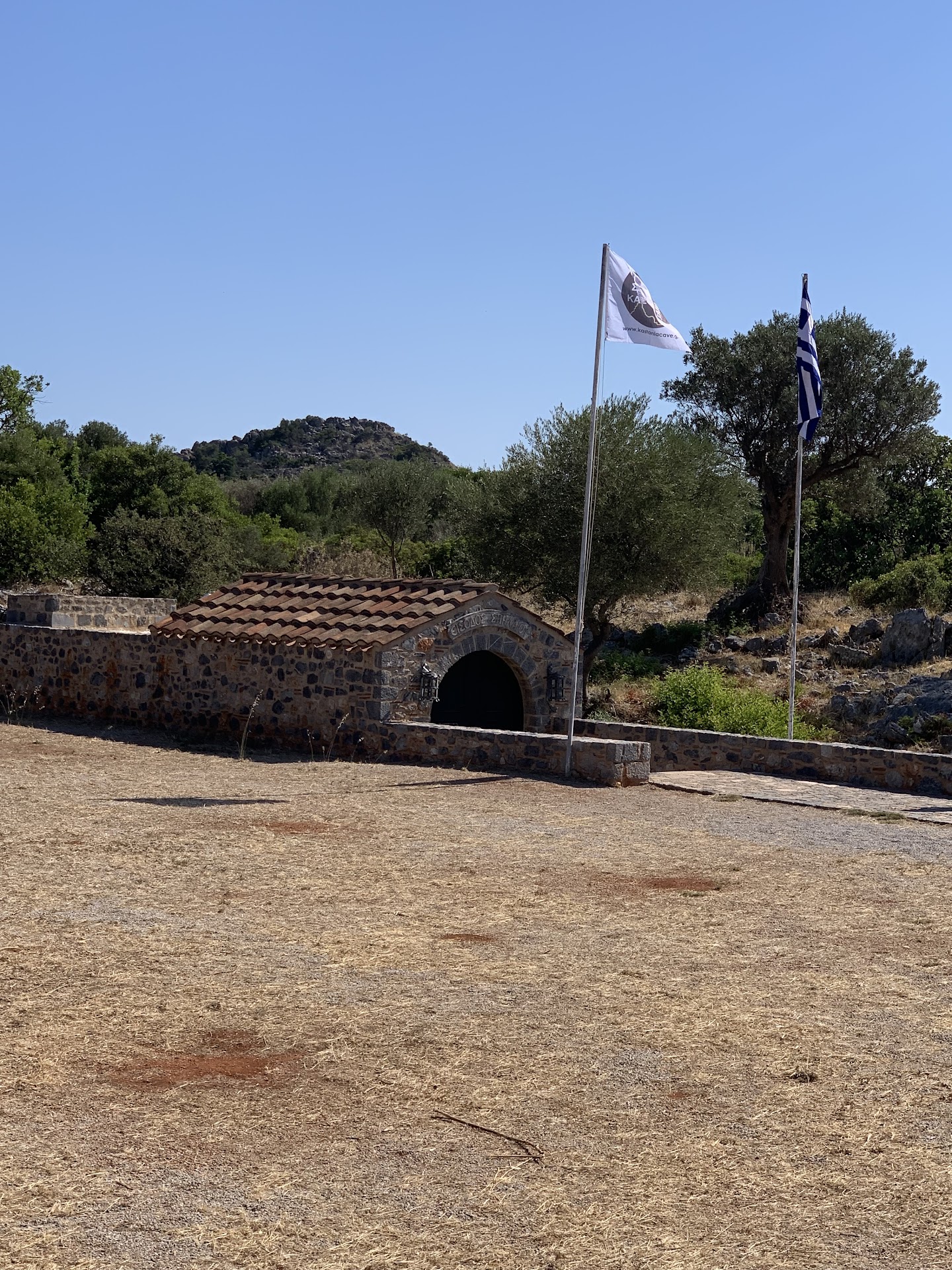
This remarkable cave is located on the southern end of the Peloponnese. While some web sites state that it “is only minutes from Neapoli” it is actually about ½ hour from Neapoli to the cave. The winding road (caution is warranted here) takes you through stunning scenery and provides several magnifient views of the coast.
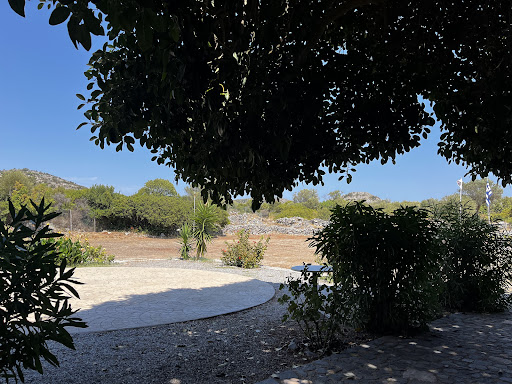
Once at the site there is parking available, as well as a small cafeteria serving coffee, cold drinks and a limited selection of baked goods. A word to the wise: don’t go thinking that you’ll have lunch at the cafe. You’ll be disappointed if you do.
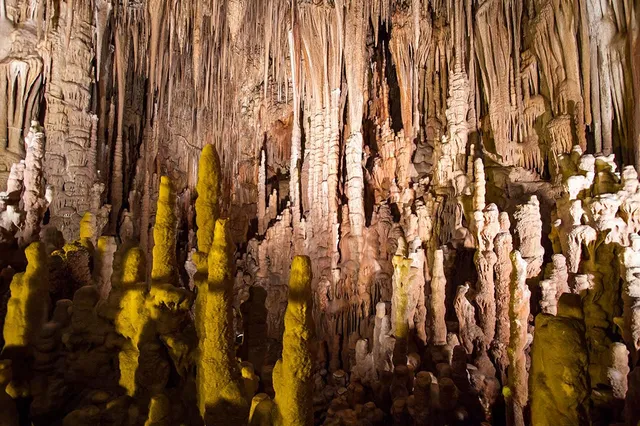
The cave itself is, in a word, spectacular. We’ve been fortunate enough to tour a number of caves (Mammoth Cave in Kentucky, USA) and man-made underground caverns (Wieliczka Salt Mine near Krakow, Poland) and this cave is easily the most awe inspiring that we’ve seen.
The well designed and constructed pathway and stairs pose no problem for people with even average mobility and stamina. Special footwear is not required. (Note: there is no apparent accommodation for people with mobilty challenges, though some arrangements may be available if you inquire in advance).
The temperature in the cave is a constant 18°C so unless you’re very temperature sensitive there is no problem taking the tour in light summer clothing.
There are a couple of things to be aware of before you go.
First, the tour (included in the ticket price) is informative but feels a bit rushed. There were several points at which we would have liked to linger on the well positioned viewing platforms to soak in the awesome geology all around us, but we had to move on with the group.
Second, taking photos and/or videos inside the cave is prohibited. This is the first time we’ve encountered that kind of prohibition and we were quite disappointed.
Entry fee (including guided tour available in Greek and English): 7€
This cave is well worth a visit if you find yourself in the area. Highly...
Read moreThe best experience ever! Kastania’s Cave (or St Andrew’s Cave named after the nearby small church) lies in Peloponnese's south tip, unseen at the foot of Mt. Parnonas’ east mountainside, at a short distance from Neapoli and Monemvasia in Laconia. The wide diversity of rock shapes, colours and forms have made it the cave number two of its kind across Europe! It covers an area of 1,500 m2, shaped in two levels and the visitable part is 500 m. long.
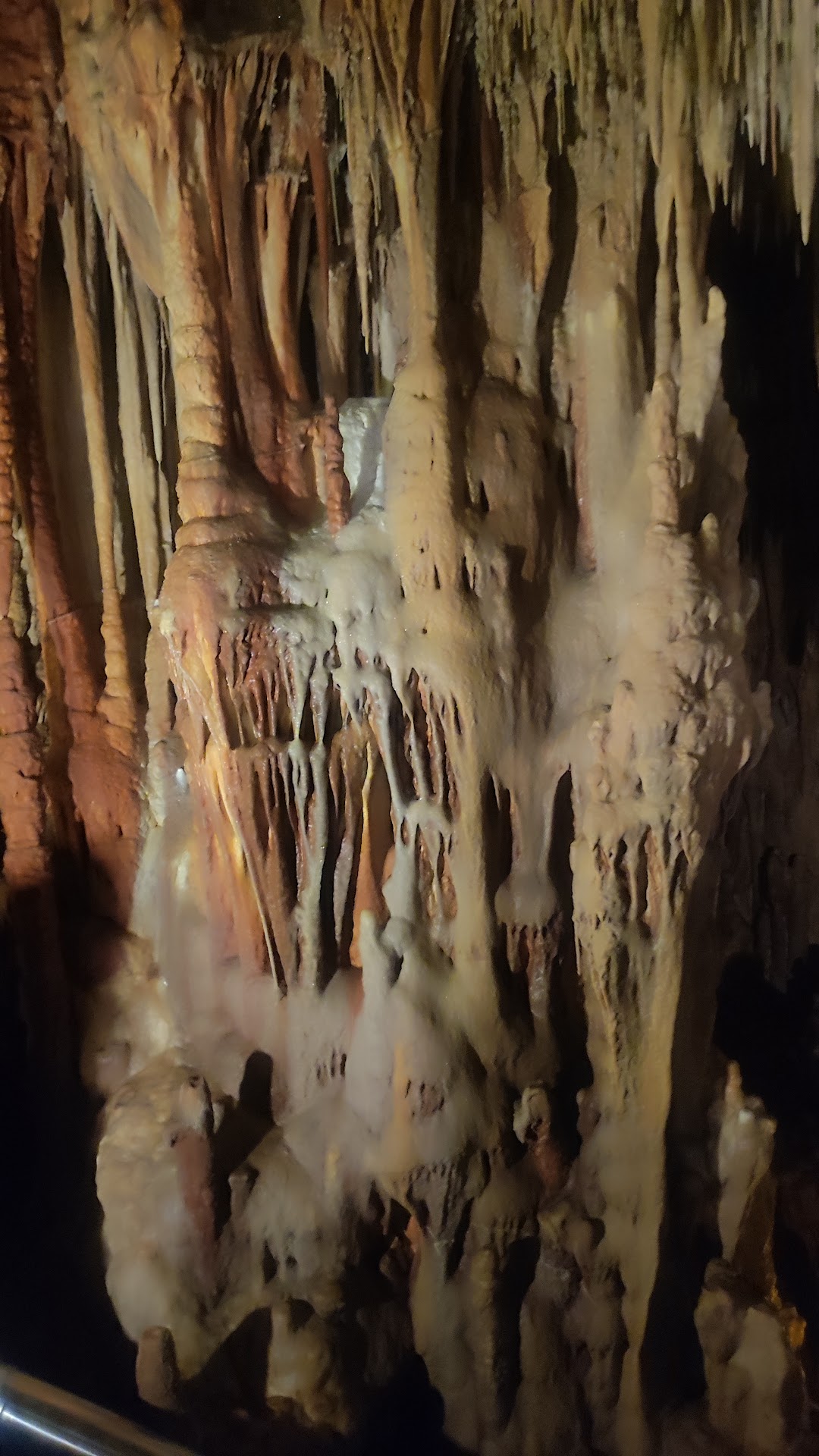
3 millenia was the period required by nature in order to create these unique cave formations, having shaped figures and stone complexes of an exceptional variety. Among the huge red and white-coloured stone cascades, the gigantic multi-shaped columns, the curtains and sheets of rock hanging from the roof and resembling wax figures, you will see formations which look like coloured octopuses, corals, medusas, little elephants, mushrooms, birds, other funny shapes, exotic plants and other large rock structures.
Tickets include a tour from an expert, providing information on how the cave was created, exposing hidden spots helping make the experience magical!
The cave also offers a small cafe where you can cool down or buy some souvenirs.
The cave is located near Kato Kastania village, approx. 17 km. E of Neapoli. The route from Neapoli is an experience that will be etched in your memory: images of green mountainsides facing Epidilion and Cape Kamila, picturesque villages where you can hear the gurgling sound of nearby spring waters, Byzantine churches, mediaeval castles, ravines with old watermills, archaeological finds and the infinite blue of...
Read moreOne of the most impressive caves of Greece can be found near the village of Kastania on the southern tip of the Peloponnese, just minutes away from Neapoli. The route follows the winding mountain road leading to the forest-covered eastern slopes of Mt. Parnon.
Rich in density and variety of shapes, colors and figures, Kastania Cave is classified as second of its kind in Europe. Nature needed three million years to create this fantasyscape with its unparalleled décor and numerous impressive formations such as enormous red and white “waterfalls”, the gigantic columns, the “curtains” and the “sheets” that overflow like waxwork from the roof, “octopuses” and “corals” nest, “elephants” and “mushrooms”, “birds” and caricatures, “exotic plants” and monumental creatures…
Standing out among the numerous attractions of the cave are geological rarities such as discs, flat stalagmites, eccentrites and elictites. With a little luck, visitors may meet the cave’s noble resident insect, the deaf and blind dolichopoda.
The cave’s surface covers 1,500 square meters separated into two levels and the visitor is guided along a 500-meter route. The cave was formed from limestones of Jurassic age (195-145 million years old) as a result of geological turmoil and chemical reaction. The stone décor owes its seven-color palette to crystalline carbonate lime enriched with several metal oxides.
A café operates right outside the cave and nearby is the old church of St. Andrew, scarred by pirates...
Read more