HTML SitemapExplore
logo
Find Things to DoFind The Best Restaurants

Mycenean Acropolis of Tiryns — Attraction in Municipality of Nafplio

Name
Mycenean Acropolis of Tiryns
Description
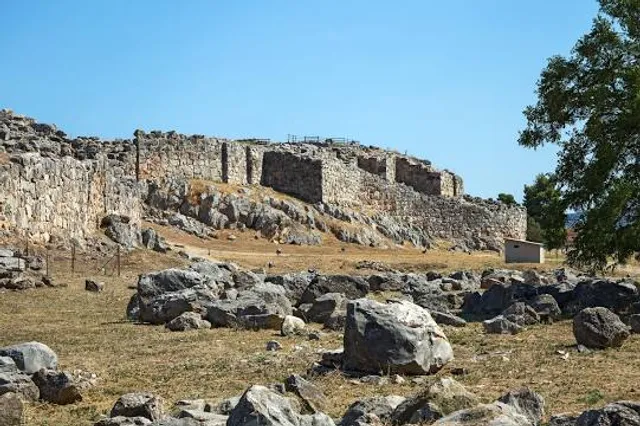
Tiryns is a Mycenaean archaeological site in Argolis in the Peloponnese, and the location from which the mythical hero Heracles was said to have performed his Twelve Labours. It lies 20 km south of Mycenae.
Nearby attractions
Nearby restaurants
Related posts
Keywords
Mycenean Acropolis of Tiryns tourism.Mycenean Acropolis of Tiryns hotels.Mycenean Acropolis of Tiryns bed and breakfast. flights to Mycenean Acropolis of Tiryns.Mycenean Acropolis of Tiryns attractions.Mycenean Acropolis of Tiryns restaurants.Mycenean Acropolis of Tiryns travel.Mycenean Acropolis of Tiryns travel guide.Mycenean Acropolis of Tiryns travel blog.Mycenean Acropolis of Tiryns pictures.Mycenean Acropolis of Tiryns photos.Mycenean Acropolis of Tiryns travel tips.Mycenean Acropolis of Tiryns maps.Mycenean Acropolis of Tiryns things to do.
Mycenean Acropolis of Tiryns things to do, attractions, restaurants, events info and trip planning
Mycenean Acropolis of Tiryns
GreecePeloponnese, Western Greece and the IonianMunicipality of NafplioMycenean Acropolis of Tiryns

Basic Info

Mycenean Acropolis of Tiryns

Peloponnese 211 00, Greece
4.4(843)
Closed
Save
spot

Ratings & Description

Info

Tiryns is a Mycenaean archaeological site in Argolis in the Peloponnese, and the location from which the mythical hero Heracles was said to have performed his Twelve Labours. It lies 20 km south of Mycenae.

Cultural
Outdoor
Scenic
Family friendly
Off the beaten path
attractions: , restaurants:
logoLearn more insights from Wanderboat AI.
Open hoursSee all hours
Fri8 AM - 3:30 PMClosed

Plan your stay

hotel
Pet-friendly Hotels in Municipality of Nafplio
Find a cozy hotel nearby and make it a full experience.
hotel
Affordable Hotels in Municipality of Nafplio
Find a cozy hotel nearby and make it a full experience.
hotel
The Coolest Hotels You Haven't Heard Of (Yet)
Find a cozy hotel nearby and make it a full experience.
hotel
Trending Stays Worth the Hype in Municipality of Nafplio
Find a cozy hotel nearby and make it a full experience.

Reviews

Things to do nearby

Nafpilo Cooking Class
Thu, Dec 4 • 10:00 AM
211 00, Nafplion, Greece
View details
Ancient Mycenae Private Tour with Licensed Guide
Thu, Dec 4 • 7:30 AM
212 00, Mykines, Greece
View details
Epidaurus Private Tour with Licensed Guide
Thu, Dec 4 • 9:30 AM
210 52, Epidavros, Greece
View details
Get the Appoverlay
Get the AppOne tap to find yournext favorite spots!
Wanderboat LogoWanderboat

Your everyday Al companion for getaway ideas

CompanyAbout Us
InformationAI Trip PlannerSitemap
SocialXInstagramTiktokLinkedin
LegalTerms of ServicePrivacy Policy

Get the app

© 2025 Wanderboat. All rights reserved.
logo

Reviews of Mycenean Acropolis of Tiryns

4.4
(843)
avatar
2.0
1y

Ticket is 4/2€ (summer/winter). This is probably the saddest archeological site I've ever seen. Despite its importance - a large Mycenean city of ~1500BCE, near Mycene itself - the sorry state of the site and its unappealing context do not make it worth a stop.

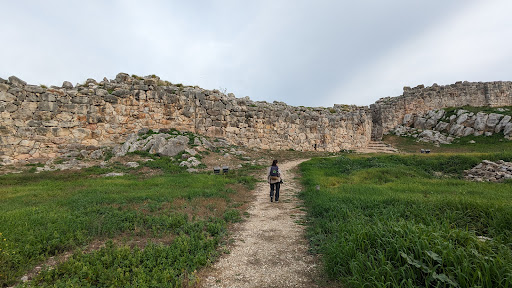
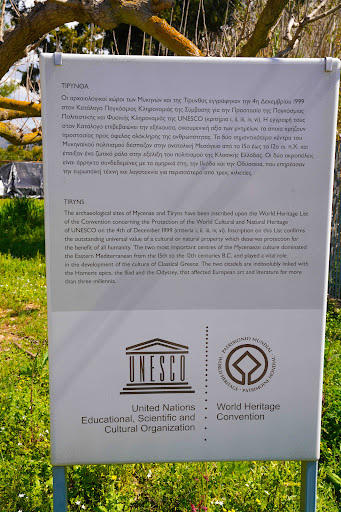
The city is probably almost as big as Mycene, with amazing cyclopean walls, two entrances, and several specialised town areas. However, I counted a total of 3 information panels: 2 explained small restoration interventions happened probably a decade ago, and a single panel was a map with a layout plan view. No historical explanation, nothing is given you at the entrance. I'd gladly pay a bit more to get at least a small handout. The acropolis has an interesting example of 2-megaron palace - again, if you don't know this in advance, you won't notice nor appreciate this.

There were excavation and repair works across the site, without any sign or explanation of what was going on. They didn't look good.

Finally, the context. Unlike Mycene, this site is placed on a low hill and is surrounded by a plain with many constructions - including a prison, which ruins the view from the acropolis towards the seaside. Additionally, it's evidently close to a landfill, given the bad smell all around the site. Add also the noise from the trafficked road which makes its western edge.

The personnel started closing the gate half an hour before the stated closure time, and the bathrooms were closed already at least an hour before closure, when we tried to use it.

It's really sad to see such an important site...

   Read more
avatar
5.0
5y

Tirinto estuvo habitada desde el Neolítico (7º-4º milenio a.C.). A la Edad del Bronce temprana (tercer milenio a.C), pertenecen los restos arquitectónicos más antiguos. Pero su época de apogeo coincide con el de la civilización micénica, a partir del año 1600 a.C, y especialmente entre 1400-1200 a.C.

Como Troya y Micenas, fue excavada durante la segunda mitad del S.XIX por Heinrich Schliemann. Fue declarado Patrimonio de la Humanidad por la Unesco en el año 1999. Sus elementos más notables fueron su palacio, sus túneles o pasadizos y dos anillos de murallas ciclópeas, que le otorgaron a la ciudad el epíteto homérico de Tirinto, la de grandes murallas. Está en una colina baja, que algunos arqueólogos denominan la acrópolis (conocida como Licimna), que se diferencia de la zona habitada. La inclinación natural permite la formación de tres terrazas que llevó a edificar tres ciudadelas: la alta, la media y la baja.

El acceso principal es una rampa que obliga al atacante a mostrar el lado derecho, el contrario al del escudo, en una disposición que favorece la defensa de la entrada. En la ciudadela micénica residían los príncipes micénicos y sus allegados, mientras que los talleres y las viviendas de los artesanos se extendían al pie de la acrópolis, en una barriada que fue protegida en parte por la última ampliación de las fortificaciones, quedando un buen número de viviendas fuera de los muros, como también sucedió en Micenas. En la parte alta estaba el Palacio Real, sede del poder político, a tenor de lo descubierto. Tuvo tres fases diferentes de construcción: la primera hacia el año 1450 a.C., posteriormente ampliado en el S.XIV a.C y en el S.XIII a.C. Estaba defendido no solo por su doble muralla, sino que también estaba dispuesto para que se tuviese que transitar por un estrecho corredor formado por altos muros a ambos lados (aún hoy se ve el agujero por donde se cerraría la puerta de acceso), una serie de patios cerrados y atravesar dos puertas en forma de H (propileos) antes de alcanzar el pórtico abierto de entrada al mégaron. El famoso megaron del palacio de Tirinto es de forma rectangular, con un amplio vestíbulo, es la habitación principal en la que estuvo el trono, frente a la pared de la derecha; con una chimenea central rodeada de cuatro columnas de madera de estilo minoico que servían de soporte para el techo. Aquí fueron halladas pinturas al fresco que se encuentran expuestas en el Museo Arqueológico Nacional de Atenas. Sobre el sector oriental del megaron hay un edificio pequeño que se cree que era un templo del periodo geométrico, el Templo de Heracon (con un altar en un círculo) pues se hallaron restos de ofrendas, que hoy se encuentran en el Museo de Nauplia.

La terraza media, que era el patio posterior del palacio, es la más pequeña de las tres y ocupa una superficie de cerca de 3.000 m2 frente a los 10.000 de la baja y los 7.000 de la alta. La inferior era una zona prácticamente desierta, destinada a acoger a la población civil en caso de guerra, que habitaba fuera de las murallas.

Las murallas constituyen uno de los mejores modelos de arquitectura militar de la época, con sus escaleras secretas, numerosas poternas, torres y bastiones, pasillos interiores y casamatas, formadas por falsas bóvedas, mediante la aproximación de hiladas de enormes bloques de piedra. El grosor de la muralla es variable, pero tiene un promedio de 7,30 mt. En la entrada principal, en el lado este de la ciudadela alta, la muralla tiene siete metros de altura en la fachada interior, pero se considera que es la altura mínima. El recinto tiene una longitud total de 350 metros. En la parte norte de las murallas hay un gran número de estancias cuya función, al igual que las galerías, podría haber sido de almacenaje o defensiva, donde los guardias descansaban. En la parte inferior de la acrópolis se encuentran accesos a pozos que suministraban agua. Fuera de las murallas hay restos de viviendas, construcciones funerarias y sistemas de canalización...

   Read more
avatar
5.0
1y

Visited in March 2024

We visited Tiryns after we left Mycenae…it being a very close drive. There were only 4 other people at the site when we were there. There is plenty of room to park. The construction of the walls with huge rocks is true and truly they are huge. It was spring and there was a lot of flowers blooming around and on the site and it was a beautiful site to see. Lots of mysterious mythology and history about this site which is worth reading about to get a better understanding before you arrive.

Tiryns is a Mycenaean archaeological site in Argolis in the Peloponnese, and the location from which the mythical hero Heracles was said to have performed his Twelve Labours.

Tiryns was a hill fort with occupation ranging back seven thousand years, from before the beginning of the Bronze Age. It reached its height of importance between 1400 and 1200 BC, when it became one of the most important centers of the Mycenaean world, and in particular in Argolis. Its most notable features were its palace, its Cyclopean tunnels and especially its walls, which gave the city its Homeric epithet of "mighty walled Tiryns". Tiryns became associated with the myths surrounding Heracles, as the city was the residence of the hero during his labors, and some sources cite it as...

   Read more
Page 1 of 7
Previous
Next

Posts

Alessio LombardiAlessio Lombardi
Ticket is 4/2€ (summer/winter). This is probably the saddest archeological site I've ever seen. Despite its importance - a large Mycenean city of ~1500BCE, near Mycene itself - the sorry state of the site and its unappealing context do not make it worth a stop. The city is probably almost as big as Mycene, with amazing cyclopean walls, two entrances, and several specialised town areas. However, I counted a total of 3 information panels: 2 explained small restoration interventions happened probably a decade ago, and a single panel was a map with a layout plan view. No historical explanation, nothing is given you at the entrance. I'd gladly pay a bit more to get at least a small handout. The acropolis has an interesting example of 2-megaron palace - again, if you don't know this in advance, you won't notice nor appreciate this. There were excavation and repair works across the site, without any sign or explanation of what was going on. They didn't look good. Finally, the context. Unlike Mycene, this site is placed on a low hill and is surrounded by a plain with many constructions - including a prison, which ruins the view from the acropolis towards the seaside. Additionally, it's evidently close to a landfill, given the bad smell all around the site. Add also the noise from the trafficked road which makes its western edge. The personnel started closing the gate half an hour before the stated closure time, and the bathrooms were closed already at least an hour before closure, when we tried to use it. It's really sad to see such an important site in this state.
Kirk BelmontKirk Belmont
Visited in March 2024 We visited Tiryns after we left Mycenae…it being a very close drive. There were only 4 other people at the site when we were there. There is plenty of room to park. The construction of the walls with huge rocks is true and truly they are huge. It was spring and there was a lot of flowers blooming around and on the site and it was a beautiful site to see. Lots of mysterious mythology and history about this site which is worth reading about to get a better understanding before you arrive. Tiryns is a Mycenaean archaeological site in Argolis in the Peloponnese, and the location from which the mythical hero Heracles was said to have performed his Twelve Labours. Tiryns was a hill fort with occupation ranging back seven thousand years, from before the beginning of the Bronze Age. It reached its height of importance between 1400 and 1200 BC, when it became one of the most important centers of the Mycenaean world, and in particular in Argolis. Its most notable features were its palace, its Cyclopean tunnels and especially its walls, which gave the city its Homeric epithet of "mighty walled Tiryns". Tiryns became associated with the myths surrounding Heracles, as the city was the residence of the hero during his labors, and some sources cite it as his birthplace.
Eileen HerreraEileen Herrera
Tiryns is a very underrated Mycenaean site I think because it lacks the place held by Homer in Mycenae, Sparta, Pylos and Odysseus’ Ithaca, wherever that may be. But it is a fascinating site full of mysteries and many more questions than answers. And it is rather accommodatingly close to Nafplion, and worth an hour or two stop either in your way there, or in your way way from. It’s easy to see why earlier visitors bought into the Cyclops builder story. It’s hard not to wonder how Bronze Age technology managed building these massive fortresses with such large, heavy stone well before the invention of the pulley and the crane. But they did all over Greece and beyond. Tiryns besides being yet another massive Mycenaean fortress has a sense of aesthetics to it, whether by some of the colorful stone used or by employing interesting tunnels and hidey-holes. There is a reason it seems to have survived the dissolution that occurred at the end of the Bronze Age and had a significant population present until well into the Iron Age. Whatever the reason, it’s worth a visit.
See more posts
See more posts
hotel
Find your stay

Pet-friendly Hotels in Municipality of Nafplio

Find a cozy hotel nearby and make it a full experience.

Ticket is 4/2€ (summer/winter). This is probably the saddest archeological site I've ever seen. Despite its importance - a large Mycenean city of ~1500BCE, near Mycene itself - the sorry state of the site and its unappealing context do not make it worth a stop. The city is probably almost as big as Mycene, with amazing cyclopean walls, two entrances, and several specialised town areas. However, I counted a total of 3 information panels: 2 explained small restoration interventions happened probably a decade ago, and a single panel was a map with a layout plan view. No historical explanation, nothing is given you at the entrance. I'd gladly pay a bit more to get at least a small handout. The acropolis has an interesting example of 2-megaron palace - again, if you don't know this in advance, you won't notice nor appreciate this. There were excavation and repair works across the site, without any sign or explanation of what was going on. They didn't look good. Finally, the context. Unlike Mycene, this site is placed on a low hill and is surrounded by a plain with many constructions - including a prison, which ruins the view from the acropolis towards the seaside. Additionally, it's evidently close to a landfill, given the bad smell all around the site. Add also the noise from the trafficked road which makes its western edge. The personnel started closing the gate half an hour before the stated closure time, and the bathrooms were closed already at least an hour before closure, when we tried to use it. It's really sad to see such an important site in this state.
Alessio Lombardi

Alessio Lombardi

hotel
Find your stay

Affordable Hotels in Municipality of Nafplio

Find a cozy hotel nearby and make it a full experience.

Get the Appoverlay
Get the AppOne tap to find yournext favorite spots!
Visited in March 2024 We visited Tiryns after we left Mycenae…it being a very close drive. There were only 4 other people at the site when we were there. There is plenty of room to park. The construction of the walls with huge rocks is true and truly they are huge. It was spring and there was a lot of flowers blooming around and on the site and it was a beautiful site to see. Lots of mysterious mythology and history about this site which is worth reading about to get a better understanding before you arrive. Tiryns is a Mycenaean archaeological site in Argolis in the Peloponnese, and the location from which the mythical hero Heracles was said to have performed his Twelve Labours. Tiryns was a hill fort with occupation ranging back seven thousand years, from before the beginning of the Bronze Age. It reached its height of importance between 1400 and 1200 BC, when it became one of the most important centers of the Mycenaean world, and in particular in Argolis. Its most notable features were its palace, its Cyclopean tunnels and especially its walls, which gave the city its Homeric epithet of "mighty walled Tiryns". Tiryns became associated with the myths surrounding Heracles, as the city was the residence of the hero during his labors, and some sources cite it as his birthplace.
Kirk Belmont

Kirk Belmont

hotel
Find your stay

The Coolest Hotels You Haven't Heard Of (Yet)

Find a cozy hotel nearby and make it a full experience.

hotel
Find your stay

Trending Stays Worth the Hype in Municipality of Nafplio

Find a cozy hotel nearby and make it a full experience.

Tiryns is a very underrated Mycenaean site I think because it lacks the place held by Homer in Mycenae, Sparta, Pylos and Odysseus’ Ithaca, wherever that may be. But it is a fascinating site full of mysteries and many more questions than answers. And it is rather accommodatingly close to Nafplion, and worth an hour or two stop either in your way there, or in your way way from. It’s easy to see why earlier visitors bought into the Cyclops builder story. It’s hard not to wonder how Bronze Age technology managed building these massive fortresses with such large, heavy stone well before the invention of the pulley and the crane. But they did all over Greece and beyond. Tiryns besides being yet another massive Mycenaean fortress has a sense of aesthetics to it, whether by some of the colorful stone used or by employing interesting tunnels and hidey-holes. There is a reason it seems to have survived the dissolution that occurred at the end of the Bronze Age and had a significant population present until well into the Iron Age. Whatever the reason, it’s worth a visit.
Eileen Herrera

Eileen Herrera

See more posts
See more posts