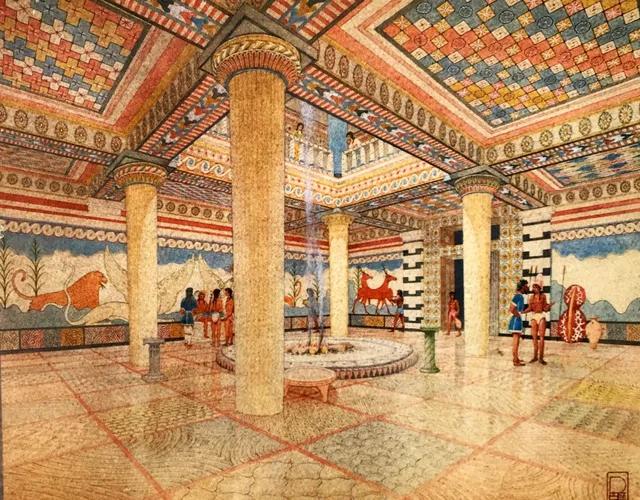
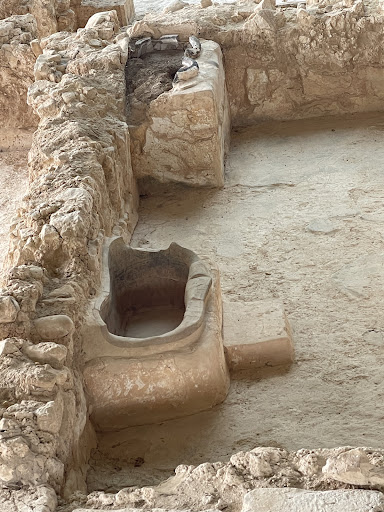
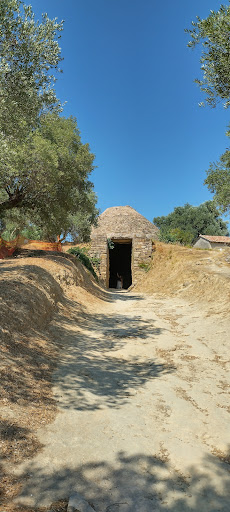
The Palace of Nestor is one of the best preserved Mycenaean sites in Greece, and visiting it feels like stepping back in time. The site is covered by a modern roof and raised walkways, which make it really easy to view the ruins from above without damaging anything. You can clearly see the layout of the palace .. the throne room, storage areas, and even the ancient bathtub, which is surprisingly intact. There’s a sense of quiet majesty as you walk through, especially knowing this was the legendary home of King Nestor from Iliad. Informative signs in Greek and English help you understand what you’re looking at, and the nearby views over the hills and sea are beautiful. Just a short drive away is the museum at Chora I missed, where many of the palace’s treasures are kept. Next time :). The site is not crowded, which makes the experience feel peaceful and personal. It’s well worth the visit if you’re into ancient history or just want to explore something truly unique in the Western Peloponnese. Don't miss the interactive room right before the ticket office. Also the tomb near to the parking lot. Not sure if the water is suitable for drinking too. Be aware :)
--- whispers ---
Above the hills where olives sway, the palace sleeps in quiet clay. No roof of gold, no guards remain, just wind and time and stone scarred plain.
A throne once stood in echoed hall, where Nestor heard the war god’s call. Now wildflowers bloom near broken walls, and swallows sing where silence falls.
A bathtub carved, still smooth and wide, as if the king just stepped outside. The hearth is cold, the feasts are done, yet stories shimmer in the sun.
From high above on walkways clear, we trace the past that lingers here... a home, a myth, a faded crown, yet none of it is truly gone.
For every stone, each weathered door, still whispers of what...
Read moreRuins aren't of interest to everyone but this Palace is one of the most important in Greece and is interesting for its age and reference in Homer's works. The floorplans of what it must have looked like are on informative signage. Don't expect to see a building, these are ruins, but the plaques show recreations of what the colorful wall paintings they discovered remnants of may have looked like. There's not a lot of walking that you need to do, everything is shaded under a new roof and there's an elevated walkway so you are above the site. The afternoon I was there, there was a wonderful breeze. Those not interested in archaeology may still be impressed with the views from the site which is perched on the top of a hill. The entire bay and coast is visible. Plus the surrounding olive groves and hills give the site a lingering royal feel. Don't miss the short walk over to a tholos (beehive) tomb right by the parking lot. They are still excavating the region and finding new...
Read moreΣε απόσταση 14 χλμ από την Πύλο, στην διαδρομή που οδηγεί στην ημιορεινή κωμόπολη Χώρα και συγκεκριμένα 2χλμ νωρίτερα από αυτήν, βρίσκεται η τοποθεσία που ανακαλύφθηκε το καλύτερα διατηρημένο Μυκηναϊκό Παλάτι στον Ελλαδικό χώρο και που του έχει αποδοθεί το όνομα "Ανάκτορο του Νέστορα" του γνωστού Βασιλιά της αρχαίας Πύλου, τον οποίο γνωρίσαμε στα έπη του Ομήρου. Τα πρώτα ευρήματα στην τοποθεσία, η οποία βρίσκεται στην εποπτική και στρατηγική κορυφή ενός λόφου ύψους 150 μέτρων και έχει άριστη οπτική προς τον κόλπο του Ναβαρίνου, καθώς και του θαλάσσιου χώρου που απλώνεται στην δυτική ακτογραμμή της Μεσσηνίας, ανακαλύφθηκαν το 1939 από την αποστολή του Αμερικανού αρχαιολόγου Καρλ Μπλέγκεν, ο οποίος θα συνέχιζε τις ανασκαφές έως το 1966, όπου πλέον θα είχε έρθει στο φως το μεγαλύτερο τμήμα του Ανακτόρου. Εξίσου σημαντική βεβαίως ήτανε κι η δυνατότητα από αυτή την θέση της εποπτείας και του ελέγχου όλων των πέριξ χερσαίων περιοχών, τόσο από την σημερινή Πύλο προς τα νότια, όσο και προς τα βόρεια από την πλευρά των σημερινών Γαργαλιάνων. Το Ανάκτορο χρονολογείται γύρω στα 1300 π.Χ και επρόκειτο για ένα διώροφο κτίριο που διέθετε χώρους υποδοχής, κεντρικές αίθουσες, με δεσπόζουσα την αίθουσα του θρόνου, εργαστήρια, λουτρά, αποθήκες, σύστημα αποχέτευσης. Στους χώρους του κτιρίου βρέθηκαν πλήθος πήλινες πινακίδες με την Γραμμική Β' οι οποίες διασώθηκαν καθώς ψήθηκαν από την φωτιά που ξέσπασε τον 12 αιώνα π.Χ , η οποία πιθανόν αποδίδεται σε Δωριείς εισβολείς, και η οποία κατέστρεψε το Ανάκτορο, επειδή ως βασικό δομικό υλικό, πέραν της πέτρας, είχε χρησιμοποιηθεί το ξύλο. Το 2016 ολοκληρώθηκαν οι εργασίες μιας σύγχρονης οροφής που στεγάζει όλο τον χώρο έκτασης 170×90 μέτρα, καθώς και σύγχρονων διαδρόμων που απλώνονται πάνω από τις εγκαταστάσεις προσφέροντας άνετη και απολαυστική θέαση. Τα έργα ανασκαφής συνεχίζονται καθώς υπάρχουν ακόμα αρκετά στρώματα προς διερεύνηση. Σε απόσταση 150 μέτρων από το Ανάκτορο υπάρχει και ένας αναστυλωμένος θολωτός τάφος. Νωρίς το πρωί που επισκεφθήκαμε την τοποθεσία δεν συναντήσαμε πρόβλημα στο πάρκινγκ και η περιήγηση στον αρχαιολογικό χώρο υπήρξε άνετη στην περίοδο της τελευταίας εβδομάδας του Ιουνίου 2024... Η επίσκεψη είναι επιβεβλημένη... τόσο για εκείνους που λατρεύουν την ιστορία, όσο και για εκείνους τους περιηγητές που αναζητούν εξαιρετικές...
Read more