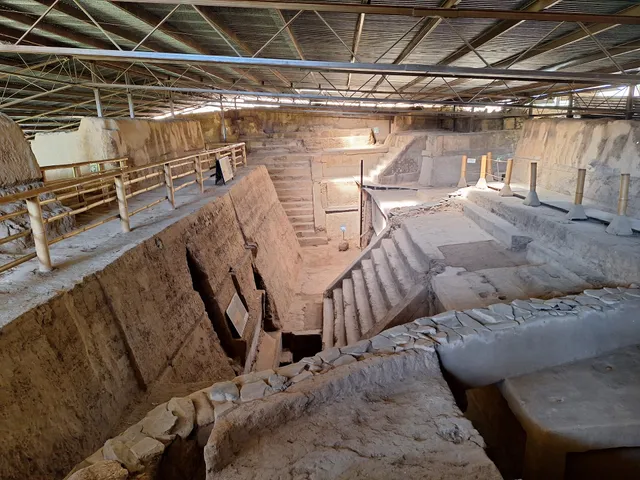
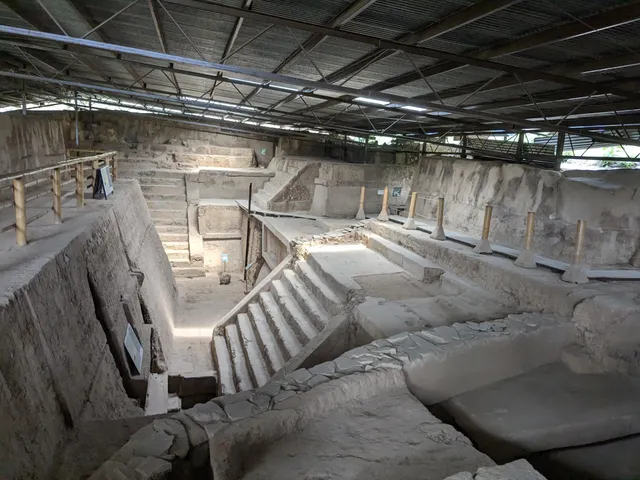
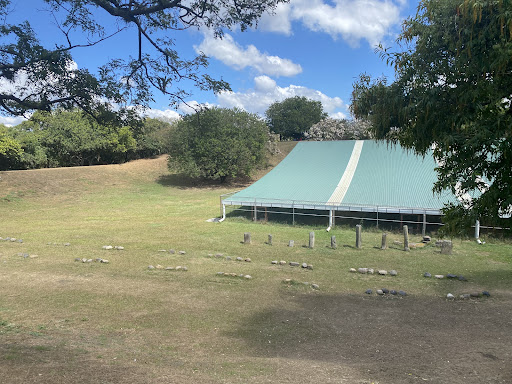
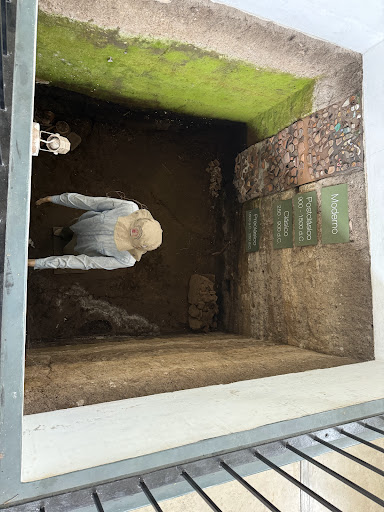
This is an excellent ruin to explore and deserves much more attention than it gets. It doesn't have the large Stone pyramid that you see in other Mayan ruins but there's much more revealed underground in the enclosed areas. To access the enclosed areas you need to have a guide, which is included in your ticket price. There is a small interesting Museum there and clean toilets and the rest of it to you can wander around and see yourself with your guide. If you don't have the guide you won't be able to access the indoor areas where there are the preserved excavations and you definitely want to see those.
The entrance is cash only and it was 50 quetzales for everyone except the Young children. You need to look for the Entrada specifically to be dropped off at the correct place.
We went to the mirafloris museum after this which is a lot of information about this ruin and it may have been better to do it the other way around but either way they fit very well together. It was also fascinating at the ruins to see the modern day ceremonies around the ceiba tree with people letting ceremonial fires and praying.
This was a good location for children as well as there was plenty of space to run around and play and...
Read moreThis is a fascinating site, but you will need to use the services of the on-site guide, as the ruins themselves are padlocked shut. The guide is a lovely woman who spotted me as I arrived (and was looking very lost!) and showed me round. Though native Guatemalan (and therefore Spanish speaking), her command of English was excellent and I enjoyed touring the site with her. She did not ask for any money (she is government employed) and told me a wealth of fascinating facts about the Mayan ruins. The whole tour took around 45 minutes and I was able to wander around afterwards. My only negative is the man at the ticket office, who sneered with contempt when I could not understand the amount he was asking for and refused to write it on my calculator when I offered it to him, or take the amount from the notes I was...
Read moreKAMINALJUYÚ: CERRO DE LOS MUERTOS
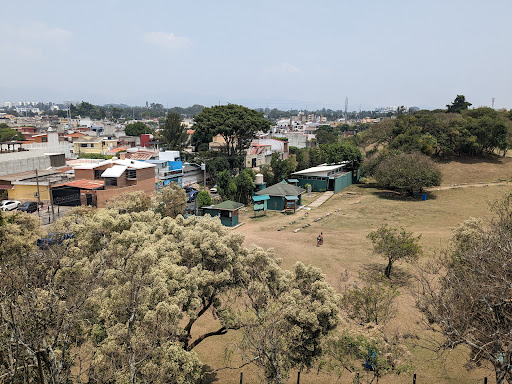
Kaminaljuyú (también escrito Kaminal Juyú) es un sitio arqueológico prehispánico de la cultura maya ubicado en las tierras altas de Guatemala a orillas del extinto Lago Miraflores, dentro del área de la actual Ciudad de Guatemala, ubicado en la calzada San Juan 30 avenida zona 7, Guatemala, Ciudad.
Denominado “Colina o Cerro de los Muertos” por la gran cantidad de enterramientos que se encontraron en las excavaciones de las ruinas en (1926-27) por Manuel Gamio y Antonio Villacorta (1927). Kaminaljuyú fue un sitio ocupado durante más de 2,000 años, Su ocupación se inicia a finales del período Preclásíco Temprano (1100-1000 AC), cuando surgen pequeñas comunidades agrícolas dentro del área comprendida por el sitio. El desarrollo de arquitectura pública y de monumentos esculpidos durante el período Preclásico Medio (1000-400 AC), indica el inicio de la complejidad socio política en el centro. Es probable que durante este período Kaminaljuyú haya logrado el control directo de El Chayal, una de las fuentes de obsidiana más importantes de Mesoamérica, localizada a una distancia de 20 km hacia el noreste del sitio.
El Preclásico Tardío (400 AC-200 DC) presenta la época de mayor apogeo demográfico, económico, social, arquítectónico y artístico en Kaminaljuyú. Su índice demográfico es más alto, se construye la mayor cantidad de edificios y un vasto conjunto de monumentos que incluyen algunos de los textos glíficos más tempranos del área Maya. También se implementa una serie de grandes canales hidráulicos utilizados para llevar agua desde el Lago Miraflores hasta los campos de cultivo.
Durante el Clásico Temprano (200-550 DC) se seca el Lago Miraflores y Kaminaljuyú experimentó una crisis ocasionada parcialmente por la imposibilidad de realizar agricultura por irrigación. Así, esta fue una época de declive en el sitio, con un descenso marcado en la población. El Clásico Tardío (550-900 DC) se caracteriza por constituir una época de resurgimiento tanto en términos poblacionales como constructivos. Aunque este período constituyó una época de nuevo esplendor, debe hacerse notar que el poder administrativo fue menos centralizado que en el pasado, ya que, para aquel entonces, Kaminaljuyú ya había perdido su supremacía como centro cultural o comercial. Por lo tanto, su desarrollo no alcanzó la complejidad que tuvo durante el Preclásico Tardío.
Publicado por la página de Facebook Cultura Histórica...
Read more