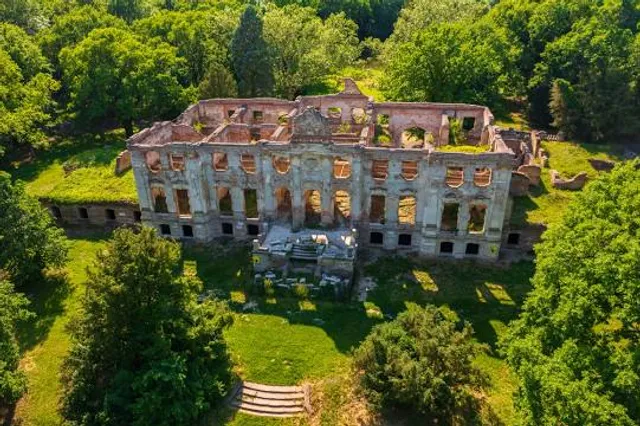
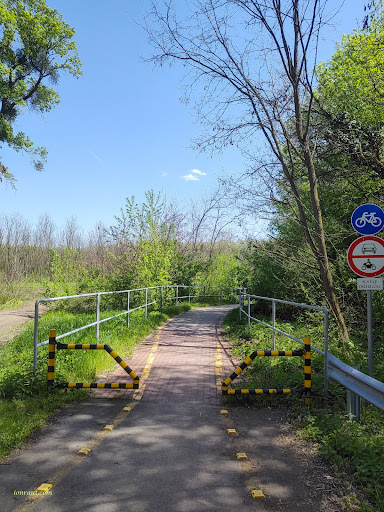
It is free to visit and is located at the end of a bicycle path. It can also be reached by car nearby. In 1874, Count Károly Wenckheim (1811-1891), imperial and royal chamberlain and hussar captain, founded an independent steppe village called Gerla-Póstelek in the eastern part of the estate. He built his own town hall and kept a separate judge and notary. However, after the flood of 1888, this village completely disappeared, and its territory was annexed to the village of Doboz in 1889. Unfortunately, most of the Póstelek forest was thinned out in 2006. The modern and beautiful Póstelek Castle lived only 30 years, when it was destroyed by World War II. After World War II, the locals scattered it. It is currently in a dilapidated state. In the 1960s they wanted to build a tourist hotel in the still intact cellar, but the...
Read moreOne of the last large stately homes to be built in Hungary (finished 1909). The building itself is now only an imposing ruin but it is set in a beautiful park with an artificial boating pond. The park is maintained and its various features of the stately home and the well documented on large display boards using historical photographs. Well...
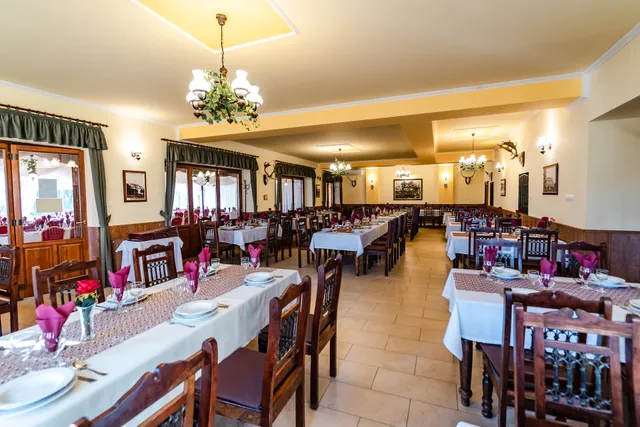
Read moreNagyszerű kiránduló, piknikező hely, a park közepén a közelben WC, étterem, bográcsozó hely.
A pósteleki kastély fénykora az 1920-as évek elejére tehető. Gróf Széchényi Antal 1924-ben bekövetkezett halálával azonban csendesebb napok következtek.
1944 őszén, amikor a grófi család az Egyesült Államokba emigrált, végleg magára hagyták a hajdani meghitt családi fészket, kiszolgáltatva azt a pusztításnak. Gróf Széchenyi Antalné Wenckheim Krisztina 1970. március 23.-án 96 évesen halt meg, távol otthonától, kastélyától az észak- karolinai Ashevilleben.
A kastélyt, miután már nem lakták, 1944 után a háborús szükségletek sajátították ki, majd termeit kifosztották, előbb az ingóságokat hordták el, majd következett minden, ami mozdítható, az ajtók az ablakok, a márvány kandallók, majd a parketta és a kárpitok, csempék. Amit nem tudtak elvinni egyszerűen szétverték, felgyújtották. A falakat egykor díszítő színes plüss tapétákat letépték, és ruhát varrtak...
Read more