HTML SitemapExplore
logo
Find Things to DoFind The Best Restaurants

Esterházy-kastély — Attraction in Soproni járás

Name
Esterházy-kastély
Description
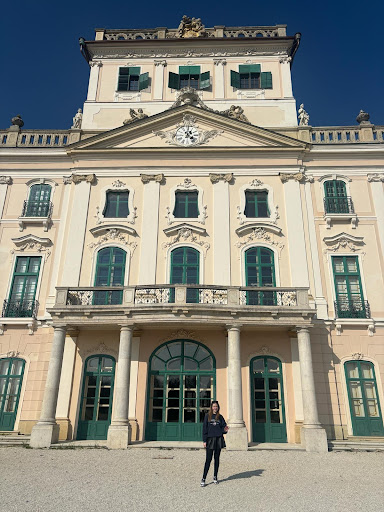
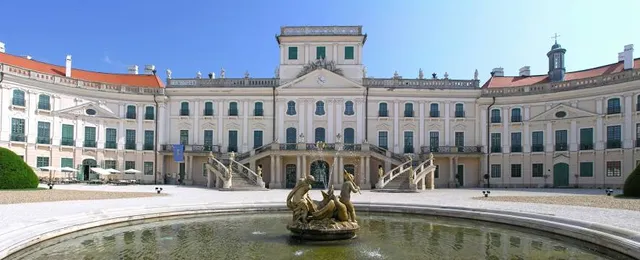
Eszterháza is a palace in Fertőd, Hungary, built by Prince Nikolaus Esterházy. Sometimes called the "Hungarian Versailles", it is Hungary's grandest Rococo edifice. It served as the home to Joseph Haydn and his orchestra from 1766 to 1790.
Nearby attractions
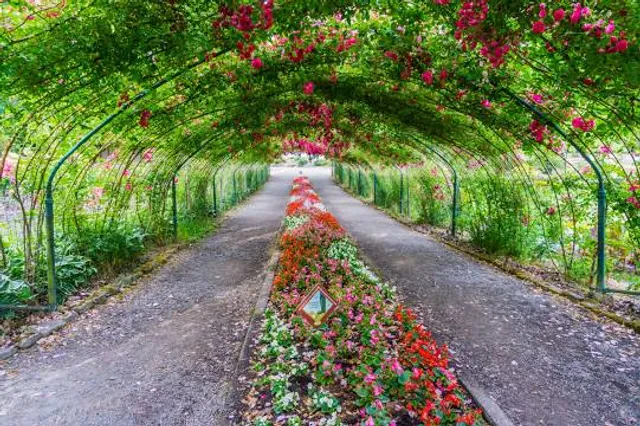
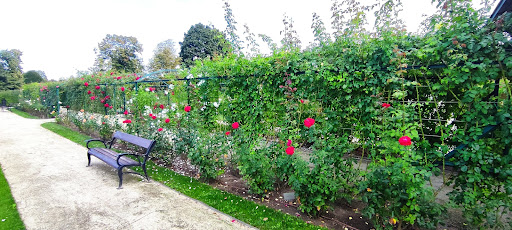
Cziraky Margit Rózsakert
Fertőd, 9431 Hungary
Nearby restaurants
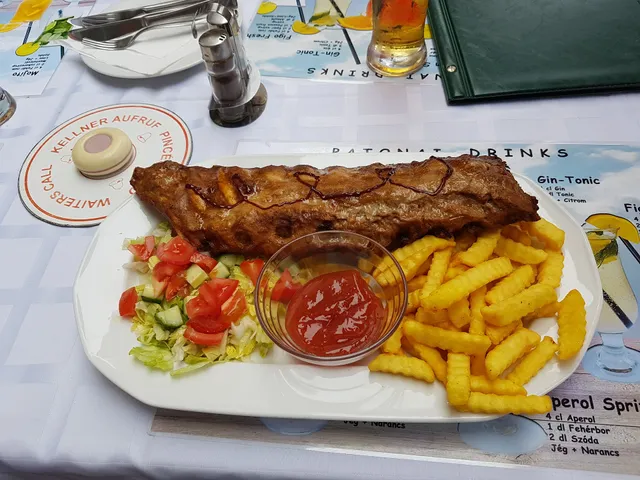
Gránátos Ház Kft.
Fertőd, Joseph Haydn u. 2, 9431 Hungary
Grácia Étterem és Pizzéria
Fertőd, Béke u. 15, 9431 Hungary
Schnitzel Insel Restaurant
Fertőd, Fő u. 6, 9431 Hungary
Nearby hotels
Hotel Patonai
Fertőd, Fő u. 4, 9431 Hungary
RÁBENSTEINER PANZIÓ, APARTMAN ÉS KÁVÉZÓ - FERTŐD
Fertőd, Fő u. 10, 9431 Hungary
Pension Ujvári
Sarród, Fertőd Hársfa köz 1 Fertőd, határtáblánál, 9431 Hungary
Fertődi Mansion Guest House
Fertőd, Szent István u. 61, 9431 Hungary
Turi Vendégház
Sarród, Kossuth u. 46, 9435 Hungary
Related posts
Keywords
Esterházy-kastély tourism.Esterházy-kastély hotels.Esterházy-kastély bed and breakfast. flights to Esterházy-kastély.Esterházy-kastély attractions.Esterházy-kastély restaurants.Esterházy-kastély travel.Esterházy-kastély travel guide.Esterházy-kastély travel blog.Esterházy-kastély pictures.Esterházy-kastély photos.Esterházy-kastély travel tips.Esterházy-kastély maps.Esterházy-kastély things to do.
Esterházy-kastély things to do, attractions, restaurants, events info and trip planning
Esterházy-kastély
HungaryTransdanubiaSoproni járásEsterházy-kastély

Basic Info

Esterházy-kastély

Fertőd, Joseph Haydn u. 2, 9431 Hungary
4.6(4.1K)
Open 24 hours
Save
spot

Ratings & Description

Info

Eszterháza is a palace in Fertőd, Hungary, built by Prince Nikolaus Esterházy. Sometimes called the "Hungarian Versailles", it is Hungary's grandest Rococo edifice. It served as the home to Joseph Haydn and his orchestra from 1766 to 1790.

Cultural
Accessibility
attractions: Cziraky Margit Rózsakert, restaurants: Gránátos Ház Kft., Grácia Étterem és Pizzéria, Schnitzel Insel Restaurant
logoLearn more insights from Wanderboat AI.
Phone
+36 99 537 640
Website
eszterhaza.hu

Plan your stay

hotel
Pet-friendly Hotels in Soproni járás
Find a cozy hotel nearby and make it a full experience.
hotel
Affordable Hotels in Soproni járás
Find a cozy hotel nearby and make it a full experience.
hotel
The Coolest Hotels You Haven't Heard Of (Yet)
Find a cozy hotel nearby and make it a full experience.
hotel
Trending Stays Worth the Hype in Soproni járás
Find a cozy hotel nearby and make it a full experience.

Reviews

Nearby attractions of Esterházy-kastély

Cziraky Margit Rózsakert

Cziraky Margit Rózsakert

Cziraky Margit Rózsakert

4.8

(182)

Closed
Click for details

Nearby restaurants of Esterházy-kastély

Gránátos Ház Kft.

Grácia Étterem és Pizzéria

Schnitzel Insel Restaurant

Gránátos Ház Kft.

Gránátos Ház Kft.

4.4

(440)

Click for details
Grácia Étterem és Pizzéria

Grácia Étterem és Pizzéria

4.4

(555)

Click for details
Schnitzel Insel Restaurant

Schnitzel Insel Restaurant

4.2

(33)

Click for details
Get the Appoverlay
Get the AppOne tap to find yournext favorite spots!
Wanderboat LogoWanderboat

Your everyday Al companion for getaway ideas

CompanyAbout Us
InformationAI Trip PlannerSitemap
SocialXInstagramTiktokLinkedin
LegalTerms of ServicePrivacy Policy

Get the app

© 2025 Wanderboat. All rights reserved.
logo

Reviews of Esterházy-kastély

4.6
(4,137)
avatar
5.0
6y

Esterháza is a palace in Fertőd, Hungary, built by Prince Nikolaus Esterházy. Sometimes called the "Hungarian Versailles", it is Hungary's grandest Rococo edifice. Esterháza was not the primary or ancestral home of the Esterházy family; that was Schloss Esterházy, a palace nearby (40 kilometers (25 mi)), in Eisenstadt. Miklós Esterházy began his plans for a new palace not long after he became reigning prince in 1762 on the death of his brother Paul Anton. Before this time, Nikolaus was accustomed to spending much of his time at a hunting lodge called Süttör, built in the same location around 1720 with a design by Anton Erhard Martinelli. The hunting lodge was the nucleus around which Esterháza was built.

The first architect to work on the project was Johann Ferdinand Mödlhammer, succeeded in 1765 by Melchior Hefele. While the palace is often compared to Versailles, which the Prince had visited in 1764 when he visited Paris, H. C. Robbins Landon claims that a more direct influence can be found in "Austrian prototypes, particularly Schönbrunn palace in Vienna." The palace cost the Prince the sum of 13 million Austro-Hungarian gulden, a figure that Robbins Landon terms "astronomical".

Eszterháza was first inhabited in 1766, but construction continued for many years. The opera house was completed in 1768 (the first performance was of Joseph Haydn's opera Lo speziale), the marionette theater in 1773. The fountain in front of the palace was not completed until 1784, at which point the Prince considered his project complete. Nikolaus Esterházy died in 1790. Neither his son Anton, who inherited the Esterházy lands, nor any of his later successors had any interest in living in the...

   Read more
avatar
4.0
3y

the palace is (was?) gorgeous, totally in line with what you see in Vienna. unfortunately it's in a "bad shape" so to say. fun fact: it's not because of WW2, or how one would imagine - Soviets. in fact the palace didn't get hurt during the attacks, but was looted and now could be found in private collections stone the world. furnishings and stuff from the palace that survived were nationalised by Soviets and now safe in national museums. what to expect to see at the moment: 3-4 halls, stairway and a small chapel. everything else is under construction. you can get inside palace only with a guided tour. i was 'lucky' to have Hungarian tour, but you will be provided with a brochure in possibly all languages at the ticket office. (some kind of signs in the rooms with coordinating numbers would be very helpful, but just a tip as soon as you're inside - you're in room 1, start reading). photos are allowed without flash in the palace and prohibited in the 'treasury' exposition. the park is free. the rose garden is extra (tickets are sold at the rose garden entrance). there's also a tourist train going through the park and around the palace, although you can quite easily just walk around it's not that long walk. car parking - personally i didn't see any signs, so parked right behind the ticket office because there were a lot of cars. on the map you get at the ticket office you'll see at least two parking lots, with one to the left from the entrance of you're...

   Read more
avatar
4.0
7y

Esterháza is a palace in Fertőd,  Hungary, built by Prince Nikolaus Esterházy. Esterházy is a Hungarian noble family with origins in the Middle Ages. Since the 17th century, they were among the great landowner magnates of the Kingdom of Hungary during the time it was part of the Habsburg Empire and later Austria-Hungary. During the history of the Habsburg empire, the Esterházys were consistently loyal to the Habsburg rulers. The castle is Hungary's landmark Rococo building open for the tourists. The palace has 126 rooms. Of particular note is the Banquet Room which has on its ceiling a painting of Apollo in his Chariot. The large library holds almost 22,000 volumes and is graced with the letter 'E', standing for the family surname. The largest room is the grotto-like Sala Terrana which was inspired by the then fashionable  Italianate style. On the ceiling are dancing Angels who hold wreaths of flowers in the shape of an 'E'. From 1766 to 1790, the estate was the home of the celebrated composer Joseph Haydn. He lived in a four-room flat in a large two-storey building housing servants' quarters. Haydn wrote the majority of his symphonies for the Prince's orchestra. Eszterháza had two opera houses. Professional guides assist visitors showing among other moments graffiti by Soviet Red Army soldiers occupying the place at the end of WW2. Allow minimum two hours to see and enjoy the beauties of the palace and rose garden and for a...

   Read more
Page 1 of 7
Previous
Next

Posts

Me 1974Me 1974
Esterháza is a palace in Fertőd, Hungary, built by Prince Nikolaus Esterházy. Sometimes called the "Hungarian Versailles", it is Hungary's grandest Rococo edifice. Esterháza was not the primary or ancestral home of the Esterházy family; that was Schloss Esterházy, a palace nearby (40 kilometers (25 mi)), in Eisenstadt. Miklós Esterházy began his plans for a new palace not long after he became reigning prince in 1762 on the death of his brother Paul Anton. Before this time, Nikolaus was accustomed to spending much of his time at a hunting lodge called Süttör, built in the same location around 1720 with a design by Anton Erhard Martinelli. The hunting lodge was the nucleus around which Esterháza was built. The first architect to work on the project was Johann Ferdinand Mödlhammer, succeeded in 1765 by Melchior Hefele. While the palace is often compared to Versailles, which the Prince had visited in 1764 when he visited Paris, H. C. Robbins Landon claims that a more direct influence can be found in "Austrian prototypes, particularly Schönbrunn palace in Vienna." The palace cost the Prince the sum of 13 million Austro-Hungarian gulden, a figure that Robbins Landon terms "astronomical". Eszterháza was first inhabited in 1766, but construction continued for many years. The opera house was completed in 1768 (the first performance was of Joseph Haydn's opera Lo speziale), the marionette theater in 1773. The fountain in front of the palace was not completed until 1784, at which point the Prince considered his project complete. Nikolaus Esterházy died in 1790. Neither his son Anton, who inherited the Esterházy lands, nor any of his later successors had any interest in living in the isolated palace.
Павел ФондуковПавел Фондуков
the palace is (was?) gorgeous, totally in line with what you see in Vienna. unfortunately it's in a "bad shape" so to say. fun fact: it's not because of WW2, or how one would imagine - Soviets. in fact the palace didn't get hurt during the attacks, but was looted and now could be found in private collections stone the world. furnishings and stuff from the palace that survived were nationalised by Soviets and now safe in national museums. what to expect to see at the moment: 3-4 halls, stairway and a small chapel. everything else is under construction. you can get inside palace only with a guided tour. i was 'lucky' to have Hungarian tour, but you will be provided with a brochure in possibly all languages at the ticket office. (some kind of signs in the rooms with coordinating numbers would be very helpful, but just a tip as soon as you're inside - you're in room 1, start reading). photos are allowed without flash in the palace and prohibited in the 'treasury' exposition. the park is free. the rose garden is extra (tickets are sold at the rose garden entrance). there's also a tourist train going through the park and around the palace, although you can quite easily just walk around it's not that long walk. car parking - personally i didn't see any signs, so parked right behind the ticket office because there were a lot of cars. on the map you get at the ticket office you'll see at least two parking lots, with one to the left from the entrance of you're facing the gates.
Vályi GyörgyVályi György
Esterháza is a palace in Fertőd,  Hungary, built by Prince Nikolaus Esterházy. Esterházy is a Hungarian noble family with origins in the Middle Ages. Since the 17th century, they were among the great landowner magnates of the Kingdom of Hungary during the time it was part of the Habsburg Empire and later Austria-Hungary. During the history of the Habsburg empire, the Esterházys were consistently loyal to the Habsburg rulers. The castle is Hungary's landmark Rococo building open for the tourists. The palace has 126 rooms. Of particular note is the Banquet Room which has on its ceiling a painting of Apollo in his Chariot. The large library holds almost 22,000 volumes and is graced with the letter 'E', standing for the family surname. The largest room is the grotto-like Sala Terrana which was inspired by the then fashionable  Italianate style. On the ceiling are dancing Angels who hold wreaths of flowers in the shape of an 'E'. From 1766 to 1790, the estate was the home of the celebrated composer Joseph Haydn. He lived in a four-room flat in a large two-storey building housing servants' quarters. Haydn wrote the majority of his symphonies for the Prince's orchestra. Eszterháza had two opera houses. Professional guides assist visitors showing among other moments graffiti by Soviet Red Army soldiers occupying the place at the end of WW2. Allow minimum two hours to see and enjoy the beauties of the palace and rose garden and for a rest afterward.
See more posts
See more posts
hotel
Find your stay

Pet-friendly Hotels in Soproni járás

Find a cozy hotel nearby and make it a full experience.

Esterháza is a palace in Fertőd, Hungary, built by Prince Nikolaus Esterházy. Sometimes called the "Hungarian Versailles", it is Hungary's grandest Rococo edifice. Esterháza was not the primary or ancestral home of the Esterházy family; that was Schloss Esterházy, a palace nearby (40 kilometers (25 mi)), in Eisenstadt. Miklós Esterházy began his plans for a new palace not long after he became reigning prince in 1762 on the death of his brother Paul Anton. Before this time, Nikolaus was accustomed to spending much of his time at a hunting lodge called Süttör, built in the same location around 1720 with a design by Anton Erhard Martinelli. The hunting lodge was the nucleus around which Esterháza was built. The first architect to work on the project was Johann Ferdinand Mödlhammer, succeeded in 1765 by Melchior Hefele. While the palace is often compared to Versailles, which the Prince had visited in 1764 when he visited Paris, H. C. Robbins Landon claims that a more direct influence can be found in "Austrian prototypes, particularly Schönbrunn palace in Vienna." The palace cost the Prince the sum of 13 million Austro-Hungarian gulden, a figure that Robbins Landon terms "astronomical". Eszterháza was first inhabited in 1766, but construction continued for many years. The opera house was completed in 1768 (the first performance was of Joseph Haydn's opera Lo speziale), the marionette theater in 1773. The fountain in front of the palace was not completed until 1784, at which point the Prince considered his project complete. Nikolaus Esterházy died in 1790. Neither his son Anton, who inherited the Esterházy lands, nor any of his later successors had any interest in living in the isolated palace.
Me 1974

Me 1974

hotel
Find your stay

Affordable Hotels in Soproni járás

Find a cozy hotel nearby and make it a full experience.

Get the Appoverlay
Get the AppOne tap to find yournext favorite spots!
the palace is (was?) gorgeous, totally in line with what you see in Vienna. unfortunately it's in a "bad shape" so to say. fun fact: it's not because of WW2, or how one would imagine - Soviets. in fact the palace didn't get hurt during the attacks, but was looted and now could be found in private collections stone the world. furnishings and stuff from the palace that survived were nationalised by Soviets and now safe in national museums. what to expect to see at the moment: 3-4 halls, stairway and a small chapel. everything else is under construction. you can get inside palace only with a guided tour. i was 'lucky' to have Hungarian tour, but you will be provided with a brochure in possibly all languages at the ticket office. (some kind of signs in the rooms with coordinating numbers would be very helpful, but just a tip as soon as you're inside - you're in room 1, start reading). photos are allowed without flash in the palace and prohibited in the 'treasury' exposition. the park is free. the rose garden is extra (tickets are sold at the rose garden entrance). there's also a tourist train going through the park and around the palace, although you can quite easily just walk around it's not that long walk. car parking - personally i didn't see any signs, so parked right behind the ticket office because there were a lot of cars. on the map you get at the ticket office you'll see at least two parking lots, with one to the left from the entrance of you're facing the gates.
Павел Фондуков

Павел Фондуков

hotel
Find your stay

The Coolest Hotels You Haven't Heard Of (Yet)

Find a cozy hotel nearby and make it a full experience.

hotel
Find your stay

Trending Stays Worth the Hype in Soproni járás

Find a cozy hotel nearby and make it a full experience.

Esterháza is a palace in Fertőd,  Hungary, built by Prince Nikolaus Esterházy. Esterházy is a Hungarian noble family with origins in the Middle Ages. Since the 17th century, they were among the great landowner magnates of the Kingdom of Hungary during the time it was part of the Habsburg Empire and later Austria-Hungary. During the history of the Habsburg empire, the Esterházys were consistently loyal to the Habsburg rulers. The castle is Hungary's landmark Rococo building open for the tourists. The palace has 126 rooms. Of particular note is the Banquet Room which has on its ceiling a painting of Apollo in his Chariot. The large library holds almost 22,000 volumes and is graced with the letter 'E', standing for the family surname. The largest room is the grotto-like Sala Terrana which was inspired by the then fashionable  Italianate style. On the ceiling are dancing Angels who hold wreaths of flowers in the shape of an 'E'. From 1766 to 1790, the estate was the home of the celebrated composer Joseph Haydn. He lived in a four-room flat in a large two-storey building housing servants' quarters. Haydn wrote the majority of his symphonies for the Prince's orchestra. Eszterháza had two opera houses. Professional guides assist visitors showing among other moments graffiti by Soviet Red Army soldiers occupying the place at the end of WW2. Allow minimum two hours to see and enjoy the beauties of the palace and rose garden and for a rest afterward.
Vályi György

Vályi György

See more posts
See more posts