Where love, marble, and legend meet at sunset
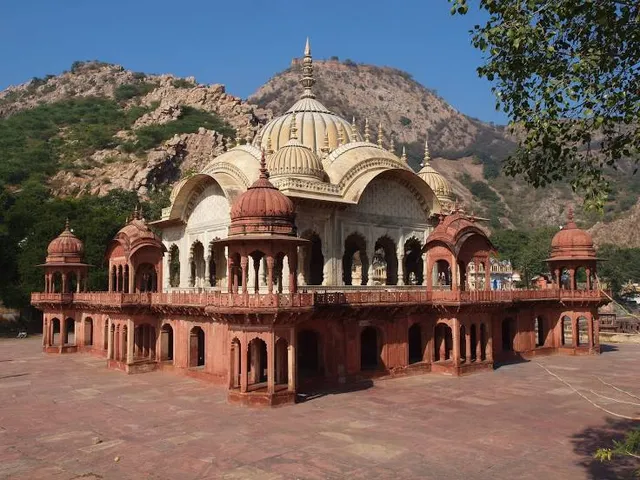
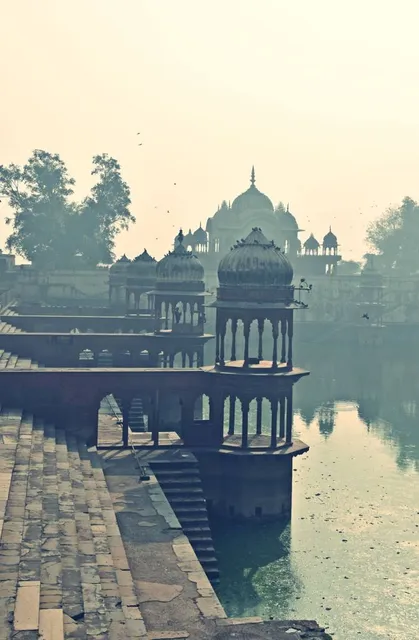
I rounded the corner of Alwar’s City Palace and there it stood, Moosi Maharani Ki Chhatri, like a poem carved in red sandstone and white marble, nestled at the edge of Sagar Lake with the Aravalli Hills silently watching overhead.
Let me walk you through time:
Late 18th–early 19th century: Maharaja Bakhtawar Singh ruled Alwar with quiet strength from 1790 until his passing in 1814. His life wasn’t just of thrones and treaties it was bound with a stirring devotion. Moosi, a performer from a different community, captured his heart but marriage wasn’t sanctioned by custom. Still, when the Maharaja died, Moosi’s love didn’t falter. She committed Sati on his pyre, and that act reshaped history in these hills.
1815: Enter Maharaja Vinay Singh. He honored his father and Moosi’s unwavering loyalty by building this double-storied cenotaph half grounded in regal red sandstone, half crowned in gleaming white marble. It wasn’t just a memorial, it was a promise carved in stone.
Architecture in love:
The lower level’s sandstone pillars stand firm, etched with floral and mythological carvings.
Above, delicate domes, jharokhas, and jali lattice rests in marble, with frescoes of Ramayana and Mahabharata tales and even the Maharaja’s footprints, preserved forever in marble.
Now, fast-forward to today: I found myself leaning over the edge of Sagar Lake, watching the chhatri’s reflection blur in the water. The sunset painted everything in blush and gold. Peacocks strut through the gardens, and sometimes you swear the air hums with whispers of a love story that wasn’t meant to be tamed.
Here’s why I give it five stars:
Location is perfect, just outside the City Palace, tucked beside a shimmering lake, framed by Aravalli’s silent vigil.
History that hits you, a narrative of forbidden love, sacrifice, and legacy, all materialised in beautiful design.
Architectural poetry the way red and white merge, how light dances on intricate carvings and mythic murals under the arching domes.
A moment suspended in time you don’t just visit....
Read moreThe place is very offbeat and hence the footfall is low. Now how that benefits a tourist is that this place is very less crowded over the weekend. It is about 3-4 hours drive from New Delhi depending on what time of the day you choose. I would prefer very early morning as the traffic is minimal at that time and you would reach just in time when this opens up for the public. This place can be divided into 3 main sections.
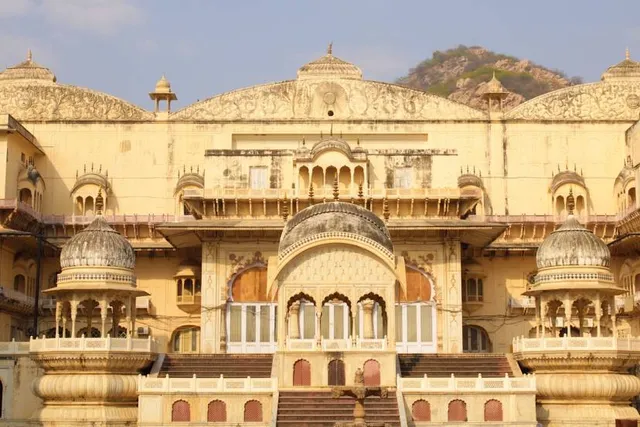
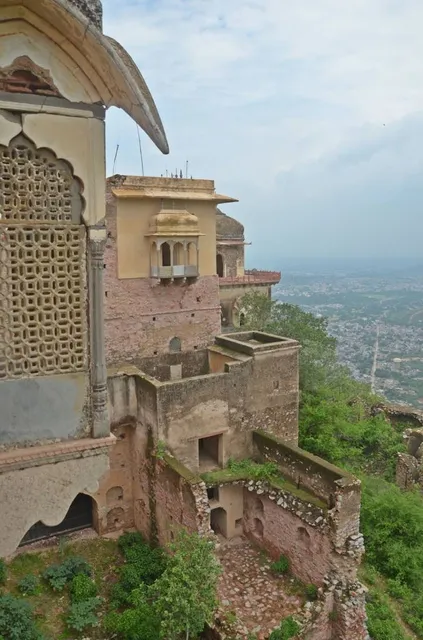
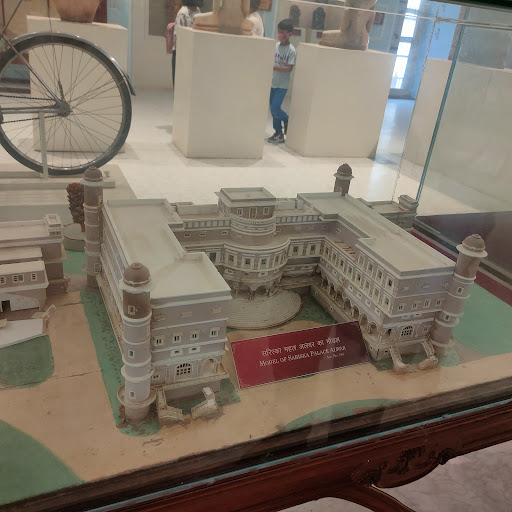
The first one would be the palace itself that also has the museum on the top floor. The museum has a very rare collection of paintings, artifacts, weapons and manuscripts. The entry fee is about 20 rupees for an adult and 10 rupees for kids over the age of 7. Students also have an entry fee of 10 rupees. The museum is divided into 3 sections. The first section has the sculptures, the second has paintings and the third displays swords and guns of that era. The staff there is very cordial and helpful. Photography is allowed but taking videos is prohibited. One can also take some beautiful pictures in the courtyard and of the Bala Fort and Temples in the background.
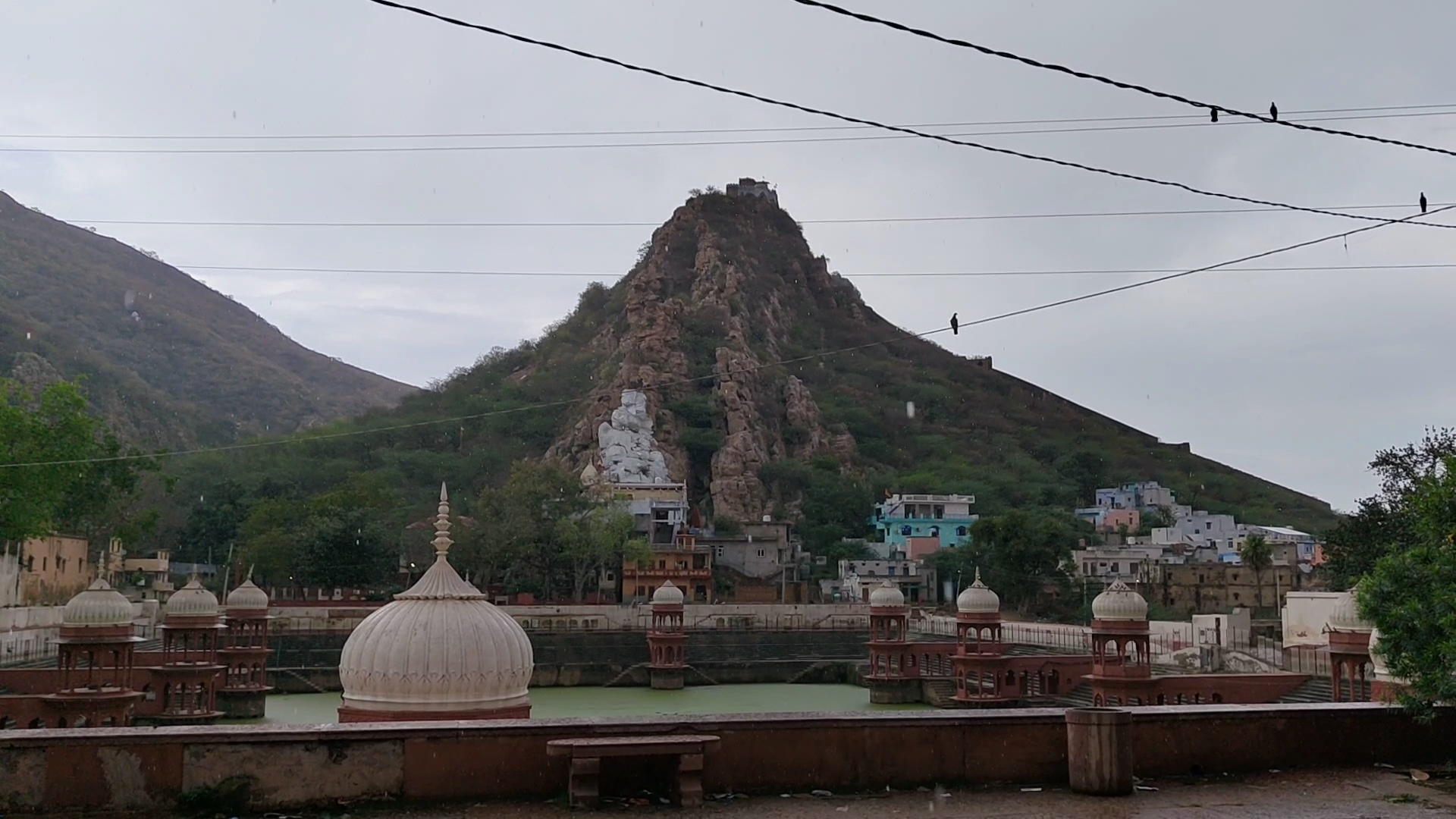
The second section covers the water reservoir that's located just behind the palace. It's based on the basis principal of harvesting rain water. One can sit there and enjoy the view of the fountains and the Aravali hills.
The third section covers the main structure after which this place is named. It's a two storey structure built in the shape of a square with the top part made in pure marble. It's reflects the perfection of the Indian architecture of those times. The intricate carving on the roof, walls and pillars is a real treat to the eyes.
There are no eating joints in the complex as it also houses the district court. So remember to carry your own food and water bottles. The place has a public washroom and decent parking space for visitors. The roads that lead to the structure are a bit narrow so please bear that in mind in case you are not an experienced driver.
I hope you will like the place as...
Read moreThe Chhatri in Alwar is truly a marvel of architectural and artistic craftsmanship, drawing visitors from near and far to witness its beauty firsthand. Situated amidst the scenic landscape of Alwar city, this cenotaph stands as a testament to the rich cultural heritage of the region.
Upon arrival, one cannot help but be captivated by the grandeur of the Chhatri's design. Built on two levels, the lower portion showcases the use of vibrant red sandstone, while the upper level is adorned with the elegance of grey and white marble. This contrast in materials adds depth and visual appeal to the structure, enhancing its overall aesthetic.
As you approach the Chhatri, its symmetrical design immediately catches the eye. Each detail is meticulously planned, from the layout of the pillars to the arrangement of the carvings. The architects of this monument have ensured that every aspect of its design exudes harmony and balance, creating a sense of tranquility for visitors.
Step inside, and you'll find yourself surrounded by a treasure trove of exquisite carvings. The inner pillars, walls, and roof are adorned with intricate patterns and motifs, each telling a story of the rich history and cultural heritage of the region. From floral designs to geometric patterns, every carving is a testament to the skill and artistry of the craftsmen who created them.
As you explore the Chhatri further, take a moment to appreciate the attention to detail that has gone into its construction. From the precision of the carvings to the quality of the materials used, every aspect of this monument speaks to the dedication and craftsmanship of its creators.
For travelers passing through Alwar city, a visit to the Chhatri is a must. Whether you're an architecture enthusiast, a history buff, or simply someone who appreciates beauty in all its forms, this magnificent cenotaph is sure to leave a lasting impression. So make it a point to visit this cultural gem and immerse yourself in the timeless beauty of the...
Read more