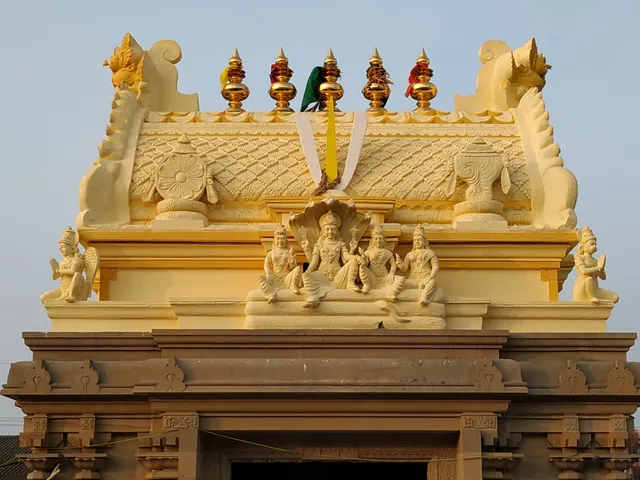
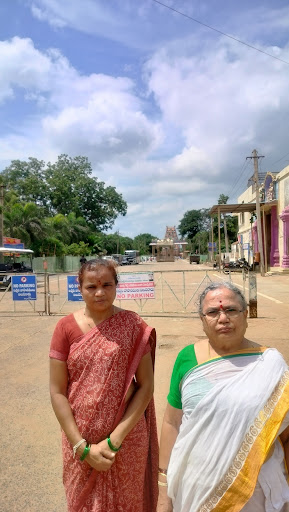
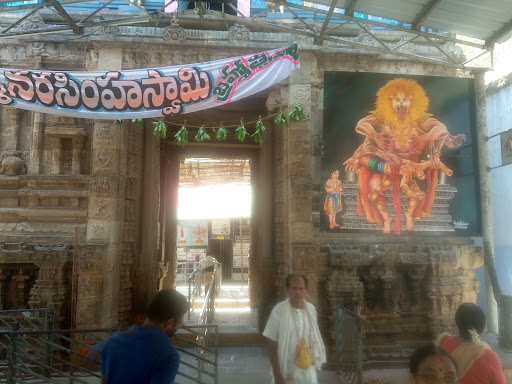
Diguva Ahobilam Sri Lakshmi Narasimha Swamy Temple (Lower Ahobilam - Prahladavarada Temple) is located in Ahobilam, Andhra Pradesh at a distance of 140 Kms from Kurnool and 340 Kms from Hyderabad Airport.
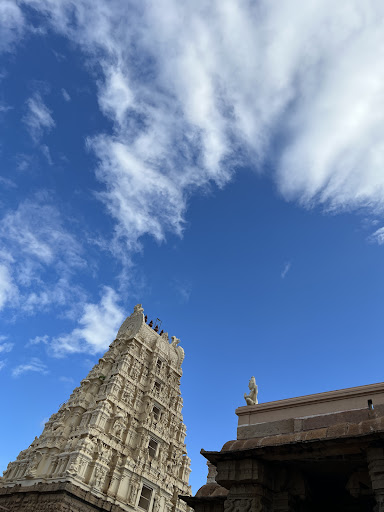
The town area’s main temple, Lower Ahobilam, is dedicated to Prahladavarada. This means ‘The Lord who always blesses and protects Prahlada’. The temple is surrounded by three Prakaras and has some Mandapams in the adjoining areas.
Ahobilam temple consists of nine shrines to Lord Nrisimha located around a 5 KM circle. Yogananda Narasimha (Shani) Jwala Narasimha (Kuja) , Bhargava Narasimha (Surya), Chatravata Narasimha (Chandra), Varaha Narasimha (Rahu) Malola Narasimha (Ketu), Paavana Narasimha (Buda). Karanja Narasimha (Shukra), Ugra Narasimha (Guru)
In addition to the nine shrines, there is a temple for Prahaladavarada Varadhan in the foothills of the mountain. Due to security reasons and the difficulty in performing daily worship, many of the utsava vigrahas of the nine shrines are kept in this temple.
Garuda wished for a vision of Lord Nrisimha in the form of the Avathara. To fulfill his wish, the Lord settled in the hills around Ahobilam in the midst of dense forests in nine different forms. For this reason this hill came to be known as Garudadri, Garudachalam, and Garudasailam.
Ahobilam is the place where the Lord killed Hiranyakasipu and saved Prahalada. Mahalakshmi took avathar as Senjulakshmi among the Senju, tribal hunters of the hills, and married the Lord.
The temple surrounded by three prakaras in the Lower Ahobilam is dedicated to Prahlada Varada i.e., the Lord whose grace bestows on Prahlada. With Vijayanagar style noticeable in the structure, there are a number of mandapas outside the temple. A shrine dedicated to Sri Venkateswara exists to the south west of this Narasimha temple and lends view to the episode that Lord Venkateswara obtained the blessings of Narasimha just before his marriage with Padmavathi.
The Mukha Mandapa there, is now used as the Kalyana Mandapa of Narasimha Swamy. With Lakshmeenarasimha as the presiding Deity, the main temple consists of a sanctum, Mukhamandapam and Rangamandapam with numerous pillars intricately carved and carrying rich sculptures. There are also three smaller shrines for Lakshmi, Andal and Azhwars.
In the sanctum are also kept the Utsava idols of Prahlada Varada, Pavana Narasimha and the processional idols of Jwala Narasimha endowed with ten hands and with Sreedevi and Bhoodevi on His either side. A small idol of the first Jeeyar, Sri Adivan Satakopa Swami is also kept before them.
What is apparent and observable is Lord Narasimha's posture in three places including the one in a polar of a divine ascetic presenting ascetic order to the first Jeeyar of Ahobila Mutt. Both in the Upper and Lower Ahobilam, it is a common sight on the pillars of Lord Narasimha wooing His consort Chenchulakshmi. The Lord chasing Hiranyakasipu in one pillar and bursting forth from another pillar to tear him are very realistic.
The annual uthsavam (Brahmothsava) performed in February every year is a great attraction that lure both the common folk and the religious Pandits to participate in them. There is a tall Jayasthambham erected in the spacious ground outside the temple walls to mark the victory of Krishnadeva Raya. The Kakatheeya Kings especially Prathapa Rudra had also contributed towards additional structures and maintenance of this Ahobilam complex.
Sri Thirumangai Azhwar describes the place as very hard to visit (sendru kandarkku ariya kovil, kavvu naayum kazhugum, deivamallal sella vonna), but due to the efforts of the 45th Azhagiyasingar, this place has transformed into "sendru kaandarku eliya (easy) kovil.
Temple timings : 6:30 AM to 1 PM, ...
Read moreAhobilam is a famous temple of South India. It is situated on the Nallamalai ranges near Nandyal Railway Station of Andhra Pradesh state. The Nallamalai ranges south of river Krishna, down to Tirupati and are called Sesha Parvatha. Sesha is the name of the king of serpents. The hood of the sesha is at Tirupati, the tail at Srisailam and the middle is situated at Ahobilam. Nallamalais at the tail are called Sringiri, at the middle are called Vedagiri and Garudagiri referred to as at the hood.
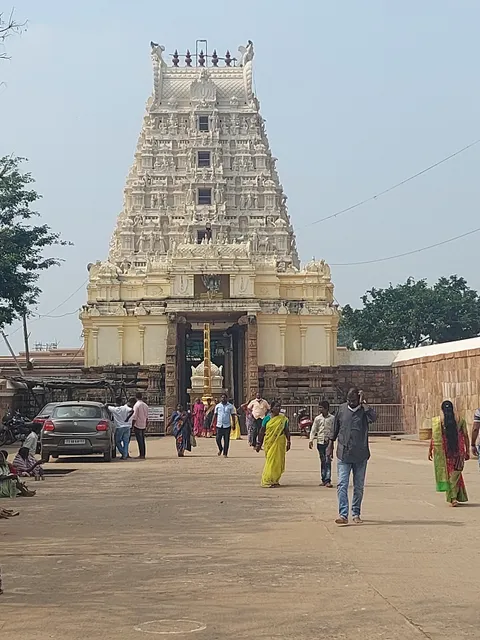
The shrine of the Ahobilam temple is situated on the top of the first range and is referred to as Upper Ahobilam and down below is called Lower Ahobilam. A huge temple surrounded by a number of buildings can be seen at the Upper Ahobilam. The main shrine or the "sacro sanctum" at Upper Ahobilam was carved out of a big egg like rock with mandapams. There is a tank here, which supplies water to the residents of the Upper Ahobliam temple. It is mainly for growing flowers for the shrine.
There is a Lower Ahobilam in the below with a big temple and enclosures, It was built according to the South Indian style. Thousands of pilgrims can stay here in this temple. The priests of both Upper and Lower Ahobilam stay there even today.
A number of costly and different types of valmnas for processional purposes are found in Lower Ahobilam. Recently, many pillared halls are added at the Lower Ahobilam. It is believed that the presiding deity, Lord Narasimha here have had a romance with a Chenchu girl, who is locally called Chenchu Lakshmi. During the annual festival here, the romance and the marriage are celebrated in a dramatic way.
Ahobilam is one of the ancient Vaishnava shrines of Indian and it has a matha at Srirangam. The idol of the presiding deity Lord Narasimha is shown in a sitting posture with jatagata or matted hair. This is the unique posture of Vishnu and which can only be seen here. A rivulet, popularly known as Bhavanasi flows near the temple, which has crystal clear water. It is believed that there is a cave underneath the temple where stays a Swayambhu (self manifested) Narasimha. Another story says that the demon Hiranyakashipu exclaimed Ahobilam! Ahobilam! when he saw the ferocious and gigantic form of Lord Narasimha. Hence, the place was named as Ahobilam.
There is a shrine of Malola Narasimha on the outskirts of a nearby village. Here goddess Lakshmi is worshipped by the name of Shantha Swaroopa. The Jwala Narasimha shrine is situated in the higher portion trikala of Lord Narasimha can be seen. This is said to be the actual place where the anger of the Lord reached its climax, when he killed Hiranyakashipu.
One more sacred Narasimha shrine is situated at a nearby place, where worship is done in the Shakta form. All the Nava Narasimhas (nine Narasimhas) - Prahlada Varada, Chatrata, Garuda, Yoga, Urga, Krodha, Malola, Jwala and Lakshmi Narasimha are worshipped at this place. This is a very ancient temple.
The inscriptions available at the Ahobilam temple indicate that king Vikramaditya VI of the Western Chalukya line of Kalyani worshipped the Mula Narasimha of this temple. The utsava murthi of the temple is made of gold and it is said to be installed by the famous Kakatiya king Prataparudra. Now, the great spiritual Jiyars of Ahobilam Matha worship it. It is said that while returning from Srisailam, Prataparudra stopped at the Ahobilam and had placed the idol at a place called Rudravaram near the village.
King Krishnadeva Raya of Vijayanagar also said to have visited this Ahobilam temple on his return from the victory of Kalinga. He is also said to have made offerings of a diamond necklace, wristlet, a gold plate and...
Read moreThe Bhagavata Purāṇa describes that Vishnu, in his previous avatar as Varāha, killed the evil asura Hiraṇayakṣa. The elder brother of Hirṇayakṣa, demon king Hiraṇyakaśipu, hated Vishnu and wanted revenge.[3] He undertook many years of austere penance to gain special powers. Thereafter, Brahma offered Hiraṇyakaśipu a boon. Hiraṇyakaśipu asked, "Grant me that I not die within any residence or outside any residence, during the daytime or at night, nor on the ground or in the sky. Grant me that my death not be brought about by any weapon, nor by any human being or animal. Grant me that I not meet death from any entity, living or nonliving created by you. Grant me, further, that I not be killed by any demigod or demon or by any great snake from the lower planets." Brahma granted him the boon, and Hiraṇyakaśipu gained these powers. Narasimha at Bhadrachalam Temple and Alagar KoyilTemple respectively. Hiraṇyakaśipu, once powerful and invincible with the new boon, began to persecute those who were devotees of Vishnu. Hiraṇyakaśipu had a son, Prahlāda, who disagreed and rebelled against his father. Prahlāda became a devotee of Vishnu. This angered Hiraṇyakaśipu, who tried to kill the boy -- but with each attempt, Prahlāda was protected by Viṣṇu's mystical power. When asked, Prahlāda refused to acknowledge his father as the supreme lord of the universe and claimed that Viṣṇu is all-pervading and omnipresent. Narasiṃha kills Hiraṇyakaśipu, as Prahlāda and Lakshmi devi bow before Lord Narasiṃha Hiraṇyakaśipu pointed to a nearby pillar and asked if 'his Viṣṇu' is in it and said to his son Prahlāda, "O most unfortunate Prahlāda, you have always described a supreme being other than me, a supreme being who is above everything, who is the controller of everyone, and who is all-pervading. But where is He? If He is everywhere, then why is He not present before me in this pillar?" Prahlāda then answered, "He was, He is and He will be In an alternate version of the story, Prahlāda answered, He is in pillars, and he is in the smallest twig. Hiraṇyakaśipu, unable to control his anger, smashed the pillar with his mace, and following a tumultuous sound, Viṣṇu in the form of Narasiṃha appeared from it and moved to attack Hiraṇyakaśipu in defense of Prahlāda. In order to kill Hiraṇyakaśipu and not upset the boon given by Brahma, the form of Narasiṃha was chosen. Hiraṇyakaśipu could not be killed by human, deva or animal. Narasiṃha was none of these, as he is a form of Viṣṇu incarnate as a part-human, part-animal. He came upon Hiraṇyakaśipu at twilight (when it is neither day nor night) on the threshold of a courtyard (neither indoors nor out), and put the demon on his thighs (neither earth nor space). Using his sharp fingernails (neither animate nor inanimate) as weapons, he disemboweled and killed the demon king The Kūrma Purāṇa describes the preceding battle between the Puruṣa and demonic forces in which he escapes a powerful weapon called Paśupāta. According to Soifer, it describes how Prahlāda's brothers headed by Anuhrāda and thousands of other demons "were led to the valley of death (yamalayam) by the lion produced from the body of man-lion".[22] The same episode occurs in the Matsya Purāṇa 179, several chapters after its version of the...
Read more